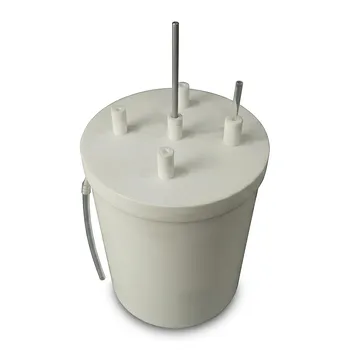
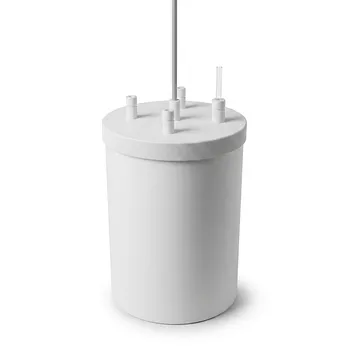
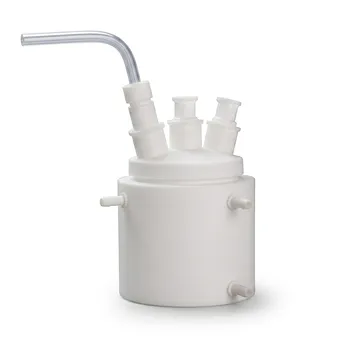
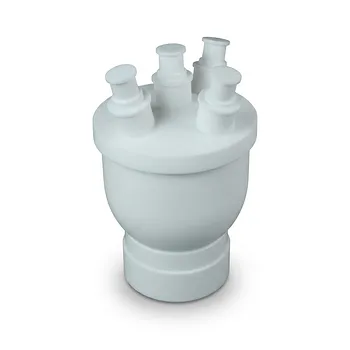
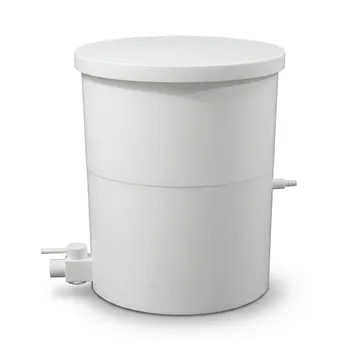
The high-pressure reactor with a PTFE liner is the indispensable vessel for the solvothermal synthesis of CAU-17. This specialized equipment provides a sealed, constant-temperature environment that facilitates the coordination reaction between bismuth salts and 1,3,5-benzenetricarboxylic acid within a solvent. By maintaining these precise conditions, the reactor ensures the formation of bismuth-based metal-organic frameworks (MOFs) characterized by specific crystal structures and regular microporous channels.
The PTFE-lined high-pressure reactor acts as a controlled chemical micro-environment that enables high-temperature crystallization while protecting the purity of the CAU-17 structure from metallic contamination and corrosive damage.
Providing the Thermodynamic Environment for MOF Crystallization
Enabling Reactions Above the Boiling Point
Solvothermal synthesis often requires temperatures that exceed the standard boiling point of the organic solvents used. The high-pressure reactor creates a sealed system that prevents solvent evaporation, allowing the internal pressure to rise and the liquid to remain stable at elevated temperatures.
Maintaining Constant Thermal Conditions
Consistency is vital for the coordination of bismuth salts and organic ligands. The reactor body ensures a uniform distribution of heat, which is essential for the steady nucleation and growth of CAU-17 crystals over the course of the synthesis.
Facilitating the Coordination Reaction
The pressurized environment increases the solubility of the precursors, such as 1,3,5-benzenetricarboxylic acid. This allows the organic ligands and bismuth ions to interact more effectively, leading to the formation of the highly ordered, microporous channels that define the CAU-17 framework.
The Protective and Pure Role of the PTFE Liner
Preventing Metal Ion Contamination
The PTFE liner serves as a barrier between the reaction mixture and the stainless steel reactor body. This prevents metal ions from the steel from leaching into the system, which is critical for ensuring the structural integrity and high purity of the synthesized bismuth MOF.
Chemical Inertness and Corrosion Resistance
PTFE is exceptionally resistant to aggressive reagents and polar solvents commonly used in MOF synthesis. The liner protects the outer stainless steel autoclave from erosion caused by acidic or alkaline conditions, extending the life of the equipment and ensuring a safe reaction.
Non-Stick Properties and Product Recovery
The anti-adhesion properties of high-purity PTFE are beneficial during the post-synthesis phase. These properties facilitate the easy recovery of the CAU-17 product from the liner walls and simplify the cleaning process to prevent cross-contamination in future experiments.
Understanding the Trade-offs and Limitations
Temperature and Pressure Thresholds
While PTFE is thermally stable, it has a definitive upper temperature limit, typically around 220°C to 250°C. Exceeding these limits can cause the liner to soften or deform, potentially leading to a seal failure or the release of fluorinated decomposition products.
Thermal Expansion Disparity
PTFE has a different rate of thermal expansion than the stainless steel reactor shell. If the reactor is heated or cooled too rapidly, the liner may warp or "buckle," which can compromise the seal and lead to solvent leakage.
Maintenance of the Internal Surface
Over time, PTFE liners can develop micro-cracks or become porous after repeated exposure to high-pressure cycles. These imperfections can trap precursors or impurities, which may negatively impact the morphology and consistency of subsequent CAU-17 batches.
Optimizing Your CAU-17 Synthesis Strategy
To achieve the best results when using a PTFE-lined high-pressure reactor for MOF synthesis, consider the following recommendations:
- If your primary focus is maximizing crystal purity: Always use a high-purity fluoropolymer liner and inspect it for surface degradation to ensure no metallic impurities from the autoclave shell reach the reaction.
- If your primary focus is structural consistency: Implement a slow, controlled heating and cooling ramp to prevent pressure shocks and to allow for the highly ordered polycondensation of the organic monomers.
- If your primary focus is high-yield recovery: Utilize the non-stick nature of the PTFE liner by performing a thorough wash of the vessel immediately after the synthesis is complete to collect all precipitated MOF material.
By mastering the balance of pressure, temperature, and chemical isolation provided by the PTFE-lined reactor, you ensure the successful engineering of the complex, bismuth-based architecture of CAU-17.
Summary Table:
| Feature | Role in CAU-17 Synthesis |
|---|---|
| Sealed Pressure Vessel | Enables reactions above boiling point for rapid crystallization. |
| PTFE Liner | Eliminates metal ion leaching to ensure high-purity bismuth MOFs. |
| Thermal Stability | Maintains constant thermal conditions for uniform crystal growth. |
| Inert Surface | Protects autoclave body from corrosive organic ligands and solvents. |
| Non-stick Finish | Facilitates easy recovery of precipitates and simplifies cleaning. |
Unlock High-Purity Results with KINTEK’s Fluoropolymer Solutions
Precision is paramount in the synthesis of complex architectures like CAU-17. KINTEK specializes in high-performance fluoropolymer materials, offering everything from standard PTFE-lined reactors and microwave digestion vessels to custom CNC-machined parts designed for your specific laboratory setup.
Our extensive range includes:
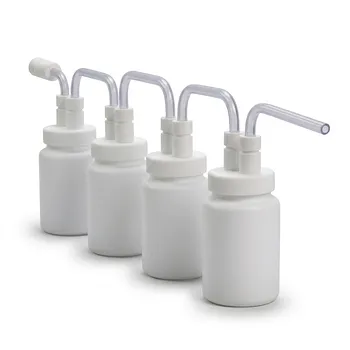
- Basic Labware: High-purity beakers, crucibles, and reagent/wash bottles.
- Sample Prep & Fluidics: Digestion tubes, filters, tubing, fittings, and valves.
- Advanced Apparatus: Custom electrochemical cells, hydrothermal synthesis liners, and microchannel reactors.
Backed by an exclusive focus on PTFE and PFA materials and end-to-end custom fabrication, we deliver the durability and chemical resistance your research demands. Contact KINTEK today to discuss your custom project or high-volume order and ensure the structural integrity of your next synthesis!
References
- Yingbo Shao, Yong Hu. A Self‐Recognition Separator for Ion Management to Customize Selective Zn<sup>2+</sup> Channels Toward Dendrite‐Free Zinc Metal Anodes. DOI: 10.1002/cey2.701
This article is also based on technical information from Kintek Knowledge Base .
Related Products
- PTFE Lined High Pressure Digestion Vessel 50ml High Temperature Hydrothermal Synthesis Tank
- High Pressure Custom TFM Reactor Stainless Steel Outer Vessel PTFE Inner Cup for Corrosive Synthesis
- Custom TFM Reaction Vessel with Stainless Steel Jacket and PTFE Inner Cup for High Corrosion Resistance
- PTFE 10L Reaction Vessel with Stirring Paddle Customizable Corrosion Resistant High Temperature Reactor for Biopharmaceutical and Chemical Processing
- High Purity PTFE Reaction Vessel Polyfluortetraethylene Cylindrical Tank Petrochemical Reaction Container
People Also Ask
- What are the benefits of using a PTFE-lined vessel for carbon-sulfur cathode treatment? Maximize Purity & Performance
- Why are PTFE-lined pressure digestion vessels required for the preparation of Ag/CeO2 catalysts? Purity & Performance
- What is the function of high-pressure PTFE digestion vessels in mineral analysis? Optimize Sample Mineralization
- What safety features are typically incorporated into high-pressure PTFE digestion vessel designs? Ensure Lab Safety
- What is the function of PTFE lined high-pressure vessels in g-C3N4 synthesis? Achieve High-Purity Material Growth