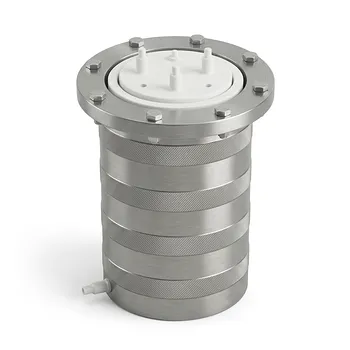
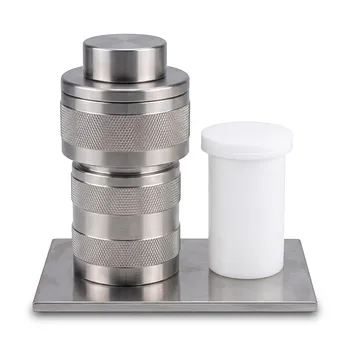
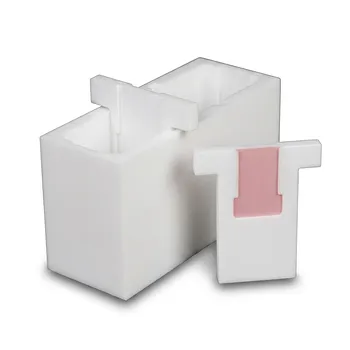
The high-pressure reactor acts as a controlled chemical forge. In the synthesis of nitrogen-doped carbon quantum dots (N-CQDs), it provides a sealed hydrothermal environment that accelerates molecular cross-linking, polycondensation, and carbonization. By maintaining extreme physical conditions, the reactor forces precursors—such as betaine-type meldonium and ammonia—to transform into uniform, fluorescent nanostructures that would be impossible to create at atmospheric pressure.
The high-pressure reactor is essential for creating a "bottom-up" synthesis environment where high temperature and pressure increase solvent reactivity and precursor solubility. This process ensures effective nitrogen doping and the formation of a graphitized core with specific surface functional groups.
The Physical Mechanism of N-CQD Formation
Accelerating Carbonization and Nucleation
A high-pressure reactor creates a closed hydrothermal system that typically reaches temperatures of 200°C or higher. This environment significantly enhances the reactivity of the solvent, which facilitates the dehydration and pyrolysis of carbon sources. These conditions are critical for the nucleation and growth of carbon nuclei, allowing small organic molecules to aggregate into nanoscale structures.
Facilitating Nitrogen Doping and Functionalization
High internal pressure increases the solubility of precursors, such as ammonia or urea, in the reaction medium. This allows nitrogen atoms to be effectively integrated into the carbon lattice during the polymerization and carbonization phases. The result is a nitrogen-doped structure that possesses surface active groups like hydroxyl and amino groups, which are vital for the dots' optical properties.
Structural Integrity and Chemical Purity
The Critical Role of Reactor Liners
Most high-pressure reactors utilize liners made of high-purity PTFE (Polytetrafluoroethylene) or PFA. These materials are chemically inert and prevent the reaction mixture from coming into contact with the stainless steel walls of the autoclave. By eliminating metal ion contamination, the liner ensures the resulting N-CQDs maintain high fluorescent purity and consistent performance.
Achieving Uniform Spherical Nanostructures
The sealed environment allows for precise control over the kinetics of the reaction. This leads to the formation of uniform spherical nanostructures with high crystallinity and structural integrity. Without the stabilized pressure of the reactor, the carbonization process would be uneven, resulting in irregular particles with poor quantum size effects.
Understanding the Trade-offs
While high-pressure reactors are indispensable, they present specific challenges. The extended reaction times—sometimes reaching 72 hours—and high temperatures require significant energy and specialized equipment. Furthermore, the non-transparent nature of stainless steel autoclaves makes it impossible to observe the reaction in real-time, requiring a "black box" approach where parameters must be perfectly calibrated beforehand to avoid incomplete carbonization or over-pyrolysis.
Strategic Implementation for N-CQD Synthesis
To achieve the best results in N-CQD synthesis, the reactor parameters must be aligned with your specific research or industrial goals.
- If your primary focus is High Fluorescence Purity: Utilize a PTFE-lined reactor to prevent any trace metal contamination from the vessel walls.
- If your primary focus is Precise Particle Size: Maintain a strictly controlled temperature profile (e.g., 200°C) to ensure uniform nucleation and growth rates.
- If your primary focus is Effective Nitrogen Doping: Use a high-pressure environment to increase the solubility of nitrogen-rich precursors like urea or ammonia.
By masterfully controlling the hydrothermal environment, the high-pressure reactor transforms simple organic precursors into sophisticated, high-performance nanomaterials.
Summary Table:
| Key Role | Synthesis Impact | Critical Requirement |
|---|---|---|
| Hydrothermal Forge | Accelerates molecular cross-linking & carbonization | Controlled high temperature (200°C+) |
| Pressure Control | Increases precursor solubility for effective nitrogen doping | Sealed, high-strength vessel |
| Contamination Shield | Prevents metal ion interference for high fluorescence purity | High-purity PTFE or PFA liners |
| Kinetic Regulation | Ensures uniform spherical nanostructures and crystallinity | Precise temperature profiling |
Elevate Your Nanomaterial Synthesis with KINTEK’s Fluoropolymer Excellence
Precision in N-CQD synthesis demands absolute chemical purity and thermal stability. KINTEK specializes in high-performance PTFE and PFA laboratory supplies, specifically engineered to withstand the rigorous hydrothermal conditions of high-pressure reactors.
From hydrothermal synthesis liners and microwave digestion vessels that prevent metal contamination, to custom CNC-fabricated reaction apparatus and high-purity fluid transfer components (tubing, fittings, valves), we provide the specialized tools your research requires. Whether you need standard labware like beakers and reagent bottles or complex, non-standard machined parts, KINTEK delivers end-to-end solutions with an exclusive focus on fluoropolymer performance.
Ready to optimize your reactor setup? Contact our experts today to discuss your custom fabrication needs and discover how KINTEK can enhance your lab's output.
References
- Huimin Duan, Hongyan Wang. Unassisted Switchable Dual‐Photoelectrode Devices Utilizing p‐n Carbon Quantum Dots as “Semiconductor Electrolytes”: Optimization Between H <sub>2</sub> O <sub>2</sub> and Solar Electricity Production. DOI: 10.1002/advs.202417204
This article is also based on technical information from Kintek Knowledge Base .
Related Products
- High Pressure Custom TFM Reactor Stainless Steel Outer Vessel PTFE Inner Cup for Corrosive Synthesis
- PTFE Lined High Pressure Digestion Vessel 50ml High Temperature Hydrothermal Synthesis Tank
- High Purity Corrosion Resistant PFA Reaction Vessel with PTFE Holder and Integrated Sampling Tube for Trace Analysis
- Custom TFM Reaction Vessel with Stainless Steel Jacket and PTFE Inner Cup for High Corrosion Resistance
- High Purity PFA Constant Pressure Condensation Reaction System Acid Resistant High Temperature Customizable Teflon Labware
People Also Ask
- Why is a PTFE-lined reactor required for Mn2O3 synthesis? Achieve High Purity & Corrosion Resistance
- What is the technical value of 180 bar pressure for MgO nanostructures? Unlock Superior Crystallinity and Morphology
- What are the technical advantages of using high-pressure PTFE reaction vessels during metal digestion? Expert Insights.
- How does the regulation of initial pressure within a high-pressure reaction system affect the production of MIL-100(Fe)?
- Why is a high-pressure reactor necessary for the esterification reaction between oleic acid and methanol at 150°C? Guide