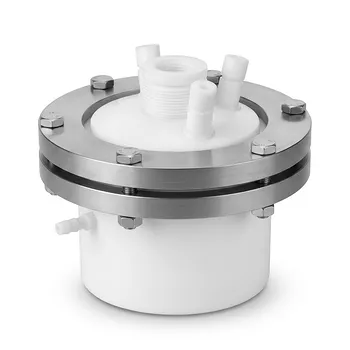
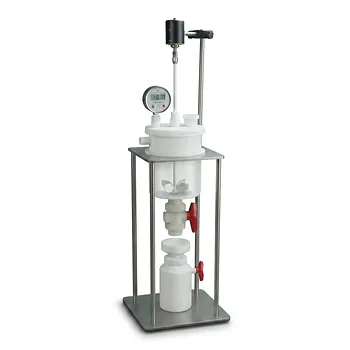
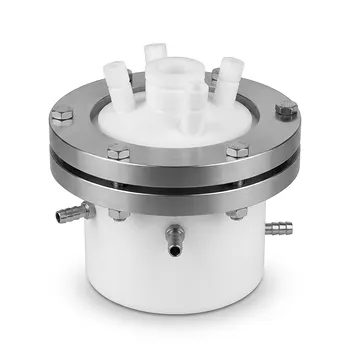
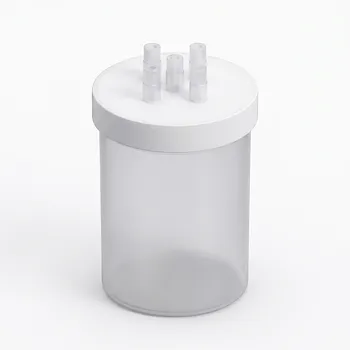
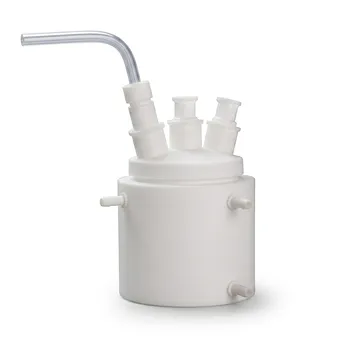
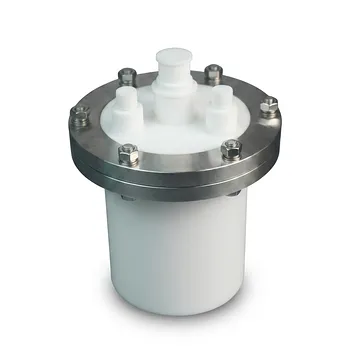
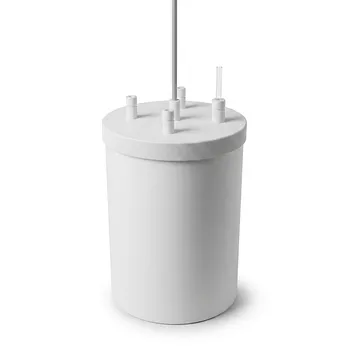
The high-pressure hydrothermal reactor is the fundamental enabler of in-situ synthesis, providing the sealed, high-energy environment necessary to grow alpha-zirconium phosphate (ZrP) crystals directly on carbon nanotube (CNT) surfaces. By maintaining high temperatures and pressures, the reactor facilitates the chemical reaction between phosphoric acid and zirconium salts that would otherwise remain inert or react inconsistently under standard conditions. This process ensures that the resulting ZrP crystals are uniformly distributed and firmly anchored to the CNT walls, creating a highly dispersible nano-hybrid filler.
The reactor transforms the chemical precursors into a stable hybrid structure by providing the kinetic energy required for uniform nucleation and crystal growth. This "in-situ" approach is the only way to achieve the robust bond between the inorganic ZrP and the organic CNT structure needed for industrial applications.
The Mechanics of Hydrothermal Synthesis in Hybrid Development
Creating the Ideal Kinetic Environment
The reactor maintains aqueous solutions in a liquid state even when temperatures exceed the normal boiling point of water. This high-energy state significantly increases the solubility and reactivity of the zirconium salts and phosphoric acid. Without this pressure, the precursors would not reach the energy threshold required to initiate the crystallization of alpha-zirconium phosphate.
Enabling In-Situ Nucleation on CNT Surfaces
The primary role of the reactor is to facilitate in-situ nucleation, where the ZrP crystals form directly on the CNT walls rather than independently in the solution. The high-pressure environment forces the reactants into close contact with the carbon nanotubes, ensuring the crystals grow as an integral part of the nano-hybrid structure. This creates a "firm attachment" that prevents the particles from separating during subsequent processing or application.
Enhancing Crystallinity and Structural Integrity
By precisely controlling the internal temperature (often ranging between 100°C and 200°C), the reactor allows for the development of high-quality alpha-zirconium phosphate crystals. This controlled crystallization is vital for achieving the specific crystal facets and morphologies required for the hybrid to function as an effective filler. The resulting material possesses a level of structural integrity and crystallinity that is difficult to achieve via traditional mechanical mixing.
Understanding the Trade-offs and Challenges
The Risk of Morphology Instability
While the reactor enables growth, over-exposure to high temperatures or pressures can lead to irregular crystal morphology. If the reaction time is not strictly monitored, the ZrP crystals may grow too large or aggregate, which negatively impacts the dispersibility of the nano-hybrid. Precise timing and temperature calibration are required to maintain the "nano" scale of the particles.
Precursor Sensitivity and Scaling
The success of the synthesis is highly dependent on the stoichiometry of the precursor solution within the sealed vessel. Because the environment is closed, any imbalance in the concentration of phosphoric acid or zirconium salts cannot be corrected mid-process. This makes the initial preparation phase critical, as the high-pressure environment will amplify any chemical inconsistencies present in the starting material.
Optimizing the Synthesis for Your Objectives
Effective use of a hydrothermal reactor requires balancing the thermal energy provided with the specific structural goals of your hybrid material.
- If your primary focus is maximum dispersibility: Prioritize a reaction temperature and time that favors high nucleation rates over crystal growth to keep the ZrP particles small and numerous.
- If your primary focus is thermal or chemical stability: Focus on maximizing the crystallinity of the ZrP by maintaining a steady, higher-range temperature to ensure a perfect alpha-zirconium phosphate structure.
- If your primary focus is bond strength between components: Ensure the CNTs are properly pre-treated or functionalized to take full advantage of the reactor's ability to drive in-situ crystallization.
By mastering the high-pressure environment, researchers can engineer CNT/ZrP hybrids with the precise molecular architecture required for advanced composite applications.
Summary Table:
| Key Feature | Functional Role in Synthesis | Impact on CNT/ZrP Hybrid |
|---|---|---|
| High-Energy Environment | Maintains liquid state >100°C | Increases precursor solubility and reactivity |
| In-Situ Nucleation | Growth directly on CNT surfaces | Ensures firm attachment and uniform distribution |
| Thermal Precision | Controlled crystallization (100-200°C) | Optimizes crystal morphology and structural integrity |
| Sealed System | High-pressure stoichiometric stability | Facilitates chemical reactions impossible at 1 atm |
Elevate Your Synthesis with KINTEK’s High-Performance Fluoropolymers
Achieving the precise molecular architecture required for CNT/ZrP hybrids demands equipment that can withstand extreme chemical and thermal conditions. KINTEK specializes in high-performance fluoropolymer materials, providing the reliability your lab needs for advanced hydrothermal synthesis.
From hydrothermal synthesis liners and microwave digestion vessels to high-purity trace analysis instruments, KINTEK manufactures virtually all imaginable laboratory supplies crafted from PTFE and PFA. Our product range includes:
- Core Labware: Beakers, crucibles, reagent bottles, and centrifuge tubes.
- Fluid Transfer: Precision tubing, fittings, and high-performance valves.
- Sample Prep: Filters, pipettes, separatory funnels, and spatulas.
- Advanced Components: Custom electrochemical cells, reaction apparatus, and bespoke CNC-machined parts.
Whether you require high-volume standard consumables like stirring bars and O-rings or a completely custom-engineered laboratory setup, our end-to-end fabrication ensures absolute quality. Maximize your research potential—Contact us today to discuss your custom fluoropolymer requirements!
References
- Pengtao Lei, Zhenkun Jiang. Promoting Proton Conductivity and Methanol‐Resistance of <scp>PVdF</scp>‐Based <scp>PEM</scp> Membrane by Incorporating Dispersive <scp>CNT</scp> Dotted With α‐Zr(<scp>HPO<sub>4</sub></scp>)<sub>2</sub>∙<scp>H<sub>2</sub>O</scp>. DOI: 10.1002/app.57083
This article is also based on technical information from Kintek Knowledge Base .
Related Products
- High Temperature Corrosion Resistant Hydrothermal Synthesis Reactor with TFM Inner Liner and Straight Cylinder Design
- PTFE Lined High Pressure Digestion Vessel 50ml High Temperature Hydrothermal Synthesis Tank
- PTFE Distillation Condensation Apparatus High Temperature Hydrofluoric Acid Resistant Fluorination Reaction Flask
- PTFE Flat Bottom Flask Continuous Reaction System Hydrofluoric Acid Resistant with Dropping Funnel
- High Pressure Custom TFM Reactor Stainless Steel Outer Vessel PTFE Inner Cup for Corrosive Synthesis
People Also Ask
- What is the role of a corrosion-resistant reactor in the synthesis of lignin-based carbon dots? Ensure Maximum Purity
- What are the technical advantages of using hydrothermal synthesis reactors for advanced electronic & optical nanomaterials?
- How does a hydrothermal synthesis reactor facilitate the production of crystalline materials with tailored morphologies? Precision Crystal Growth
- Why is the sealing reliability of a hydrothermal synthesis reactor critical for 24-hour cycles? Ensure Nano-Precision
- What role do hydrothermal synthesis reactors play in CQD preparation? Achieve High-Purity Nanomaterial Synthesis