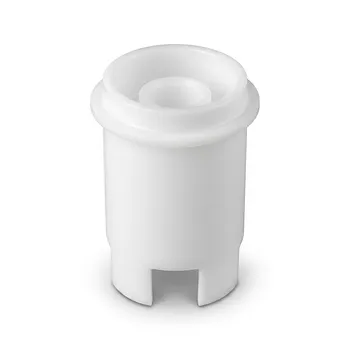
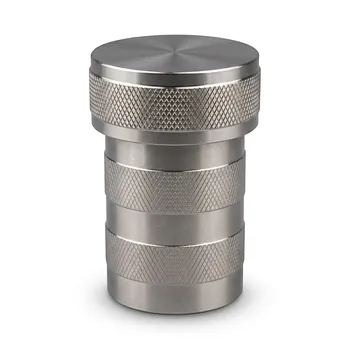
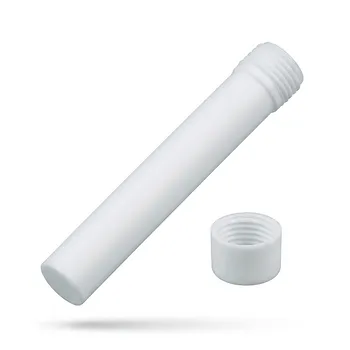
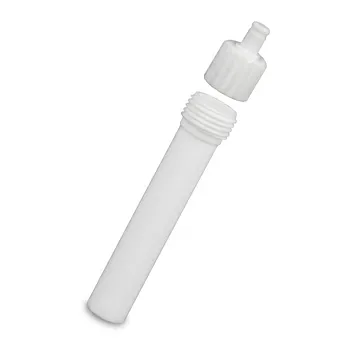
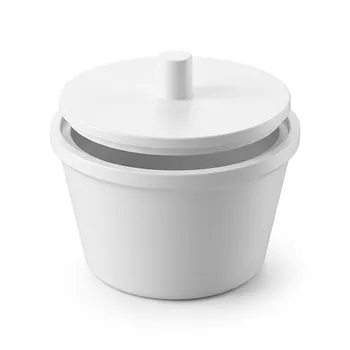
The high-pressure autoclave with a polytetrafluoroethylene (PTFE) liner is the critical vessel for the hydrothermal synthesis of lithium-rich manganese-based (LNM) cathode precursors. This equipment provides a sealed, constant-temperature environment where high internal pressure drives the growth kinetics of crystals. The PTFE liner specifically ensures that the reaction remains free from metallic contamination and survives the highly corrosive, strong alkali conditions typical of LNM material production.
A PTFE-lined autoclave enables the precise synthesis of LNM cathode materials by combining a high-pressure hydrothermal environment with extreme chemical inertness. This setup allows for the controlled crystallization of precursors with high purity, specific morphologies, and superior crystallinity.
The Hydrothermal Reaction Environment
Driving Crystallization Through Pressure
The autoclave creates a sealed environment that allows the internal pressure to rise significantly as the temperature increases. This high-pressure state facilitates the solvothermal or hydrothermal reaction, enabling solvents to reach temperatures above their normal boiling points.
This increased energy state enhances the reactivity of the precursors, promoting uniform mixing and crystallization at the molecular level. For LNM materials, this is essential for achieving the specific phase structures required for high electrochemical activity.
Controlling Growth Kinetics
By maintaining a stable, high-pressure environment over extended periods, the autoclave allows for the fine-tuning of crystal growth kinetics. This control is vital for producing particles with specific morphologies, such as nanowires or spherical precursors.
Consistent pressure and temperature ensure that the resulting material achieves high crystallinity. Without this stability, the LNM cathode material might suffer from structural defects that reduce its capacity or cycle life.
The Critical Role of the PTFE Liner
Protection Against Strong Alkali Corrosion
LNM cathode synthesis often involves strong alkali solutions which are highly corrosive to standard laboratory equipment. The PTFE liner acts as a primary shield, possessing superior chemical resistance that prevents the reaction media from attacking the autoclave's outer shell.
This shielding is not merely for the longevity of the equipment; it is a chemical necessity. Without the liner, the strong bases would degrade the stainless steel walls, potentially causing vessel failure or altering the reaction chemistry.
Preventing Metal Ion Contamination
The extreme chemical inertness of PTFE prevents the leaching of metal ions (such as iron, chromium, or nickel) from the autoclave walls into the reaction mixture. For cathode materials, even trace amounts of foreign metal ions can disrupt the stoichiometric ratio and degrade electrochemical performance.
By isolating the reaction, the PTFE liner ensures that the measured yield and selectivity are a result of the precursors themselves. This purity is critical for maintaining the regularity of the material's microporous or crystalline structure.
Understanding the Trade-offs
Temperature and Pressure Limitations
While PTFE is highly inert, it has strict thermal limitations, typically losing structural integrity above 180°C to 200°C. Exceeding these temperatures can cause the liner to soften or deform, potentially leading to a breach of the sealed environment.
Furthermore, the liner's presence reduces the effective working volume of the autoclave. Researchers must carefully calculate the fill degree to ensure there is enough headspace for pressure generation without risking an over-pressure explosion.
Non-Adhesive Properties and Cleaning
PTFE is chosen for its non-adhesive properties, which help in the recovery of synthesized powders and simplify cleaning. However, if the material is not cleaned rigorously between batches, residual precursors can act as "seeds" for the next reaction, leading to batch-to-batch inconsistency.
How to Apply This to Your Project
Selecting the Right Configuration
To achieve high-quality LNM cathode materials, the reactor configuration must match your specific chemical environment and thermal requirements.
- If your primary focus is high purity and stoichiometry: Ensure you use a high-purity PTFE liner to completely isolate the reaction from the stainless steel walls, preventing any transition metal contamination.
- If your primary focus is morphological control: Prioritize an autoclave with precise temperature control systems to manage the internal pressure and growth kinetics over long reaction times (e.g., 24 hours).
- If your primary focus is maximizing reaction yield: Carefully adjust the volume of the PTFE liner relative to your solvent volume to optimize the gas-liquid phase contact and internal pressure.
The synergy between the high-pressure capabilities of the autoclave and the chemical resistance of the PTFE liner is what makes the reliable synthesis of advanced LNM cathode materials possible.
Summary Table:
| Key Feature | Functional Role | Benefit for LNM Synthesis |
|---|---|---|
| High-Pressure Vessel | Enables hydrothermal reactions above boiling point | Drives crystal growth kinetics and phase stability |
| PTFE Chemical Inertness | Prevents metal ion leaching (Fe, Cr, Ni) | Maintains stoichiometric purity and electrochemical performance |
| Alkali Resistance | Protects against strong corrosive bases | Ensures vessel safety and prevents reaction contamination |
| Non-Adhesive Surface | Minimizes material loss and residue | Simplifies cleaning and ensures batch-to-batch consistency |
Elevate Your Battery Material Research with KINTEK
Precision in LNM cathode synthesis requires equipment that can withstand extreme chemical environments without compromising purity. KINTEK specializes in manufacturing high-performance laboratory supplies crafted exclusively from PTFE and PFA.
From everyday basic labware like beakers and digestion tubes to custom-engineered PTFE liners, high-purity trace analysis instruments, and advanced reaction apparatus, we provide the tools necessary for high-stakes hydrothermal synthesis. Our capabilities extend to:
- Custom CNC Fabrication: Tailor-made, non-standard machined parts and bespoke laboratory setups.
- Comprehensive Lab Solutions: High-volume orders of stirring bars, O-rings, seals, and fluid transfer components.
- Advanced Apparatus: Battery testing fixtures, hydrothermal synthesis liners, and microwave digestion vessels.
Don't let contamination or equipment failure derail your research. Trust the fluoropolymer experts at KINTEK to deliver high-performance solutions for your most demanding applications.
Contact our technical team today to discuss your project requirements!
References
- Natalia B. Timusheva, Artem M. Abakumov. Chemical compatibility at the interface of garnet-type Ga-LLZO solid electrolyte and high-energy Li-rich layered oxide cathode for all-solid-state batteries. DOI: 10.1038/s41598-024-78927-w
This article is also based on technical information from Kintek Knowledge Base .
Related Products
- PTFE Lined High Pressure Digestion Vessel 50ml High Temperature Hydrothermal Synthesis Tank
- Custom TFM Reaction Vessel with Stainless Steel Jacket and PTFE Inner Cup for High Corrosion Resistance
- High Pressure Custom TFM Reactor Stainless Steel Outer Vessel PTFE Inner Cup for Corrosive Synthesis
- High Pressure PTFE Digestion Vessel Inner Cup Holder Custom Corrosion Resistant Low Background Teflon
- High Temperature Corrosion Resistant Hydrothermal Synthesis Reactor with TFM Inner Liner and Straight Cylinder Design
People Also Ask
- What are the benefits of using a PTFE-lined vessel for carbon-sulfur cathode treatment? Maximize Purity & Performance
- Why are PTFE-lined pressure digestion vessels required for the preparation of Ag/CeO2 catalysts? Purity & Performance
- What safety features are typically incorporated into high-pressure PTFE digestion vessel designs? Ensure Lab Safety
- What is the function of PTFE lined high-pressure vessels in g-C3N4 synthesis? Achieve High-Purity Material Growth
- Role of High-Pressure Digestion Tanks in Perovskite Synthesis: Achieve Superior Stability and Latent Heat