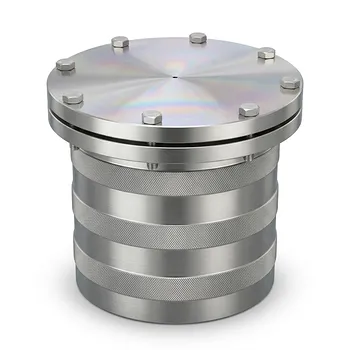
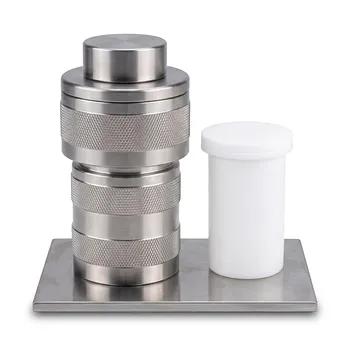
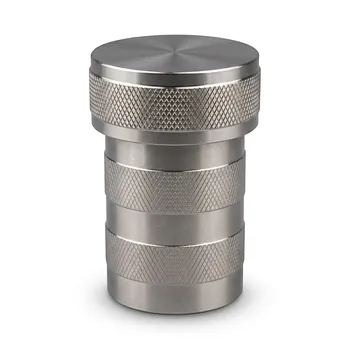
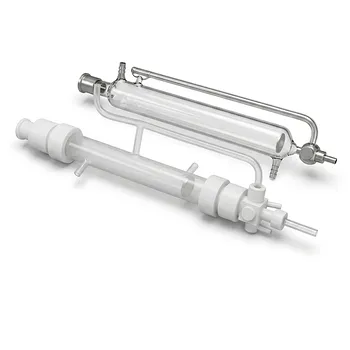
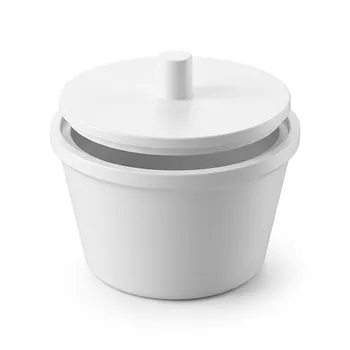
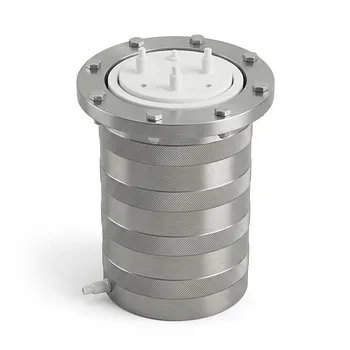
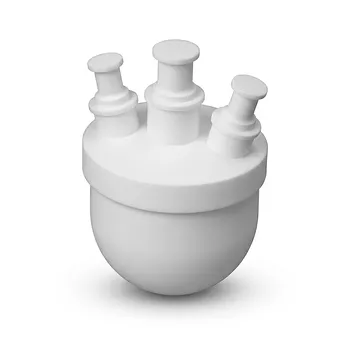
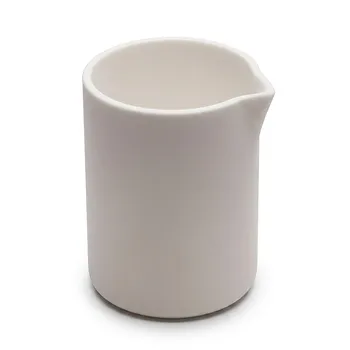
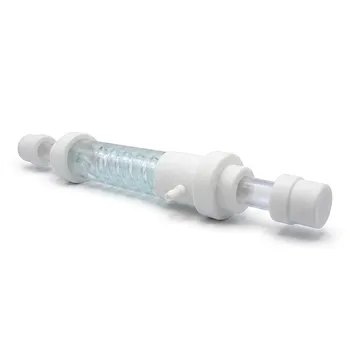
The role of a fluoropolymer-lined high-pressure autoclave is to provide a chemically inert, sealed environment that enables reactions to occur at temperatures and pressures far exceeding normal boiling points. In the specific synthesis of catalyst supports like beta-FeOOH, this setup prevents corrosive precursor solutions from reacting with the autoclave's metallic shell. This isolation is fundamental to ensuring high chemical purity and facilitating the ordered growth of specific nanorod morphologies.
The fluoropolymer-lined autoclave acts as both a protective barrier and a pressurized reaction chamber, maintaining the integrity of the chemical environment. By isolating the reaction from the metal vessel, it ensures that the resulting catalyst supports achieve the precise crystallinity and purity required for high-performance applications.
Isolation and Purity Maintenance
Preventing Metal Ion Contamination
In the synthesis of high-performance catalysts, even trace amounts of foreign metal ions can poison the active sites of the support. Fluoropolymer liners (such as PTFE or PFA) ensure the reaction system remains free from contamination by preventing the solution from leaching minerals or metals from the autoclave's stainless steel walls.
Chemical Inertness Against Aggressive Precursors
The synthesis of beta-FeOOH often involves aggressive precursors like iron nitrate and ammonium fluoride. The chemical inertness of the fluoropolymer liner prevents these substances from undergoing side reactions with the vessel itself, which guarantees the stoichiometric consistency of the final product.
Non-stick Surface and Product Recovery
Fluoropolymers possess a low-friction, non-stick surface that minimizes the adhesion of synthesized nanostructures to the vessel walls. This characteristic significantly improves the recovery rate of the target catalyst support and ensures that the morphology of the crystals is not damaged during collection.
Facilitating Nanostructure Morphology
Maintaining Superheated Liquid States
The sealed environment of the autoclave allows heating to generate autogenous pressure, keeping solvents in a liquid state well above their atmospheric boiling points. This high-energy environment is vital for providing the kinetic energy necessary to overcome activation barriers for the formation of complex structures like beta-FeOOH.
Promoting Ordered Nanorod Growth
The controlled pressure and temperature within the lined vessel facilitate the oriented growth of nanorods onto support frameworks. By maintaining a stable, isolated environment, the autoclave allows for the repair of covalent bonds and the assembly of highly crystalline, regular structures.
Structural Integrity and Crystallinity
Extreme physical conditions—sometimes reaching up to 220°C in specialized setups—are essential for effective collisions between ions and ligands. This ensures that materials like metal-organic frameworks (MOFs) or metal oxides achieve the specific topology and structural integrity required for catalytic efficiency.
Understanding the Trade-offs
Temperature and Pressure Limitations
While fluoropolymer liners are highly resistant to chemicals, they have physical limits, typically around 220°C to 250°C for PTFE. Exceeding these temperatures can cause the liner to soften or deform, potentially leading to seal failure or contamination of the sample with decomposed polymer.
Thermal Expansion Mismatch
Fluoropolymers and the outer metal shell of the autoclave expand at different rates when heated. If the heating or cooling process is too rapid, the liner can crack or warp, which may allow corrosive precursors to seep through and damage the expensive outer pressure vessel.
Mechanical Wear and Replacement
Liners are considered consumable components that degrade over time due to repeated thermal cycling and exposure to harsh reagents. Regular inspection is required to ensure that micro-cracks do not compromise the purity of the synthesis or the safety of the high-pressure operation.
How to Apply This to Your Project
When selecting or operating a lined autoclave for hydrothermal synthesis, your choice should be dictated by the specific requirements of your precursor chemistry and the desired morphology of the catalyst.
- If your primary focus is Maximum Purity: Ensure the use of high-purity PFA or PTFE liners to eliminate any risk of metal ion leaching from the autoclave shell.
- If your primary focus is High-Temperature Morphology (above 200°C): Monitor the integrity of the PTFE liner closely, as thermal stress near its limit can lead to deformation and loss of seal.
- If your primary focus is Improved Product Yield: Leverage the non-stick properties of fluoropolymers to ensure minimal material loss on the vessel walls during the recovery phase.
The integration of fluoropolymer liners in high-pressure autoclaves remains the definitive standard for achieving the controlled, high-purity environments necessary for advanced hydrothermal material synthesis.
Summary Table:
| Feature | Role in Hydrothermal Synthesis | Impact on Final Product |
|---|---|---|
| Chemical Inertness | Prevents metal ion leaching from autoclave walls | Ensures high chemical purity; prevents poisoning of active sites |
| Non-stick Surface | Minimizes adhesion of synthesized nanostructures | Maximizes product recovery and maintains crystal morphology |
| Sealed Environment | Enables autogenous pressure above boiling points | Provides kinetic energy for ordered nanorod growth and assembly |
| Material Tolerance | Sustains temperatures up to 220°C-250°C | Facilitates high-energy reactions for complex structures like MOFs |
Elevate Your Research with Precision Fluoropolymer Solutions
To achieve the specific crystallinity and purity required for high-performance catalyst supports, your laboratory equipment must be as precise as your chemistry. KINTEK specializes in high-performance fluoropolymer materials, offering an unparalleled range of supplies from everyday basic labware like PTFE and PFA beakers, crucibles, and reagent bottles to advanced reaction apparatus including custom hydrothermal synthesis liners, microwave digestion vessels, and electrochemical cells.
Whether you need standard consumables such as stirring bars and filters or complex, non-standard machined parts, our end-to-end custom CNC fabrication ensures you receive the exact tools your project demands. We are dedicated to supporting material scientists and researchers with high-purity trace analysis instruments and comprehensive fluid transfer components designed for the most aggressive environments.
Ready to optimize your synthesis process? Contact us today to discuss your custom requirements and discover how KINTEK’s absolute focus on high-performance materials can bring value to your laboratory.
References
- Dechang Pi, Xuning Li. In-situ spectroscopic insights into the dual-site synergistic electrocatalytic mechanism of propylene epoxidation over single-Ag-atom catalyst. DOI: 10.1038/s41467-025-67338-8
This article is also based on technical information from Kintek Knowledge Base .
Related Products
- Custom TFM Reaction Vessel with Stainless Steel Jacket and PTFE Inner Cup for High Corrosion Resistance
- PTFE Lined High Pressure Digestion Vessel 50ml High Temperature Hydrothermal Synthesis Tank
- High Temperature Corrosion Resistant Hydrothermal Synthesis Reactor with TFM Inner Liner and Straight Cylinder Design
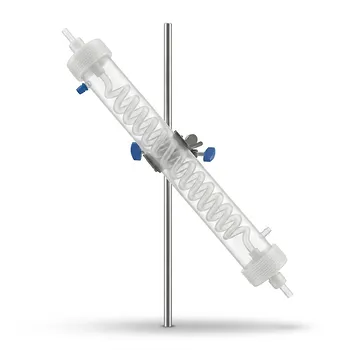
- High Purity PFA Chromatography Column Double Layer Constant Pressure Filter Column with Sieve Plate Acid Resistant Fluoropolymer Filtration System
- High Purity PTFE Microwave Digestion Vessel for Soil and Food Analysis Acid Resistant Fluoropolymer Sample Preparation Liners
People Also Ask
- Why are high-performance pressure-resistant reaction vessels required for oxygen-assisted hydrothermal conversion at 150 °C?
- How do magnetic stirring and reaction vessels impact MOF-derived carbon quality? Optimize Your Composite Performance
- Why are high-quality fluoropolymer-lined reaction vessels required for alk-Ti3C2Tx MXene? Ensure Purity & HF Resistance
- Why are PTFE-lined reaction vessels necessary for forced degradation studies? Ensure high-purity results and accuracy.
- Why is a high-purity PTFE lined reaction vessel required for the acidic etching of MXenes? Ensure Material Purity.