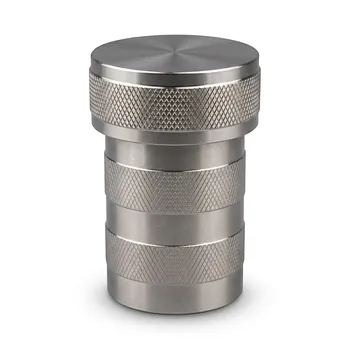
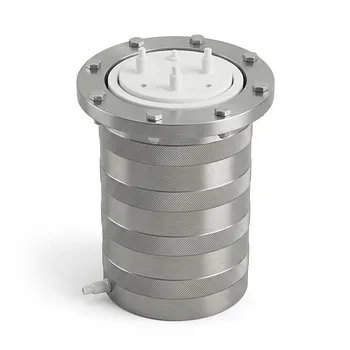
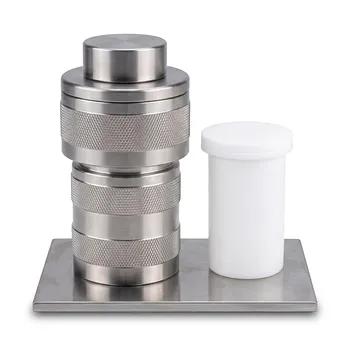
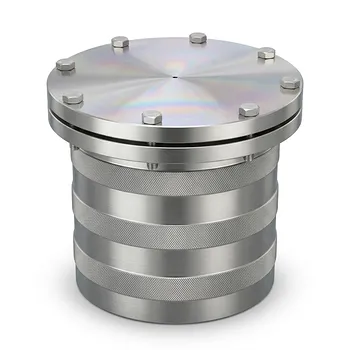
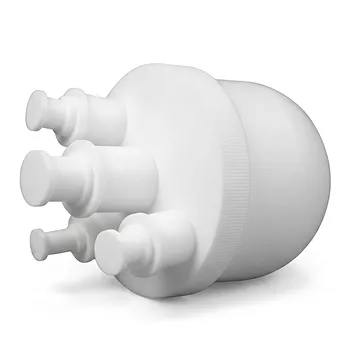
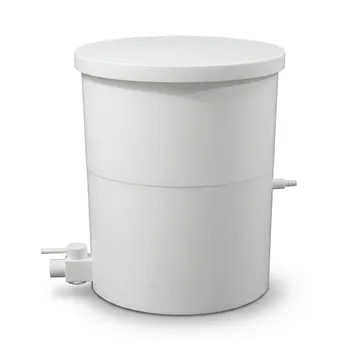
The primary function of a high-pressure hydrothermal reactor in the synthesis of MIL-100(Fe) is to provide a sealed, superheated environment that maintains solvents in a liquid state well above their normal boiling points. This environment generates autogenous pressure, which significantly increases the solubility of precursors—specifically iron sources and trimesic acid. By forcing these materials into solution, the reactor enables the precise coordination reactions and self-assembly required to form a highly crystalline metal-organic framework (MOF).
A high-pressure hydrothermal reactor acts as a high-energy reaction vessel that bypasses the limitations of ambient boiling points. It creates the specific subcritical conditions necessary for Fe3+ ions to fully coordinate with organic ligands, resulting in a stable, porous structure with a high specific surface area.
Enhancing Precursor Solubility and Coordination
Overcoming Solubility Barriers
In MIL-100(Fe) synthesis, the organic ligand (trimesic acid) often has limited solubility in water at room temperature. The high-pressure reactor allows the temperature to reach 120°C or higher while keeping the water liquid, which drastically increases the concentration of dissolved reactants.
Facilitating Metal-Ligand Coordination
Once the iron sources and trimesic acid are fully dissolved, the high-energy environment facilitates the coordination reaction between metal ions and ligands. This process is the foundation of the MOF structure, and it requires the thermal energy provided by the superheated solvent to overcome activation barriers.
Structural Evolution and Crystallinity
Promoting Self-Assembly
The formation of MIL-100(Fe) is a complex self-assembly process that requires a high degree of order. The autogenous pressure within the reactor provides the kinetic conditions necessary for the systematic arrangement of atoms into a rigid framework, ensuring high crystallinity in the final product.
Tuning Pore Structure and Surface Area
Precise control over the reactor's initial pressure and temperature allows researchers to fine-tune the nucleation and growth processes. This control directly influences the specific surface area (BET surface area) and pore volume, which are critical for maximizing the material's capacity for CO2 adsorption.
Material Integrity and System Sealing
The Critical Role of PTFE Liners
High-pressure reactors typically utilize a Polytetrafluoroethylene (PTFE) liner to provide chemical inertness. This liner prevents the acidic reactants, such as trimesic acid, from corroding the stainless steel outer shell and prevents metal ion contamination from leaching into the sample.
Maintaining the Subcritical State
The sealed nature of the reactor ensures that the reaction proceeds in a subcritical state, where the solvent properties change significantly compared to ambient conditions. This state accelerates ion diffusion and promotes the formation of uniform, large-sized crystals that would be impossible to achieve under standard reflux conditions.
Understanding Technical Trade-offs and Safety
Thermal and Pressure Limits
While increasing temperature can speed up the reaction, exceeding the thermal limits of the PTFE liner (typically around 220°C) can lead to liner deformation or toxic gas release. Users must balance the need for high reaction rates with the physical limitations of the reactor materials.
Kinetic Control vs. Polydispersity
Rapid heating in a high-pressure environment can lead to burst nucleation, which may result in very small particles with a wide size distribution. If a specific crystal morphology is required, the heating rate and pressure must be modulated carefully to avoid a loss of structural uniformity.
Optimizing Your MIL-100(Fe) Synthesis
The success of your synthesis depends on how you leverage the reactor's environment to meet your specific research or industrial goals.
- If your primary focus is Maximum Surface Area: Utilize precise pressure regulation to slow the nucleation rate, allowing for the growth of more perfect, high-porosity crystal lattices.
- If your primary focus is Chemical Purity: Always use a clean, high-performance PTFE or PPL liner to ensure no cross-contamination from the reactor’s metal walls occurs during the 120°C coordination phase.
- If your primary focus is CO2 Adsorption Capacity: Optimize the autogenous pressure to ensure full coordination of Fe3+ ions, as incomplete coordination sites can reduce the framework's overall stability and gas uptake.
By mastering the subcritical environment of the hydrothermal reactor, you can transform simple precursors into the sophisticated, high-performance architecture of MIL-100(Fe).
Summary Table:
| Key Feature | Technical Impact | Research Benefit |
|---|---|---|
| Subcritical Environment | Keeps solvents liquid well above boiling point | Drastically increases precursor solubility |
| Autogenous Pressure | Facilitates molecular self-assembly | High crystallinity and stable porous framework |
| PTFE/PPL Liners | Provides chemical inertness at high temps | Prevents metal contamination and vessel corrosion |
| Precise Temperature Control | Modulates nucleation and growth rates | Optimized BET surface area and CO2 adsorption |
Elevate Your MOF Synthesis with KINTEK Expertise
Achieving the perfect crystalline structure for MIL-100(Fe) requires high-performance equipment that can withstand rigorous subcritical conditions. KINTEK specializes in premium fluoropolymer-based laboratory solutions, focusing on PTFE and PFA materials to ensure absolute chemical purity and durability.
Whether you need standard high-pressure hydrothermal synthesis liners, custom microwave digestion vessels, or advanced microchannel reactors, our end-to-end CNC fabrication ensures every part meets your exact specifications. From basic labware (beakers, crucibles, reagent bottles) and fluid transfer components (tubing, valves) to specialized sample prep tools and complex reaction apparatus, KINTEK delivers the reliability your research demands.
Ready to optimize your lab's performance? Contact KINTEK today for custom solutions and high-volume orders!
References
- Soňa Lisníková, Petr Novák. Systematic Study on MIL-100(Fe) Synthesis Conditions to Enhance Its Properties as a Green Material for CO<sub>2</sub> Capture. DOI: 10.1021/acsomega.5c03761
This article is also based on technical information from Kintek Knowledge Base .
Related Products
- High Temperature Corrosion Resistant Hydrothermal Synthesis Reactor with TFM Inner Liner and Straight Cylinder Design
- High Pressure Custom TFM Reactor Stainless Steel Outer Vessel PTFE Inner Cup for Corrosive Synthesis
- PTFE Lined High Pressure Digestion Vessel 50ml High Temperature Hydrothermal Synthesis Tank
- Custom TFM Reaction Vessel with Stainless Steel Jacket and PTFE Inner Cup for High Corrosion Resistance
- High Purity PFA Constant Pressure Condensation Reaction System Acid Resistant High Temperature Customizable Teflon Labware
People Also Ask
- What is the role of a corrosion-resistant reactor in the synthesis of lignin-based carbon dots? Ensure Maximum Purity
- What are the technical advantages of using hydrothermal synthesis reactors for advanced electronic & optical nanomaterials?
- How does a hydrothermal synthesis reactor facilitate the production of crystalline materials with tailored morphologies? Precision Crystal Growth
- Why is the sealing reliability of a hydrothermal synthesis reactor critical for 24-hour cycles? Ensure Nano-Precision
- What role do hydrothermal synthesis reactors play in CQD preparation? Achieve High-Purity Nanomaterial Synthesis