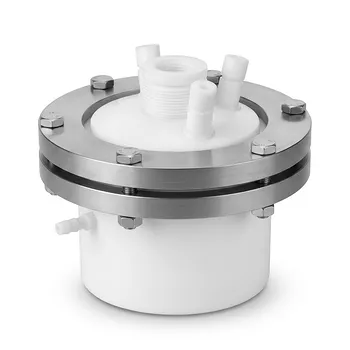
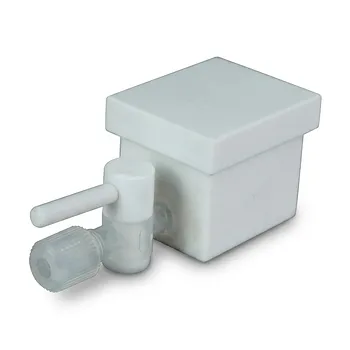
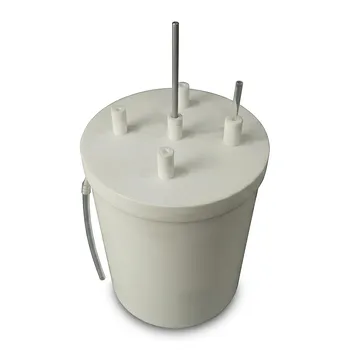
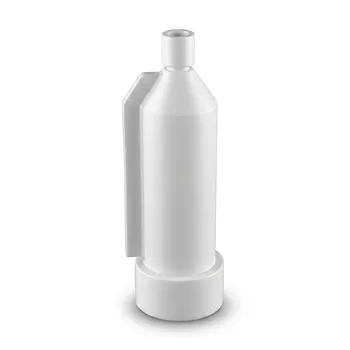
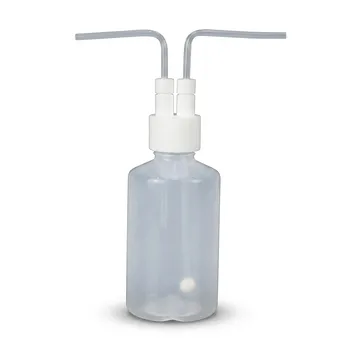
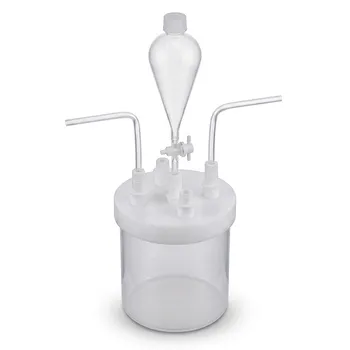
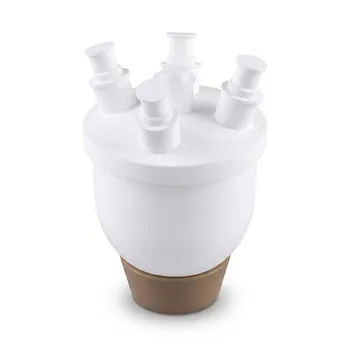
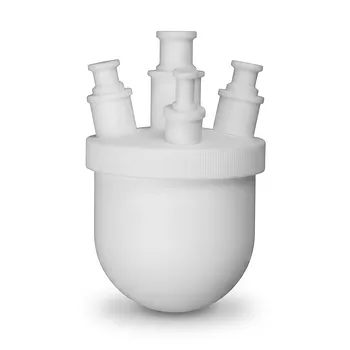
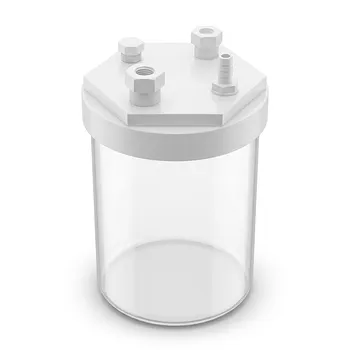
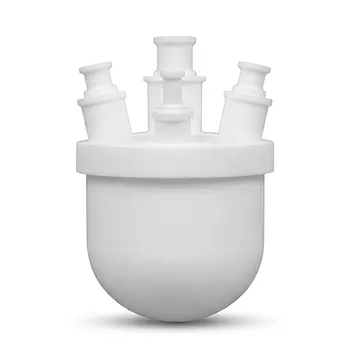
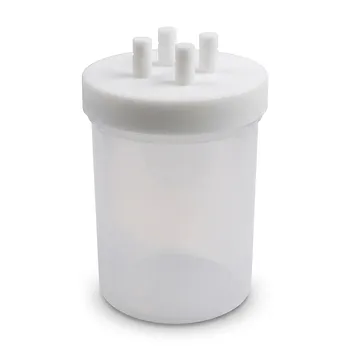
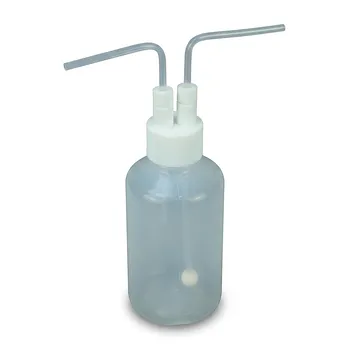
Sealed reaction vessels utilize atmospheric isolation and chemical absorption to quantify microbial respiration. By trapping all carbon dioxide ($CO_2$) produced by soil organisms within a closed environment, these vessels ensure that subsequent chemical analysis reflects only the biological activity of the soil sample, free from external contamination.
Core Takeaway: The fundamental mechanism relies on a strictly controlled closed-loop system where microbial $CO_2$ is captured by an alkaline absorbent for precise titration. This isolation is essential to distinguish soil-derived metabolic gases from ambient atmospheric carbon.
The Principle of Environmental Isolation
Eliminating Atmospheric Interference
The vessel creates a physical barrier that prevents external $CO_2$ from entering the reaction zone. This ensures that the final measurement is not skewed by the concentration of carbon dioxide naturally found in the surrounding ambient air.
Containment of Metabolic Byproducts
As microorganisms break down organic matter, they release $CO_2$ as a byproduct of respiration. The sealed environment ensures that 100% of these emitted gases remain within the vessel, where they can be effectively measured.
Defining Soil Biological Quality
By isolating the sample, the vessel allows researchers to calculate microbial metabolic intensity. This metric serves as a direct indicator of the soil’s biological health and its capacity to cycle nutrients.
Chemical Capture and Quantification
The Role of the Absorption Tube
An absorption tube, typically containing sodium hydroxide (NaOH), is placed inside the vessel to react with the released gases in real-time. This chemical "trap" converts the gaseous $CO_2$ into a stable carbonate form within the solution.
Quantification Through Titration
Following the incubation period, the internal solution is analyzed using analytical titration. By measuring how much of the sodium hydroxide was neutralized, the exact mass of $CO_2$ produced by the microbes can be calculated.
Real-Time vs. End-Point Measurement
While the absorption happens continuously, the final data is usually derived at the end of the test period. The vessel maintains a stable environment throughout this duration, ensuring the rate of respiration is captured accurately over time.
Understanding the Trade-offs
Oxygen Depletion Risks
In a completely sealed system, the available oxygen is finite and is consumed as microbes respire. If the incubation period is too long, the vessel may become anaerobic, which fundamentally changes microbial behavior and leads to inaccurate "natural" soil activity data.
Sensitivity to Seal Integrity
The accuracy of this mechanism is entirely dependent on the physical seal of the vessel. Even a minor leak allows atmospheric $CO_2$ to infiltrate the system, which will artificially inflate the results and suggest higher microbial activity than actually exists.
Temperature and Pressure Fluctuations
Sealed vessels are sensitive to internal pressure changes caused by temperature shifts during incubation. Maintaining a constant temperature is vital to ensure that gas absorption rates remain consistent and that the seal remains intact.
Applying This Method to Your Project
Making the Right Choice for Your Goal
To achieve the most reliable data from sealed reaction vessels, consider your specific research objectives:
- If your primary focus is baseline soil health assessment: Ensure the incubation period is short enough to prevent oxygen depletion while allowing for measurable $CO_2$ accumulation.
- If your primary focus is comparative chemical analysis: Use standardized NaOH concentrations across all vessels to ensure that titration variances reflect only microbial differences.
- If your primary focus is high-precision longitudinal studies: Prioritize high-quality, laboratory-grade seals and rigorous temperature controls to eliminate external environmental variables.
By mastering the balance between isolation and gas capture, you can transform a simple sealed vessel into a powerful diagnostic tool for soil ecology.
Summary Table:
| Mechanism Component | Function | Key Requirement |
|---|---|---|
| Environmental Isolation | Prevents atmospheric $CO_2$ contamination | High-integrity airtight seals |
| Chemical Absorption | Traps microbial $CO_2$ using NaOH | Stable alkaline absorption tube |
| Quantification | Calculates metabolic intensity | Accurate analytical titration |
| Incubation Control | Maintains natural aerobic state | Precise timing to avoid oxygen depletion |
Elevate Your Soil Research with KINTEK’s High-Performance Fluoropolymers
Precise measurement of microbial activity demands absolute chemical inertness and leak-proof reliability. KINTEK specializes in manufacturing high-performance laboratory supplies crafted exclusively from PTFE and PFA, ensuring zero contamination for your most sensitive trace analyses.
Whether you need high-purity sealed reaction vessels, custom digestion tubes, or PFA bottles for chemical absorption, our end-to-end custom CNC fabrication can deliver exactly what your project requires. From everyday labware like beakers and stir bars to complex, non-standard reaction apparatus and battery testing fixtures, we provide the durability and precision soil scientists trust.
Ready to upgrade your lab setup? Contact KINTEK today to discuss your custom fluoropolymer needs!
References
- Leidy Yibeth Deantonio Florido, Diego Alejandro Salinas Velandia. Examining Heavy Metals in Guava: Soil Quality and Climatic Effects. DOI: 10.1007/s42729-025-02513-w
This article is also based on technical information from Kintek Knowledge Base .
Related Products
- Custom PTFE Reaction Apparatus Flange Sealed Corrosion Resistant Jacketed Vessel with Stirring Bar and Thermometer Ports
- Corrosion Resistant PTFE Evaporation Cell Electrophoresis Tank 400ml Flame Retardant Insulated Reaction Vessel Customizable
- PTFE 10L Reaction Vessel with Stirring Paddle Customizable Corrosion Resistant High Temperature Reactor for Biopharmaceutical and Chemical Processing
- High Purity PTFE Corrosion Resistant Reaction Vessel with Luer Fittings and Caps for Trace Analysis
- Custom PTFE Multi Port Reaction Bottle Caps Corrosion Resistant High Purity GL32 GL45 Laboratory Closures
People Also Ask
- Why are high-purity PTFE or PFA reaction vessels recommended for the synthesis of PANI-TiC hybrid materials? - Guide
- Why are fluoroplastic (PTFE) reaction vessels recommended for Methylene Blue (MB) adsorption kinetic experiments?
- Why is a PTFE reaction vessel required for Ti3C2Tx MXene synthesis? Ensure Safe HF Etching & High Purity
- What reaction vessel and fluid handling considerations are necessary for living cationic polymerization of fluorinated monomers involving Lewis acid catalysts? Key design and safety tips
- Ion Activation Reaction Vessel Requirements: Why PTFE is Critical for Membrane Performance