UV-irradiated VDF and VDF-HFP copolymerization is controlled by light-gated peroxide radical generation. Continuous UV exposure cleaves peroxide initiators into radicals that initiate VDF and HFP addition, while turning off the light rapidly suppresses further radical production because the peroxide has little thermal decomposition at room temperature. Tetrafunctional initiators such as BTBDMH produce a higher apparent polymerization rate than difunctional TBPO under comparable molar conditions, while molecular weight and dispersity remain comparatively stable across conversion.
The central kinetic feature is an on/off radical source: UV light controls peroxide dissociation, peroxide functionality controls the number of initiating radical sites, and fluoropolymer reaction components preserve the optical, chemical, and fluid-handling conditions required for reproducible synthesis.
How the UV-Controlled Kinetics Work
Peroxide activation supplies the initiating radicals
Dialkyl peroxide initiators are relatively stable in the dark at room temperature. UV irradiation supplies the energy required for peroxide bond cleavage, generating reactive radical species.
For TBPO-based systems, the initially formed peroxide-derived radicals can undergo fragmentation that produces highly reactive carbon-centered radicals, including methyl radicals. These radicals add to the carbon-carbon double bond of VDF or HFP and create the first fluorinated polymer-chain radical.
Continuous irradiation maintains radical flux
The polymerization depends on a continuing supply of radicals rather than on a single initiation event. Under illumination, peroxide dissociation sustains chain initiation and allows existing chain radicals to continue propagating through monomer addition.
When UV exposure stops, radical generation falls sharply. Because the peroxide initiator undergoes negligible thermal dissociation at room temperature, monomer conversion and polymer growth rapidly approach a standstill.
VDF and HFP undergo radical-chain propagation
After initiation, a chain-end radical adds to VDF or HFP, producing a new radical at the end of the growing fluorinated chain. Repeated additions build the VDF-rich backbone and incorporate HFP units into the copolymer.
The observed rate therefore reflects several coupled processes: peroxide photolysis, radical initiation efficiency, monomer propagation, termination, and the changing composition of the reaction mixture.
The measured rate is an apparent rate
The reported values, such as (k_p^{\mathrm{app}} = 0.053\ \mathrm{h}^{-1}) for TBPO and (0.111\ \mathrm{h}^{-1}) for BTBDMH, should be interpreted as apparent polymerization-rate constants for the complete experimental system.
They are not necessarily intrinsic propagation constants for an individual VDF or HFP radical. They also incorporate initiator activation, radical production, reaction conditions, and other system-level effects.
Why Initiator Functionality Changes the Rate
Difunctional initiators provide fewer radical sites
A difunctional peroxide such as TBPO can generate two initiating sites per initiator molecule in the idealized functionality comparison. Its measured apparent rate constant in the reference system is (0.053\ \mathrm{h}^{-1}).
The number of effective radicals can be lower than the theoretical maximum because peroxide cleavage, radical escape, side reactions, and termination are not perfectly quantitative.
Tetrafunctional initiators increase initiation capacity
BTBDMH contains four peroxide-derived initiating functionalities. At equivalent molar ratios, this gives the system a greater potential radical-generation capacity than a difunctional initiator.
The reported apparent rate constant for BTBDMH is (0.111\ \mathrm{h}^{-1}), approximately twice the TBPO value. This indicates that initiator functionality materially affects the observed kinetics under otherwise comparable conditions.
Higher rate does not necessarily mean poorer control
Despite the higher apparent rate with BTBDMH, the reference reports stable number-average molecular weight, (M_n), and polydispersity index, PDI, across conversion levels.
This suggests that the increased initiation capacity does not automatically produce progressive broadening or uncontrolled molecular-weight growth in the tested photo-controlled system. The result depends on maintaining a suitable balance between initiation, propagation, and termination.
What Happens at the Chain Level
Initiation
UV light activates the peroxide, and the resulting radicals enter the monomer phase. A radical adds to a VDF or HFP molecule, converting the monomer double bond into a new carbon-centered chain radical.
The first successful addition is kinetically important because it links peroxide activation to productive fluoropolymer growth.
Propagation
The chain radical repeatedly adds fluorinated monomer. Each addition regenerates a radical at the chain end, allowing the chain to continue growing as long as monomer and active radicals remain available.
The relative incorporation of VDF and HFP depends on their reactivities and concentrations, although the provided kinetic data primarily establish the light and initiator-functionality effects.
Termination and deactivation
Growing radicals can be removed through termination reactions or other radical-consuming pathways. These processes limit chain growth and influence (M_n), PDI, and the final conversion.
When irradiation is interrupted, the dominant change is the loss of new peroxide-derived radicals. Existing radicals may terminate, but they are no longer efficiently replenished, so the overall polymerization rate collapses.
How Fluoropolymer Components Enable Photo-Initiated Synthesis
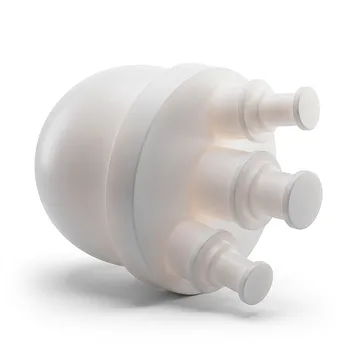
PFA provides optical access
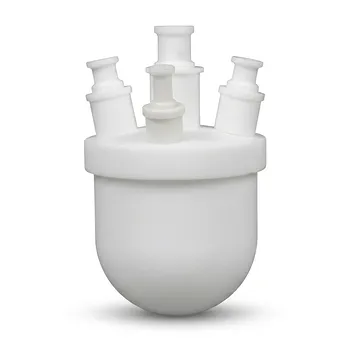
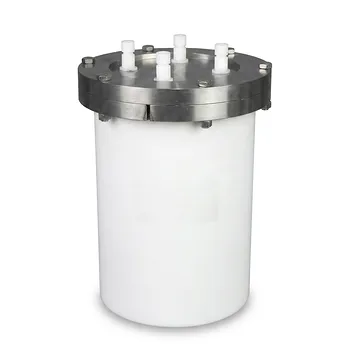
Custom PFA reaction vessels offer high UV clarity and transparency. This allows the irradiation source to reach the peroxide initiator and reaction mixture with less optical interference from the vessel wall.
Uniform and predictable light delivery is important because the peroxide activation rate depends on the local UV exposure.
PTFE and PFA resist aggressive chemistry
Fluoropolymer components are chemically inert toward organic peroxides and fluorinated gases under the relevant reaction conditions. This reduces the likelihood that the vessel, tubing, or fittings will be attacked or participate in unwanted reactions.
Chemical resistance also helps preserve the intended concentrations of initiator, solvent, and monomer during the reaction.
Fluid-transfer hardware preserves reaction control
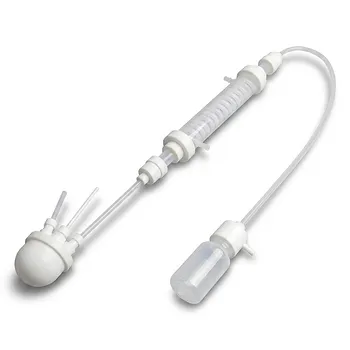
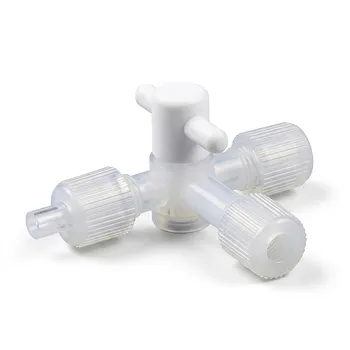
PFA or PTFE tubing, fittings, and transfer lines support leak-free handling of volatile fluorinated monomers and peroxide-containing solutions. Reliable fluid control is essential because changes in composition, pressure, or dosing can alter the radical kinetics.
These components also reduce contamination risks that could interfere with sensitive radical processes.
Low-contamination construction protects the mechanism
Trace metals and reactive surface contaminants can consume radicals or alter catalyst-mediated activation pathways. High-purity PFA and PTFE equipment helps minimize these sources of kinetic variability.
This is particularly relevant when the synthesis is extended to photomediated PVDF block-copolymer chemistry involving PVDF iodine end groups and transition-metal carbonyl activators.
How These Principles Extend to PVDF Block Copolymers
Catalyst activation adds another kinetic control layer
In PVDF block-copolymer synthesis, transition-metal carbonyl compounds such as ( \mathrm{Mn_2(CO)_{10}} ) can activate PVDF iodine end groups, including PVDF-(\mathrm{CF_2-I}) and PVDF-(\mathrm{CH_2-I}).
The activation rate depends on solvent, monomer identity, and catalyst concentration. Solvents such as DMC and DMAc can therefore produce different photochemical outcomes even when the nominal catalyst loading is the same.
Monomer reactivity affects block growth
The supplementary reference identifies a reactivity order of vinyl acetate greater than methyl acrylate, which is greater than styrene, under the cited activation conditions.
Highly reactive monomers and hydrogen-donating solvents can reduce the catalyst loading needed to activate PVDF iodine ends. However, the resulting kinetics must still be balanced against unwanted transfer and termination pathways.
Excessively low catalyst loading can reduce fidelity
Insufficient catalyst may leave some PVDF iodine ends unactivated. Partial iodine degenerative transfer can then occur, producing incomplete block extension and homopolymer impurities.
The practical implication is that catalyst concentration must be selected for complete and controlled end-group activation, rather than minimized solely to reduce catalyst use.
Understanding the Trade-offs
More peroxide functionality can increase rate
A multifunctional initiator can raise the apparent polymerization rate by increasing the number of potential radical-generating sites. This can be useful when faster conversion is needed.
The trade-off is that higher radical flux can also increase termination or side reactions if the reaction is pushed beyond the conditions where molecular-weight control remains stable.
Continuous UV exposure limits process flexibility
The light-controlled mechanism provides a rapid stop in radical generation, but it also requires stable irradiation throughout the active growth period. Poor optical alignment, vessel opacity, or changing sample geometry can produce uneven activation.
A reaction setup should therefore be designed around consistent UV transmission rather than treating the vessel as a passive container.
Fluoropolymer equipment improves compatibility but adds design constraints
PFA and PTFE offer strong chemical resistance and low contamination risk, but the selected component must still be appropriate for pressure, temperature, mechanical strength, sealing, and UV exposure.
Material compatibility alone does not guarantee a safe or kinetically uniform reactor. Wall thickness, geometry, fitting design, and illumination distance can affect practical performance.
Apparent kinetics should not be overgeneralized
The difference between (0.053\ \mathrm{h}^{-1}) and (0.111\ \mathrm{h}^{-1}) describes the tested systems and conditions. It should not be treated as a universal multiplier for every VDF, HFP, peroxide, solvent, light source, or reactor design.
Comparisons are most meaningful when initiator loading, UV intensity, temperature, monomer concentration, solvent, and reactor geometry are held constant.
How to Apply This to Your Project
Select the setup according to the dominant objective:
- If your primary focus is rapid VDF or VDF-HFP conversion: Use a multifunctional peroxide such as BTBDMH and maintain consistent UV exposure, while monitoring whether the higher radical flux changes (M_n) or PDI.
- If your primary focus is on/off temporal control: Use a peroxide system whose thermal decomposition is negligible at the operating temperature and design the reactor for immediate, uniform UV switching.
- If your primary focus is molecular-weight and dispersity control: Treat initiator functionality, radical flux, and termination as a coupled system, and verify (M_n) and PDI across conversion rather than relying only on conversion rate.
- If your primary focus is reproducible fluoropolymer processing: Use UV-transparent PFA for irradiated reaction zones and chemically resistant PTFE or PFA for transfer, fitting, and storage components.
- If your primary focus is PVDF block-copolymer fidelity: Optimize solvent and catalyst concentration for complete PVDF iodine-end activation, because overly low catalyst loading can promote incomplete activation and homopolymer formation.
The most reliable photo-initiated fluoropolymer synthesis combines controlled peroxide photolysis with a reaction system that preserves light delivery, chemical composition, fluid containment, and low-contamination conditions.
Summary Table:
| Aspect | Key Findings |
|---|---|
| Radical Generation | UV light cleaves peroxides; thermal decomposition is negligible at RT. |
| Initiator Functionality | Tetrafunctional BTBDMH yields ~2x higher apparent rate vs difunctional TBPO. |
| Molecular Weight Control | Mn and PDI remain stable across conversion despite higher radical flux. |
| Chain Growth | Radical addition to VDF/HFP; rate is apparent, not intrinsic. |
| Equipment Role | PFA/PTFE provide UV clarity, chemical resistance, and low contamination. |
Unlock precise photo-initiated fluoropolymer synthesis with KINTEK's high-purity PTFE and PFA labware. From custom reaction vessels and fluid handling to CNC-machined components, our solutions ensure UV transparency, chemical resistance, and low contamination for reproducible kinetics. Contact us to optimize your setup — Get in touch today!
Related Products
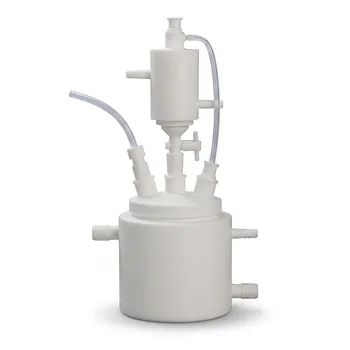
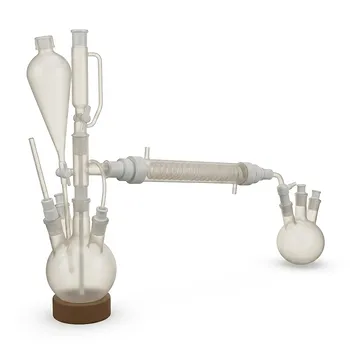
- PTFE Flat Bottom Flask Continuous Reaction System Hydrofluoric Acid Resistant with Dropping Funnel
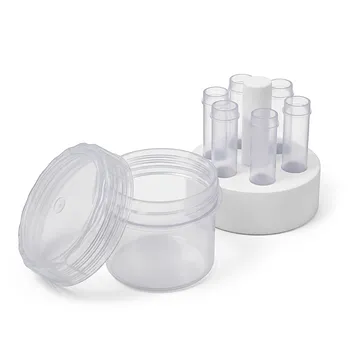
- High Purity Corrosion Resistant PFA Reaction Vessel with PTFE Holder and Integrated Sampling Tube for Trace Analysis
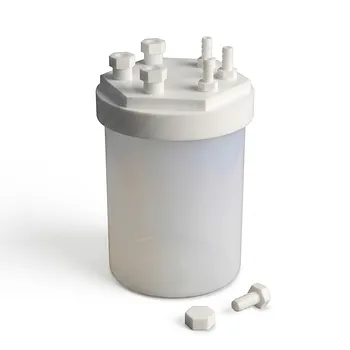
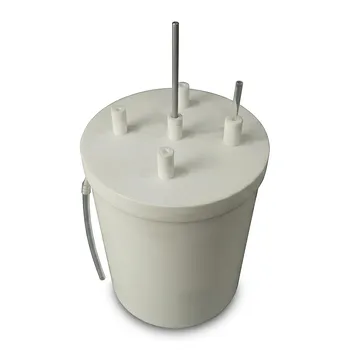
- PFA Chemical Reaction Tank with Customizable Fittings for Corrosive Solvent Synthesis and High Purity Lab Applications
- Customizable PTFE Reaction Vessel with Electric Stirring Paddle and Buchner Funnel Vacuum Filtration System
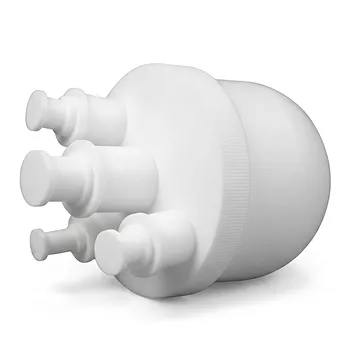
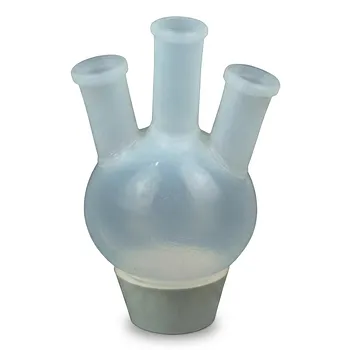
- High Purity PTFE Single Neck Reaction Flask Acid Resistant Customizable Fluoropolymer Laboratory Reactor
People Also Ask
- How do pyrolysis temperature and steam diluent ratios influence tetrafluoroethylene (TFE) conversion and yield in fluoropolymer monomer reaction apparatus? Optimize TFE yield with temperature and steam control
- How can autopolymerization of TFE gas be prevented during storage and handling? Master TFE safety with oxygen control, inhibitors, and robust system design.
- What reaction challenges in multi-step fluoropolymer monomer preparation necessitate chemically resistant fluoropolymer fluid handling systems and reaction apparatus?
- How do high-performance fluoropolymer fluid transfer components and reaction apparatus support the characterization and testing of electroactive polymer sensors and biosensors? Achieve Reliable, Low-Contamination Testing
- Why use high chemical inertness reactors for hydrogen production? Prevent catalyst poisoning with PFA/PTFE.