Multi-step fluoropolymer monomer preparation is difficult because the chemistry combines sensitive intermediates, aggressive reagents, contamination risks, and demanding transfer conditions. Traditional TFVE routes can produce poor yields in the presence of electron-withdrawing groups, require cumbersome Br–F elimination, and leave tetrafluorovinyl ether impurities that cause low molecular weight polymers. Alternative organometallic and transition-metal-catalyzed routes improve synthetic flexibility but increase the need for chemically inert, leak-tight reaction and fluid handling equipment.
The equipment challenge is not simply resistance to one reagent. It is maintaining chemical purity, seal integrity, and controlled transfers across several reaction, purification, and intermediate-storage steps involving fluorinated, organometallic, corrosive, or volatile materials.
Why Conventional Monomer Routes Create Handling Problems
Electron-Withdrawing Groups Reduce Reaction Reliability
Traditional fluoroalkylation and dehalogenation routes often perform poorly when electron-withdrawing groups are present. Reduced conversion and selectivity can force additional reaction and purification cycles, increasing exposure of intermediates to vessel walls, tubing, seals, and transfer fittings.
Chemically resistant fluoropolymer surfaces help prevent those contact points from contributing contamination or unwanted side reactions during repeated processing.
Br–F Elimination Is Cumbersome
Br–F elimination introduces an additional conversion step that can be operationally demanding. The reaction sequence must be controlled closely to avoid incomplete transformation and to preserve the sensitive tetrafluorovinyl ether functionality.
Reaction vessels, adapters, and tubing must therefore tolerate the reagents and conditions used during elimination without degrading, swelling, or releasing extractable material into the product stream.
Tetrafluorovinyl Ether Impurities Affect Polymer Molecular Weight
Residual tetrafluorovinyl ether impurities are not merely analytical nuisances. They can contribute to the formation of polymers with undesirably low molecular weight, making purification and trace-contamination control central to the overall synthesis.
PFA tubing, PTFE vessels, and fluoropolymer adapters provide non-reactive contact surfaces that reduce the risk of introducing contaminants between reaction, transfer, and purification stages.
Why Alternative Synthetic Routes Increase Equipment Demands
Organometallic Intermediates Are Highly Sensitive
Alternative routes may convert compounds such as p-bromo(trifluorovinyloxy)benzene into lithium or Grignard intermediates. These species require controlled handling because unintended contact with reactive surfaces, residual contaminants, or incompatible materials can compromise the intermediate before the desired coupling step.
Fluid paths must remain clean and chemically compatible throughout reagent addition, intermediate transfer, and quenching or purification operations.
Palladium and Cobalt Couplings Add Process Complexity
Palladium- and cobalt-catalyzed couplings introduce additional components, including catalysts, ligands, bases, and reaction byproducts. These systems create more opportunities for trace metal contamination, adsorption, or carryover between steps.
High-purity fluoropolymer components help limit leaching from equipment and reduce the likelihood that the apparatus becomes a source of impurities during catalyst screening or monomer preparation.
Intermediate Transfers Are Part of the Reaction System
A reaction may be chemically well designed yet still fail during transfer. Narrow tubing, adapters, valves, seals, and temporary storage vessels all become part of the material-contact environment.
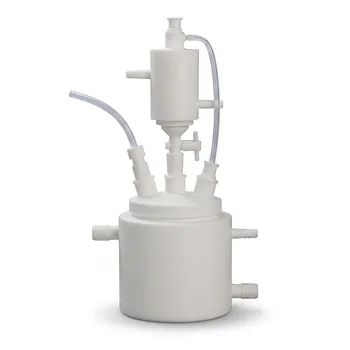
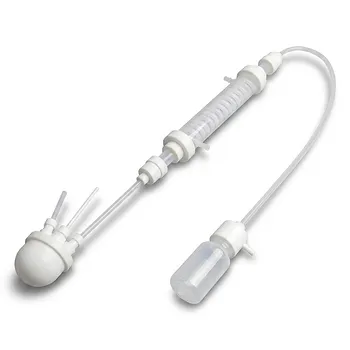
Using compatible PFA tubing, custom fittings, and PTFE reaction vessels creates a continuous, chemically resistant path between synthesis and purification rather than treating transfer as an afterthought.
What the Apparatus Must Withstand
Strong Fluorinated Reagents and Organometallic Chemistry
Fluorinated reagents and organometallic intermediates can be incompatible with ordinary plastics, elastomers, or metallic contact surfaces. Degradation may cause leaks, introduce particles or leachables, or alter reagent composition.
PTFE and PFA are used because their chemically inert surfaces can withstand many aggressive fluorinated and organometallic environments encountered during these conversions.
Corrosive Post-Modification Reagents
Related fluorinated polymer synthesis workflows may involve reagents such as lithium aluminum hydride for ester reduction or thionyl chloride for acid chloride formation. Polar aprotic solvents, including dimethylformamide and tetrahydrofuran, can also be present.
The apparatus must resist both the active reagents and the solvents that transport them. Material compatibility should be assessed for the complete chemical mixture, temperature, exposure time, and pressure rather than for an isolated reagent alone.
Volatile or Gaseous Fluoromonomers
Some fluoropolymer synthesis programs also handle low-boiling gaseous monomers such as vinylidene fluoride. Its very low boiling point requires pressure-capable systems and careful control of containment, condensation, and transfer.
High-purity fluoropolymer tubing and fittings can support chemically clean fluid paths, but pressure-rated reactor construction, valves, seals, and operating procedures remain essential for safe gas handling.
Reactive Initiators and Solvents
Radical polymerizations and catalyst studies may involve aggressive initiators, organic solvents, and reactive fluorinated intermediates. Solvent degradation or trace contamination can affect reaction behavior and make results difficult to reproduce.
Chemically inert apparatus reduces the chance that the equipment alters the solvent or introduces metal and polymeric contaminants into the reaction.
How Fluoropolymer Components Address These Challenges
Non-Reactive Contact Surfaces
PTFE and PFA provide low-reactivity surfaces for reaction vessels, tubing, adapters, and fittings. This is particularly valuable when a monomer or intermediate passes through several pieces of equipment before isolation.
The objective is to preserve the intended chemical composition from reaction through purification.
Leak-Tight Connections
Sensitive fluorinated chemistry often requires containment of volatile reagents, solvents, or gaseous monomers. Poor seals can cause hazardous leaks, concentration changes, or exposure to atmospheric moisture and contaminants.
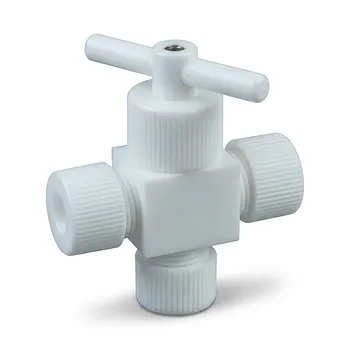
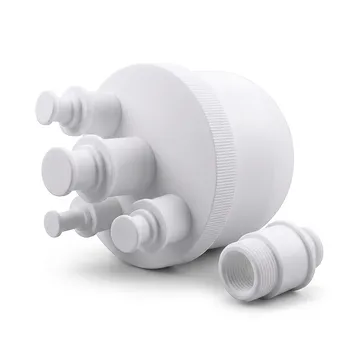
Custom-machined fluoropolymer fittings and compatible sealing components help maintain system integrity during transfer and reaction operations.
Reduced Cross-Contamination
Multi-step synthesis increases the risk that residues from one operation carry into the next. This can be especially damaging when trace tetrafluorovinyl ether, metal, catalyst, or solvent contamination affects later polymerization.
Dedicated or thoroughly cleanable fluoropolymer fluid paths help reduce carryover between intermediate transfer and purification cycles.
Thermal and Chemical Stability
Reaction conditions may include heating, cooling, pressure changes, or exothermic reagent additions. Equipment must maintain its mechanical and chemical performance throughout those conditions.
PFA and PTFE offer strong chemical resistance and useful thermal stability, although the specific grade, geometry, pressure rating, and temperature limits must still be verified for the process.
Understanding the Trade-Offs
Fluoropolymers Are Not Universal Materials
PTFE and PFA are highly resistant to many chemicals, but no material should be treated as compatible with every reagent or operating condition. Direct exposure to extremely reactive environments, elevated temperatures, mechanical stress, or pressure may require a more detailed compatibility assessment.
This is particularly important for systems involving elemental fluorine, concentrated halogenating chemistry, or high-pressure gases.
Mechanical Design Still Matters
Chemical resistance does not compensate for an unsuitable design. Tubing diameter, wall thickness, bend radius, fitting geometry, valve selection, and seal design determine whether the system can safely contain and deliver the process fluids.
Gas-phase or pressure-driven operations require components specifically rated for the intended pressure and temperature, not merely components made from a chemically resistant polymer.
Cleanliness Must Be Managed Operationally
Fluoropolymer equipment reduces contamination risk but does not eliminate it. Residual solvents, catalyst particles, cleaning agents, and previous intermediates can still compromise a sensitive monomer synthesis.
Cleaning, drying, inspection, material segregation, and—where necessary—dedicated fluid paths remain necessary parts of the process.
Customization Increases Responsibility
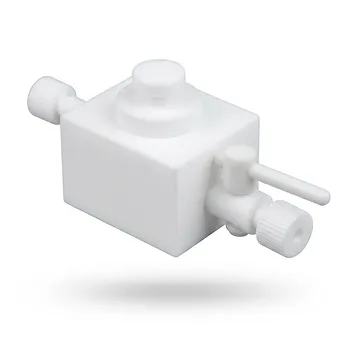
Custom-machined fittings and reaction vessels can solve difficult geometry and transfer problems, but machining quality and dimensional control directly affect sealing and cleanability. A custom part should be evaluated for surface finish, dead volume, connection reliability, and compatibility with the complete process.
Applying the Requirements to Equipment Selection
The right system should be selected around the entire synthesis sequence rather than a single reaction vessel.
- If your primary focus is monomer yield and selectivity: Use chemically inert PTFE or PFA contact surfaces to reduce side reactions and contamination during elimination, organometallic conversion, coupling, and purification steps.
- If your primary focus is polymer molecular weight: Prioritize clean, low-carryover fluid paths that minimize tetrafluorovinyl ether and other trace impurities reaching the polymerization stage.
- If your primary focus is organometallic intermediate stability: Use compatible fluoropolymer vessels, tubing, adapters, and seals with controlled transfer paths and carefully verified reagent compatibility.
- If your primary focus is volatile or gaseous monomer handling: Specify pressure-rated reactors, valves, fittings, and seals, then use chemically resistant fluoropolymer components where they meet the mechanical requirements.
- If your primary focus is reproducible catalyst screening: Control trace metal leaching, solvent degradation, residue carryover, and dead volume across the complete apparatus.
- If your primary focus is operator and process safety: Design for leak-tight containment, verified pressure limits, appropriate ventilation, and compatibility with the most aggressive reagent in the process.
The central engineering principle is to preserve chemical integrity at every stage, from the first reagent addition through final monomer purification and transfer.
Summary Table:
| Challenge | Consequence | Fluoropolymer Solution |
|---|---|---|
| Electron-withdrawing groups | Poor yield, more purification cycles | Inert surfaces minimize side reactions |
| Br–F elimination | Cumbersome, sensitive intermediates | PTFE/PFA resist reagents, prevent degradation |
| Tetrafluorovinyl ether impurities | Low molecular weight polymers | Clean fluid paths reduce contamination |
| Sensitive organometallic intermediates | Decomposition before coupling | Compatible vessels and tubing |
| Catalytic couplings | Trace metal contamination | High-purity fluoropolymers limit leaching |
| Corrosive post-modification reagents | Equipment degradation | Chemical resistance of PTFE/PFA |
| Volatile/gaseous monomers | Leakage, pressure issues | Leak-tight seals and pressure-rated components |
Elevate your fluoropolymer monomer synthesis with KINTEK's high-purity PTFE/PFA labware and custom-machined fluid handling systems. Our inert, leak-tight components safeguard sensitive intermediates and ensure reproducibility. Contact our specialists today to optimize your process — Get in touch now!
Related Products
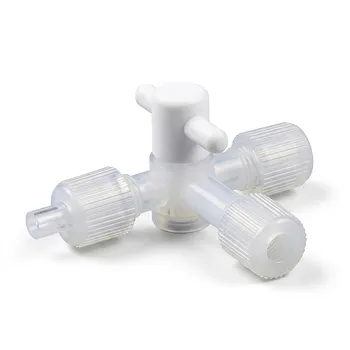
- Corrosion Resistant High Purity PFA Valve and Weldable Transparent Tubing for Semiconductor Fluid Transfer
- High Purity PFA Chromatography Column with Collection Bottle Corrosion Resistant Fluoropolymer Filtration System for Trace Analysis
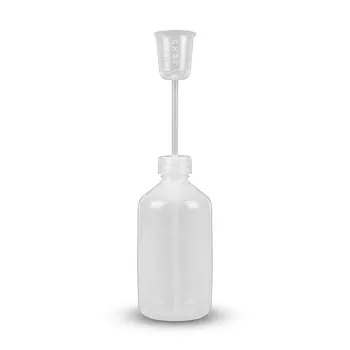
- Corrosion Resistant PFA Bottle Top Dispenser Translucent Squeeze Liquid Extraction System for Ultra Pure Chemical Handling
- PTFE PFA Vacuum Filtration System Corrosion Resistant Customizable Shatterproof Laboratory Device
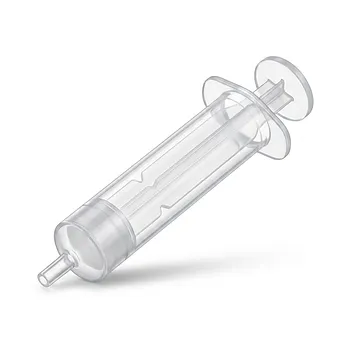
- Corrosion Resistant PFA Syringe Translucent Visual Fluoropolymer Labware 10ml Chemical Handling Tool
People Also Ask
- Why are high-purity PFA fluid transfer components preferred for battery electrolytes? Ensure Purity & Data Accuracy
- How do high-precision PFA fluid transfer components, such as tubing and fittings, affect the results of continuous-flow synthesis?
- How do PFA fluid transfer components contribute to chemical research precision? Achieve high-purity results today.
- What role do PFA tubing and valves play in high-precision laboratory fluid transfer systems? Ensure Ultra-Pure Results
- What advantages do PTFE and PFA tubing offer for organic solvents? Superior chemical resistance, purity, and high-temperature stability.