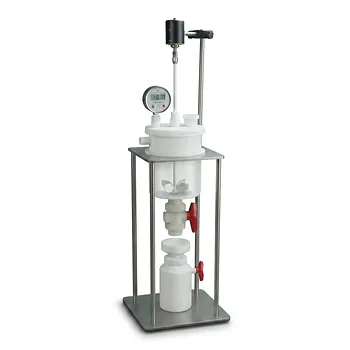
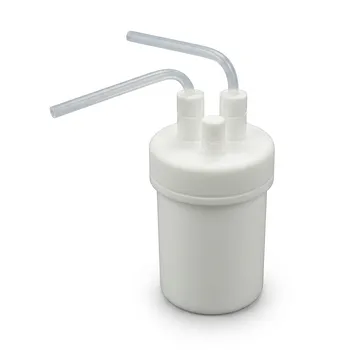
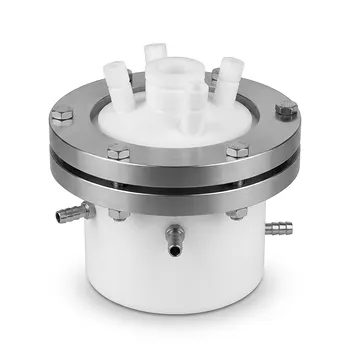
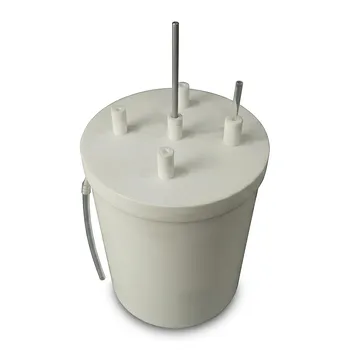
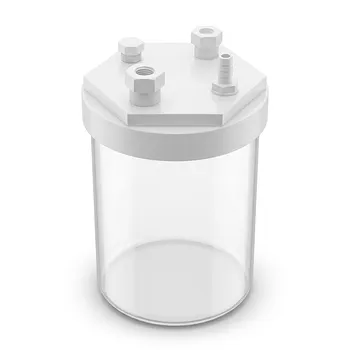
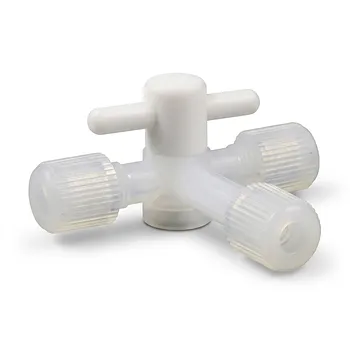
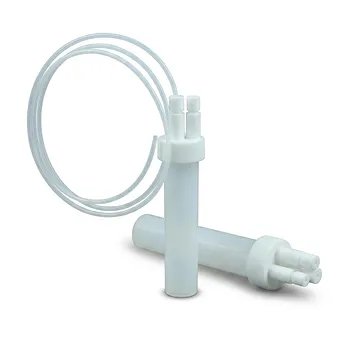
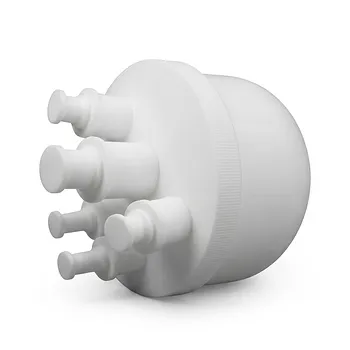
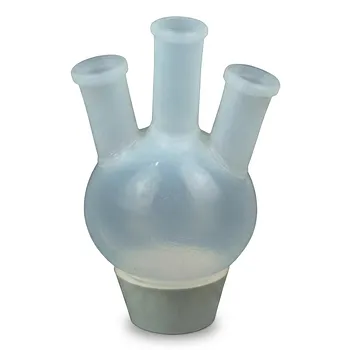
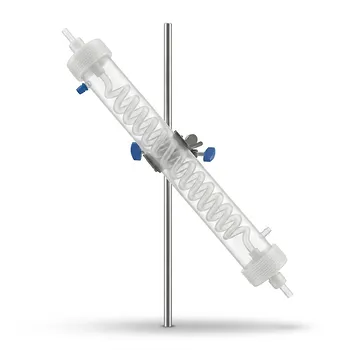
High-performance fluoropolymer components make sensor testing cleaner, more stable, and more repeatable. PTFE and PFA tubing, fittings, valves, reaction vessels, and custom electrochemical fixtures isolate the sensor from corrosive fluids, ionic contamination, leakage, and unwanted electrical interactions. This allows researchers to measure small changes in capacitance, conductivity, pressure, temperature, dielectric response, and electromechanical output with greater confidence.
The central benefit is control: fluoropolymer fluid-transfer and reaction hardware creates a chemically inert, electrically insulating, low-contamination test environment so that measured signals reflect the electroactive polymer sensor—not the surrounding apparatus.
Why Sensor Characterization Requires Controlled Fluid Handling
Electroactive polymers are sensitive to their interfaces
Materials such as PVDF and PVDF copolymers are used in capacitive biosensors, microfluidic temperature sensors, pressure sensors, and tactile devices. Their performance depends not only on the polymer itself, but also on the liquid, electrodes, channel walls, pressure conditions, and electrical environment surrounding the sensing interface.
Small changes in ionic concentration, dielectric properties, fluid pressure, or interfacial chemistry can alter the measured response. The fluid-delivery system must therefore avoid introducing uncontrolled variables.
Liquid contamination can distort electrical measurements
Liquid electrolytes and biological analytes may be sensitive to trace ionic contamination. If tubing, fittings, seals, or vessel walls release extractables or react with the sample, the resulting changes can affect conductivity, capacitance, impedance, sensitivity, and signal-to-noise ratio.
High-purity PTFE and PFA components reduce this risk through their low surface reactivity and low tendency to contaminate fluids. They help ensure that the measured electrical behavior comes from the sensor and analyte system rather than from the fluid path.
How Fluoropolymer Fluid-Transfer Components Improve Testing
PTFE and PFA protect chemical integrity
PTFE and PFA provide strong resistance to solvents, acids, bases, oxidizing environments, and many aggressive electrolytes. This is important when biosensors or electroactive polymer devices are tested under chemically demanding conditions.
Because the materials are resistant to degradation, they are less likely to introduce reaction products or impurities during repeated measurements. This supports more consistent comparisons between samples, devices, and test cycles.
Low surface energy helps reduce fouling
Fluoropolymer surfaces are non-stick and have low surface energy. These properties can reduce sample adhesion, scaling, and fouling inside tubing, fittings, channels, and reaction chambers.
Cleaner fluid paths help maintain predictable flow and reduce the risk that residual analyte or biological material will carry over into subsequent tests.
Electrical insulation reduces parasitic effects
PTFE and PFA are highly electrically insulating materials. In electrochemical and capacitive measurements, this helps reduce unintended current paths and electrical coupling through the fluid-transfer hardware.
The result is a better-controlled measurement environment for detecting small electrical changes, particularly when the sensor signal is weak or the system includes liquid electrolytes.
Stable flow improves measurement repeatability
Smooth, low-friction fluoropolymer surfaces support consistent fluid movement through microchannels and narrow tubing. Stable flow helps limit pressure fluctuations, bubbles, and transient disturbances that could otherwise appear as sensor responses.
This is especially relevant for dynamic pressure, tactile, and microfluidic sensors, where the timing and magnitude of mechanical or thermal inputs must be controlled.
How Custom Reaction Apparatus Supports Advanced Testing
Custom cells align the hardware with the sensor geometry
Standard laboratory vessels often cannot reproduce the required electrode spacing, channel dimensions, sample volume, or fluid path. CNC-machined PTFE and PFA cells and fixtures can be designed around the specific sensor and experimental setup.
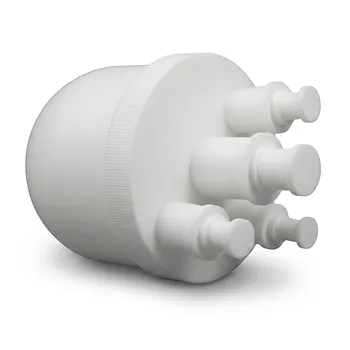
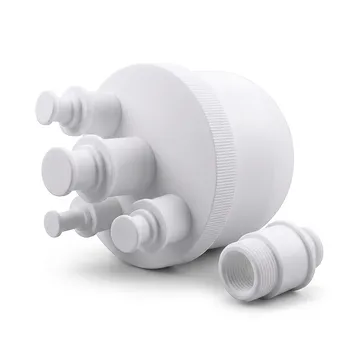
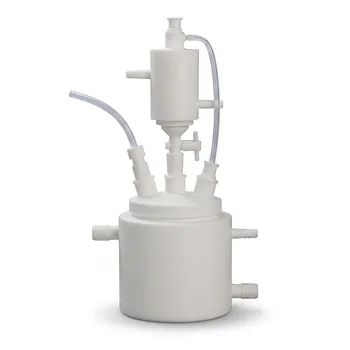
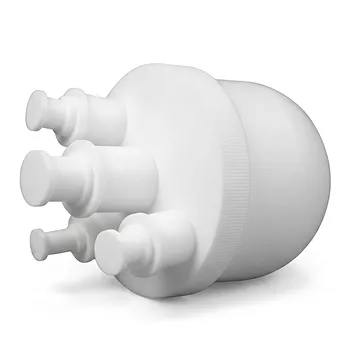
Custom apparatus may incorporate electrode accessories, microchannels, reaction chambers, fluid ports, sample holders, and sealing features. This reduces dead volume and allows the researcher to control how the analyte reaches the active sensing area.
Reaction chambers remain chemically non-participating
In electrochemical testing, the chamber material should not consume reactants, release contaminants, or participate in side reactions. Fluoropolymers provide a chemically inert boundary for experiments involving aggressive electrolytes and reactive intermediates.
This supports more reliable evaluation of sensor stability, response drift, selectivity, and long-duration operation.
High-temperature capability expands test conditions
PTFE and PFA offer useful thermal resistance in laboratory reaction and electrochemical systems. This allows testing across a broader range of temperatures, provided that the specific material grade, pressure, and operating limits are verified for the application.
Temperature-stable apparatus is important for separating true sensor behavior from changes caused by fluid-line softening, vessel deformation, or material degradation.
What This Enables Researchers to Measure
Electrical and dielectric properties
A clean, insulating fluid path helps researchers characterize capacitance, impedance, dielectric response, leakage, and conductivity-related behavior. These measurements are central to capacitive biosensors and polymer-based sensing interfaces.
Reducing background contamination and parasitic electrical effects improves the credibility of small-signal measurements.
Electromechanical conversion efficiency
PVDF-based devices can convert mechanical deformation into electrical signals and can also respond mechanically to applied electrical excitation. Controlled fluid pressure, flow, and contact conditions make it easier to evaluate this electromechanical conversion.
The apparatus can therefore support testing of sensitivity, hysteresis, response time, repeatability, and signal stability.
Chemical and biological response
For biosensors, the fluid-delivery system determines how consistently the analyte, buffer, electrolyte, or biological sample reaches the sensing surface. Chemically compatible components help preserve the sample composition and minimize contamination from the test hardware.
This is essential when comparing responses across concentrations or determining detection limits.
Long-duration stability
Fluoropolymer tubing, valves, fittings, and reaction vessels can support extended testing in corrosive or oxidizing environments. Their resistance to degradation and leakage helps maintain stable conditions during prolonged experiments.
Long-term operation is particularly valuable for measuring baseline drift, fouling, material aging, and signal retention.
Building a Reliable Test System
Match the material to the fluid and process
PTFE and PFA are both chemically resistant, but the correct selection still depends on temperature, pressure, permeation, mechanical requirements, flexibility, and the specific chemicals involved. Material compatibility should be checked against the complete operating envelope.
The objective is not simply to select a fluoropolymer, but to select a component design and material grade that remain stable throughout the test.
Control the entire wetted path
Using fluoropolymer components only at the reaction chamber is insufficient if upstream tubing, fittings, valves, or storage containers introduce contaminants. Every wetted component should be evaluated as part of the same fluid path.
This includes connectors, seals, reservoirs, pump interfaces, sampling ports, and cleaning procedures.
Design for measurement access
The apparatus should provide access to electrodes, sensor surfaces, reference points, and electrical connections without compromising fluid containment. A well-designed fixture separates the fluidic, mechanical, and electrical functions as much as possible.
That separation simplifies troubleshooting and makes it easier to determine whether an observed change originates from the sensor, analyte, or test system.
Understanding the Trade-offs
Chemical resistance does not eliminate all system risks
Fluoropolymers reduce contamination and corrosion risks, but they do not guarantee perfect purity under every condition. Trace extractables, surface residues, permeation, or contamination introduced during machining and assembly can still affect sensitive experiments.
Components should be cleaned, conditioned, and validated using blank tests before critical measurements.
PTFE and PFA have different mechanical characteristics
PTFE offers excellent chemical resistance and low friction, but it can be relatively soft and may exhibit creep under sustained load. PFA is also highly chemically resistant and is often useful where greater transparency, melt-processability, or dimensional control is required.
The choice should account for pressure, sealing force, dimensional stability, visibility, and fabrication method—not chemical resistance alone.
Fluoropolymer insulation can complicate grounding
Electrical insulation is beneficial for reducing parasitic current paths, but an electrochemical system still requires a deliberate grounding and shielding strategy. Poorly planned grounding can create noise, floating potentials, or unstable reference measurements.
The fluidic design and electrical instrumentation must therefore be engineered together.
Low-friction surfaces do not prevent every flow problem
Bubbles, dead zones, inadequate mixing, and pump pulsation can still distort measurements. Fluoropolymer components reduce some sources of instability, but channel geometry, degassing, flow control, and system layout remain important.
A stable material cannot compensate for a poorly designed fluidic system.
Making the Right Choice for Your Goal
The best configuration depends on what the experiment must isolate and measure.
- If your primary focus is low-noise electrical characterization: Use high-purity PTFE or PFA wetted components and electrically insulating fixtures to reduce ionic contamination, leakage, and parasitic coupling.
- If your primary focus is biosensor selectivity or detection limits: Control the complete wetted path with chemically compatible, low-fouling materials and validate the system with blanks and reference samples.
- If your primary focus is pressure, tactile, or microfluidic response: Use smooth, well-designed fluoropolymer channels and fittings to stabilize flow and minimize pressure disturbances.
- If your primary focus is corrosive or long-duration electrochemical testing: Select fluoropolymer tubing, valves, vessels, and custom cells rated for the actual chemical, temperature, and pressure conditions.
- If your primary focus is a non-standard sensor geometry: Use custom-machined PTFE or PFA reaction apparatus to integrate electrodes, microchannels, sample chambers, and sensor fixtures into one controlled platform.
With appropriate material selection, fluid-path control, and electrical design, fluoropolymer apparatus helps turn difficult electroactive sensor experiments into reliable and interpretable measurements.
Summary Table:
| Aspect | Benefit |
|---|---|
| Chemical Inertness | Resists solvents, acids, and bases, preventing contamination and degradation |
| Electrical Insulation | Reduces parasitic currents and noise, improving signal fidelity |
| Low Surface Energy | Minimizes fouling and sample carryover for cleaner tests |
| Smooth Flow | Ensures stable fluid delivery, reducing pressure fluctuations |
| Customization | CNC-machined PTFE/PFA cells fit specific sensor geometries |
| Thermal Resistance | Supports testing across broader temperature ranges |
Enhance your electroactive polymer sensor testing with KINTEK's high-purity PTFE/PFA fluid handling and custom reaction apparatus. Our precision-machined components ensure chemical inertness, electrical insulation, and stable flow for reliable measurements. From tubing and fittings to custom electrochemical cells, we provide the tools you need for accurate characterization. Contact us today to discuss your requirements and elevate your research.
Related Products
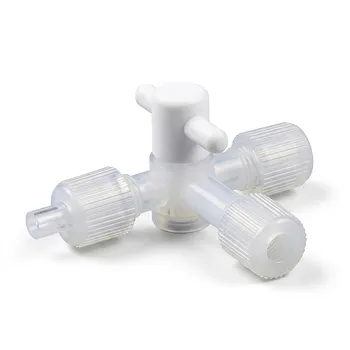
- Corrosion Resistant High Purity PFA Valve and Weldable Transparent Tubing for Semiconductor Fluid Transfer
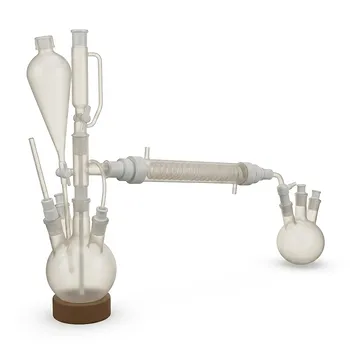
- PTFE Distillation Condensation Apparatus High Temperature Hydrofluoric Acid Resistant Fluorination Reaction Flask
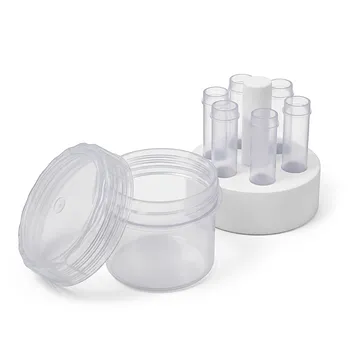
- High Purity Corrosion Resistant PFA Reaction Vessel with PTFE Holder and Integrated Sampling Tube for Trace Analysis
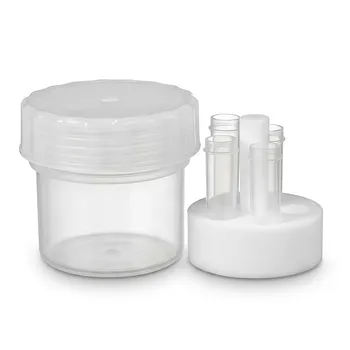
- Corrosion Resistant PTFE Support with PFA Transparent Reaction Tank and High Purity PFA Sampling Tube for Trace Analysis
- Customizable PTFE Reaction Vessel with Electric Stirring Paddle and Buchner Funnel Vacuum Filtration System
People Also Ask
- Why are high-purity PFA fluid transfer components preferred for battery electrolytes? Ensure Purity & Data Accuracy
- How do high-precision PFA fluid transfer components, such as tubing and fittings, affect the results of continuous-flow synthesis?
- How do PFA fluid transfer components contribute to chemical research precision? Achieve high-purity results today.
- What role do PFA tubing and valves play in high-precision laboratory fluid transfer systems? Ensure Ultra-Pure Results
- What advantages do PTFE and PFA tubing offer for organic solvents? Superior chemical resistance, purity, and high-temperature stability.