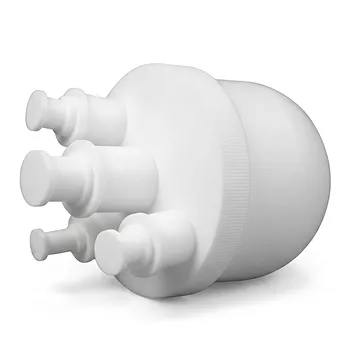
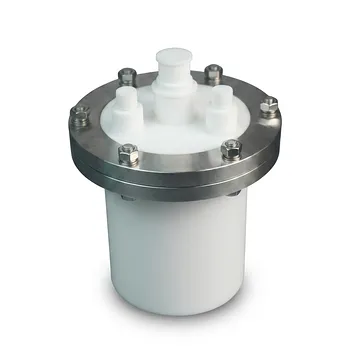
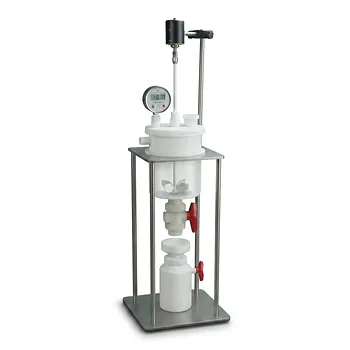
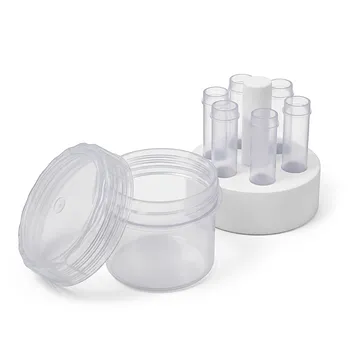
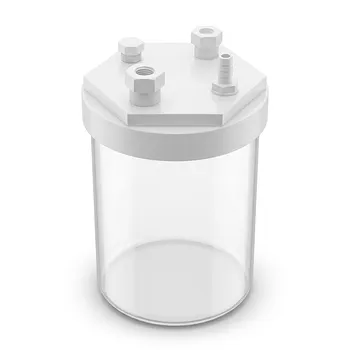
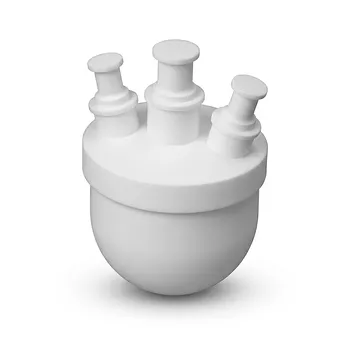
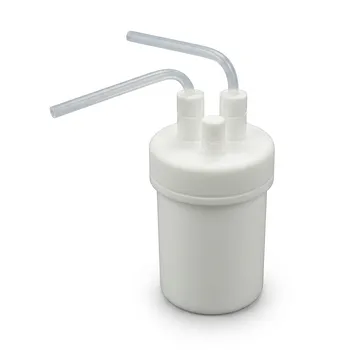
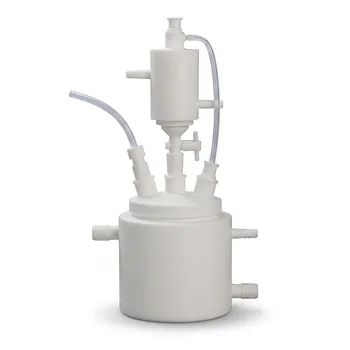
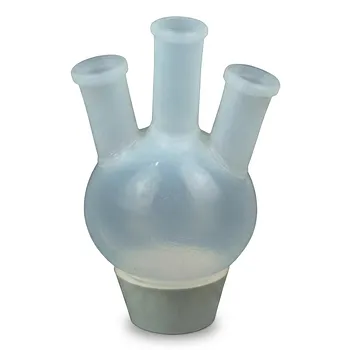
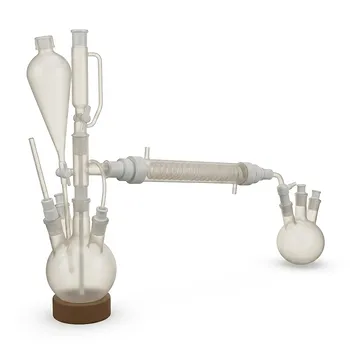
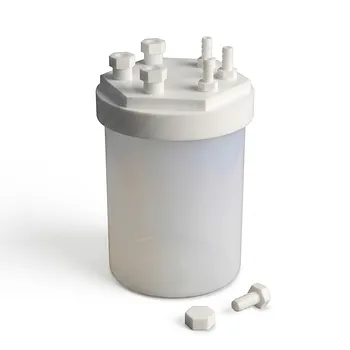
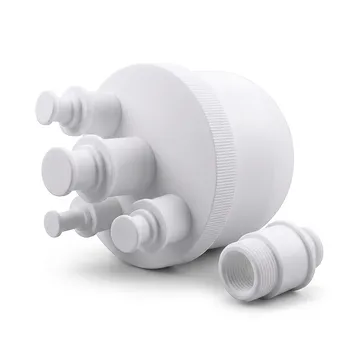
The use of fluoropolymer reactors is essential because peat water contains highly corrosive organic acids that degrade standard containers, while the complex biomass of coconut water requires an ultra-pure environment to prevent catalyst failure. Using inert materials like PTFE or PFA ensures that neither the acidic nor alkaline components of the electrolyte leach impurities into the system, which would otherwise compromise hydrogen purity and electrochemical efficiency.
Core Takeaway: To ensure the stability of hydrogen production from organic mixtures, reactors must be chemically inert to prevent the leaching of metal ions and silicates. Fluoropolymers provide a critical barrier that protects the catalyst from poisoning and maintains the precise conductivity required for the reaction.
The Corrosive Challenges of Peat and Coconut Water
The Impact of Humic and Fulvic Acids
Peat water is naturally rich in humic and fulvic acids, which create a highly corrosive environment for standard metal or low-grade plastic reactors. These organic compounds can react with the reactor walls, leading to structural degradation and the introduction of unwanted chemical byproducts into the hydrogen stream.
Interaction with Alkaline Electrolytes
Many biomass-to-hydrogen processes supplement the mixture with high-concentration alkaline electrolytes, such as Potassium Hydroxide (KOH). The combination of organic acids from the peat and the high pH of the electrolyte creates a "dual-threat" environment that rapidly erodes conventional glass or metallic surfaces.
Maintaining Electrolyte Conductivity
For efficient electrolysis, the ionic conductivity of the solution must remain stable throughout the process. Material leaching from non-inert reactor walls can introduce foreign ions that alter the electrolyte’s behavior, leading to unpredictable fluctuations in voltage and hydrogen yield.
Safeguarding the Catalytic Process
Preventing Catalyst Poisoning
High-performance catalysts used in hydrogen production are extremely sensitive to impurity deposition. When using glass containers, high-alkaline mixtures can leach silicates that migrate to the catalyst’s active sites, effectively "poisoning" the catalyst and halting the production of hydrogen.
Eliminating Metal Ion Contamination
Metallic reactor components, even those made of stainless steel, can release transition metal ions when exposed to the complex organic media of coconut water. These ions can compete with the intended electrochemical reactions or deposit on electrodes, leading to experimental errors and reduced system longevity.
Ensuring Long-Term Operational Stability
Hydrogen production research often requires long-term stability tests, such as 24-hour galvanostatic cycles, to prove commercial viability. Fluoropolymers like PTFE and PFA maintain their structural integrity and chemical inertness throughout these extended periods, ensuring that the results reflect the chemistry of the feedstock rather than the degradation of the vessel.
Understanding the Trade-offs
Cost vs. Durability
While fluoropolymer reactors offer superior performance, they typically command a higher initial capital cost compared to glass or standard polymers. However, this cost is usually offset by the extended service life of the apparatus and the reduction in failed experiments caused by contamination.
Thermal and Pressure Limitations
Although fluoropolymers are exceptionally inert, they have specific thermal thresholds that must be monitored. While they handle the heat of most electrolytic processes well, they may not be suitable for high-pressure or ultra-high-temperature gasification without specialized reinforcement.
How to Apply This to Your Project
To maximize the efficiency of your hydrogen production system, select your reactor materials based on the specific chemical stresses of your feedstock and electrolyte.
- If your primary focus is experimental precision: Use PTFE or PFA for all wetted components, including tubing and sensor sleeves, to eliminate the risk of silicate or metal ion leaching.
- If your primary focus is processing acidic peat water: Prioritize fluoropolymer linings to prevent humic acids from corroding the structural integrity of your containment system.
- If your primary focus is long-term stability testing: Invest in high-purity fluoropolymer storage tanks and reactors to ensure the electrolyte remains uncontaminated over hundreds of hours of operation.
By choosing chemically inert fluoropolymers, you ensure that your hydrogen production remains pure, your catalysts stay active, and your data reflects the true potential of your biomass feedstock.
Summary Table:
| Challenge | Impact on Electrolysis | Fluoropolymer (PTFE/PFA) Advantage |
|---|---|---|
| Organic Acids | Corrodes standard vessels; introduces impurities. | Exceptional resistance to humic and fulvic acids. |
| Alkaline Electrolytes | Leaches silicates from glass, poisoning catalysts. | Zero-leach surface maintains electrolyte purity. |
| Metal Ion Leaching | Competes with reactions; causes electrode errors. | Metal-free composition prevents ion contamination. |
| Process Stability | Fluctuating conductivity and reduced yield. | Maintains structural and chemical integrity over time. |
Elevate Your Research with KINTEK’s Fluoropolymer Expertise
Don't let leaching or corrosion compromise your hydrogen production data. KINTEK specializes in high-performance fluoropolymer materials designed to withstand the most aggressive chemical environments.
From everyday basic labware like beakers, crucibles, and reagent bottles, to high-purity fluid transfer components (tubing, fittings, valves) and specialized sample prep tools, we ensure your system remains contamination-free. For advanced researchers, we offer custom electrochemical cells, battery testing fixtures, and microwave digestion vessels crafted through our end-to-end CNC fabrication process.
Whether you need standard consumables or a bespoke laboratory setup tailored to complex biomass electrolysis, KINTEK delivers unmatched precision and durability.
Ready to protect your catalysts and ensure high-purity results?
Contact our experts today to discuss your project requirements!
References
- Politeknik Negeri Tanah Laut. Characteristics of Peat Water and Coconut Water Molecules in the Electrolysis Process to Produce Hydrogen Gas. DOI: 10.31940/logic.v25i2.78-84
This article is also based on technical information from Kintek Knowledge Base .
Related Products
- High Purity 4L PFA Reaction Tank for Proton Exchange Membrane Electrolysis Water Oxygen Separation Systems
- PTFE 10L Reaction Vessel with Stirring Paddle Customizable Corrosion Resistant High Temperature Reactor for Biopharmaceutical and Chemical Processing
- Custom PTFE Reaction System with Hose Barb Fittings Corrosion Resistant High Sealing 2L 4L Lab Reactor with Separatory Funnel
- Custom PTFE Electrolytic Cell Corrosion Resistant Low Background Reaction Vessel with Inlet Outlet Ports
- High Purity PTFE Single Neck Reaction Flask Acid Resistant Customizable Fluoropolymer Laboratory Reactor
People Also Ask
- Why Are High-Purity Fluoropolymer Vessels and Tubing Critical for Trace Analysis? Prevent Contamination Reliably
- What are the primary functional and temperature differences between PFA and FEP when selecting melt-processible fluoropolymers for custom laboratory apparatus?
- Why is the chemical stability of polymer endgroups critical when selecting melt-processible fluoropolymers like PFA for high-purity laboratory apparatus? Choose Stable Endgroups for Reliable Performance
- What are the characteristics of PFA material? A Guide to Its High-Performance Balance
- Why is Perfluoroalkoxy alkane (PFA) preferred over glass or stainless steel in pharmaceutical process development? Pure Yield