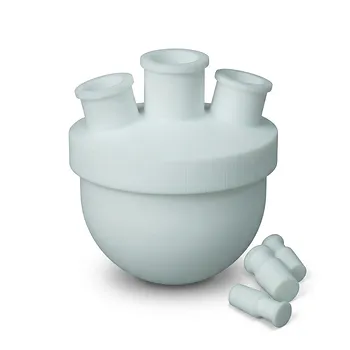
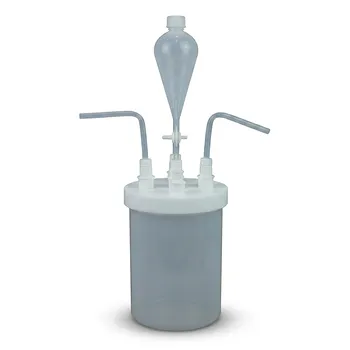
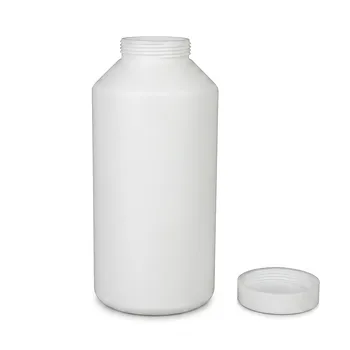
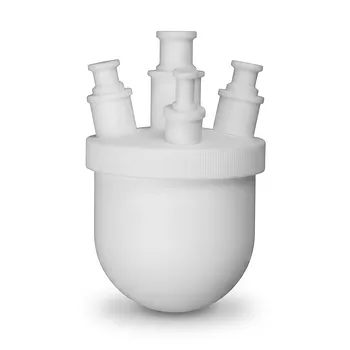
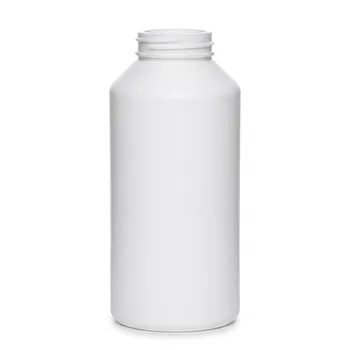
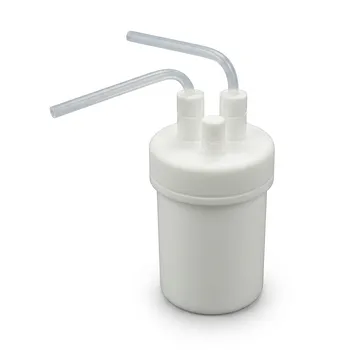
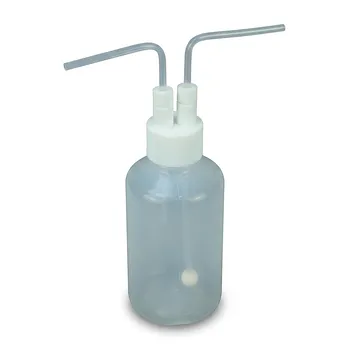
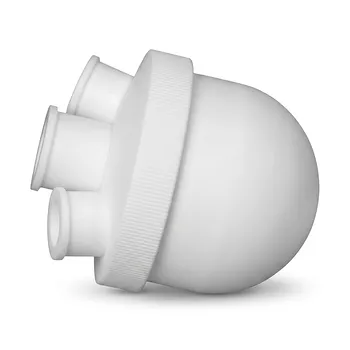
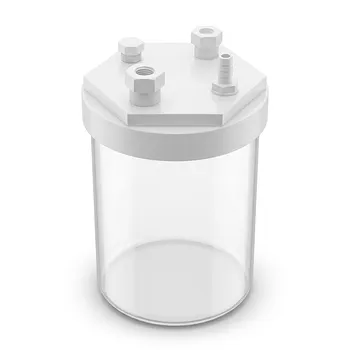
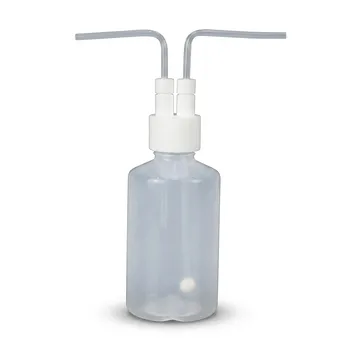
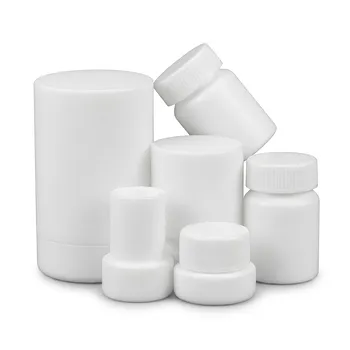
High-pressure reaction bottles serve as the critical containment vessels for solvothermal synthesis, creating a sealed, high-energy environment that forces reactions to occur under super-ambient conditions. In the specific case of MIL-125-NH2, these bottles allow titanium precursors and 2-aminoterephthalic acid to react at temperatures reaching 453 K (180°C), far exceeding the normal boiling point of common solvents. This environment ensures the metal ions and organic ligands possess the kinetic energy and solubility necessary to organize into a stable, crystalline framework.
The primary function of high-pressure reaction bottles is to maintain a sealed, high-temperature environment that generates autogenous pressure, enabling the complete dissolution of precursors and the formation of high-crystallinity metal-organic frameworks that would be impossible to synthesize under atmospheric conditions.
The Role of Autogenous Pressure in Solvothermal Synthesis
Maintaining Liquid State Above Boiling Points
High-pressure reactors allow solvents to reach temperatures significantly higher than their atmospheric boiling points without vaporizing. By keeping the solvent in a liquid state at temperatures like 453 K, the system provides the thermal energy required to overcome the activation barriers of coordination chemistry.
Enhancing Solvent Penetration and Solubility
Under high pressure, the penetration capability of the solvent into the reactant mixture is substantially increased. This facilitates the complete dissolution of metal salts (like titanate) and organic ligands (like 2-aminoterephthalic acid), ensuring that the precursors are fully available for reaction.
Promoting Structural Integrity and Crystal Growth
Achieving Dynamic Equilibrium
The high-pressure environment promotes a state of dynamic equilibrium during the formation of coordination bonds. This allows for the slow formation and "repair" of bonds within the lattice, which is essential for developing the ordered, microporous structures characteristic of MIL-125-NH2.
Formation of High-Crystallinity Structures
By providing a stable, constant-pressure environment, these vessels ensure that crystal growth occurs uniformly. This results in high-purity MOFs with stable skeletal structures and precisely defined pore sizes, which are vital for applications in gas storage or catalysis.
Chemical Containment and System Purity
Preventing Solvent and Reactant Loss
A perfectly sealed environment prevents the loss of volatile solvents, such as N,N-Dimethylformamide (DMF) or methanol, during long heating cycles. Maintaining a constant concentration of reactants is necessary to ensure the stoichiometry of the resulting MIL-125-NH2 remains consistent.
Protection via Inert Liners
Most high-pressure bottles utilize chemically inert liners made of PTFE (Teflon) or PFA. These liners protect the outer stainless steel shell from corrosive precursors while preventing metal ions from leaching into the reaction, thereby ensuring the atomically precise growth of the framework.
Understanding the Trade-offs and Risks
Pressure Limits and Safety Hazards
The primary risk of using high-pressure bottles is the potential for mechanical failure if the autogenous pressure exceeds the vessel's rating. Overfilling the liner or using highly volatile solvents at excessive temperatures can lead to explosive decompression.
Limitations of Liner Materials
While PTFE and PFA are highly inert, they have strict temperature limits, typically becoming unstable above 250°C to 260°C. Exceeding these limits can cause the liner to deform or release contaminants, potentially ruining the purity of the MOF synthesis.
How to Apply This to Your Synthesis Project
Making the Right Choice for Your Goal
- If your primary focus is high crystallinity: Ensure the reaction bottle is sealed perfectly to maintain constant autogenous pressure, which facilitates the "self-healing" of the crystal lattice.
- If your primary focus is material purity: Always use high-purity fluoropolymer liners (PTFE/PFA) to prevent the reaction mixture from contacting and corroding the metal walls of the reactor.
- If your primary focus is process safety: Never exceed the 70-80% fill capacity of the liner to allow sufficient headspace for gas expansion and to prevent dangerous pressure spikes.
By mastering the high-pressure environment, researchers can unlock the full potential of solvothermal chemistry to create robust and highly functional metal-organic frameworks.
Summary Table:
| Feature | Function in Synthesis | Benefit for MIL-125-NH2 |
|---|---|---|
| Autogenous Pressure | Maintains liquid state above boiling points | Overcomes activation barriers for coordination chemistry |
| High-Temp Environment | Enhances solvent penetration and solubility | Ensures complete dissolution of metal and organic precursors |
| Sealed Containment | Prevents volatile solvent and reactant loss | Maintains precise stoichiometry and concentration |
| Inert Liners (PTFE/PFA) | Provides a corrosion-resistant reaction zone | Prevents metal leaching and ensures atomic-level purity |
Elevate Your Solvothermal Synthesis with KINTEK
Achieving the structural integrity and high crystallinity required for MIL-125-NH2 demands equipment that can withstand extreme conditions without compromising purity. KINTEK specializes in high-performance fluoropolymer solutions tailored for the most demanding laboratory environments.
From everyday basic labware like beakers, measuring cylinders, and reagent bottles to specialized components like hydrothermal synthesis liners, microwave digestion vessels, and custom electrochemical cells, we manufacture virtually all imaginable laboratory supplies from high-purity PTFE and PFA. Our expertise extends from fluid transfer components (tubing, fittings, valves) to sample prep tools and advanced reaction apparatus.
Backed by end-to-end custom CNC fabrication, KINTEK is equipped to deliver everything from complex non-standard machined parts to high-volume orders with an absolute focus on performance and chemical inertness.
Ready to optimize your MOF production? Contact us today to discuss your custom laboratory setup!
References
- Yilei He, Ranbo Yu. Encapsulation of Highly Dispersed Au NPs by Strong Metal–Support Interactions in Porous Titania Nanoplates for Efficient Electrosynthesis of H<sub>2</sub>O<sub>2</sub>. DOI: 10.1002/adfm.202314654
This article is also based on technical information from Kintek Knowledge Base .
Related Products
- High Temperature PTFE Reaction Flask 1000ml Single Neck Round and Flat Bottom Laboratory Bottle
- PTFE Lined High Pressure Digestion Vessel 50ml High Temperature Hydrothermal Synthesis Tank
- Custom PTFE Wide Mouth Reagent Reaction Bottle Corrosion Resistant High Temperature Large Capacity Straight Body Laboratory Vessel
- Corrosion Resistant PFA Translucent Reaction Bottle with PTFE Screw Cap and Standard 19 24 Ground Joint Neck for High Temperature Lab Applications
- Custom PFA Reaction Bottles High Purity PTFE Reaction Vessels Corrosion Resistant Petrochemical Containers
People Also Ask
- How does thermal stability and fluoride evolution impact the performance of high-temperature PTFE laboratory vessels? Uncover the key factors for reliable operation.
- What are the limitations of pure PTFE in high temperature applications? Understanding the 200°C Ceiling
- What are the technical advantages of using high-pressure PTFE reaction vessels during metal digestion? Expert Insights.
- What is the function of pressure vessels in Silicalite-1 crystallization? Optimize your hydrothermal zeolite synthesis.
- In what way do high-precision constant temperature reaction vessels influence the performance and durability of magnetic chitosan nanocomposites?