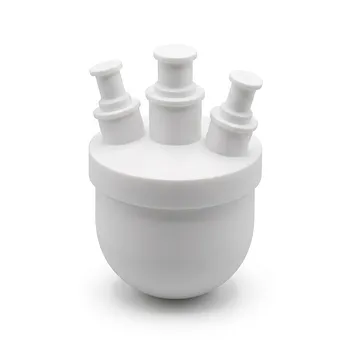
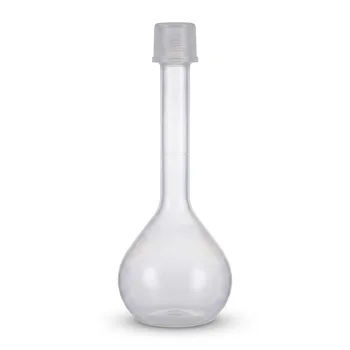
High-precision constant temperature reaction vessels are the foundational tools for ensuring the kinetic stability required to synthesize high-performance magnetic chitosan nanocomposites. By providing exact thermal and mechanical control, these vessels facilitate the creation of Fe3O4/CS particles with uniform size distributions and dense protective coatings. This precise fabrication directly prevents core corrosion in harsh environments and significantly extends the operational lifespan of the material.
The use of high-precision reaction vessels transforms the synthesis of Fe3O4/CS composites from a variable process into a controlled engineering feat. Precise temperature management ensures a high-quality chitosan shell that shields the magnetic core from acidic degradation, maximizing both adsorption efficiency and durability.
Achieving Kinetic Stability in Nanocomposite Synthesis
The Role of Precise Temperature Control
Synthesis of Fe3O4/CS composites requires a stable thermal environment to manage the rate of the coating reaction. High-precision vessels prevent thermal fluctuations that could otherwise lead to uneven polymer precipitation or weak bonding.
Controlled heat ensures that the kinetic energy of the molecules remains within the optimal range for uniform shell formation. This stability is the primary factor in determining the structural integrity of the final nanocomposite.
Optimizing Agitation for Uniform Distribution
Beyond temperature, these vessels allow for exact control over agitation speeds, which is critical for maintaining the suspension of Fe3O4 particles. Uniform agitation ensures that the chitosan coating is distributed evenly across all available surface areas.
Without this mechanical precision, particles tend to aggregate, resulting in "clumped" composites with inconsistent magnetic properties. Uniform size distribution is essential for predictable performance in large-scale applications.
Enhancing Performance Through Structural Integrity
Creating Dense, High-Quality Coatings
The quality of the chitosan (CS) layer acts as the definitive barrier between the magnetic core and its environment. High-precision vessels promote the development of dense, high-quality coatings that lack the structural defects found in lower-precision batches.
A dense coating ensures that the active sites on the chitosan remain accessible for adsorption while keeping the core protected. This density is the direct result of a stable reaction environment during the synthesis phase.
Preventing Core Corrosion in Harsh Media
Magnetic cores, particularly Fe3O4, are highly susceptible to acidic corrosion when used in industrial wastewater treatment. If the coating is thin or porous, acidic ions can penetrate the shell and dissolve the magnetic center.
By utilizing high-precision reaction vessels, manufacturers produce composites that can withstand aggressive chemical environments. This protection is vital for maintaining the magnetic recoverability of the material after use.
Understanding the Risks of Process Fluctuation
The Vulnerability of the Magnetic Core
The most significant risk in nanocomposite synthesis is a compromised protective shell. If the temperature deviates during the coating process, the resulting chitosan layer may be patchy or insufficiently thick.
A compromised shell leads to "leaking" of the magnetic core, which not only destroys the material's functionality but can also introduce secondary contamination into the treated water.
Consequences of Non-Uniform Synthesis
Inconsistent agitation or thermal gradients within the vessel lead to a wide range of particle sizes. Non-uniform particles settle at different rates and exhibit varied magnetic responses, making them difficult to collect using standard magnetic separators.
This inconsistency reduces the efficiency of repeated use cycles, as a significant portion of the material may be lost or rendered ineffective after the first application.
Strategic Implementation for Material Longevity
How to Apply This to Your Project
To maximize the value of magnetic chitosan nanocomposites, the synthesis environment must be treated as a critical performance variable. High-precision equipment is not merely an upgrade but a requirement for industrial-grade durability.
- If your primary focus is environmental resilience: Prioritize vessels with ultra-stable thermal sensors to ensure a pinhole-free chitosan layer that resists acidic corrosion in wastewater.
- If your primary focus is consistent adsorption capacity: Focus on agitation precision to maintain a narrow size distribution, which maximizes the available surface area for chemical reactions.
- If your primary focus is operational cost-efficiency: Invest in high-precision synthesis to ensure the material remains effective for long-term repeated use, reducing the need for frequent replacement.
By mastering the kinetic environment of the reaction, you ensure that every particle produced is optimized for both immediate performance and long-term structural survival.
Summary Table:
| Key Feature | Synthesis Impact | Performance Benefit |
|---|---|---|
| Temperature Control | Manages reaction kinetics | Dense, high-quality protective coatings |
| Exact Agitation | Maintains particle suspension | Uniform size distribution & magnetic response |
| Thermal Stability | Prevents uneven precipitation | Enhanced resistance to acidic corrosion |
| Process Precision | Eliminates structural defects | Maximum durability for repeated use cycles |
Elevate Your Research with KINTEK’s Precision Fluoropolymer Solutions
To achieve the kinetic stability required for high-performance magnetic chitosan nanocomposites, your laboratory equipment must meet the highest standards of chemical resistance and thermal precision. KINTEK specializes in manufacturing an exhaustive range of laboratory supplies crafted exclusively from PTFE and PFA, ensuring your synthesis environment remains uncontaminated and perfectly controlled.
From everyday essentials like beakers, crucibles, and reagent bottles to advanced apparatus including hydrothermal synthesis liners, microwave digestion vessels, and custom electrochemical cells, we provide the tools necessary for cutting-edge material science. Our capabilities extend to:
- Fluid Transfer: High-purity tubing, fittings, and valves.
- Sample Prep: Separatory funnels, filters, and high-precision pipettes.
- Custom Fabrication: End-to-end CNC machining for bespoke laboratory setups and complex non-standard parts.
Whether you are scaling up with high-volume orders or require specialized components for trace analysis, KINTEK’s absolute focus on high-performance fluoropolymers guarantees the durability your project demands.
Ready to optimize your synthesis process? Contact us today to discuss your custom requirements!
References
- Minh-Tri Le, Nguyen Thi Huong. Magnetic Chitosan Nanocomposites Derived from Industrial Solid Waste: A Promising Approach for Arsenic(III) Remediation. DOI: 10.1021/acsomega.4c05955
This article is also based on technical information from Kintek Knowledge Base .
Related Products
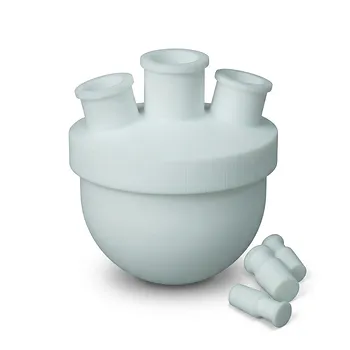
- High Temperature PTFE Reaction Flask 1000ml Single Neck Round and Flat Bottom Laboratory Bottle
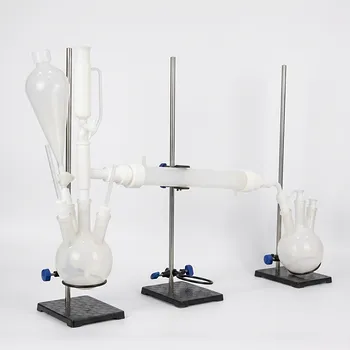
- High Purity PFA Constant Pressure Condensation Reaction System Acid Resistant High Temperature Customizable Teflon Labware
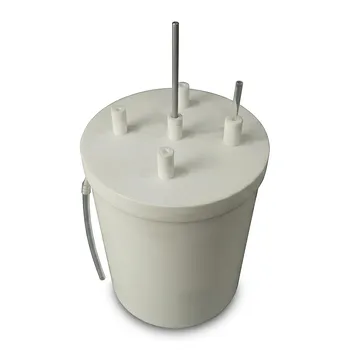
- PTFE 10L Reaction Vessel with Stirring Paddle Customizable Corrosion Resistant High Temperature Reactor for Biopharmaceutical and Chemical Processing
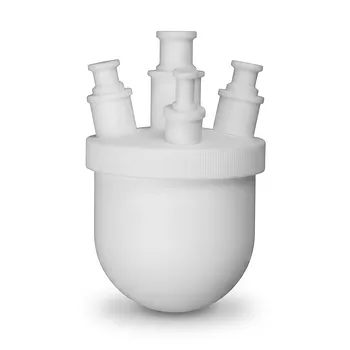
- High Temperature Corrosion Resistant PTFE Reaction Flask Custom Multi Neck Laboratory Vessel with Flat or U Bottom
- High Purity PFA Reaction Vessel for Biopharmaceutical Synthesis and Corrosive Chemical Fluid Handling with Customizable Tube Fittings
People Also Ask
- How does thermal stability and fluoride evolution impact the performance of high-temperature PTFE laboratory vessels? Uncover the key factors for reliable operation.
- What are the limitations of pure PTFE in high temperature applications? Understanding the 200°C Ceiling
- What are the technical advantages of using high-pressure PTFE reaction vessels during metal digestion? Expert Insights.
- What is the function of pressure vessels in Silicalite-1 crystallization? Optimize your hydrothermal zeolite synthesis.
- How does the atmospheric environment (nitrogen versus air) influence the thermal degradation limits and operating safety of high-temperature fluoropolymer laboratory vessels? Nitrogen vs Air: Thermal Limits & Safety