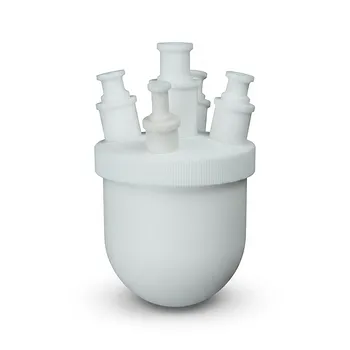
The sealed pressure vessel is the critical engine of hydrothermal synthesis. It creates a high-pressure environment that prevents aqueous solvents from evaporating when heated above their atmospheric boiling point. This specific condition allows for the controlled chemical reduction and anisotropic growth required to transform copper precursors into high-aspect-ratio nanowires.
Core Takeaway: A sealed pressure vessel enables high-temperature, liquid-phase chemistry that is impossible at standard atmospheric pressure. By maintaining internal pressure, the vessel stabilizes the reaction environment, allowing surfactants and templates to direct the growth of copper into specific crystalline structures.
Maintaining the Liquid State at High Temperatures
Overcoming Atmospheric Boiling Points
In hydrothermal synthesis, reactions often occur at temperatures between 100°C and 150°C. Under normal conditions, water-based solvents would turn to steam at these temperatures, halting the liquid-phase reaction. The threaded cap creates a hermetic seal that forces the solvent to remain liquid, creating a "superheated" environment.
Driving Faster Reaction Kinetics
The combination of high temperature and internal pressure accelerates the thermal decomposition of precursor solutions. This pressurized state ensures that the copper precursors, surfactants, and reducing agents interact with high kinetic energy. These conditions are vital for the efficient conversion of intermediates into the final nanostructures.
Facilitating Anisotropic Growth and Reduction
Regulating Crystalline Development
For copper to form into nanowires rather than spheres, it must undergo anisotropic growth. The pressurized environment facilitates the controlled reduction of copper ions along specific crystalline axes. This allows templates like glycine and octadecylamine to effectively "cap" certain crystal faces, forcing the copper to grow into long, thin wires.
Enhancing Interaction Between Reagents
The constant-volume environment of a sealed vessel ensures that the concentration of reagents remains stable throughout the process. This stability allows for the synergistic effect of temperature and pressure to regulate the transformation of copper hydroxide intermediates. Without this pressure, the delicate balance required for specific crystalline orientations would be lost.
Understanding the Trade-offs and Safety Risks
Mechanical Stress and Sealing Integrity
The primary risk in this process is the mechanical failure of the vessel or the threaded cap. At 125°C and above, the internal pressure can become significant, and any defect in the threads or the seal can lead to a rapid decompression event. This not only ruins the synthesis but poses a significant laboratory safety hazard.
Scalability and Monitoring Limitations
Because the reaction occurs inside a closed, opaque vessel, real-time monitoring of the nanowire growth is difficult. Furthermore, scaling the process from small laboratory bottles to industrial volumes requires specialized engineering to maintain uniform heat and pressure. Inconsistencies in pressure across a larger vessel can lead to polydispersity, where the nanowires vary significantly in length and diameter.
How to Apply This to Your Project
Recommendations for Synthesis
- If your primary focus is high-aspect-ratio nanowires: Ensure the threaded cap is rated for temperatures up to 150°C to maintain the pressure necessary for anisotropic growth.
- If your primary focus is catalytic activity: Focus on the synergistic effect of temperature and pressure to maximize the specific surface area of the resulting nanostructures.
- If your primary focus is laboratory safety: Regularly inspect the threads of your pressure vessels for wear and never exceed the maximum volume capacity recommended for the solvent.
The sealed pressure vessel effectively turns a standard chemical reaction into a high-energy environment capable of precision molecular architecture.
Summary Table:
| Feature | Role in Synthesis | Benefit for Nanowires |
|---|---|---|
| Threaded Cap | Creates a hermetic, airtight seal | Prevents solvent evaporation above boiling points |
| Pressure Control | Maintains superheated liquid state | Accelerates reaction kinetics and thermal decomposition |
| Anisotropic Growth | Facilitates axial reduction | Enables glycine/octadecylamine to template long wires |
| Constant Volume | Stabilizes reagent concentrations | Ensures uniform crystalline orientation and structure |
Elevate Your Synthesis with Precision Fluoropolymer Engineering
Hydrothermal synthesis of high-aspect-ratio copper nanowires demands equipment that can withstand rigorous pressure and chemical environments. KINTEK specializes in high-performance PTFE and PFA laboratory supplies designed for extreme reliability.
From everyday basic labware like beakers, crucibles, and reagent bottles to advanced hydrothermal synthesis liners, microwave digestion vessels, and custom-machined PFA pressure containers, we provide the tools necessary for precision molecular architecture. Our capabilities extend to comprehensive fluid transfer components (tubing, valves, fittings), sample prep tools, and bespoke CNC-fabricated parts tailored to your specific reaction parameters.
Whether you need high-volume consumables or a complex, non-standard laboratory setup, KINTEK’s absolute focus on fluoropolymer excellence ensures your research is backed by superior material integrity.
Ready to optimize your lab’s performance? Contact our experts today for custom solutions and high-purity laboratory supplies.
References
- Andrea Conte, Alessandro Aliprandi. Engineering morphological features and surface steps in ultrathick penta-twinned copper nanowires. DOI: 10.1039/d5tc01835h
This article is also based on technical information from Kintek Knowledge Base .
Related Products
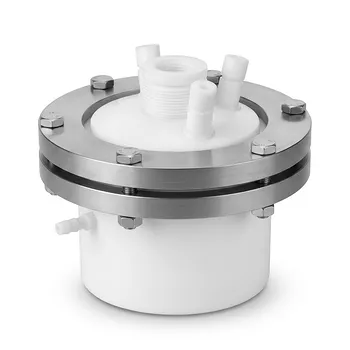
- Custom PTFE Reaction Apparatus Flange Sealed Corrosion Resistant Jacketed Vessel with Stirring Bar and Thermometer Ports
- Corrosion Resistant PTFE Digestion Tube White Opaque Tubular Bottle for Geological Mineral Sample Preparation Screw Cap Sealed Laboratory Vessel
- Custom TFM Reaction Vessel with Stainless Steel Jacket and PTFE Inner Cup for High Corrosion Resistance
- PTFE Lined High Pressure Digestion Vessel 50ml High Temperature Hydrothermal Synthesis Tank
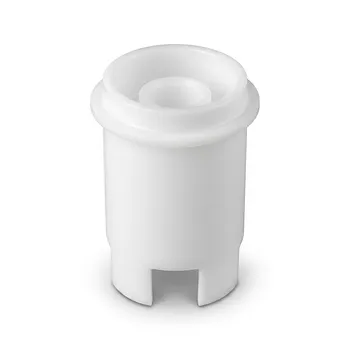
- High Pressure PTFE Digestion Vessel Inner Cup Holder Custom Corrosion Resistant Low Background Teflon
People Also Ask
- How do perfluorinated solvent environments influence the selection of reaction vessels and fluid handling components in nonaqueous emulsion polymerizations? Choose fluoropolymer materials.
- Why are high-purity PTFE or PFA reaction vessels recommended for the synthesis of PANI-TiC hybrid materials? - Guide
- Why are fluoroplastic (PTFE) reaction vessels recommended for Methylene Blue (MB) adsorption kinetic experiments?
- Why is a PTFE reaction vessel required for Ti3C2Tx MXene synthesis? Ensure Safe HF Etching & High Purity
- Why is a high-quality PTFE reaction vessel required for the etching preparation of Ti3C2Tx MXene? Ensure Pure Synthesis.