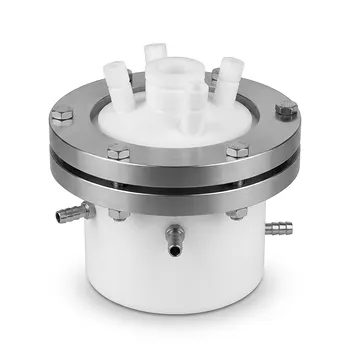
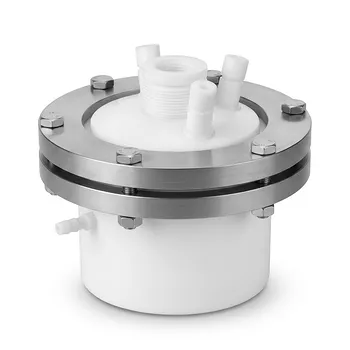
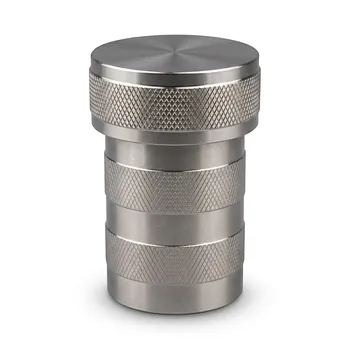
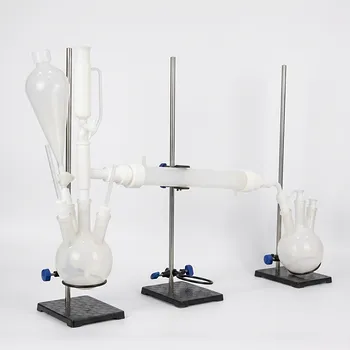
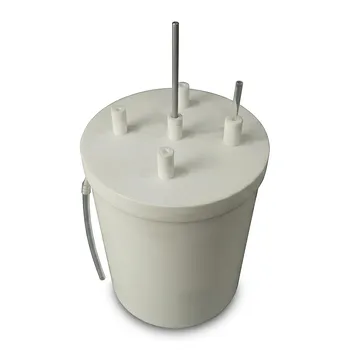
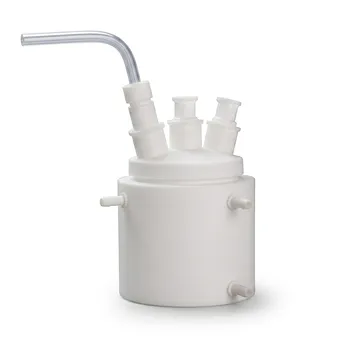
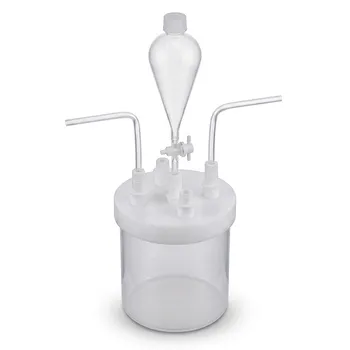
The sealed high-pressure reactor serves as the critical kinetic and thermodynamic engine for the synthesis of Lanthanide Metal-Organic Frameworks (Ln-MOFs). It creates a closed system that enables solvents to be heated far beyond their atmospheric boiling points, generating autogenous pressure. This specific environment is necessary to dissolve poorly soluble precursors fully and facilitate the reversible coordination chemistry required for highly crystalline, ordered frameworks.
The reactor provides a controlled, subcritical environment where high temperature and autogenous pressure drive the dissolution of precursors and the "self-healing" of coordination bonds. This process is essential for achieving the structural purity and high crystallinity that define functional Ln-MOF materials.
Overcoming Solubility and Diffusion Barriers
Achieving Subcritical Solvent Conditions
In a sealed environment, solvents like N,N-Dimethylformamide (DMF) or ethanol can be heated significantly above their boiling points without evaporating. These conditions enhance the penetration capability of the solvent, allowing it to interact more effectively with solid precursors.
Complete Dissolution of Precursors
Lanthanide salts and organic ligands often possess limited solubility at room temperature. The high-energy environment of the reactor forces these metal ions and organic ligands into a single homogeneous liquid phase, ensuring they are available for the nucleation process.
Acceleration of Ion Diffusion
The elevated pressure and temperature significantly accelerate the diffusion of ions within the solution. This rapid movement is vital for the consistent transport of building blocks to the growing crystal faces, resulting in more uniform material growth.
Driving Crystalline Order through Dynamic Equilibrium
Facilitating Reversible Coordination
Ln-MOFs rely on the formation of coordination bonds between lanthanide ions and organic linkers. The high-pressure environment promotes a dynamic equilibrium, where bonds can break and reform—a process often referred to as "self-repairing" or "healing."
Promoting Ordered Pore Structures
Because the reaction occurs under constant, high-pressure conditions, the framework has the energy required to correct structural defects during growth. This results in ordered pore structures and high crystallinity, which are essential for applications in gas storage or catalysis.
Ensuring Structural Integrity
The sealed nature of the vessel prevents the loss of volatile components, maintaining a constant chemical potential throughout the synthesis. This stability allows the crystals to grow slowly and steadily, which is the key to producing large-sized, morphologically uniform frameworks.
The Role of Chemical Containment and Purity
Protection via Fluoropolymer Liners
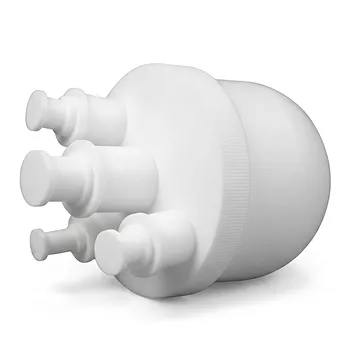
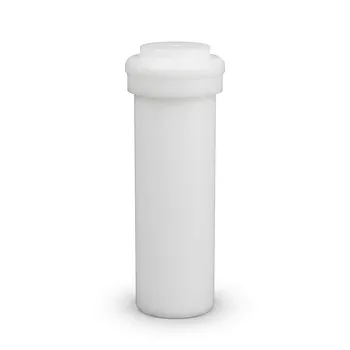
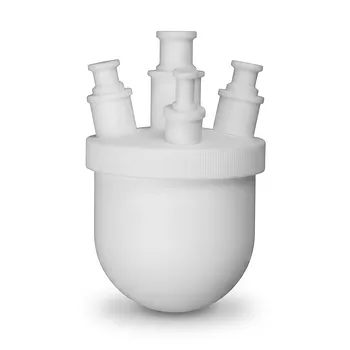
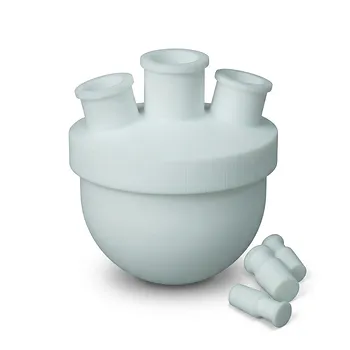
High-pressure reactors are typically equipped with chemically inert liners made of Polytetrafluoroethylene (PTFE) or Perfluoroalkoxy (PFA). These liners protect the outer steel vessel from the corrosive effects of metal ions and acidic catalysts like acetic acid.
Preventing Impurity Introduction
By isolating the reaction mixture within a non-reactive liner, the reactor prevents metal ion erosion of the container walls. This ensures that the resulting Ln-MOF is of high purity and free from unintended metallic contaminants that could alter its properties.
Understanding the Trade-offs
Kinetic Sensitivity and Safety
Operating at temperatures like 453 K generates significant autogenous pressure, which poses safety risks if the reactor is overfilled or the vessel is compromised. Precise control of the filling degree is mandatory to prevent catastrophic pressure spikes.
The "Black Box" Limitation
Because the reaction occurs inside a sealed, opaque stainless-steel sleeve, researchers cannot observe the process in real-time. This lack of direct observation makes it difficult to pinpoint the exact moment of nucleation or to adjust parameters mid-reaction.
Scalability Challenges
While highly effective for laboratory-scale discovery, the high-pressure requirements make industrial scaling difficult and energy-intensive. Moving from milligram-scale "batch" reactors to large-scale production requires specialized engineering to maintain safety and structural uniformity.
How to Apply This to Your Synthesis Goals
Strategic Recommendations
- If your primary focus is High Crystallinity: Prioritize a slow cooling ramp after the reaction to allow the dynamic equilibrium to maximize structural "repair" at high pressure.
- If your primary focus is Material Purity: Ensure the use of high-purity PTFE or PFA liners to prevent the leaching of metal impurities from the reactor walls.
- If your primary focus is Morphological Uniformity: Carefully control the "filling degree" of the reactor (typically 50-80%) to maintain consistent autogenous pressure throughout the heating cycle.
By mastering the pressurized environment of the solvothermal reactor, you can precisely tune the delicate balance of dissolution and coordination required for advanced lanthanide frameworks.
Summary Table:
| Function | Key Mechanism | Resulting Benefit |
|---|---|---|
| Solvent Activation | Subcritical heating (above boiling point) | Enhanced solubility & precursor dissolution |
| Structural Growth | Dynamic equilibrium & "self-healing" | Ordered pore structures & high crystallinity |
| Ion Transport | Accelerated diffusion under pressure | Uniform material growth & morphological consistency |
| Contamination Control | PTFE/PFA fluoropolymer containment | High material purity & resistance to corrosive acids |
| Stability | Closed-system constant chemical potential | Large-sized, steady crystal development |
Elevate Your Solvothermal Synthesis with KINTEK
Precision in Lanthanide Metal-Organic Framework (Ln-MOF) synthesis starts with superior containment. KINTEK specializes in high-performance fluoropolymer materials designed to withstand the rigorous demands of subcritical solvent environments. From high-purity PTFE and PFA liners for your hydrothermal reactors to essential labware like beakers, crucibles, and reagent bottles, we provide the tools that ensure structural purity and high crystallinity.
Our extensive range covers everything from comprehensive fluid transfer components (tubing, valves, fittings) and sample prep tools to advanced reaction apparatus like microwave digestion vessels and custom-machined electrochemical cells. Whether you require standard consumables or complex, non-standard parts crafted through our end-to-end custom CNC fabrication, KINTEK is your absolute partner for high-performance laboratory supplies.
Ready to optimize your research? Contact KINTEK today to discuss your custom laboratory needs and ensure your synthesis goals are met with unmatched material quality.
References
- Kankan Patra, Haridas Pal. Lanthanide-based metal–organic frameworks (Ln-MOFs): synthesis, properties and applications. DOI: 10.1039/d4su00271g
This article is also based on technical information from Kintek Knowledge Base .
Related Products
- Custom PTFE Reaction System with Hose Barb Fittings Corrosion Resistant High Sealing 2L 4L Lab Reactor with Separatory Funnel
- High Pressure Custom TFM Reactor Stainless Steel Outer Vessel PTFE Inner Cup for Corrosive Synthesis
- Custom PTFE Reaction Apparatus Flange Sealed Corrosion Resistant Jacketed Vessel with Stirring Bar and Thermometer Ports
- High Temperature Corrosion Resistant Hydrothermal Synthesis Reactor with TFM Inner Liner and Straight Cylinder Design
- Custom TFM Reaction Vessel with Stainless Steel Jacket and PTFE Inner Cup for High Corrosion Resistance
People Also Ask
- Why are PP or PTFE reactors preferred over glass in tribocatalysis? Maximize Charge Separation & Catalytic Efficiency
- What are the primary fabrication methods for capillary-based and monolithic PTFE reactors? Expert Production Insights
- What functional advantages do PTFE reactors provide over glass? Achieve Superior Purity and Safety in Synthesis
- How does PTFE's melting behavior affect custom lab apparatus? Key insights for manufacturing.
- What structural characteristics provide PTFE fluoropolymer laboratory apparatus with high thermal stability? Strong C-F bonds, dense fluorine shielding, and rigid helical conformation ensure stability during high-temperature analysis.