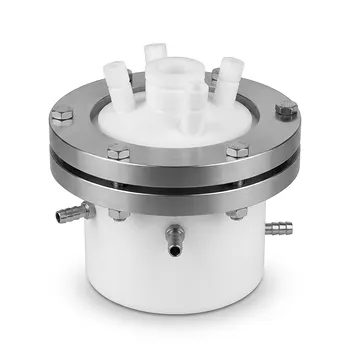
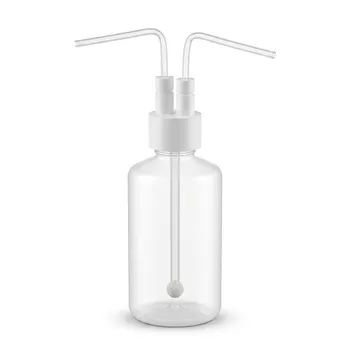
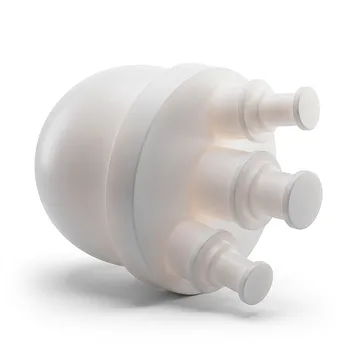
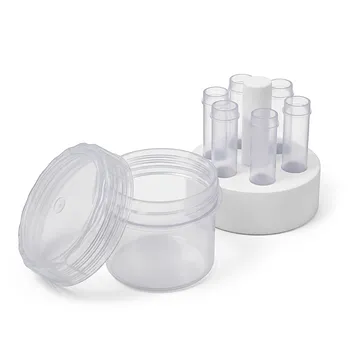
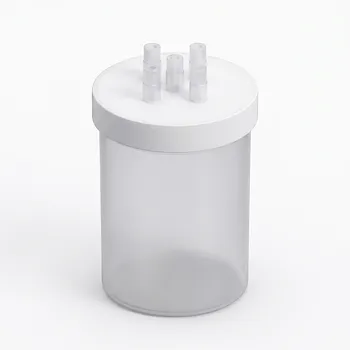
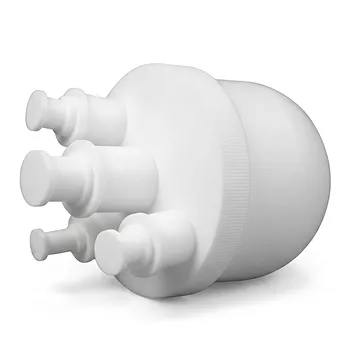
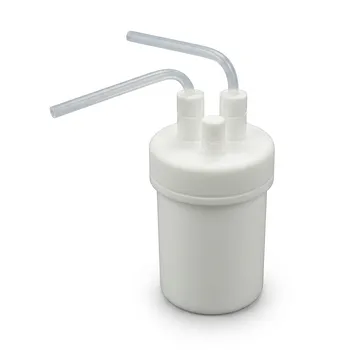
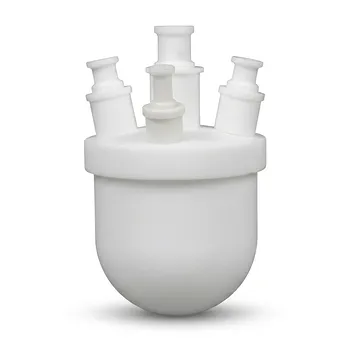
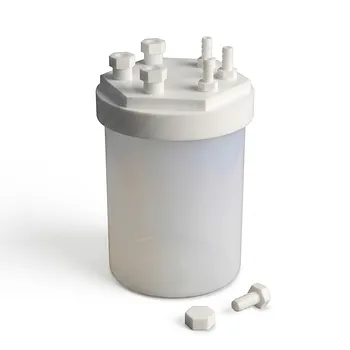
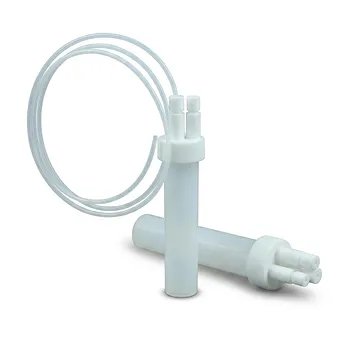
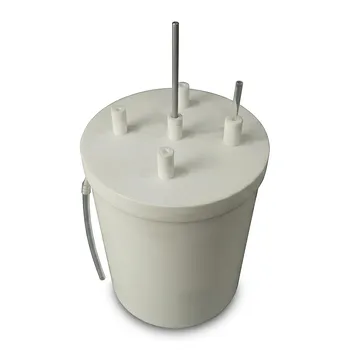
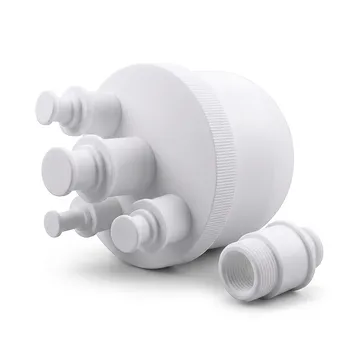
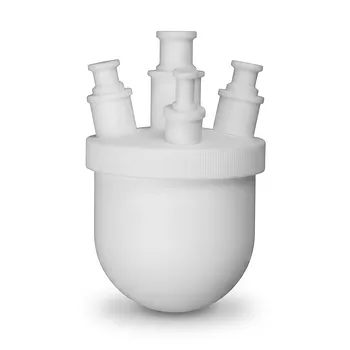
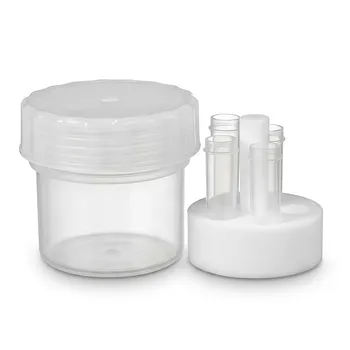
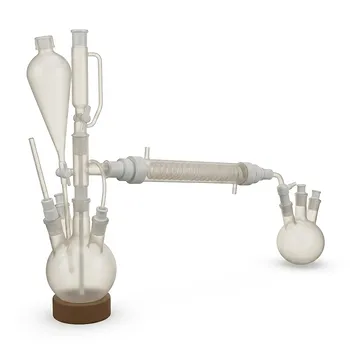
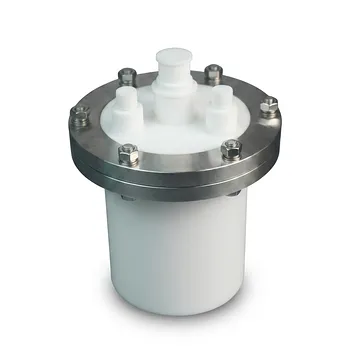
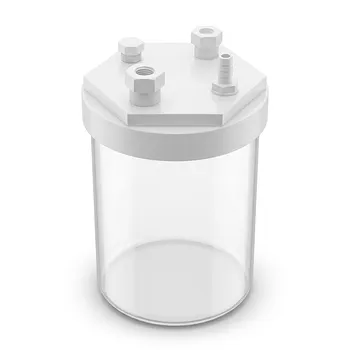
High-sealing fluoropolymer reaction chambers are critical for isolating the reaction environment from the atmosphere to ensure the integrity of isotopic labeling data. These specialized vessels allow researchers to maintain a hermetic seal, which is essential for capturing and analyzing generated gases via mass spectrometry. By preventing the ingress of ambient oxygen, these chambers enable the precise tracking of oxygen atoms as they move between the tin oxide lattice and the reaction products.
The primary purpose of high-sealing fluoropolymer chambers is to provide a chemically inert and airtight environment that facilitates the accurate measurement of the Lattice Oxygen involvement Mechanism (LOM). This setup ensures that the detected oxygen originates from the catalyst's lattice rather than atmospheric contamination, while simultaneously protecting the system from corrosive electrolytes.
Precision in Isotope Tracking and Gas Analysis
Eliminating Atmospheric Interference
Isolating the reaction system prevents ambient oxygen from entering the chamber and contaminating the experimental environment. This isolation is mandatory when using oxygen isotopes (such as $^{18}$O) to trace the specific origin of oxygen atoms during the catalytic cycle.
Facilitating Accurate Mass Spectrometry
The high-sealing nature of the chamber ensures that all generated gases are captured without leakage. This allows for high-sensitivity mass spectrometry analysis, which is necessary to detect the subtle isotopic shifts that characterize the formation and recovery of oxygen vacancies.
Material Integrity in Harsh Environments
Chemical Inertness and Corrosion Resistance
Fluoropolymers like PTFE (Teflon) or PFA are chosen for their exceptional resistance to chemical attack. Tin oxide-supported catalysts are often evaluated in strong acidic environments where standard glass or metallic reaction cells might suffer from erosion.
Preventing Impurity Leaching
Using fluoropolymer materials prevents the leaching of trace impurities from the reaction vessel into the electrolyte. This ensures that the measured electrocatalytic data accurately reflect the electronic effects between the active metal sites and the tin oxide support, rather than being skewed by external contaminants.
Understanding the Trade-offs and Limitations
Mechanical and Thermal Constraints
While fluoropolymers offer superior chemical resistance, they possess lower mechanical strength and thermal stability compared to stainless steel. Researchers must carefully monitor pressure and temperature to ensure the chamber does not deform, which could compromise the hermetic seal.
Cost and Fabrication Complexity
High-quality fluoropolymer chambers are significantly more expensive than standard laboratory glassware. Additionally, creating complex, high-precision seals in these materials requires specialized machining techniques and high-grade gaskets to maintain the vacuum-tight environment necessary for LOM studies.
How to Apply This to Your Catalyst Research
- If your primary focus is isotope tracing: Utilize a high-sealing fluoropolymer chamber to eliminate atmospheric oxygen contamination and ensure the validity of your mass spectrometry results.
- If your primary focus is stability in acidic media: Select PFA or PTFE cell bodies to prevent vessel degradation and the subsequent leaching of impurities that could mask true catalytic performance.
- If your primary focus is quantifying oxygen vacancies: Maintain a strictly hermetic environment to accurately monitor the depletion and replenishment of lattice oxygen during the reaction.
Investing in high-sealing fluoropolymer infrastructure is the definitive way to ensure that your mechanistic insights into tin oxide catalysts are based on pure experimental evidence rather than environmental artifacts.
Summary Table:
| Key Feature | Benefit for LOM Research | Material Impact |
|---|---|---|
| Hermetic Sealing | Prevents atmospheric $^{16}$O interference; enables precise $^{18}$O isotope tracking. | Ensures data integrity for mass spectrometry. |
| Chemical Inertness | Withstands strong acidic electrolytes without erosion or vessel degradation. | Maintains structural stability of the reaction cell. |
| High Purity | Eliminates leaching of trace impurities into the electrolyte. | Protects the catalytic electronic effect from contamination. |
| Gas Containment | Captures all generated gases for high-sensitivity analysis. | Allows accurate quantification of oxygen vacancies. |
Elevate Your Catalyst Research with KINTEK’s Fluoropolymer Expertise
Precision in LOM studies demands an environment free from contamination and leaks. KINTEK specializes in high-performance fluoropolymer solutions, offering an exhaustive range of laboratory supplies crafted from PTFE and PFA.
Whether you require everyday basic labware (beakers, reagent bottles, digestion tubes) or complex, custom-engineered components, we provide the materials necessary for high-purity trace analysis. Our offerings extend from fluid transfer components (tubing, valves, fittings) and sample prep tools to advanced reaction apparatus, including bespoke electrochemical cells, battery testing fixtures, and microwave digestion vessels.
Why choose KINTEK?
- End-to-End Custom CNC Fabrication: We deliver everything from complex non-standard machined parts to high-volume orders.
- Absolute Material Focus: Exclusive expertise in fluoropolymers ensures maximum chemical resistance and hermetic integrity.
- Comprehensive Range: From O-rings and gaskets to sophisticated microchannel reactors, we have your lab covered.
Ensure your mechanistic insights are based on pure evidence. Contact us today to discuss your custom laboratory setup!
References
- S. A. Keishana Navodye, G. T. Kasun Kalhara Gunasooriya. Analysis of tin oxide supported transition metal single-atom catalysts for oxygen evolution reaction. DOI: 10.1039/d5ta01974e
This article is also based on technical information from Kintek Knowledge Base .
Related Products
- Custom PTFE Reaction System with Hose Barb Fittings Corrosion Resistant High Sealing 2L 4L Lab Reactor with Separatory Funnel
- Custom PTFE Gas Washing Bottle Cap Multi Port Reaction Lid Corrosion Resistant High Sealing Laboratory Fluoropolymer Closure
- High Purity Custom PTFE Large Volume 15L Flask Corrosion Resistant Low Trace Background Fluoropolymer Reaction Vessel
- High Purity Corrosion Resistant PFA Reaction Vessel with PTFE Holder and Integrated Sampling Tube for Trace Analysis
- High Purity 4L PFA Reaction Tank for Proton Exchange Membrane Electrolysis Water Oxygen Separation Systems
People Also Ask
- What are the primary fabrication methods for capillary-based and monolithic PTFE reactors? Expert Production Insights
- What functional advantages do PTFE reactors provide over glass? Achieve Superior Purity and Safety in Synthesis
- How does PTFE's melting behavior affect custom lab apparatus? Key insights for manufacturing.
- What structural characteristics provide PTFE fluoropolymer laboratory apparatus with high thermal stability? Strong C-F bonds, dense fluorine shielding, and rigid helical conformation ensure stability during high-temperature analysis.
- What are the advantages of using high-precision PTFE valves and fittings? Optimize Chemical Purity and Fluid Control