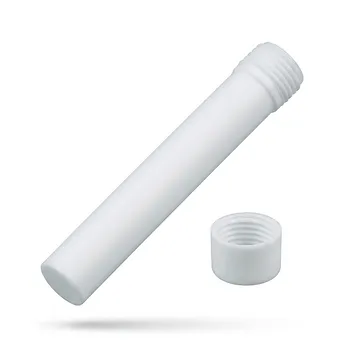
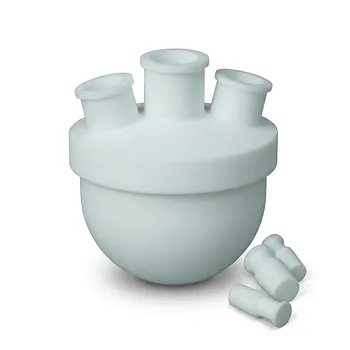
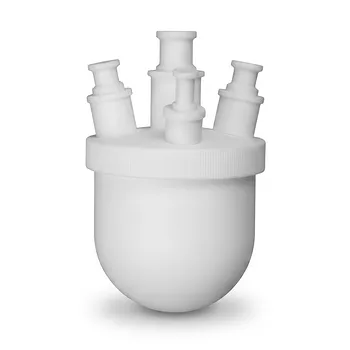
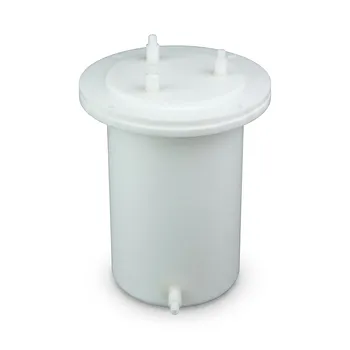
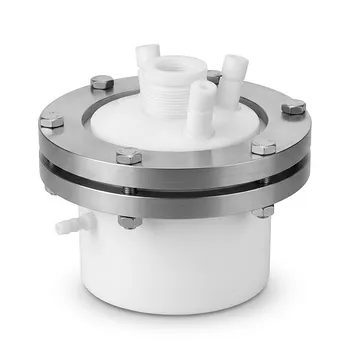
The PTFE-lined hydrothermal synthesis vessel is the fundamental tool for engineering the physical and chemical properties of cerium dioxide ($CeO_2$) catalysts. It provides a chemically inert, high-pressure environment that allows researchers to move beyond basic chemistry into precise nano-engineering. By manipulating temperature and pressure within this sealed space, the vessel facilitates the growth of specific crystalline structures that dictate a catalyst’s eventual reactivity and efficiency.
The core function of the PTFE-lined vessel is to provide a contamination-free, pressurized environment that forces cerium precursors to crystallize into specific morphologies while preventing the leaching of metallic impurities from the reactor body.
The Role of Chemical Inertness and Purity
Preventing Metallic Contamination
The Polytetrafluoroethylene (PTFE) liner serves as a critical barrier between the reaction medium and the stainless steel walls of the autoclave. This isolation ensures that the resulting $CeO_2$ particles remain free from metal impurities, such as iron or chromium, which could otherwise leach into the solution and interfere with the catalyst’s performance.
Resistance to Corrosive Precursors
Hydrothermal synthesis often involves harsh environments, including strong alkaline solutions (pH 8-9) or oxidative agents like nitrates and urea. PTFE is chosen for its exceptional chemical resistance, allowing it to withstand these corrosive conditions at high temperatures without degrading or reacting with the precursors.
Non-Stick Surface Characteristics
The high non-stick properties of PTFE ensure that synthesized nanostructures, such as hollow spherical particles, do not adhere to the vessel walls during growth. This characteristic minimizes sample loss and maintains the morphological consistency of the batch by preventing secondary growth on the container surface.
Engineering Morphology via Hydrothermal Pressure
Facilitating Oriented Crystallization
The vessel utilizes hydrothermal pressure to induce the oriented crystallization of cerium salt precursors. By precisely controlling the internal environment, researchers can dictate whether the $CeO_2$ grows into specific shapes like nanocubes, nanorods, or nanospheres.
Defining Surface Active Sites
The choice of morphology directly impacts the distribution of surface active sites on the catalyst. Because different crystal faces have different catalytic activities, the vessel’s ability to regulate morphology is the primary mechanism for "tuning" the catalyst for specific chemical reactions.
Promoting Lattice Incorporation
The high-pressure environment accelerates the hydrolysis and crystallization process, which is essential for doping $CeO_2$ with other ions like Manganese (Mn). This pressure forces the dopants into the ceria lattice to form a stable solid solution rather than allowing them to simply rest on the surface.
Understanding the Trade-offs
Temperature Constraints
While PTFE is highly inert, it has a functional temperature ceiling, typically reaching its limit around 220°C to 240°C. Exceeding these temperatures can lead to the mechanical deformation of the liner, potentially compromising the seal or contaminating the sample with fluorinated decomposition products.
Pressure Safety and Seals
The effectiveness of the hydrothermal process depends entirely on the integrity of the seal between the PTFE liner and its cap. If the pressure generated by the heating process exceeds the mechanical limits of the outer steel vessel or the internal liner, it can lead to pressure leaks that disrupt the crystallization process and yield inconsistent results.
How to Apply This to Your Project
Making the Right Choice for Your Goal
- If your primary focus is high catalytic purity: Ensure the PTFE liner is thoroughly cleaned with acid between uses to prevent cross-contamination from previous synthesis runs.
- If your primary focus is specific morphology (e.g., nanorods): Use the vessel to maintain a steady temperature (typically 80°C to 240°C) for extended periods, as crystallization is highly sensitive to thermal fluctuations.
- If your primary focus is creating doped solid solutions: Leverage the high-pressure capabilities of the sealed vessel to force guest ions into the $CeO_2$ lattice, ensuring a more stable and effective catalyst.
By mastering the environmental variables within the PTFE-lined vessel, you can transform simple cerium salts into highly specialized, high-performance catalytic materials.
Summary Table:
| Feature | Benefit to CeO2 Synthesis | Operational Limit |
|---|---|---|
| PTFE Inertness | Prevents metallic leaching (Fe, Cr) for high catalyst purity | Temp limit: 220°C - 240°C |
| High Pressure | Drives oriented crystallization for specific morphologies (nanocubes, rods) | Requires secure vessel sealing |
| Non-Stick Surface | Prevents particle adhesion and ensures uniform sample recovery | Requires thorough acid cleaning |
| Lattice Doping | Forces guest ions (like Mn) into the ceria lattice for stable solutions | Dependent on pressure integrity |
Elevate Your Catalyst Research with KINTEK High-Performance Fluoropolymers
Precision in cerium dioxide synthesis demands materials that never compromise on purity. KINTEK specializes in the absolute focus of high-performance fluoropolymers, providing the essential tools for your most sensitive hydrothermal and trace analysis workflows.
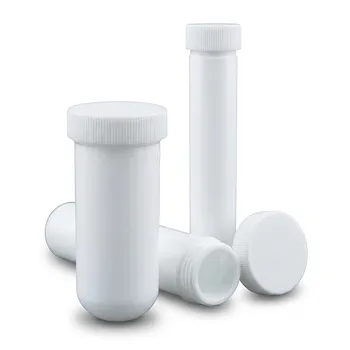
From everyday basic labware—including beakers, crucibles, and reagent bottles—to advanced PTFE/PFA hydrothermal synthesis liners and microwave digestion vessels, we offer a comprehensive range of solutions. Our expertise extends to fluid transfer components (tubing, valves, and fittings) and bespoke, end-to-end custom CNC fabrication for non-standard machined parts tailored to your specific reactor designs.
Whether you require high-volume consumables or a unique laboratory setup, KINTEK ensures your catalysts remain free from contamination. Contact us today to request a quote or discuss your custom fabrication needs.
References
- Andreína Alarcón, Carlos Ponce de León. CeO<sub>2</sub>-promoted Cu<sub>2</sub>O-based catalyst sprayed on the gas diffusion layer for the electroreduction of carbon dioxide to ethylene. DOI: 10.1039/d3ma01009k
This article is also based on technical information from Kintek Knowledge Base .
Related Products
- PTFE Lined High Pressure Digestion Vessel 50ml High Temperature Hydrothermal Synthesis Tank
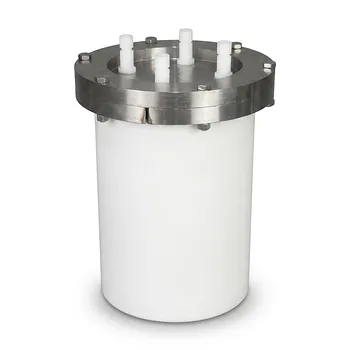
- High Pressure Custom TFM Reactor Stainless Steel Outer Vessel PTFE Inner Cup for Corrosive Synthesis
- Custom TFM Reaction Vessel with Stainless Steel Jacket and PTFE Inner Cup for High Corrosion Resistance
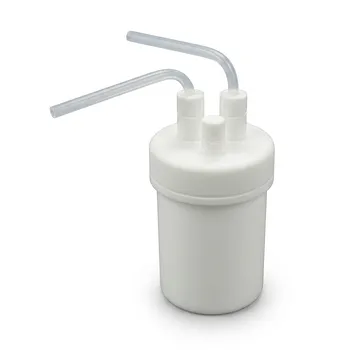
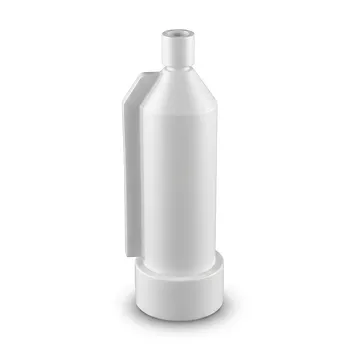
- Custom PTFE Continuous Reaction Bottles Virgin Fluoropolymer High Purity Low Background Synthesis Vessels
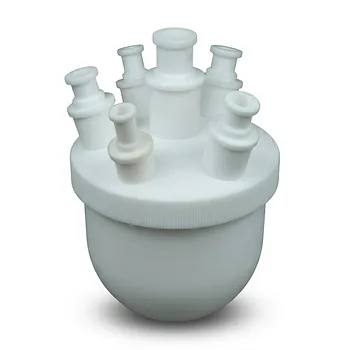
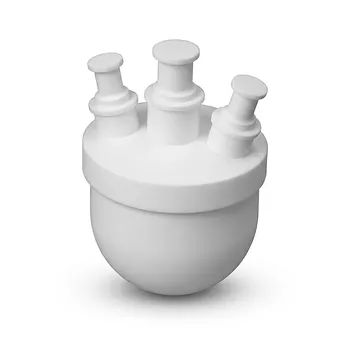
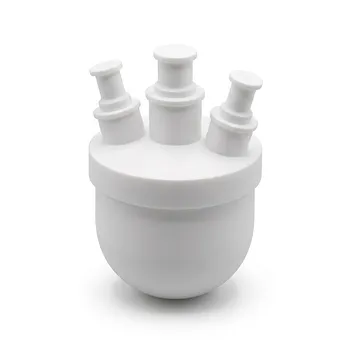
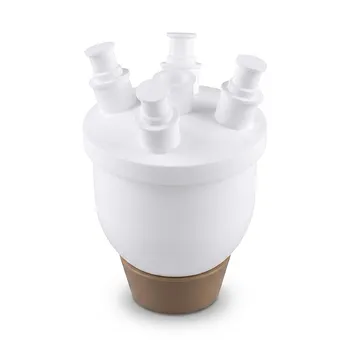
- Custom Multi Neck PTFE Flask 18L Laboratory Chemical Reactor Vessel for High Purity Synthesis and Stirring Applications
People Also Ask
- What are the benefits of using a PTFE-lined vessel for carbon-sulfur cathode treatment? Maximize Purity & Performance
- Why are PTFE-lined pressure digestion vessels required for the preparation of Ag/CeO2 catalysts? Purity & Performance
- What is the function of high-pressure PTFE digestion vessels in mineral analysis? Optimize Sample Mineralization
- What safety features are typically incorporated into high-pressure PTFE digestion vessel designs? Ensure Lab Safety
- What is the function of PTFE lined high-pressure vessels in g-C3N4 synthesis? Achieve High-Purity Material Growth