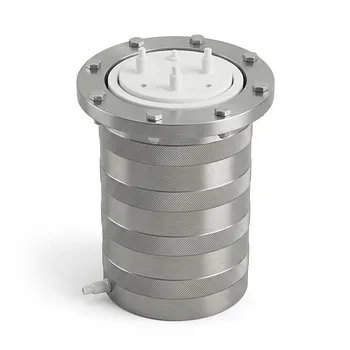
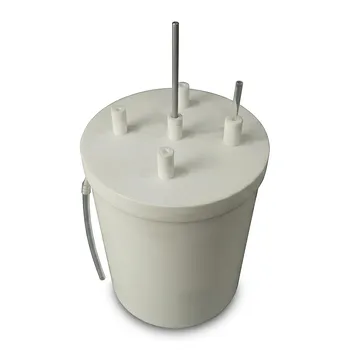
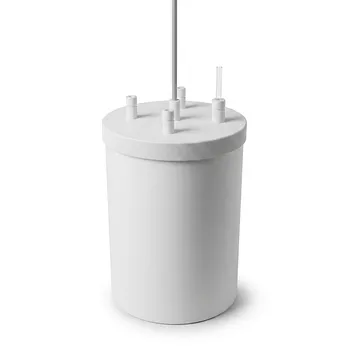
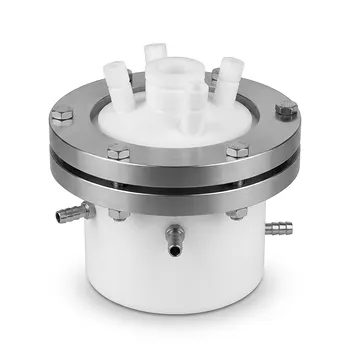
The primary function of a PTFE-lined high-pressure reactor is to provide a chemically inert, sealed environment that enables the controlled nucleation and growth of Zinc Oxide (ZnO) hollow spheres. By isolating the reaction precursors from the stainless steel autoclave body, the PTFE liner allows the synthesis to proceed at high temperatures—typically around 180°C—and high pressures without introducing metal ion contamination or damaging the vessel.
The PTFE-lined reactor acts as both a protective barrier and a high-purity reaction vessel, ensuring that the hydrothermal synthesis of ZnO hollow spheres remains free from impurities while maintaining the structural integrity of the autoclave under extreme conditions.
Maintaining the Hydrothermal Environment
High-Pressure Sealing
The reactor creates a sealed environment necessary for hydrothermal synthesis, where the internal pressure rises significantly as the temperature increases. This pressure is essential for driving the precursors to undergo the specific chemical transformations required to form complex hollow sphere morphologies.
Thermal Stability
The PTFE (Polytetrafluoroethylene) liner is specifically chosen for its ability to withstand constant temperatures up to 220°C. In the synthesis of ZnO, it maintains a stable thermal environment at 180°C, ensuring that the energy input for crystal growth remains consistent throughout the duration of the reaction.
Chemical Isolation and Purity
Preventing Metal Contamination
The most critical role of the PTFE liner is preventing the reaction solution from contacting the stainless steel autoclave body. This isolation ensures that no metal ions from the steel leach into the solution, which would otherwise disrupt the high-purity crystal structure of the Zinc Oxide.
Exceptional Corrosion Resistance
Hydrothermal reactions often involve aggressive reagents, including strong acids or bases. PTFE is chosen for its chemical inertness, as it resists corrosion from nearly all organic solvents and corrosive media, thereby protecting the external metal shell from erosion.
Facilitating Product Recovery and Growth
Non-Stick Surface Properties
PTFE possesses a natural non-stick surface that prevents the synthesized ZnO micro- and nano-powders from adhering to the vessel walls. This property is vital for the efficient recovery of the final product and simplifies the subsequent cleaning process of the equipment.
Promoting Uniform Nucleation
By providing a consistent and inert internal surface, the liner allows precursors to undergo sufficient nucleation and growth. This controlled environment is what enables the formation of specific nanocluster structures and ensures the consistency of the morphology across different batches.
Understanding the Trade-offs
Temperature Limitations
While PTFE is highly versatile, it has a rigid thermal ceiling; exceeding 220°C can cause the liner to deform or release toxic vapors. Researchers must precisely monitor the temperature to avoid compromising the structural integrity of the seal.
Heat Transfer Delays
PTFE is an effective insulator, which means it does not conduct heat as quickly as the outer stainless steel shell. This results in a thermal lag, requiring users to account for the time it takes for the internal reaction solution to actually reach the target synthesis temperature.
How to Apply This to Your Project
Recommendations for Synthesis
- If your primary focus is Maximum Product Purity: Ensure the PTFE liner is thoroughly cleaned with acid between runs to remove any residual trace elements that could seed the next reaction.
- If your primary focus is Structural Consistency: Use a digital controller to manage the heating ramp rate, accounting for the PTFE’s insulating properties to ensure uniform nucleation.
- If your primary focus is Equipment Longevity: Never exceed 220°C and check the liner for signs of "cold flow" or deformation after every high-pressure cycle.
Through the strategic use of PTFE lining, researchers can harness the power of high-pressure hydrothermal chemistry while maintaining the clinical precision required for advanced nanomaterial synthesis.
Summary Table:
| Feature | Function in ZnO Synthesis |
|---|---|
| Chemical Inertness | Prevents metal ion leaching from the autoclave body into the solution. |
| High-Pressure Sealing | Creates the sealed environment needed for hollow sphere nucleation. |
| Thermal Stability | Maintains stable reaction energy at temperatures up to 220°C. |
| Non-Stick Surface | Facilitates easy product recovery and efficient vessel cleaning. |
| Corrosion Resistance | Protects the reactor from aggressive acidic or basic precursors. |
Elevate Your Nanomaterial Synthesis with KINTEK Fluoropolymer Expertise
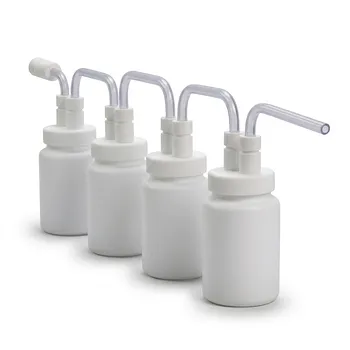
Precision in the hydrothermal synthesis of ZnO hollow spheres demands the highest purity environments. At KINTEK, we focus exclusively on high-performance fluoropolymers to protect your research from contamination. From essential labware like PTFE beakers and reagent bottles to advanced custom-machined hydrothermal synthesis liners and PFA reaction vessels, we provide the tools required for clinical precision.
Our end-to-end custom CNC fabrication capabilities allow us to deliver everything from high-volume standard consumables (tubing, fittings, stirring bars) to complex, non-standard bespoke laboratory setups tailored to your specific pressure and temperature needs.
Ensure the integrity of your next batch.
Contact KINTEK today for high-performance PTFE and PFA laboratory solutions!
References
- Omid Khanali, Hamed Naderi-Samani. Comparative analysis of zinc precursors in the hydrothermal synthesis of zinc oxide hollow spheres. DOI: 10.24294/can10286
This article is also based on technical information from Kintek Knowledge Base .
Related Products
- PTFE Lined High Pressure Digestion Vessel 50ml High Temperature Hydrothermal Synthesis Tank
- High Pressure Custom TFM Reactor Stainless Steel Outer Vessel PTFE Inner Cup for Corrosive Synthesis
- Custom TFM Reaction Vessel with Stainless Steel Jacket and PTFE Inner Cup for High Corrosion Resistance
- PTFE 10L Reaction Vessel with Stirring Paddle Customizable Corrosion Resistant High Temperature Reactor for Biopharmaceutical and Chemical Processing
- High Purity PTFE Reaction Vessel Polyfluortetraethylene Cylindrical Tank Petrochemical Reaction Container
People Also Ask
- What are the benefits of using a PTFE-lined vessel for carbon-sulfur cathode treatment? Maximize Purity & Performance
- Why are PTFE-lined pressure digestion vessels required for the preparation of Ag/CeO2 catalysts? Purity & Performance
- What safety features are typically incorporated into high-pressure PTFE digestion vessel designs? Ensure Lab Safety
- What is the function of PTFE lined high-pressure vessels in g-C3N4 synthesis? Achieve High-Purity Material Growth
- Role of High-Pressure Digestion Tanks in Perovskite Synthesis: Achieve Superior Stability and Latent Heat