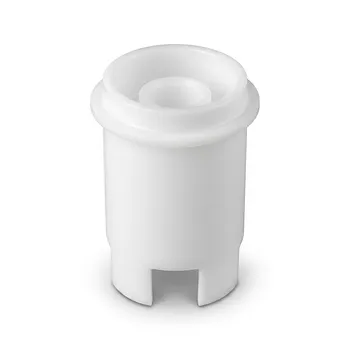
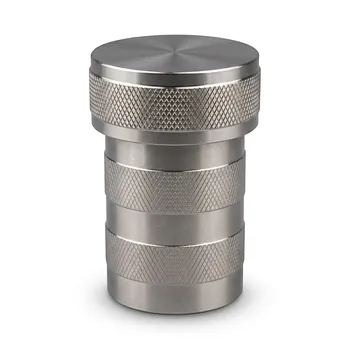
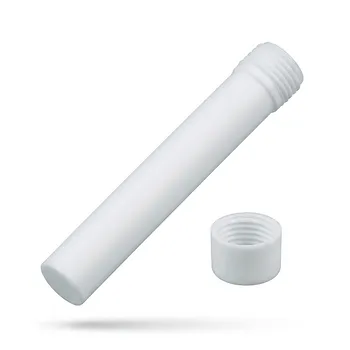
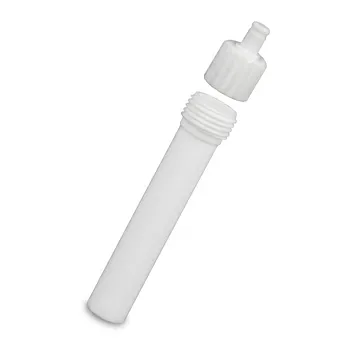
The use of a PTFE-lined high-pressure autoclave is essential for creating the controlled, corrosive-resistant environment required to synthesize high-purity P-Ov-TiO2 nanocrystals. This specialized vessel allows for hydrothermal synthesis at 150°C while simultaneously preventing contamination from the metal reactor walls and enabling the formation of unique liquid-liquid micro-reactors.
The PTFE-lined autoclave serves a dual role: it acts as a chemically inert barrier against corrosive precursors like hypophosphorous acid and provides the sealed, high-pressure conditions necessary to control the growth and doping of titanium dioxide at the water-toluene interface.
Ensuring Chemical Purity and Structural Integrity
Resistance to Corrosive Precursors
The synthesis of P-Ov-TiO2 involves the decomposition of hypophosphorous acid, which creates a highly corrosive environment. The PTFE (polytetrafluoroethylene) liner is chosen specifically for its superior chemical stability, ensuring that these corrosive agents do not damage the container or react with the vessel itself.
Prevention of Metal Ion Contamination
Maintaining the electronic properties of phosphorus-doped nanocrystals requires extreme purity. The liner effectively prevents metal ion contamination from the stainless steel vessel walls, which would otherwise migrate into the reaction solution and degrade the nanocrystals' performance.
Protection of the External Hardware
High-pressure autoclaves typically feature a stainless steel outer shell for structural strength. The PTFE liner protects this outer shell from corrosion caused by organic solvents and acidic precursors, extending the lifespan of the equipment and ensuring safety during high-temperature runs.
Facilitating the Synthesis Mechanism
Creation of Interfacial Micro-reactors
The sealed nature of the autoclave enables the formation of micro-reactors at the interface of water and toluene. This specific environment is critical for the restricted growth of titanium dioxide nuclei, allowing for the precise control of nanocrystal size and morphology.
Maintaining Autogenous Pressure
Under hydrothermal conditions (typically 150°C for this synthesis), the sealed vessel generates autogenous pressure. This pressure is necessary to drive the chemical reactions and phase transformations that convert titanium sources into highly crystalline P-Ov-TiO2.
Ease of Product Recovery
PTFE is known for its extremely smooth, non-stick surface. This physical property facilitates the subsequent recovery and collection of the synthesized solid powder sediments, minimizing product loss after the reaction is complete.
Understanding the Trade-offs
Temperature and Pressure Limitations
While PTFE is highly inert, it is a thermoplastic with a specific thermal ceiling, typically around 220°C to 250°C. Exceeding these temperatures can cause the liner to soften or deform, potentially leading to seal failure or "creeping" of the plastic under high pressure.
Heat Transfer Inefficiency
PTFE is an insulator, meaning it does not conduct heat as efficiently as the metal shell of the autoclave. This requires longer heating and cooling cycles to ensure the internal reaction mixture reaches the desired set-point temperature consistently.
Risk of Mechanical Failure
The liner must be inspected regularly for cracks or pitting. If the liner fails during a run, the corrosive reaction mixture will immediately attack the stainless steel shell, which can lead to catastrophic pressure vessel failure.
Applying This to Your Synthesis Goals
How to Apply This to Your Project
To achieve the best results when synthesizing P-Ov-TiO2 or similar nanocrystals, align your autoclave usage with your specific material requirements:
- If your primary focus is Maximum Purity: Ensure the PTFE liner is thoroughly cleaned with acid between runs to remove any residual phosphorus or titanium clusters that could act as unintended seeds.
- If your primary focus is Precise Particle Size: Focus on the seal integrity to maintain constant autogenous pressure, as fluctuations in pressure can disrupt the water-toluene micro-reactors.
- If your primary focus is Equipment Longevity: Never exceed 200°C for prolonged periods, even if the liner is rated higher, to prevent permanent deformation and ensure the liner continues to fit the stainless steel shell perfectly.
The PTFE-lined autoclave is not merely a container, but a critical tool that defines the chemical environment and structural outcome of the nanocrystal synthesis.
Summary Table:
| Function | Key Benefit | Technical Feature |
|---|---|---|
| Chemical Resistance | Protects against corrosive hypophosphorous acid | High-stability PTFE material |
| Purity Control | Prevents metal ion leaching from stainless steel | Non-reactive internal barrier |
| Reaction Environment | Maintains autogenous pressure at 150°C | Sealed hydrothermal design |
| Interfacial Growth | Facilitates water-toluene micro-reactors | Controlled liquid-liquid interface |
| Product Recovery | Minimizes product loss and adhesion | Ultra-smooth, non-stick surface |
Optimize Your Nanomaterial Synthesis with KINTEK
Precision in nanocrystal synthesis begins with the highest quality labware. KINTEK specializes in manufacturing high-performance fluoropolymer solutions designed to withstand the most demanding hydrothermal conditions.
Whether you require standard PTFE or PFA liners for autoclaves, microwave digestion vessels, or custom CNC-fabricated parts, our expertise ensures your research remains free from contamination. From basic labware like beakers, crucibles, and reagent bottles to complex fluid transfer components and advanced electrochemical cells, KINTEK provides the durability and chemical inertness your lab deserves.
Ready to elevate your lab’s efficiency? Contact us today to explore our full range of standard and bespoke fluoropolymer supplies and discover how our absolute focus on high-performance materials can support your next breakthrough.
References
- Jinzheng Yang, Zhanshuang Jin. Precision‐Engineered Nanocatalysts Via Lattice Tailoring and <i>d</i>‐Band Center Modulation for High‐Performance Lithium‐Sulfur Batteries. DOI: 10.1002/cey2.70043
This article is also based on technical information from Kintek Knowledge Base .
Related Products
- PTFE Lined High Pressure Digestion Vessel 50ml High Temperature Hydrothermal Synthesis Tank
- Custom TFM Reaction Vessel with Stainless Steel Jacket and PTFE Inner Cup for High Corrosion Resistance
- High Pressure Custom TFM Reactor Stainless Steel Outer Vessel PTFE Inner Cup for Corrosive Synthesis
- High Pressure PTFE Digestion Vessel Inner Cup Holder Custom Corrosion Resistant Low Background Teflon
- High Temperature Corrosion Resistant Hydrothermal Synthesis Reactor with TFM Inner Liner and Straight Cylinder Design
People Also Ask
- What are the benefits of using a PTFE-lined vessel for carbon-sulfur cathode treatment? Maximize Purity & Performance
- Why are PTFE-lined pressure digestion vessels required for the preparation of Ag/CeO2 catalysts? Purity & Performance
- What safety features are typically incorporated into high-pressure PTFE digestion vessel designs? Ensure Lab Safety
- What is the function of PTFE lined high-pressure vessels in g-C3N4 synthesis? Achieve High-Purity Material Growth
- Role of High-Pressure Digestion Tanks in Perovskite Synthesis: Achieve Superior Stability and Latent Heat