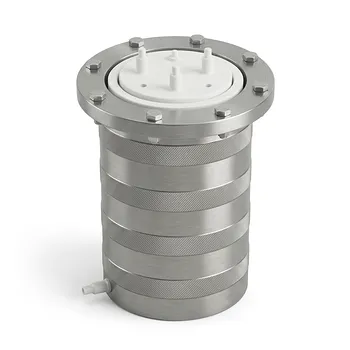
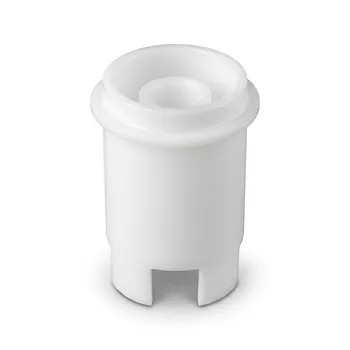
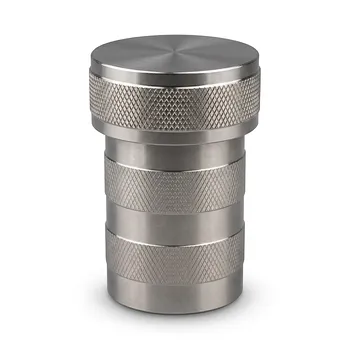
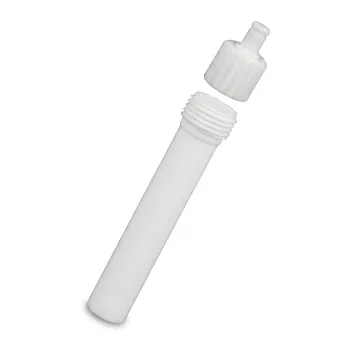
The synthesis of PCN-222 relies on a PTFE-lined autoclave to create a pressurized, high-purity environment for solvothermal reactions. This equipment allows zirconium salts and porphyrin ligands to react at temperatures like 120°C, sustaining the internal pressure while the PTFE (polytetrafluoroethylene) liner prevents metal ion contamination and protects the vessel from corrosive chemicals.
Core Takeaway: The PTFE-lined autoclave is essential because it maintains solvents in a high-energy subcritical state while providing a chemically inert "clean room" environment. This ensures the zirconium-porphyrin framework assembles with high purity and crystallinity without interference from the reactor’s metal walls.
Facilitating the Solvothermal Environment
Sustaining Subcritical Solvent Conditions
In the synthesis of PCN-222, the autoclave creates a sealed system where solvents can be heated well above their atmospheric boiling points. This generates autogenous pressure, keeping the solvents in a liquid, subcritical state that significantly increases the solubility of the precursors.
Accelerating Nucleation and Growth
High-pressure conditions enhance the reactivity of the zirconium salts and porphyrin ligands. This leads to a state of supersaturation, which is necessary for the precise nucleation and slow growth of the high-porosity MOF framework.
Thermal Stability and Control
The autoclave provides the thermal mass needed to maintain a constant temperature, such as 120°C, over extended periods. This stability is vital for the precise crystallization of PCN-222, ensuring the resulting precursors have a consistent three-dimensional structure.
Ensuring Chemical Purity and Integrity
Preventing Metal Ion Contamination
The PTFE liner acts as a physical barrier between the reaction solution and the stainless steel walls of the autoclave. This is critical for PCN-222 synthesis because it prevents unwanted metal ions from the reactor wall from leaching into the solution and disrupting the framework.
Corrosion Resistance Against Precursors
The organic solvents (like DMF) and metal salts used in MOF synthesis can be highly corrosive at elevated temperatures. PTFE is chemically inert, meaning it will not react with or be degraded by these harsh reagents, thereby protecting the external metal shell of the autoclave.
Maximizing Product Recovery
PTFE possesses an extremely smooth, non-stick surface. This property facilitates the recovery of the synthesized PCN-222 powder or crystals, ensuring that the solid precipitates can be easily collected from the liner after the reaction is complete.
Understanding the Trade-offs
Temperature Limitations of PTFE
While PTFE is highly inert, it has a functional temperature ceiling, typically around 250°C. Exceeding this limit can cause the liner to soften or deform, which may compromise the seal and lead to dangerous pressure leaks.
Pressure Sensitivity and Seal Wear
The integrity of the autoclave depends on the mechanical seal between the PTFE liner and the metal cap. Frequent thermal cycling can cause the PTFE to "creep" or deform over time, requiring regular inspection to ensure the system remains pressure-tight.
Heating and Cooling Rates
Because PTFE is a thermal insulator, it can slow down the transfer of heat from the oven to the reaction solution. Users must account for this thermal lag when programming heating and cooling cycles intended for single-crystal growth.
How to Apply This to Your Synthesis
Making the Right Choice for Your Goal
- If your primary focus is Maximum Purity: Ensure the PTFE liner is thoroughly cleaned with acid between runs to remove any residual zirconium or ligands that could act as "seeds" for the next batch.
- If your primary focus is Large Crystal Growth: Utilize the autoclave's thermal mass to implement a slow, programmed cooling rate, which minimizes defects in the PCN-222 lattice.
- If your primary focus is Equipment Longevity: Never exceed 80% of the liner's total volume with solvent to allow sufficient headspace for pressure expansion, preventing liner rupture.
By maintaining a controlled, inert, and high-pressure environment, the PTFE-lined autoclave transforms standard chemical precursors into the sophisticated, porous architecture of the PCN-222 framework.
Summary Table:
| Function | Benefit to PCN-222 Synthesis | PTFE Feature |
|---|---|---|
| Pressure Control | Enables subcritical solvent states for precursor solubility | Sealed Autoclave Design |
| Contamination Prevention | Blocks metal ions from leaching into the MOF framework | Chemically Inert PTFE Liner |
| Thermal Stability | Maintains precise 120°C temp for consistent crystallization | High Thermal Mass |
| Product Recovery | Allows easy collection of fine powder and crystals | Non-stick Smooth Surface |
Elevate Your MOF Research with KINTEK
Precision in PCN-222 synthesis starts with the right equipment. KINTEK specializes in high-performance fluoropolymer solutions tailored for advanced laboratory environments. Whether you are conducting solvothermal reactions or complex trace analysis, we provide everything you need:
- Reaction & Synthesis: High-purity PTFE/PFA-lined autoclaves, hydrothermal synthesis liners, microwave digestion vessels, and custom electrochemical cells.
- Fluid & Sample Prep: Tubing, fittings, valves, separatory funnels, and filtration tools.
- General Labware: Beakers, crucibles, centrifuge tubes, stirring bars, and high-purity storage tanks.
From high-volume consumables to complex, non-standard machined parts, our end-to-end custom CNC fabrication ensures your setup meets exact specifications. Contact us today to optimize your laboratory performance!
References
- Wanyu Shen, Yuen Wu. Self-healing Cu single-atom catalyst for high-performance electrocatalytic CO2 methanation. DOI: 10.1038/s41467-025-63274-9
This article is also based on technical information from Kintek Knowledge Base .
Related Products
- PTFE Lined High Pressure Digestion Vessel 50ml High Temperature Hydrothermal Synthesis Tank
- Custom TFM Reaction Vessel with Stainless Steel Jacket and PTFE Inner Cup for High Corrosion Resistance
- High Pressure Custom TFM Reactor Stainless Steel Outer Vessel PTFE Inner Cup for Corrosive Synthesis
- High Pressure PTFE Digestion Vessel Inner Cup Holder Custom Corrosion Resistant Low Background Teflon
- High Temperature Corrosion Resistant Hydrothermal Synthesis Reactor with TFM Inner Liner and Straight Cylinder Design
People Also Ask
- What are the benefits of using a PTFE-lined vessel for carbon-sulfur cathode treatment? Maximize Purity & Performance
- Why are PTFE-lined pressure digestion vessels required for the preparation of Ag/CeO2 catalysts? Purity & Performance
- What safety features are typically incorporated into high-pressure PTFE digestion vessel designs? Ensure Lab Safety
- What is the function of high-pressure PTFE digestion vessels in mineral analysis? Optimize Sample Mineralization
- What is the function of PTFE lined high-pressure vessels in g-C3N4 synthesis? Achieve High-Purity Material Growth