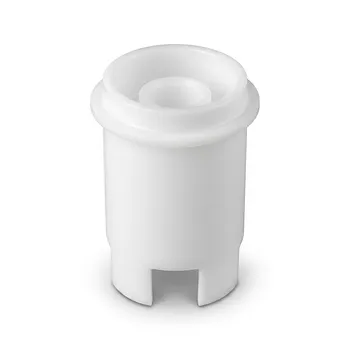
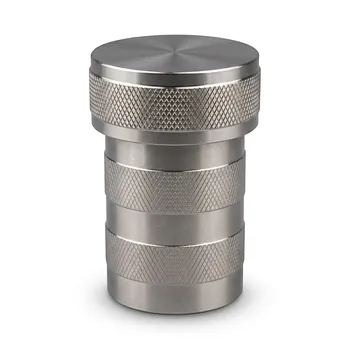
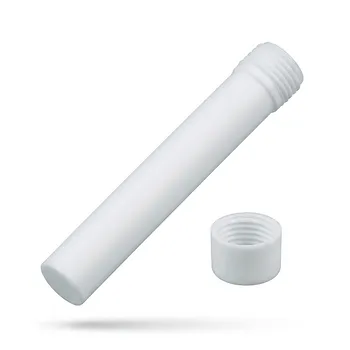
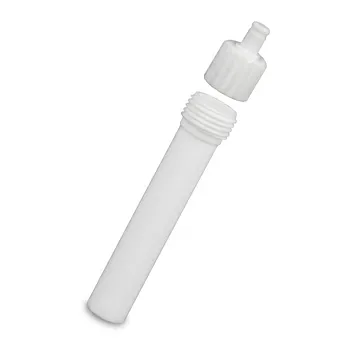
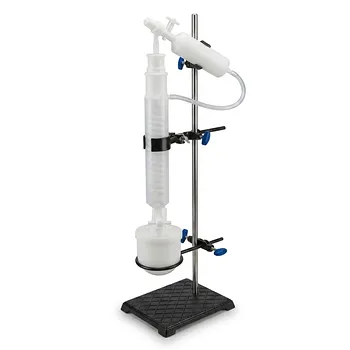
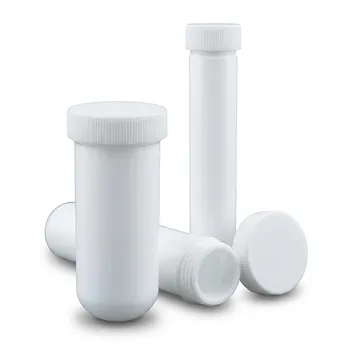
The PTFE-lined high-pressure autoclave serves as the primary reaction vessel for the hydrothermal synthesis of nickel-bismuth oxide, providing a chemically inert and pressurized environment at 120°C. Its fundamental role is to facilitate the in-situ growth of the electrocatalyst onto a nickel foam substrate while preventing contamination and resisting the corrosive nature of the reaction precursors.
The PTFE-lined autoclave enables hydrothermal synthesis by creating a high-pressure, subcritical environment that enhances reactant solubility and ensures the chemical purity of the nickel-bismuth oxide catalyst by isolating the reaction from the metallic reactor walls.
Maintaining Chemical Purity and Stoichiometry
Preventing Metallic Contamination
The chemical inertness of the PTFE (polytetrafluoroethylene) liner is the most critical factor in synthesizing high-performance electrocatalysts. It ensures that the stainless steel outer shell of the autoclave does not leach metal ions into the solution, which would otherwise alter the catalyst's stoichiometry and poison the active sites.
Preserving Precursor Integrity
By providing a non-reactive surface, the liner allows for the precise in-situ growth of nickel-bismuth oxide on the nickel foam substrate. This controlled environment ensures that the interaction between the nickel and bismuth precursors remains consistent with the desired crystalline structure and chemical composition.
Managing High-Pressure and Temperature Conditions
Withstanding Autogenous Pressure
During the hydrothermal process at 120°C, the reaction liquid generates autogenous pressure within the sealed vessel. The autoclave is designed to contain this pressure, allowing the solvent to reach subcritical conditions where its properties change significantly compared to atmospheric boiling points.
Enhancing Reactant Solubility
The high-pressure environment within the PTFE liner increases the solubility and reactivity of the nickel and bismuth precursors. This leads to a state of supersaturation, which is necessary for the nucleation and slow growth of high-quality oxide crystals on the substrate.
Protection Against Corrosive Environments
Resistance to Alkaline Attack
Hydrothermal synthesis often involves strong alkaline agents or harsh precursors that can degrade standard laboratory glassware. The PTFE liner offers exceptional corrosion resistance, protecting the structural integrity of the autoclave's stainless steel shell from chemical attack during the reaction.
Facilitating Efficient Material Recovery
The non-stick properties of PTFE prevent the synthesized micro- and nano-powders from adhering to the walls of the vessel. This characteristic simplifies the cleaning process and ensures that the maximum amount of synthesized material is available for characterization and use.
Understanding the Trade-offs
Temperature Limitations
While PTFE is highly versatile, it has a strict upper temperature limit, typically around 200°C to 250°C, beyond which it may deform or release toxic fumes. For synthesis requiring temperatures exceeding 250°C, more expensive PPL (para-polyphenylene) liners or specialized metallic alloys must be utilized.
Thermal Expansion Disparity
PTFE has a significantly higher coefficient of thermal expansion than the stainless steel outer shell. If the autoclave is heated or cooled too rapidly, the liner can warp or crack, potentially compromising the seal and leading to dangerous pressure leaks.
Applying This Technology to Your Synthesis
Choosing the Right Setup for Your Goal
To achieve the best results in your hydrothermal synthesis, consider the following technical recommendations based on your specific requirements:
- If your primary focus is high purity: Ensure your PTFE liner is cleaned with a dilute acid wash between runs to remove any residual trace metals that could act as unintended dopants.
- If your primary focus is scale-up: Select an autoclave volume that allows for at least 20-30% "headspace" to ensure safe pressure management during the heating phase.
- If your primary focus is structural uniformity: Use a programmable oven to control the heating and cooling rates, which minimizes the thermal stress on the PTFE liner and promotes more uniform crystal growth.
By providing a controlled, inert, and pressurized environment, the PTFE-lined autoclave acts as the essential "chemical laboratory" where complex nickel-bismuth oxide structures are successfully engineered.
Summary Table:
| Key Feature | Benefit in Synthesis | Impact on Electrocatalyst |
|---|---|---|
| Chemical Inertness | Prevents metallic leaching from the outer shell | Maintains precise stoichiometry and purity |
| Pressure Containment | Facilitates subcritical solvent conditions | Enhances precursor solubility and crystal growth |
| Corrosion Resistance | Withstands strong alkaline and acidic precursors | Protects equipment integrity during long reactions |
| Non-stick Surface | Prevents material adhesion to vessel walls | Ensures maximum recovery of synthesized powders |
| Thermal Stability | Maintains environment at 120°C - 200°C | Enables consistent in-situ growth on substrates |
Elevate Your Research with KINTEK’s Precision Fluoropolymer Solutions
Are you looking to eliminate contamination and optimize your hydrothermal synthesis? KINTEK specializes in high-performance labware crafted exclusively from PTFE and PFA, ensuring your results remain pure and reproducible.
Our extensive range covers everything your lab needs:
- Foundational Labware: Beakers, measuring cylinders, crucibles, dishes, reagent/wash bottles, centrifuge and digestion tubes.
- Fluid & Sample Prep: High-purity trace analysis instruments, cleaning/storage tanks, tubing, fittings, valves, separatory funnels, burettes, filters, and pipettes.
- Specialized Accessories: Tweezers, spatulas, stirring bars, O-rings, gaskets, seal tapes, and septa.
- Advanced Reaction Apparatus: Standard or custom electrochemical cells, hydrothermal synthesis liners, battery testing fixtures, electrode accessories, microwave digestion vessels, microchannel reactors, and condensation/reflux devices.
Whether you require high-volume consumables or complex non-standard machined parts via our end-to-end custom CNC fabrication, KINTEK is your dedicated partner for high-performance material science.
Ready to upgrade your laboratory setup? Contact us today to discuss your custom requirements!
References
- Seunghyun Jo, Thomas F. Fuller. High-Performance Nickel–Bismuth Oxide Electrocatalysts Applicable to Both the HER and OER in Alkaline Water Electrolysis. DOI: 10.1021/acsami.4c15514
This article is also based on technical information from Kintek Knowledge Base .
Related Products
- PTFE Lined High Pressure Digestion Vessel 50ml High Temperature Hydrothermal Synthesis Tank
- Custom TFM Reaction Vessel with Stainless Steel Jacket and PTFE Inner Cup for High Corrosion Resistance
- High Pressure Custom TFM Reactor Stainless Steel Outer Vessel PTFE Inner Cup for Corrosive Synthesis
- High Pressure PTFE Digestion Vessel Inner Cup Holder Custom Corrosion Resistant Low Background Teflon
- High Temperature Corrosion Resistant Hydrothermal Synthesis Reactor with TFM Inner Liner and Straight Cylinder Design
People Also Ask
- What are the benefits of using a PTFE-lined vessel for carbon-sulfur cathode treatment? Maximize Purity & Performance
- Why are PTFE-lined pressure digestion vessels required for the preparation of Ag/CeO2 catalysts? Purity & Performance
- What safety features are typically incorporated into high-pressure PTFE digestion vessel designs? Ensure Lab Safety
- What is the function of PTFE lined high-pressure vessels in g-C3N4 synthesis? Achieve High-Purity Material Growth
- Role of High-Pressure Digestion Tanks in Perovskite Synthesis: Achieve Superior Stability and Latent Heat