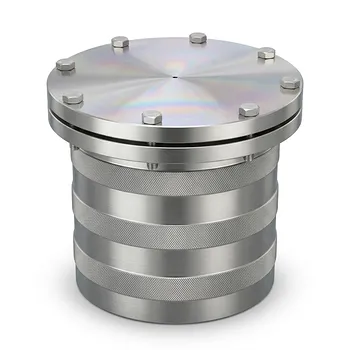
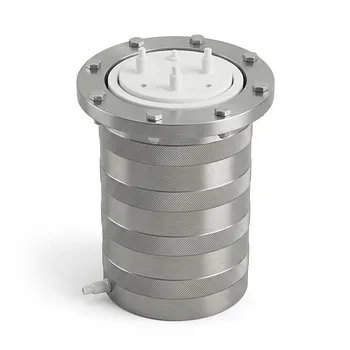
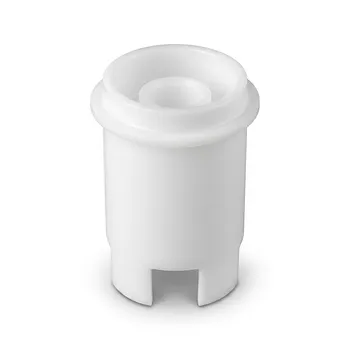
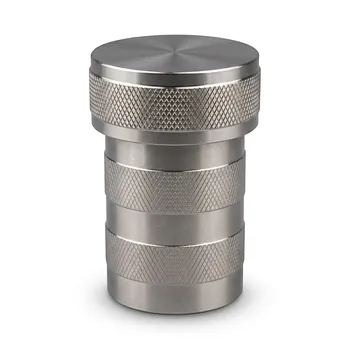
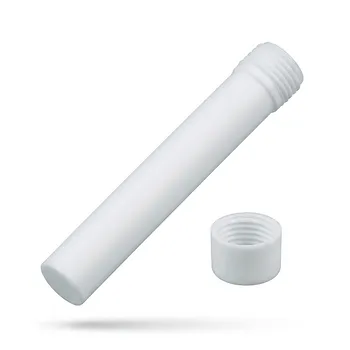
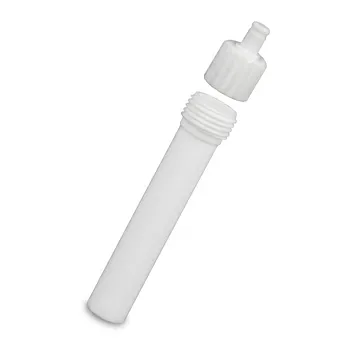
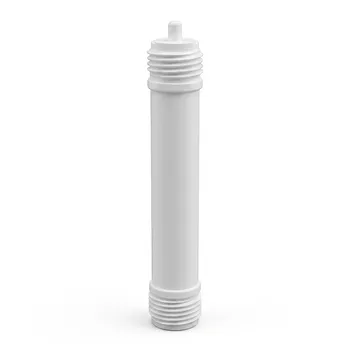
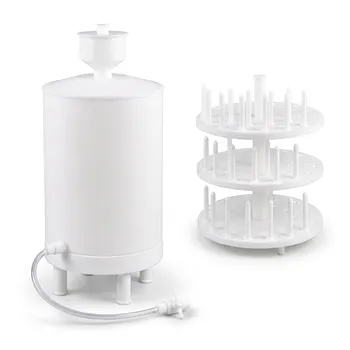
The PTFE-lined high-pressure autoclave serves as a critical reaction vessel that provides a chemically inert, sealed environment for the hydrothermal synthesis of alpha-manganese dioxide ($\alpha$-MnO2) nanowires. It allows the reaction mixture to reach high temperatures—typically around 150°C—and generate autogenous pressure, which is essential for the directional crystallization of the precursors. The PTFE liner specifically isolates corrosive acidic solutions from the autoclave's metal walls, ensuring the structural integrity of the equipment and the purity of the resulting nanostructures.
Core Takeaway: The PTFE-lined autoclave enables the synthesis of high-purity $\alpha$-MnO2 nanowires by providing a corrosion-resistant environment that maintains the constant high pressure and temperature necessary for precursors to organize into a specific tunnel-structured morphology.
Protecting the Reactor from Chemical Attack
Resistance to Acidic Precursors
The synthesis of $\alpha$-MnO2 often involves highly acidic environments, utilizing reagents such as acetic acid and manganese sulfate. The Polytetrafluoroethylene (PTFE) liner acts as a primary barrier, as it is exceptionally resistant to acid corrosion that would otherwise damage the stainless steel body of the autoclave.
Isolation from Strong Oxidizers
In addition to acids, precursors like potassium permanganate are often used, which are strong oxidizing agents. The PTFE liner’s chemical inertness prevents these reactive species from attacking the metallic interior of the vessel during the long reaction cycles required for nanowire growth.
Facilitating the Hydrothermal Environment
Maintaining Constant Autogenous Pressure
The autoclave creates a sealed, airtight system where the liquid precursors are heated beyond their boiling point. This generates autogenous pressure, which increases the reactivity of the solvent and forces the precursors to undergo thorough molecular mixing and crystallization.
Supporting Long-Term Crystallization
The formation of well-defined nanowires with a regular morphology requires extended periods of heat and pressure, often lasting 12 hours or more. The high-pressure autoclave ensures these conditions remain stable throughout the entire duration, allowing the $\alpha$-MnO2 to grow steadily into its characteristic one-dimensional form.
Ensuring High Purity and Structural Integrity
Preventing Metal Ion Contamination
If the acidic reaction solution were to contact the stainless steel walls, it could leach metal ion impurities (such as iron, chromium, or nickel) into the sample. The PTFE liner eliminates this risk, ensuring the $\alpha$-MnO2 nanowires maintain high electrochemical activity and chemical purity.
Promoting the Tunnel Structure
The unique tunnel structure of alpha-manganese dioxide is sensitive to the synthesis environment. By providing a stable, high-pressure, and contaminant-free space, the autoclave facilitates the precise atomic arrangement necessary for the nanowires to develop their specific crystalline phases.
Understanding the Trade-offs and Limitations
Temperature Constraints of PTFE
While PTFE is highly inert, it has a physical limit; it generally should not be used for reactions exceeding 250°C. Beyond this point, the liner can soften or undergo thermal decomposition, potentially compromising the seal and releasing toxic fumes.
Thermal Expansion Mismatch
PTFE has a higher coefficient of thermal expansion than the stainless steel shell surrounding it. If the autoclave is heated or cooled too rapidly, the liner may deform or "creep," which can lead to leaks or difficulty removing the liner from the metal jacket after the experiment.
How to Apply This to Your Research
Recommended Protocols Based on Objectives
- If your primary focus is high-purity nanowire growth: Ensure the PTFE liner is thoroughly cleaned with acid between uses to prevent cross-contamination from previous synthesis batches.
- If your primary focus is equipment longevity: Never exceed the manufacturer's maximum temperature rating (usually 200°C–230°C for standard liners) to prevent permanent deformation of the PTFE.
- If your primary focus is morphological consistency: Use a consistent filling degree (usually 60%–80% of the liner volume) to ensure reproducible autogenous pressure across different experiments.
The PTFE-lined autoclave is the indispensable "chemical kitchen" that allows researchers to safely harness extreme conditions to cook precisely ordered manganese dioxide nanostructures.
Summary Table:
| Key Feature | Benefit for alpha-MnO2 Synthesis |
|---|---|
| PTFE Chemical Inertness | Protects vessel from acidic precursors (manganese sulfate) and strong oxidizers. |
| Sealed Pressure Vessel | Maintains autogenous pressure at ~150°C for directional crystallization of nanowires. |
| Purity Barrier | Eliminates metal ion leaching (Fe, Cr, Ni) from stainless steel walls into the sample. |
| Stable Environment | Supports 12h+ reaction cycles to ensure uniform, tunnel-structured morphology. |
Precision Material Synthesis Starts with KINTEK Fluoropolymer Excellence
Achieving the perfect $\alpha$-MnO2 nanowire morphology requires equipment that stands up to aggressive chemistry. KINTEK provides an exhaustive range of high-performance laboratory supplies crafted exclusively from PTFE and PFA to ensure your research remains uncontaminated and reproducible.
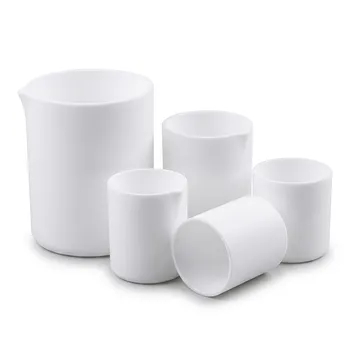
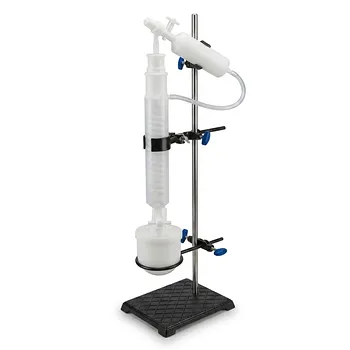
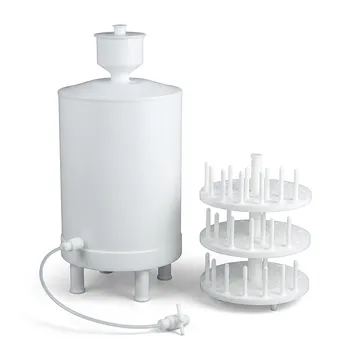
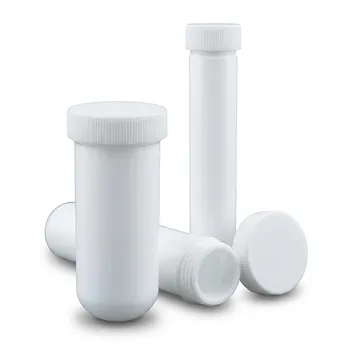
From everyday basic labware like beakers, measuring cylinders, crucibles, and reagent bottles to advanced hydrothermal synthesis liners, microwave digestion vessels, and electrochemical cells, our products are designed for the most demanding environments. We also offer comprehensive fluid transfer components (tubing, valves), sample prep tools, and general consumables (O-rings, seal tapes). Backed by end-to-end custom CNC fabrication, KINTEK is equipped to deliver everything from high-volume standard orders to bespoke, non-standard machined parts tailored to your specific setup.
Secure the purity of your results—contact us today to discuss your laboratory needs!
References
- Cheng Liu, Dino Tonti. Unveiling capacity limitations of MnO <sub>2</sub> in rechargeable Zn chemistry. DOI: 10.1039/d5ee03588k
This article is also based on technical information from Kintek Knowledge Base .
Related Products
- PTFE Lined High Pressure Digestion Vessel 50ml High Temperature Hydrothermal Synthesis Tank
- Custom TFM Reaction Vessel with Stainless Steel Jacket and PTFE Inner Cup for High Corrosion Resistance
- High Pressure Custom TFM Reactor Stainless Steel Outer Vessel PTFE Inner Cup for Corrosive Synthesis
- High Pressure PTFE Digestion Vessel Inner Cup Holder Custom Corrosion Resistant Low Background Teflon
- High Temperature Corrosion Resistant Hydrothermal Synthesis Reactor with TFM Inner Liner and Straight Cylinder Design
People Also Ask
- What are the benefits of using a PTFE-lined vessel for carbon-sulfur cathode treatment? Maximize Purity & Performance
- Why are PTFE-lined pressure digestion vessels required for the preparation of Ag/CeO2 catalysts? Purity & Performance
- What is the function of high-pressure PTFE digestion vessels in mineral analysis? Optimize Sample Mineralization
- What safety features are typically incorporated into high-pressure PTFE digestion vessel designs? Ensure Lab Safety
- What is the function of PTFE lined high-pressure vessels in g-C3N4 synthesis? Achieve High-Purity Material Growth