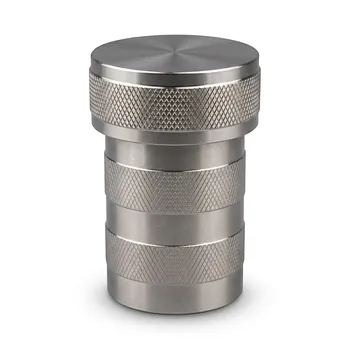
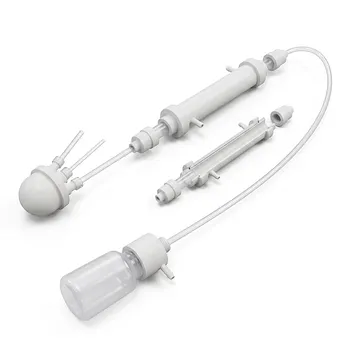
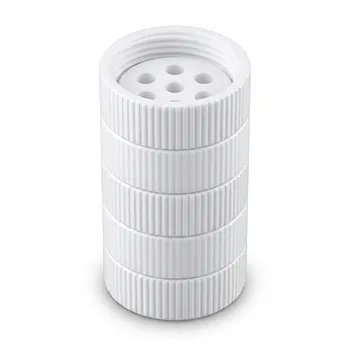
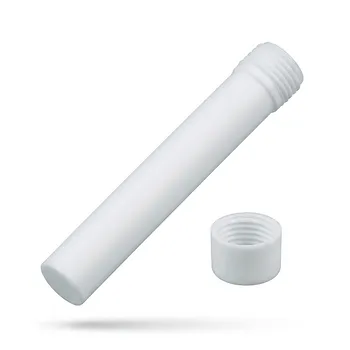
The PTFE-lined high-pressure hydrothermal autoclave serves as a chemically inert reaction vessel that enables the synthesis of high-purity OER catalysts under extreme conditions. By providing a sealed environment capable of withstanding high temperatures and pressures, it facilitates the directional growth of active materials on conductive substrates while preventing metal ion contamination from the reactor's outer shell.
Core Takeaway: The PTFE liner acts as a critical barrier that ensures the chemical purity and structural integrity of OER catalysts by providing a corrosion-resistant, high-pressure environment necessary for the controlled growth of complex oxides and sulfides.
Ensuring Catalyst Purity and Structural Integrity
Chemical Inertness and Contamination Prevention
The primary function of the polytetrafluoroethylene (PTFE) liner is to isolate the reaction media from the autoclave's stainless steel body. This prevents the leaching of metal impurities from the vessel walls into the catalyst, which is vital for ensuring the high purity and excellent crystallinity of materials like NiFeOx or metal-organic frameworks (MOFs).
Resistance to Corrosive Reaction Media
OER catalyst synthesis often involves strong alkaline solutions, acidic precursors, or reactive sulfur sources like thioacetamide (TAA). The PTFE liner provides exceptional corrosion resistance, protecting the external pressure vessel from chemical attack while maintaining the stability of the precursor solution at temperatures often exceeding 130°C to 175°C.
Facilitating Controlled Material Growth
Enabling Supercritical Reaction Conditions
The sealed nature of the autoclave allows liquid-phase reactions to proceed at temperatures significantly higher than the normal boiling point of the solvent. This high-pressure, high-temperature environment provides the necessary energy to promote the directional growth of active materials, ensuring that precursors transform into specific morphologies like nanorods or uniform oxide crystals.
In-Situ Growth on Conductive Substrates
For OER applications, catalysts are frequently grown directly onto substrates such as nickel foam or mesh. The constant pressure maintained within the PTFE-lined vessel ensures a uniform hydrothermal environment, which is essential for the in-situ deposition of the catalyst, optimizing its adhesion and rotational polarization performance.
Understanding the Trade-offs and Limitations
Thermal Constraints of Fluoropolymers
While PTFE is highly resistant to chemicals, it has a lower thermal ceiling compared to metallic vessels, typically limited to roughly 250°C. Exceeding these temperatures can lead to liner deformation or the release of toxic fluorinated vapors, potentially compromising the experiment and safety.
Pressure and Mechanical Wear
Because the PTFE liner is relatively soft, it relies entirely on the outer stainless steel shell for mechanical strength. Over time, repeated heating and cooling cycles can cause the liner to lose its shape or develop microscopic cracks, which may eventually allow corrosive fluids to reach and damage the structural integrity of the outer autoclave.
How to Apply This to Your Synthesis Goals
Strategic Implementation for OER Research
The choice of a PTFE-lined autoclave should be dictated by the specific chemical and structural requirements of your desired anode catalyst.
- If your primary focus is maximizing catalyst purity: Ensure the PTFE liner is thoroughly cleaned and replaced at the first sign of discoloration to prevent cross-contamination between batches.
- If your primary focus is achieving specific crystal morphologies: Focus on the sealing mechanism of the autoclave to maintain constant autogenous pressure, as fluctuations can lead to non-uniform particle sizes.
- If your primary focus is high-temperature synthesis (above 250°C): Consider alternative liner materials like PEEK or quartz, as standard PTFE may fail or leach contaminants under extreme thermal stress.
By precisely controlling the hydrothermal environment within a PTFE-lined vessel, researchers can reliably produce high-performance OER catalysts with the specific chemical and structural properties required for efficient water splitting.
Summary Table:
| Feature | Function | Impact on OER Catalyst |
|---|---|---|
| Chemical Inertness | Prevents leaching from steel body | Ensures high purity (e.g., NiFeOx, MOFs) |
| Corrosion Resistance | Resists strong alkaline/acid media | Maintains stability of precursor solutions |
| High-Pressure Seal | Enables supercritical conditions | Promotes directional & in-situ material growth |
| Thermal Isolation | Uniform hydrothermal environment | Optimizes crystal morphology and adhesion |
Elevate Your Synthesis with KINTEK’s Fluoropolymer Expertise
Precise OER catalyst synthesis demands the highest standards of chemical purity and material integrity. At KINTEK, we specialize in high-performance fluoropolymer solutions tailored for the most demanding laboratory environments.
Whether you need everyday basic labware (beakers, crucibles, reagent bottles), high-purity trace analysis instruments, or comprehensive fluid transfer components (tubing, valves, fittings), we provide the reliability your research deserves. Our capabilities extend to advanced reaction apparatus, including custom PTFE-lined autoclaves, electrochemical cells, and microwave digestion vessels.
Why choose KINTEK?
- End-to-End Customization: Precision CNC fabrication for complex non-standard parts and bespoke setups.
- Material Focus: Absolute expertise in high-performance PTFE and PFA.
- Scalability: From single specialized components to high-volume orders.
Contact KINTEK today to discuss your specific requirements and ensure your lab is equipped with the world's finest fluoropolymer supplies.
References
- Hengzhou Liu, Edward H. Sargent. Hierarchically porous carbon supports enable efficient syngas production in electrified reactive capture. DOI: 10.1039/d5ee00094g
This article is also based on technical information from Kintek Knowledge Base .
Related Products
- PTFE Lined High Pressure Digestion Vessel 50ml High Temperature Hydrothermal Synthesis Tank
- Custom TFM Reaction Vessel with Stainless Steel Jacket and PTFE Inner Cup for High Corrosion Resistance
- High Temperature Corrosion Resistant Hydrothermal Synthesis Reactor with TFM Inner Liner and Straight Cylinder Design
- High Pressure Custom TFM Reactor Stainless Steel Outer Vessel PTFE Inner Cup for Corrosive Synthesis
- High Temperature Corrosion Resistant PTFE Hydrogen Fluoride Condensation Reflux System with Separatory Funnel and PFA Collection Bottle
People Also Ask
- What are the benefits of using a PTFE-lined vessel for carbon-sulfur cathode treatment? Maximize Purity & Performance
- Why are PTFE-lined pressure digestion vessels required for the preparation of Ag/CeO2 catalysts? Purity & Performance
- What safety features are typically incorporated into high-pressure PTFE digestion vessel designs? Ensure Lab Safety
- What is the function of PTFE lined high-pressure vessels in g-C3N4 synthesis? Achieve High-Purity Material Growth
- Role of High-Pressure Digestion Tanks in Perovskite Synthesis: Achieve Superior Stability and Latent Heat