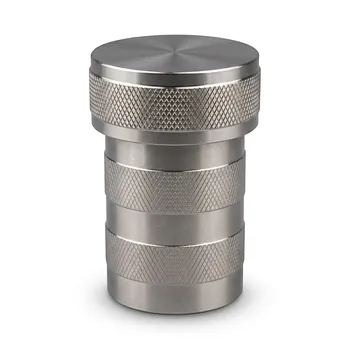
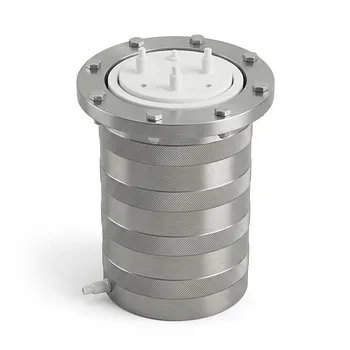
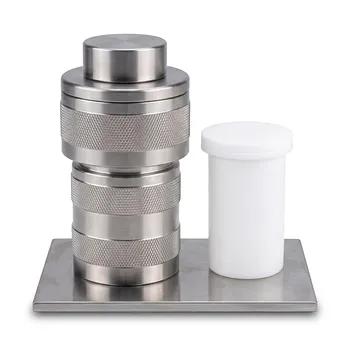
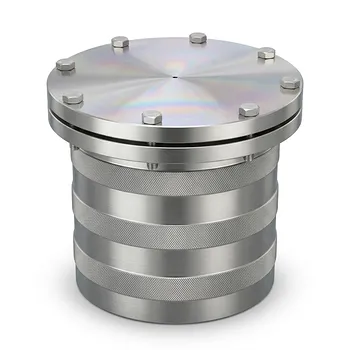
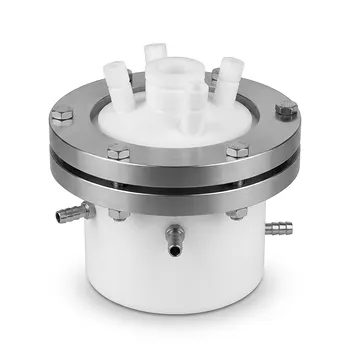
The high-pressure hydrothermal reactor is the fundamental catalyst for the one-step synthesis of VO2@C nanocomposites. It creates a sealed, high-temperature environment (typically 180°C) where water acts as a subcritical solvent to simultaneously reduce vanadium pentoxide and carbonize glucose. This precise control enables the in-situ growth of vanadium dioxide crystals directly onto carbon spheres, ensuring a uniform and tightly integrated composite structure that would be impossible under standard atmospheric conditions.
The hydrothermal reactor facilitates a "one-pot" reaction by leveraging high autogenous pressure to increase precursor solubility and chemical reactivity. This environment allows for the simultaneous formation of both the carbon matrix and the metal oxide crystals, resulting in superior structural integration and phase purity.
Creating the Subcritical Reaction Environment
Achieving Subcritical Conditions
At temperatures such as 180°C within a sealed vessel, water enters a subcritical state, where its physical and chemical properties shift significantly. The resulting autogenous pressure increases the dielectric constant and lowers the viscosity of the solvent. This allows the water to penetrate precursor materials more effectively than it could at boiling point.
Accelerating Chemical Kinetics
The high-pressure environment significantly increases the solubility and reactivity of the vanadium pentoxide precursor and the glucose carbon source. These conditions accelerate the reduction of vanadium and the carbonization of glucose simultaneously. Without this pressure, the energy barrier for these dual processes would require much higher temperatures, potentially damaging the desired morphology.
Facilitating In-Situ Growth and Integration
Simultaneous Reduction and Carbonization
The reactor enables a one-step synthesis by providing the thermal energy and pressure required for two distinct chemical pathways to occur at once. As the glucose molecules undergo carbonization to form spheres, the vanadium precursor is reduced to monoclinic vanadium dioxide. This synchronization is critical for achieving a "one-pot" workflow.
Structural Integrity and Core-Shell Formation
Because the reaction happens in a sealed, high-pressure system, the $VO_2$ crystals nucleate and grow directly on the surface of the forming carbon matrix. This results in a uniform core-shell structure or a tightly integrated composite. The pressure ensures that the interface between the metal oxide and the carbon is robust, preventing the materials from delaminating.
Controlling Phase and Morphology
Precise control of the reactor’s temperature and residence time allows for the selection of specific crystal facets and morphologies. In the case of $VO_2@C$, the reactor environment is tuned to promote the growth of the stable monoclinic phase. This ensures the resulting nanocomposite possesses the specific stoichiometry and crystallinity required for advanced applications.
Understanding the Trade-offs
Safety and Equipment Limits
High-pressure reactors, especially those using PTFE (polytetrafluoroethylene) liners, have strict temperature limits, often around 200°C–250°C. Exceeding these limits can lead to liner deformation or catastrophic pressure release. Users must balance the need for high reactivity with the mechanical limits of the pressure vessel.
Scalability Challenges
Hydrothermal synthesis is often limited by batch processing constraints. While it produces high-quality nanocomposites, scaling the process to industrial levels requires significantly more complex and expensive high-pressure infrastructure. This makes it ideal for precision materials but challenging for high-volume, low-cost production.
Reaction Time Sensitivity
The duration of the hydrothermal process is a critical variable; too little time results in incomplete carbonization, while too much time can lead to overgrowth of crystals. This narrow window requires rigorous optimization of the reactor’s "soak time" to maintain the desired nanoscale dimensions.
How to Apply This to Your Project
Recommendations for Synthesis
- If your primary focus is phase purity: Maintain a steady temperature of 180°C to 200°C to ensure the full reduction of vanadium pentoxide into the monoclinic $VO_2$ phase.
- If your primary focus is uniform coating: Use a glucose-to-vanadium ratio that favors slower nucleation, allowing the carbon spheres to provide a consistent substrate for $VO_2$ growth.
- If your primary focus is structural integrity: Ensure the reactor is equipped with a clean PTFE liner to prevent contamination and maintain a perfectly sealed environment for consistent autogenous pressure.
By mastering the high-pressure environment of the hydrothermal reactor, you can achieve a level of molecular integration in $VO_2@C$ nanocomposites that is unattainable through traditional mechanical mixing.
Summary Table:
| Mechanism | Impact on Synthesis | Key Benefit |
|---|---|---|
| Subcritical Environment | Increases precursor solubility & reactivity | Enables efficient "One-Pot" workflow |
| Chemical Kinetics | Accelerates vanadium reduction & glucose carbonization | Lower energy barriers for dual processes |
| In-Situ Growth | Nucleates VO2 directly onto forming carbon spheres | Robust core-shell structural integrity |
| Phase Control | Precise regulation of temperature & residence time | High phase purity & specific crystallinity |
Elevate Your Nanomaterial Synthesis with KINTEK
Achieving precise phase purity and structural integrity in VO2@C nanocomposites requires equipment that can withstand rigorous hydrothermal conditions. KINTEK specializes in manufacturing high-performance laboratory supplies crafted from PTFE and PFA, including the critical hydrothermal synthesis liners and microwave digestion vessels essential for high-pressure reactions.
From basic labware like beakers and reagent bottles to complex custom CNC-fabricated reaction apparatus and fluid transfer components (tubing, valves, fittings), we deliver end-to-end solutions for high-purity trace analysis. Whether you need standard consumables or bespoke laboratory setups for advanced reaction environments, KINTEK’s absolute focus on fluoropolymer materials ensures your research is backed by durability and chemical inertness.
Ready to optimize your hydrothermal processes? Contact us today to discuss your custom requirements and discover how our high-performance fluoropolymer solutions can enhance your laboratory's efficiency.
References
- Yogita Padwal, Suresh Gosavi. <i>In situ</i> synthesis of VO<sub>2</sub>@C nanocomposites for enhanced visible-light photocatalysis in wastewater remediation and sustainable hydrogen generation. DOI: 10.1039/d4ya00587b
This article is also based on technical information from Kintek Knowledge Base .
Related Products
- High Temperature Corrosion Resistant Hydrothermal Synthesis Reactor with TFM Inner Liner and Straight Cylinder Design
- High Pressure Custom TFM Reactor Stainless Steel Outer Vessel PTFE Inner Cup for Corrosive Synthesis
- PTFE Lined High Pressure Digestion Vessel 50ml High Temperature Hydrothermal Synthesis Tank
- Custom TFM Reaction Vessel with Stainless Steel Jacket and PTFE Inner Cup for High Corrosion Resistance
- High Purity PFA Constant Pressure Condensation Reaction System Acid Resistant High Temperature Customizable Teflon Labware
People Also Ask
- What is the role of a corrosion-resistant reactor in the synthesis of lignin-based carbon dots? Ensure Maximum Purity
- What are the technical advantages of using hydrothermal synthesis reactors for advanced electronic & optical nanomaterials?
- How does a hydrothermal synthesis reactor facilitate the production of crystalline materials with tailored morphologies? Precision Crystal Growth
- Why is the sealing reliability of a hydrothermal synthesis reactor critical for 24-hour cycles? Ensure Nano-Precision
- What role do hydrothermal synthesis reactors play in CQD preparation? Achieve High-Purity Nanomaterial Synthesis