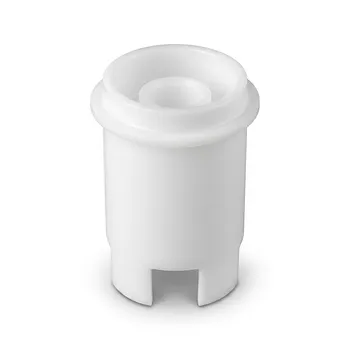
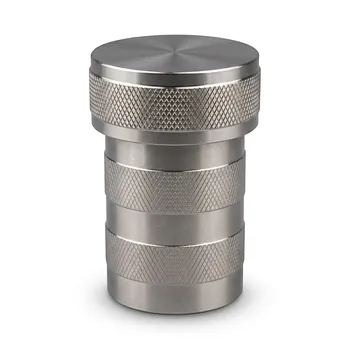
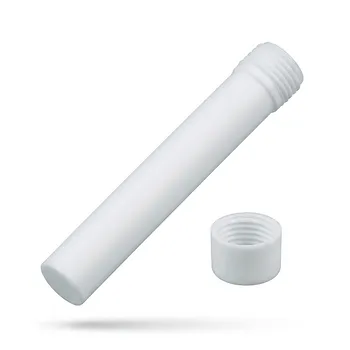
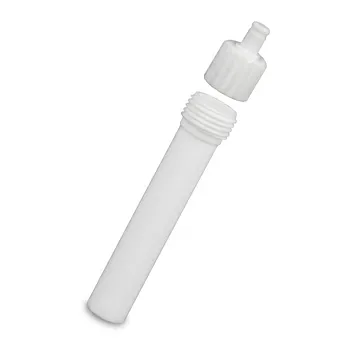
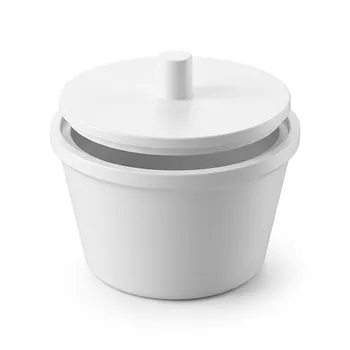
The function of a high-pressure autoclave with a PTFE liner is to provide a controlled, contamination-free hydrothermal environment for the synthesis of ACZO nanorods. This equipment enables the complete decomposition of precursors and the oriented crystallization of nanostructures at temperatures like 170°C, while the liner ensures high chemical purity by preventing the reaction solution from interacting with the metal reactor walls.
The autoclave creates the necessary thermodynamic conditions—high pressure and temperature—to drive the nucleation and growth of doped zinc oxide, while the PTFE liner serves as a critical barrier against metallic contamination and corrosion.
Creating the Hydrothermal Growth Environment
Facilitating Precursor Dissolution
A high-pressure autoclave allows solvents to remain in a liquid state at temperatures significantly above their normal boiling points. This increased energy facilitates the complete dissolution of precursors, ensuring that aluminum, cerium, and zinc ions are thoroughly mixed in the solution.
Driving Nucleation and Crystallization
The sealed environment maintains the stable conditions required for nucleation and growth of the nanorods. At specific temperatures, such as 170°C, the system provides the thermal energy necessary for the precursors to decompose and reform into solid ACZO nanocomposites.
Promoting Oriented Nanorod Growth
Under high-pressure conditions, the precursor solution reaches a state of supersaturation that favors anisotropic growth. This specifically encourages the material to crystallize along the [0001] direction, resulting in the desired one-dimensional nanorod morphology rather than bulk particles.
The Critical Role of the PTFE Liner
Preventing Metallic Contamination
The Polytetrafluoroethylene (PTFE) liner is prized for its exceptional chemical inertness. By shielding the reaction solution from the autoclave's stainless steel shell, it prevents iron, chromium, or nickel ions from leaching into the ACZO, which would otherwise degrade the material's purity and performance.
Resistance to Corrosive Precursors
Hydrothermal synthesis often involves strong alkaline or acidic environments that would corrode a standard metal vessel. The PTFE liner provides the necessary corrosion resistance to withstand these aggressive chemical precursors at elevated temperatures without failing.
Ensuring Purity for Doping
For co-doped materials like ACZO, maintaining the precise ratio of Aluminum and Cerium is vital. The liner ensures that the doping process remains controlled and that no unintended external elements are incorporated into the zinc oxide crystal lattice.
Understanding the Trade-offs and Limitations
Temperature Constraints
While PTFE is highly inert, it has a functional upper temperature limit, typically around 250°C. Exceeding this temperature can cause the liner to soften or deform, potentially compromising the seal and damaging the autoclave.
Thermal Expansion Mismatch
PTFE has a different coefficient of thermal expansion than the stainless steel shell surrounding it. Rapid heating or cooling can lead to mechanical stress on the liner, which may cause it to crack or warp over time, leading to potential leaks.
Pressure Limitations
The autoclave system is designed for high pressure, but the safety of the operation depends on the integrity of the seal between the liner and the cap. Improper assembly or worn gaskets can lead to pressure drops, which disrupt the crystallization process and result in poor nanorod quality.
How to Apply This to Your Project
When selecting or operating a PTFE-lined autoclave for ACZO synthesis, consider the following recommendations:
- If your primary focus is Maximum Purity: Always inspect the PTFE liner for any discoloration or pitting before use, as these are signs of previous contamination or material degradation.
- If your primary focus is Precise Morphology: Maintain a strictly controlled heating ramp to ensure the solution reaches supersaturation gradually, promoting uniform nanorod dimensions.
- If your primary focus is Equipment Longevity: Avoid "quenching" or rapid cooling of the autoclave after the 170°C synthesis; allow it to cool naturally to protect the PTFE liner from thermal shock.
The synergy between the autoclave's physical environment and the liner's chemical protection is what makes the precision engineering of ACZO nanorods possible.
Summary Table:
| Feature | Role in ACZO Synthesis | Key Benefit |
|---|---|---|
| Hydrothermal Environment | Enables high temperature/pressure (170°C+) | Facilitates precursor dissolution and crystallization |
| PTFE Liner | Acts as a chemical barrier against metal walls | Prevents metallic contamination (Fe, Ni, Cr) |
| Oriented Growth | Maintains supersaturation state | Promotes anisotropic growth along the [0001] direction |
| Chemical Inertness | Resists aggressive alkaline/acidic precursors | Ensures precise Aluminum-Cerium doping ratios |
| Temperature Limit | Functional up to ~250°C | Safe range for most nanorod hydrothermal processes |
Elevate Your Research Precision with KINTEK’s Fluoropolymer Expertise
Precision in nanomaterial synthesis demands a contamination-free environment. KINTEK specializes in high-performance PTFE and PFA laboratory solutions designed to protect the integrity of your most sensitive experiments. From hydrothermal synthesis liners and microwave digestion vessels to custom CNC-fabricated components, we provide the chemical inertness and thermal stability your lab requires.
Our extensive range includes:
- Essential Labware: Beakers, crucibles, reagent bottles, and centrifuge tubes.
- Fluid Handling: High-purity tubing, fittings, valves, and filtration tools.
- Advanced Apparatus: Custom electrochemical cells, battery testing fixtures, and microchannel reactors.
Whether you need high-volume standard consumables like stirring bars and gaskets or bespoke, non-standard machined parts, KINTEK’s absolute focus on fluoropolymers ensures your ACZO nanorods and other advanced materials remain pure.
Ready to upgrade your laboratory setup? Contact our engineering team today to discuss your custom requirements and experience the KINTEK advantage in high-performance materials.
References
- Abu Summama Sadavi Bilal, Akbar Ali Qureshi. Dual-doped ZnO nanocomposites for superior photocatalytic hydrogen generation. DOI: 10.1186/s40712-025-00327-3
This article is also based on technical information from Kintek Knowledge Base .
Related Products
- PTFE Lined High Pressure Digestion Vessel 50ml High Temperature Hydrothermal Synthesis Tank
- Custom TFM Reaction Vessel with Stainless Steel Jacket and PTFE Inner Cup for High Corrosion Resistance
- High Pressure Custom TFM Reactor Stainless Steel Outer Vessel PTFE Inner Cup for Corrosive Synthesis
- High Pressure PTFE Digestion Vessel Inner Cup Holder Custom Corrosion Resistant Low Background Teflon
- High Temperature Corrosion Resistant Hydrothermal Synthesis Reactor with TFM Inner Liner and Straight Cylinder Design
People Also Ask
- What are the benefits of using a PTFE-lined vessel for carbon-sulfur cathode treatment? Maximize Purity & Performance
- Why are PTFE-lined pressure digestion vessels required for the preparation of Ag/CeO2 catalysts? Purity & Performance
- What safety features are typically incorporated into high-pressure PTFE digestion vessel designs? Ensure Lab Safety
- What is the function of PTFE lined high-pressure vessels in g-C3N4 synthesis? Achieve High-Purity Material Growth
- Role of High-Pressure Digestion Tanks in Perovskite Synthesis: Achieve Superior Stability and Latent Heat