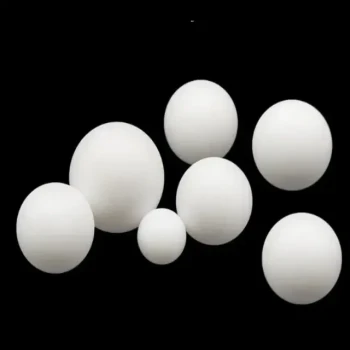
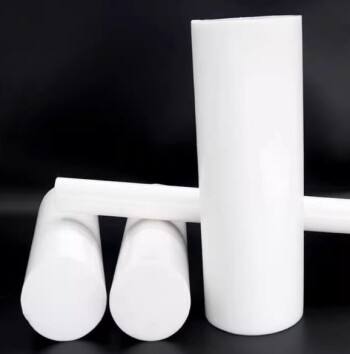
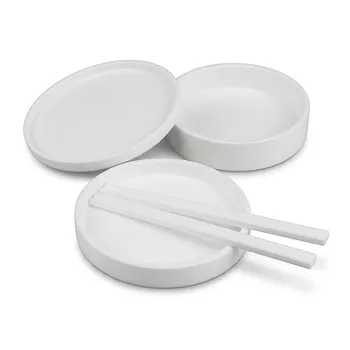
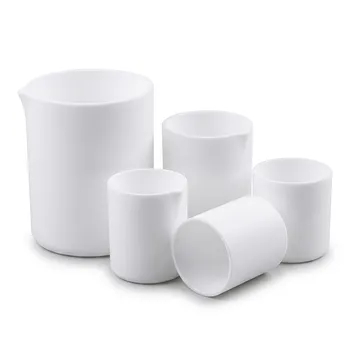
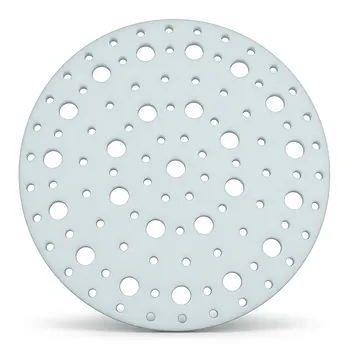
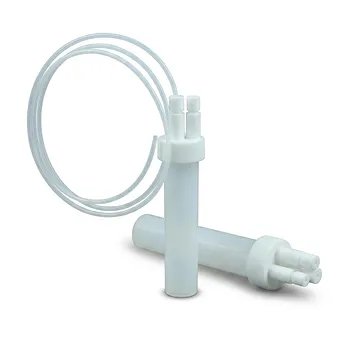
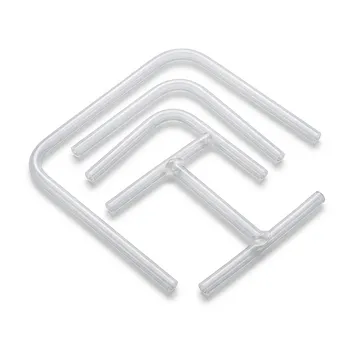
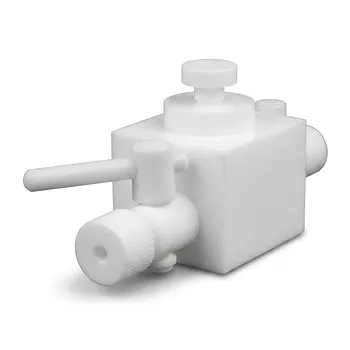
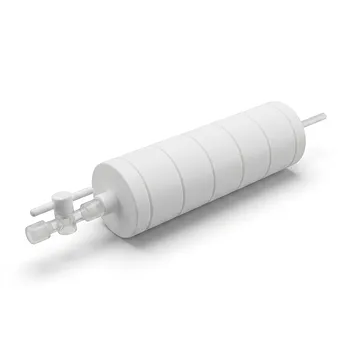
PTFE is chemically inert because its carbon backbone is heavily shielded by tightly bonded fluorine atoms. The exceptionally strong carbon–fluorine bonds make PTFE highly resistant to attack by strong acids, concentrated bases, organic solvents, and many fluorinated reagents. It also does not readily dissolve, swell, or react, helping laboratory vessels, tubing, and fittings preserve sample purity under aggressive conditions.
The key advantage is chemical nonreactivity: PTFE’s fluorine-rich molecular structure protects the polymer from most laboratory reagents, while its low surface energy and thermal stability reduce contamination, degradation, and cleaning difficulties.
Why PTFE Resists Aggressive Chemicals
Strong carbon–fluorine bonding
PTFE consists of a carbon-chain backbone surrounded by fluorine atoms. The strong, short C–F bonds are difficult for chemical reagents to break, creating a highly stable molecular structure.
The fluorine atoms also shield much of the carbon backbone from contact with acids, bases, and solvents. This combination explains why PTFE remains largely unreactive in environments where conventional plastics, metals, or elastomers may corrode or degrade.
Low chemical reactivity
PTFE is resistant to attack from many strong acids, concentrated bases, and organic solvents, including hydrofluoric acid under typical laboratory conditions. It generally neither participates in reactions with the contained reagent nor provides a reactive surface for chemical transformations.
This is especially valuable in digestion, synthesis, and reagent-storage applications where the container must remain chemically passive.
Resistance to dissolution and swelling
A material can fail without visibly reacting if it dissolves, softens, or swells in the chemical it contains. PTFE’s molecular stability gives it very low solubility in ordinary laboratory solvents and strong resistance to dimensional changes.
Consequently, PTFE components can maintain their function during prolonged exposure to corrosive media.
How These Properties Protect High-Purity Samples
Low extractables and leachables
PTFE does not readily break down or dissolve into a sample, so it contributes very low levels of organic contamination under appropriate operating conditions. This makes it useful for trace analysis, where even small impurities can affect results.
The material’s resistance to chemical attack also reduces the risk that corrosion products or degradation fragments will enter the reagent.
Low surface energy
PTFE has exceptionally low surface energy, giving it non-wetting and low-adhesion behavior. Many aqueous and organic liquids do not spread readily across its surface.
This can reduce residue retention and simplify cleaning, although low wetting can also make complete rinsing and liquid transfer dependent on vessel geometry and handling technique.
Stable, nonreactive fluid-contact surfaces
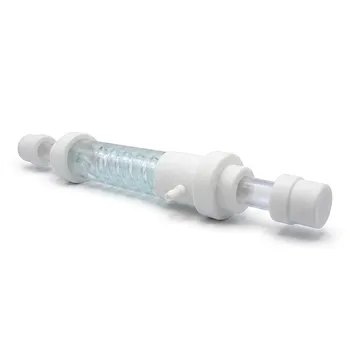
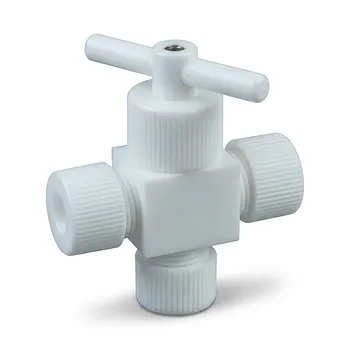
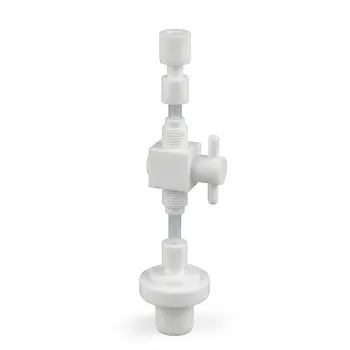
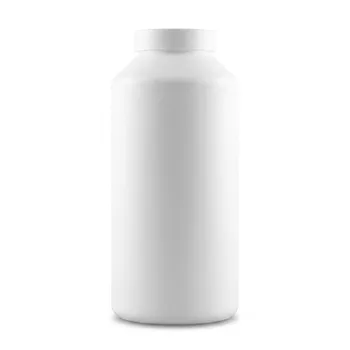
PTFE is used for bottles, digestion vessels, tubing, liners, valves, and fittings because the wetted surface remains comparatively inert. This supports reliable fluid handling when the chemical composition, concentration, and purity of the reagent must be preserved.
PFA is often selected alongside PTFE when a more transparent or melt-processable fluoropolymer component is needed, while retaining strong chemical resistance.
Why Thermal Stability Matters
Broad operating-temperature capability
Chemical resistance is most useful when it remains available across the process temperature range. PTFE retains practical stability from cryogenic conditions through elevated laboratory temperatures, allowing it to handle cold storage, heated digestion, and demanding transfer operations.
Its thermal stability helps prevent warping, embrittlement, or chemical degradation during temperature cycling.
Resistance during digestion and reaction work
Laboratory digestion and reaction procedures can combine aggressive reagents with heat. PTFE vessels and liners can withstand these environments without the corrosion mechanisms associated with many metals or the chemical attack that affects less-resistant polymers.
However, temperature limits must be established for the specific design and chemical combination rather than assumed from PTFE’s general reputation.
Understanding the Trade-offs
“Chemically inert” does not mean universally indestructible
PTFE is not resistant to every possible chemical condition. Certain materials, including molten alkali metals, elemental fluorine, and some highly reactive fluorinating systems, can attack PTFE, particularly at elevated temperatures.
Compatibility should therefore be checked against the exact reagent, concentration, temperature, pressure, and exposure duration.
Mechanical properties require separate evaluation
PTFE’s chemical resistance does not automatically make it the best structural material. It has relatively low stiffness compared with metals and can deform under sustained load, especially at higher temperatures.
For pressure-containing systems, threaded connections, seals, or repeated mechanical cycling, the complete component design matters as much as the polymer’s chemistry.
Purity depends on manufacturing and handling
Low contamination is not guaranteed by the material name alone. Fillers, pigments, machining residues, processing aids, poor cleaning, or unsuitable storage practices can compromise high-purity performance.
For trace analysis, specify appropriate virgin or high-purity grades, control the manufacturing process, and validate extractables and cleaning procedures.
Thermal processing has limitations
PTFE does not behave like a conventional melt-processable plastic. Near its melting region, it forms a stiff gel rather than a freely flowing melt, which influences how components are manufactured.
That limitation is one reason PFA may be preferred for certain complex, transparent, or molded laboratory parts.
Making the Right Choice for Your Goal
PTFE is most valuable when chemical nonreactivity and sample integrity are more important than transparency, stiffness, or easy melt processing.
- If your primary focus is aggressive-acid resistance: Use PTFE for wetted vessels, tubing, liners, and fittings after verifying compatibility with the exact reagent and temperature.
- If your primary focus is trace-analysis purity: Select a high-purity, low-extractables component and control cleaning, handling, and manufacturing contamination.
- If your primary focus is heated digestion or thermal cycling: Use fluoropolymer equipment within its rated temperature and pressure limits, and evaluate deformation as well as chemical resistance.
- If your primary focus is complex molded or transparent labware: Consider PFA when its processing and visibility advantages are more important than PTFE’s particular form and performance characteristics.
PTFE’s strong fluorine-shielded structure makes it a dependable barrier between aggressive chemistry and sensitive laboratory samples.
Summary Table:
| Property | Benefit | Application |
|---|---|---|
| Strong C-F bonds | Resists acid, base, solvent attack | Digestion vessels, tubing |
| Low reactivity | Prevents contamination and reactions | Reagent storage, trace analysis |
| Low extractables | Maintains sample purity | Analytical instruments |
| Low surface energy | Non-stick, easy cleaning | Filtration, sample prep |
| Thermal stability | Operates from cryogenic to high temps | Heated digestion, reactions |
For over a decade, KINTEK has been the trusted source for high-performance PTFE and PFA labware. Our products, from beakers to custom electrochemical cells, are crafted to deliver maximum chemical resistance, purity, and durability—ensuring your samples are never compromised. Whether you need standard components, custom CNC-machined parts, or specialty equipment, our team is ready to support your specific applications. Contact us today to find the perfect solution for your lab!
Related Products
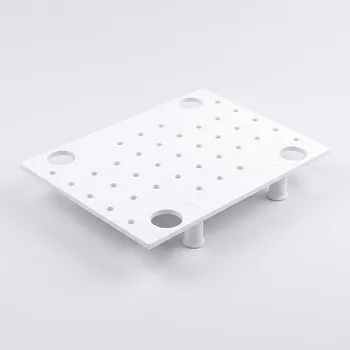
- High Temperature Resistant PTFE Thermal Insulation Board Corrosion Resistant Metal Free Fluoropolymer Stand for Ultra Clean Laboratories
- Custom PTFE Insulating Gaskets and Corrosion Resistant Fluoropolymer Seals for Industrial Electrical Applications
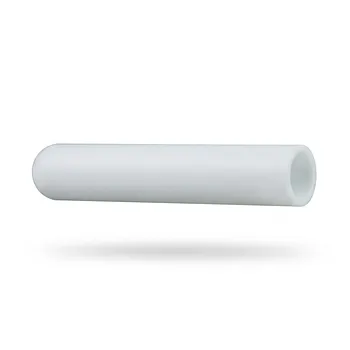
- Custom PTFE Test Tubes Corrosion Resistant Low Background Fluoropolymer Labware 50ml 30ml
- Custom PTFE Filtration System Acid Resistant Chemical Semiconductor Fluoropolymer Filter Assembly
- Custom PTFE Condenser Tube 100ml Serpentine and Straight Fluoropolymer Laboratory Heat Exchanger with Flask Adapters
People Also Ask
- What are the limitations of pure PTFE in high temperature applications? Understanding the 200°C Ceiling
- What materials are used to manufacture PTFE bars? A Guide to Virgin & Filled PTFE
- What factors should be considered when choosing PTFE bars for chemical applications? Select the Right Grade for Your Process
- What advantages do PTFE bars offer in chemical industries? Ensure Safety and Efficiency in Demanding Applications
- Why are PTFE bars considered essential in modern industrial applications? Unlock Unmatched Chemical & Thermal Resistance