Fluoropolymers resist chemicals because fluorine strongly protects the carbon backbone, while their surfaces repel substances because fluorinated groups have exceptionally low surface energy. The highly stable carbon–fluorine (C–F) bonds, combined with fluorine’s low polarizability and electron-withdrawing character, make the polymer difficult to oxidize, solvate, or chemically attack. At the surface, fluorinated segments preferentially orient toward the interface, lowering surface energy and producing strong hydrophobic and oleophobic behavior.
The same molecular design explains both major advantages: fluorine forms a durable chemical shield around the polymer backbone and creates a low-energy outer surface that resists wetting, adhesion, absorption, and contamination.
Why the Molecular Structure Is Chemically Resistant
Strong carbon–fluorine bonds
Fluorine forms one of the strongest common single bonds to carbon. Breaking or replacing these bonds requires substantial chemical energy, which helps fluoropolymer chains withstand acids, bases, solvents, oxidizing agents, and reducing environments.
The polymer backbone also contains strong carbon–carbon bonds. Together, these bonds give fluoropolymers a chemically stable framework that is difficult for reactive chemicals to fragment.
Fluorine shields the carbon backbone
Fluorine atoms occupy the positions around the carbon chain and create a dense protective envelope. This steric shielding makes it more difficult for reagents, oxygen, radicals, and ultraviolet radiation to reach and attack the underlying backbone.
In perfluorinated polymers, most or all of the backbone’s available hydrogen is replaced by fluorine. This generally provides greater chemical and thermal resistance than in partially fluorinated materials, which retain some more reactive carbon–hydrogen bonds.
Low polarizability reduces chemical interaction
Fluorine is highly electronegative but relatively difficult to polarize. As a result, fluorinated surfaces have weak, less easily induced intermolecular interactions with many other substances.
This contributes to low adhesion and reduces the tendency of chemicals or biological materials to absorb into, dissolve in, or remain attached to the polymer.
Chemical inertness is also a materials property
Resistance does not depend only on individual bond strength. The polymer’s overall architecture, crystallinity, chain packing, molecular weight, defects, fillers, and processing history also influence performance.
That is why chemically related fluoropolymers can have different temperature limits, permeability, mechanical properties, and resistance to particular reagents.
Why Fluoropolymer Surfaces Repel Water and Oils
Fluorinated groups migrate toward the interface
Fluorinated segments tend to orient or migrate toward the material–air or material–liquid interface because doing so lowers the system’s overall surface energy. The surface therefore becomes enriched in fluorine even when the entire polymer is not fully fluorinated.
This is a molecular form of surface optimization: the material presents a low-energy exterior to its surroundings.
Low surface energy limits wetting
A liquid spreads easily when it can form favorable interactions with a solid surface. Fluoropolymer surfaces offer relatively few favorable interactions, so many liquids form beads rather than spreading across the material.
This produces the familiar non-stick and low-wetting behavior.
Hydrophobic and oleophobic behavior
Fluoropolymer surfaces repel water because they do not readily form strong interactions with water molecules. They can also repel many oils and organic liquids because the fluorinated surface has low polarizability and limited compatibility with hydrocarbon-based substances.
The degree of repellency depends on the specific fluoropolymer, surface roughness, contamination, liquid composition, temperature, and contact time. “Oleophobic” therefore means strongly resistant to wetting by many oils, not universally resistant to every liquid.
Low adhesion reduces contamination
The same low-energy surface that limits wetting also reduces adhesion of residues, particles, biological materials, and sample components. This is particularly valuable where surfaces must remain clean or must avoid interacting with trace quantities of a chemical sample.
How These Properties Produce Thermal and Operational Stability
Fluorine improves resistance to thermal degradation
Replacing many carbon–hydrogen bonds with carbon–fluorine bonds makes the polymer less susceptible to thermal decomposition and oxidation. Fluoropolymers can therefore retain useful chemical stability under demanding temperature conditions.
Each material still has a defined continuous-use temperature and processing limit. Chemical resistance at room temperature should not be interpreted as unlimited stability at elevated temperature.
Fluoropolymers resist aggressive laboratory reagents
In fluid-transfer tubing, digestion vessels, storage tanks, seals, and reaction components, the fluorinated structure helps prevent chemical attack and material degradation.
This can reduce leaching, sample absorption, discoloration, and premature failure when handling aggressive acids, bases, solvents, and reactive reagents.
Stable surfaces support analytical purity
For high-purity and trace-analysis applications, the material must do more than survive chemically. It must avoid contributing contaminants or removing analytes from the sample.
Low absorption, low adhesion, and chemical inertness help fluoropolymer components maintain sample integrity, although the complete system—including additives, fittings, cleaning procedures, and exposure conditions—must still be evaluated.
Perfluorinated and Partially Fluorinated Materials
Perfluorinated polymers provide the strongest fluorine shielding
Materials such as PTFE and PFA contain highly fluorinated structures that provide exceptional resistance to many acids, bases, solvents, and oxidizing environments.
Their fully or nearly fully fluorinated surfaces also provide very low surface energy and strong non-wetting behavior.
Partially fluorinated polymers involve a balance
Partially fluorinated materials retain some carbon–hydrogen segments or other chemical groups. They may offer improved processability, flexibility, adhesion, or mechanical performance, but their chemical and thermal limits can differ from those of perfluorinated grades.
Material selection should therefore be based on the actual reagent, temperature, pressure, mechanical load, and exposure duration—not on the word “fluoropolymer” alone.
Understanding the Trade-offs
Chemical resistance does not mean universal immunity
Some extreme conditions can damage fluoropolymers, particularly combinations of high temperature and highly reactive chemicals. Certain molten alkali metals, elemental fluorine, specialized oxidizers, and radiation environments require specific compatibility checks.
A compatibility chart is useful, but it should be validated against the exact concentration, temperature, stress, and exposure time.
Low surface energy complicates manufacturing
The same low surface energy that creates repellency makes fluoropolymers difficult to bond, coat, print, and achieve strong layer-to-layer adhesion with. Conventional adhesives and deposited layers often struggle to wet the surface.
Processing may require specialized surface treatments, mechanical retention, thermal joining, or machining.
High-temperature processing requires controls
Many fluoropolymers have high melt viscosities and require demanding processing conditions. Overheating can generate hazardous or corrosive decomposition products, so processing temperature control, ventilation, and appropriate equipment are essential.
For precision laboratory components, machining can sometimes be preferable to processes that expose the material to excessive heat.
Mechanical performance is not identical to chemical performance
Fluoropolymers can deform under sustained load, especially at elevated temperatures. Creep, permeability, dimensional stability, and pressure resistance may govern the design even when chemical compatibility is excellent.
The correct material is therefore the one that satisfies the entire operating envelope, not simply the one with the highest chemical resistance.
How to Apply This to Your Project
The right choice depends on whether the dominant requirement is chemical inertness, surface repellency, thermal endurance, manufacturability, or mechanical performance.
- If your primary focus is chemical compatibility: Choose a grade whose documented resistance matches the specific reagent, concentration, temperature, pressure, and exposure duration.
- If your primary focus is sample purity: Prioritize low absorption, low leaching, clean processing, and compatibility of every wetted component—not only the fluoropolymer body.
- If your primary focus is liquid repellency: Select a fluorinated surface with sufficiently low surface energy, while accounting for roughness, contamination, and the actual liquid being handled.
- If your primary focus is fabrication: Plan for difficult bonding and processing by considering machining, mechanical retention, specialized surface treatment, and controlled thermal processing.
- If your primary focus is long-term reliability: Evaluate creep, permeability, thermal cycling, pressure, and chemical exposure together rather than relying on bond strength alone.
Strong C–F bonding provides the chemical shield, while fluorine-rich low-energy surfaces provide the repellency that makes fluoropolymers unusually reliable in demanding applications.
Summary Table:
| Property | Chemical Resistance | Surface Repellency |
|---|---|---|
| C–F bond strength | High, resists chemical attack | N/A |
| Fluorine shielding | Protects backbone from reagents | N/A |
| Low polarizability | Reduces chemical interaction | Lowers surface energy |
| Surface fluorine enrichment | N/A | Repels water and oils |
| Thermal stability | Withstands high temperatures | N/A |
| Low adhesion | N/A | Prevents contamination |
For high-performance fluoropolymer labware and custom components engineered to withstand the harshest chemicals while maintaining sample purity, trust KINTEK's PTFE and PFA solutions. From beakers and tubing to custom CNC-machined parts, we deliver precision and reliability. Contact us today to discuss your requirements and experience the KINTEK advantage — Get in touch.
Related Products
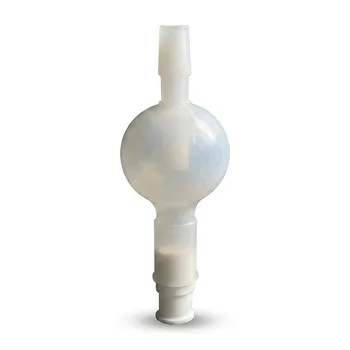
- High Purity PFA Chromatography Column with Collection Bottle Corrosion Resistant Fluoropolymer Filtration System for Trace Analysis
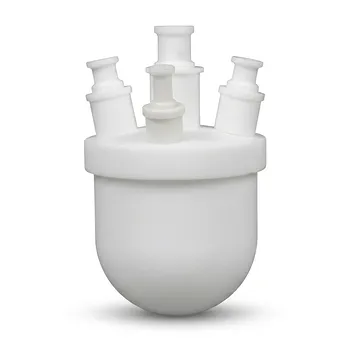
- Custom PTFE Flask 250ml High Purity Fluoropolymer Laboratory Vessel for Chemical Research
- High Purity PFA Chromatography Columns and Collection Bottles Corrosion Resistant Fluoropolymer Filtration Systems for Trace Analysis
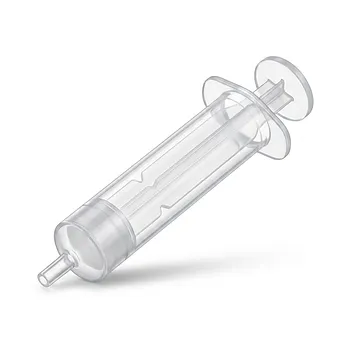
- Corrosion Resistant PFA Syringe Translucent Visual Fluoropolymer Labware 10ml Chemical Handling Tool
- Custom PFA Tubing 1/4 Inch High Purity Corrosion Resistant Fluoropolymer Tube with Welding and Machining Services
People Also Ask
- Why is the chemical stability of polymer endgroups critical when selecting melt-processible fluoropolymers like PFA for high-purity laboratory apparatus? Choose Stable Endgroups for Reliable Performance
- What are the characteristics of PFA material? A Guide to Its High-Performance Balance
- Why is Perfluoroalkoxy alkane (PFA) preferred over glass or stainless steel in pharmaceutical process development? Pure Yield
- Why is PFA superior for cleaning and preventing cross-contamination? The Gold Standard for Ultra-Trace Lab Hygiene
- What are the key properties of PFA (PerFluoroAlkoxy)? A Guide to Extreme Chemical and Thermal Resistance