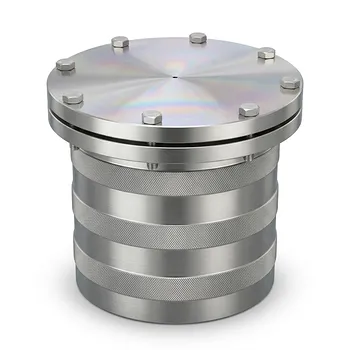
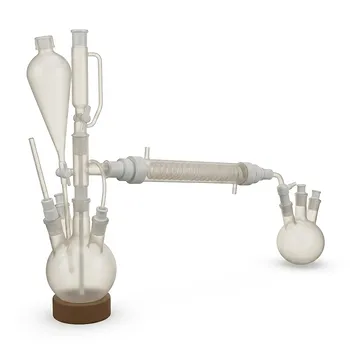
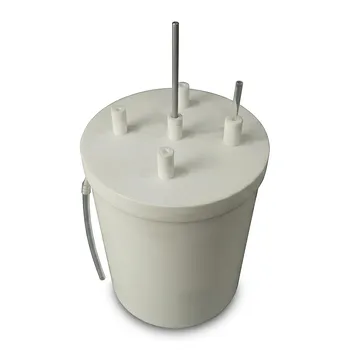
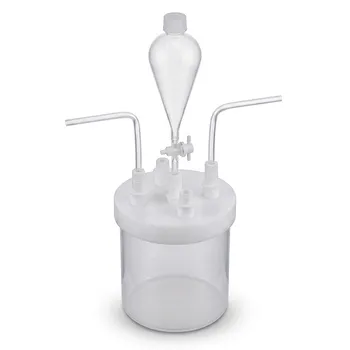
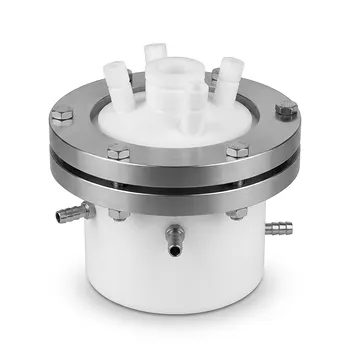
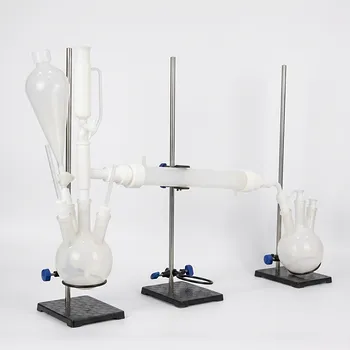
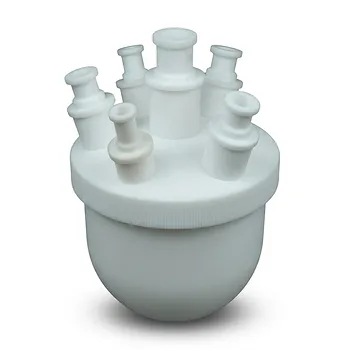
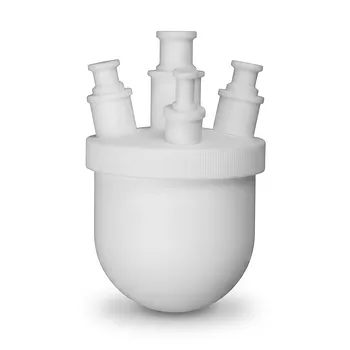
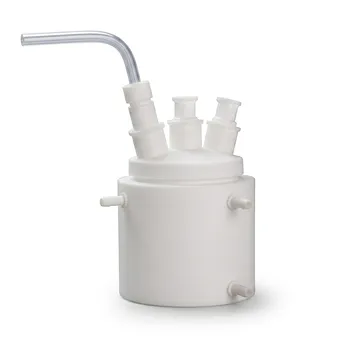
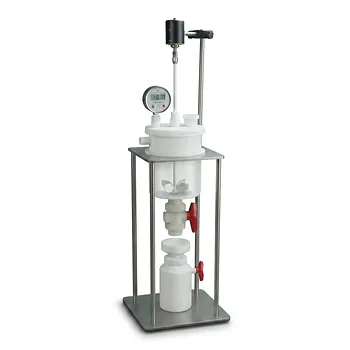
The high-pressure hydrothermal synthesis reactor serves as a controlled, sealed environment that enables the thermal decomposition of thioacetamide and the subsequent growth of doped nanostructures. By maintaining temperatures and pressures far exceeding atmospheric conditions, the reactor facilitates the release of hydrogen sulfide ($H_2S$) from the thioacetamide sulfur source, allowing it to integrate precisely into the zinc nitrate matrix to form specific nanostructure morphologies.
Core Takeaway: The reactor acts as a pressurized chemical crucible that drives the nucleation and growth of doped nanomaterials by increasing precursor solubility and enabling the chemical breakdown of sulfur sources that would otherwise remain stable.
Facilitating Chemical Decomposition and Integration
Converting Thioacetamide to a Reactive Sulfur Source
In this synthesis process, thioacetamide is used as the sulfur source, but it requires high thermal energy to become active. The reactor provides the necessary heat within a sealed system to decompose thioacetamide into hydrogen sulfide ($H_2S$).
Integration into the Zinc Nitrate Matrix
Once decomposed, the $H_2S$ gas interacts with the zinc nitrate solution under high pressure. This pressure forces the sulfur ions to integrate effectively into the zinc-based lattice, ensuring that the doping process is uniform and chemically sound.
Thermodynamics of the Sealed Environment
Increasing Solubility and Diffusion Rates
The high-pressure environment significantly increases the solubility of precursors that might otherwise be difficult to dissolve in standard conditions. This leads to a more homogenous solution, which is critical for creating consistent nanostructures.
Achieving Moderate Supersaturation
By precisely controlling the temperature (often between 100°C and 200°C), the reactor maintains a state of moderate supersaturation. This environment drives zinc source ions to nucleate and grow along specific crystallographic directions, resulting in high-aspect-ratio morphologies.
Engineering of the Hydrothermal Autoclave
The Role of the PTFE Liner
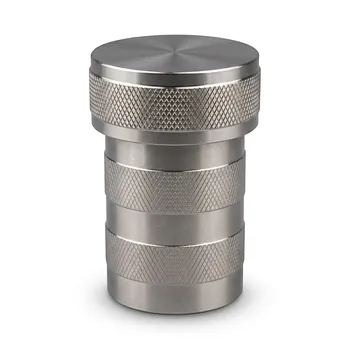
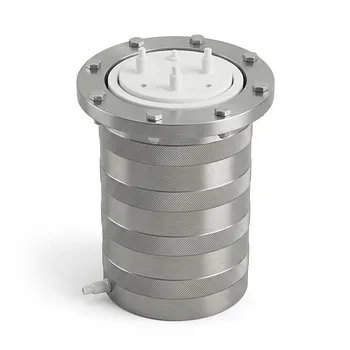
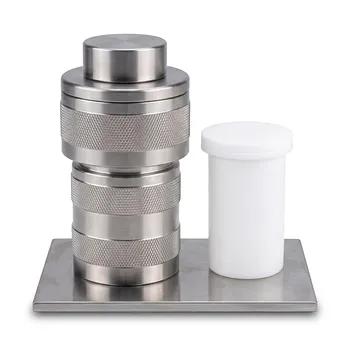
A standard hydrothermal reactor utilizes a Polytetrafluoroethylene (PTFE) liner inside a stainless steel shell. This liner is essential because it is highly resistant to corrosion from the chemical precursors and prevents contamination of the nanostructures.
Creating Autogenous Pressure
As the solvent is heated within the fixed volume of the reactor, it creates autogenous pressure. This pressure allows solvents to reach subcritical or supercritical states, enhancing the reactivity of the metal precursors and speeding up the recrystallization process.
Understanding the Trade-offs
The "Black Box" Limitation
One primary disadvantage of using a high-pressure reactor is the inability to observe the reaction in real-time. Because the process occurs inside a sealed stainless steel vessel, researchers cannot monitor the exact moment of nucleation or adjust parameters mid-reaction.
Safety and Equipment Fatigue
Operating at high temperatures and pressures carries inherent safety risks, including the potential for vessel failure if limits are exceeded. Additionally, the PTFE liners can deform over time (creep) if subjected to repeated high-heat cycles, potentially affecting the volume and pressure consistency of the synthesis.
How to Apply This to Your Project
When utilizing a high-pressure hydrothermal reactor for nanostructure synthesis, your approach should vary based on your structural requirements.
- If your primary focus is Morphology Control: Prioritize the precise calibration of the reaction duration and temperature to dictate whether the zinc nitrate grows into nanoparticles or high-aspect-ratio nanorods.
- If your primary focus is Doping Uniformity: Ensure the thioacetamide concentration is perfectly balanced with the reactor's pressure settings to facilitate complete decomposition into $H_2S$.
- If your primary focus is Material Purity: Always inspect the PTFE liner for signs of wear or chemical leaching to ensure no impurities from the stainless steel shell enter the reaction.
The high-pressure reactor is the fundamental tool for overcoming energy barriers in nanostructure synthesis, transforming stable chemical precursors into complex, doped functional materials.
Summary Table:
| Feature | Role in Synthesis | Key Benefit |
|---|---|---|
| Thermal Decomposition | Converts thioacetamide into reactive $H_2S$ | Enables sulfur integration at lower temps |
| High-Pressure Environment | Increases precursor solubility & diffusion | Ensures a homogenous, uniform doping process |
| PTFE Liner | Provides a chemically inert reaction chamber | Eliminates contamination & corrosion risks |
| Moderate Supersaturation | Drives nucleation along specific directions | Facilitates high-aspect-ratio morphologies |
| Autogenous Pressure | Reaches subcritical or supercritical states | Accelerates the recrystallization process |
Elevate Your Synthesis with KINTEK’s Precision Fluoropolymer Labware
Achieving uniform doping and high-purity nanostructures requires equipment that can withstand the rigors of high-pressure hydrothermal synthesis. KINTEK specializes in high-performance fluoropolymer materials, manufacturing virtually every laboratory essential you need for success.
From everyday basic labware like beakers, measuring cylinders, crucibles, and reagent bottles to specialized high-purity trace analysis instruments and hydrothermal synthesis liners, our products ensure zero contamination. We provide comprehensive fluid transfer components (tubing, fittings, valves), sample prep tools (filters, pipettes, tweezers), and advanced reaction apparatus including standard or custom electrochemical cells, battery testing fixtures, and microwave digestion vessels.
Backed by end-to-end custom CNC fabrication, KINTEK is equipped to deliver everything from high-volume orders to complex, non-standard machined parts tailored to your specific research parameters. Contact us today to discuss your custom laboratory setup!
References
- Anand Gaspar, M. Sathish. Thioacetamide-Doped Zinc Nitrate Hexahydrate Nanostructures: Hydrothermal Synthesis and Characterization. DOI: 10.14233/ajchem.2025.34344
This article is also based on technical information from Kintek Knowledge Base .
Related Products
- High Temperature Corrosion Resistant Hydrothermal Synthesis Reactor with TFM Inner Liner and Straight Cylinder Design
- High Pressure Custom TFM Reactor Stainless Steel Outer Vessel PTFE Inner Cup for Corrosive Synthesis
- PTFE Lined High Pressure Digestion Vessel 50ml High Temperature Hydrothermal Synthesis Tank
- High Temperature PTFE Reaction Flask 1000ml Single Neck Round and Flat Bottom Laboratory Bottle
- Custom TFM Reaction Vessel with Stainless Steel Jacket and PTFE Inner Cup for High Corrosion Resistance
People Also Ask
- What is the role of a corrosion-resistant reactor in the synthesis of lignin-based carbon dots? Ensure Maximum Purity
- What are the technical advantages of using hydrothermal synthesis reactors for advanced electronic & optical nanomaterials?
- How does a hydrothermal synthesis reactor facilitate the production of crystalline materials with tailored morphologies? Precision Crystal Growth
- Why is the sealing reliability of a hydrothermal synthesis reactor critical for 24-hour cycles? Ensure Nano-Precision
- What role do hydrothermal synthesis reactors play in CQD preparation? Achieve High-Purity Nanomaterial Synthesis