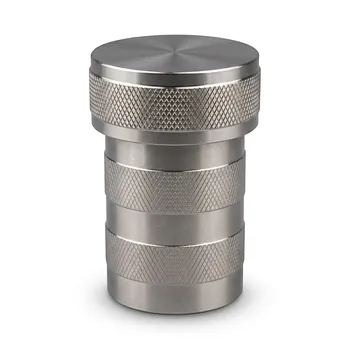
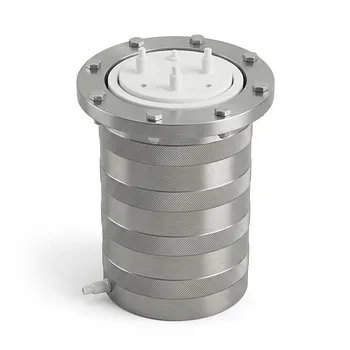
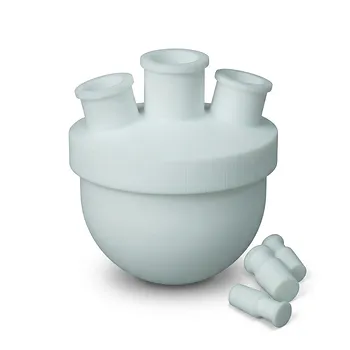
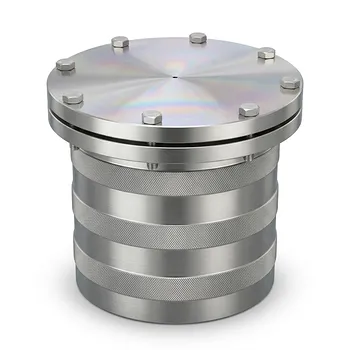
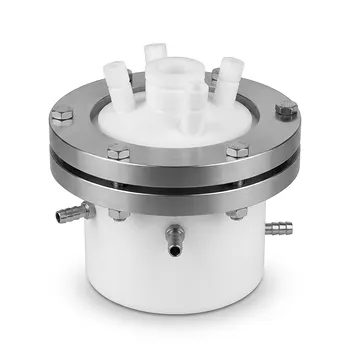
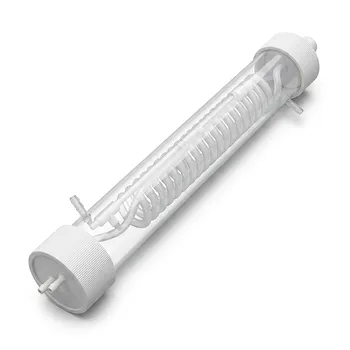
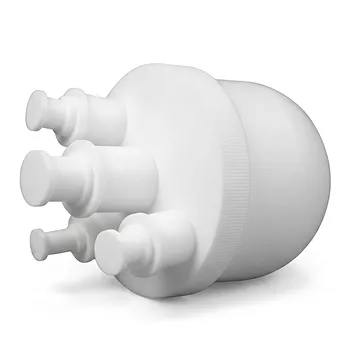
The high-pressure hydrothermal synthesis reactor is the primary tool for forcing metal ions into the complex internal architectures of carbon supports. By creating a sealed, high-temperature, and high-pressure environment, these reactors enable metal salt solutions to overcome physical resistance and distribute uniformly at the nanoscale before the final heat treatment.
Core Takeaway: The reactor acts as a high-energy "pressure cooker" that drives metal precursors into mesoporous channels and facilitates controlled chemical growth, ensuring the final catalyst has the precise morphology and active site distribution required for high performance.
Overcoming Physical Barriers to Metal Loading
Penetrating Mesoporous Channels
In the preparation of catalysts like those using hollow mesoporous carbon spheres, the reactor’s high-pressure environment is essential for forcing solutions into tight spaces. The pressure allows metal salt solutions to overcome the capillary resistance of internal mesopores that would otherwise remain inaccessible under standard atmospheric conditions.
Achieving Nanoscale Dispersion
By maintaining a controlled environment, the reactor ensures that metal ions, such as Manganese and Cobalt, achieve a uniform, nanoscale dispersion. This prevents the clumping of metals, which is critical for maximizing the surface area of the active sites in the finished catalyst.
Enhancing Solvent Reactivity
At high temperatures (often reaching 200°C), the solvent enters a subcritical state where its reactivity significantly increases. This enhanced state facilitates the dehydration and decarboxylation of carbon precursors, allowing for more effective integration of metal ions into the carbon matrix.
Facilitating Chemical Transformation and Growth
In-Situ Functionalization and Attachment
The reactor enables in-situ functionalization, where metal oxides or salts decompose and crystallize directly onto the surface of carbon supports like carbon nanotubes (CNTs). This process ensures that the metal particles are firmly and uniformly attached to the carbon network, preventing leaching during use.
Controlling Crystallinity and Phase Structure
The sealed environment provides the necessary conditions for deep hydrolysis and primary crystallization. This is vital for forming specific crystalline phase structures in metal-organic frameworks (MOFs) or mixed oxides, which ultimately define the catalyst's catalytic activity.
Structural Self-Assembly
For complex catalysts, the reactor facilitates the self-assembly of metal ions and ligands. This high-pressure "solvothermal" reaction can produce specific morphologies, such as hollow rod-shaped structures, which determine how active sites are distributed throughout the material.
Understanding the Trade-offs
Material Limitations of Liners
Most reactors use high-purity Polytetrafluoroethylene (PTFE) or Polyphenylene Sulfide (PPL) liners to resist corrosion. However, these materials have strict temperature limits; exceeding them can cause liner deformation or chemical contamination of the catalyst.
Kinetic vs. Thermodynamic Control
While hydrothermal synthesis allows for excellent morphology control, the process is often slower than other methods like precipitation. Finding the balance between reaction time and temperature is a common pitfall; too much time in the reactor can lead to over-growth of crystals, reducing the catalyst's effectiveness.
Scalability Constraints
The reliance on batch-style pressure vessels makes scaling up production difficult compared to continuous-flow processes. Each batch must be carefully monitored to ensure consistency in pressure and cooling rates, as variations can lead to different crystalline phases or particle sizes.
How to Apply This to Your Project
Recommendations for Catalyst Synthesis
- If your primary focus is maximizing active site surface area: Utilize the high-pressure environment to force metal precursors into mesoporous carbon supports, ensuring the pressure is high enough to overcome capillary forces.
- If your primary focus is structural integrity: Prioritize in-situ hydrothermal growth to ensure that metal nanoparticles are chemically bonded to the carbon nanotubes or quantum dots.
- If your primary focus is specific crystalline phases: Precisely control the temperature and duration to allow for full dissolution and recrystallization of your metal precursors within the solvent.
The hydrothermal reactor is not merely a container, but a precision instrument that dictates the fundamental architecture and efficiency of metal-doped carbon catalysts.
Summary Table:
| Function | Key Benefit | Impact on Catalyst |
|---|---|---|
| Pressure Loading | Overcomes capillary resistance | Forces metal precursors into tight mesoporous channels |
| Nanoscale Dispersion | Prevents metal clumping | Maximizes active site surface area for higher efficiency |
| In-Situ Functionalization | Strong chemical bonding | Ensures metal particles remain attached, preventing leaching |
| Crystallinity Control | Precise phase structure | Defines the final catalytic activity and morphology |
| Solvent Reactivity | Enhanced dehydration | Facilitates deeper integration of metals into the carbon matrix |
Elevate Your Catalyst Research with KINTEK Precision Engineering
Achieving the perfect nanoscale dispersion in metal-doped carbon catalysts requires equipment that can withstand the most demanding hydrothermal environments. KINTEK specializes in high-performance fluoropolymer solutions designed specifically for advanced synthesis and trace analysis.
Whether you are performing high-pressure hydrothermal synthesis or complex fluid transfers, we provide a comprehensive range of laboratory supplies crafted from premium PTFE and PFA, including:
- Synthesis & Reaction: High-quality hydrothermal synthesis liners, microwave digestion vessels, and custom electrochemical cells.
- Specialized Labware: High-purity trace analysis instruments, beakers, crucibles, and reagent bottles.
- Fluid & Sample Handling: Tubing, fittings, valves, separatory funnels, and precision filtration tools.
- Custom Fabrication: End-to-end CNC machining for bespoke laboratory setups and complex non-standard parts.
From everyday consumables like stirring bars and gaskets to advanced battery testing fixtures, KINTEK is your partner for high-volume orders and custom-engineered solutions. Contact us today to learn how our fluoropolymer expertise can enhance your laboratory's efficiency and results.
References
- Zi-Qiang Chen, Zhao‐Qing Liu. Spin polarization induced rapid reconstruction of transition metal oxide for efficient water electrolysis. DOI: 10.1039/d5sc04336k
This article is also based on technical information from Kintek Knowledge Base .
Related Products
- High Temperature Corrosion Resistant Hydrothermal Synthesis Reactor with TFM Inner Liner and Straight Cylinder Design
- High Pressure Custom TFM Reactor Stainless Steel Outer Vessel PTFE Inner Cup for Corrosive Synthesis
- PTFE Lined High Pressure Digestion Vessel 50ml High Temperature Hydrothermal Synthesis Tank
- High Temperature PTFE Reaction Flask 1000ml Single Neck Round and Flat Bottom Laboratory Bottle
- Custom TFM Reaction Vessel with Stainless Steel Jacket and PTFE Inner Cup for High Corrosion Resistance
People Also Ask
- What is the role of a corrosion-resistant reactor in the synthesis of lignin-based carbon dots? Ensure Maximum Purity
- What are the technical advantages of using hydrothermal synthesis reactors for advanced electronic & optical nanomaterials?
- How does a hydrothermal synthesis reactor facilitate the production of crystalline materials with tailored morphologies? Precision Crystal Growth
- Why is the sealing reliability of a hydrothermal synthesis reactor critical for 24-hour cycles? Ensure Nano-Precision
- What role do hydrothermal synthesis reactors play in CQD preparation? Achieve High-Purity Nanomaterial Synthesis