Modern fluoropolymer manufacturing is driven by two priorities: reducing environmental and worker hazards while preserving the exceptional purity and chemical resistance laboratories require. Older polymerization processes used persistent surfactants such as ammonium perfluorooctanoate, which were phased out because of environmental persistence and health concerns. Current approaches use replacement surfactants, tighter process controls, and rigorous post-processing to reduce hazardous residues, airborne byproducts, and contamination in products such as PTFE and PFA tubing, labware, and fluid-transfer components.
The key consideration is not simply whether a fluoropolymer is chemically inert in service. Manufacturers must also control the substances used during polymerization, the hazards created during thermal processing, and the extractables remaining in the finished product.
Why Environmental Concerns Changed Fluoropolymer Manufacturing
Persistent polymerization surfactants
Historically, fluoropolymer production relied on surfactants such as ammonium perfluorooctanoate to support polymerization. These substances raised concern because of their environmental persistence and potential health risks.
Their phaseout changed the manufacturing objective. Producers must now achieve the same resin performance while using replacement chemistries and processes that reduce environmental impact and the possibility of hazardous residues.
Product purity is part of environmental responsibility
For high-purity laboratory products, environmental controls and product-quality controls are closely connected. A manufacturing process that leaves residual surfactants, catalysts, pigments, or degradation products can create both waste-management concerns and sample-contamination risks.
This is especially important for PFA digestion vessels, reagent bottles, tubing, and other components used in trace analysis. Even very small extractable levels can compromise analytical results.
Durable materials reduce replacement demands
Fluoropolymers provide high chemical inertness, heat resistance, UV stability, and resistance to permeation and environmental degradation. In laboratory service, these properties allow components to withstand aggressive acids, organic solvents, and elevated temperatures without rapid chemical attack.
Long service life can reduce replacement frequency and the associated material waste. However, durability does not eliminate the need for responsible manufacturing, processing, and end-of-life management.
How Worker Safety Shapes Production
Controlling hazards during monomer synthesis
Fluorinated monomers can present explosion hazards during synthesis and handling. Manufacturing systems therefore need to eliminate or control potential ignition sources, including electrical arcs, hot spots, and other sources of uncontrolled energy.
Residual oxygen is another important concern in processes where combustible or reactive materials are present. Equipment design, atmosphere control, and operating procedures must work together to prevent unsafe reaction conditions.
Managing thermal-processing emissions
Fluoropolymer compounding, extrusion, baking, and sintering involve elevated temperatures. If thermal parameters are not carefully controlled, reactive ingredients or degraded material can generate toxic airborne byproducts.
Manufacturers must therefore control variables such as:
- Temperature profiles
- Residence time
- Melt rheology
- Cooling rates
- Ventilation and emission management
- Post-processing and curing conditions
The objective is to prevent material overheating and ensure that finished parts do not retain avoidable degradation products.
Matching the process to the resin
PTFE and PFA cannot be processed in exactly the same way. Fine-powder PTFE is typically formed through paste extrusion using processing aids, followed by baking and sintering to coalesce the resin and develop mechanical strength.
PFA is melt-processable and requires high-temperature extrusion equipment. Because fluorine-containing melt off-gasses can be corrosive, the equipment must use suitable corrosion-resistant alloys and be operated within tightly controlled thermal limits.
Preventing defects that become safety failures
Poor extrusion control can produce nonuniform wall thickness, internal surface defects, or micro-cracks. In fluid-transfer applications, these defects can lead to leakage, premature failure, or exposure to hazardous chemicals.
Controlling draw-down ratios, temperature profiles, and cooling rates helps produce tubing with consistent dimensions and the pressure capability required for laboratory fluid delivery and corrosive chemical transfer.
How Safety Requirements Protect Laboratory Users
Minimizing extractables and leachables
Finished fluoropolymer components must be evaluated for substances that could migrate into chemicals or samples under actual operating conditions. This includes potential residues from raw materials, catalysts, pigments, processing aids, and thermal degradation.
For ultra-trace analysis, the relevant question is not only whether the product looks clean. It is whether the product remains chemically inert and releases no contaminant at the temperatures, solvent exposures, and contact times used in the laboratory.
Applying relevant quality standards
Products intended for medical, pharmaceutical, and high-purity laboratory applications may be assessed against requirements such as FDA Title 21 CFR, including provisions relevant to perfluorocarbon resins and polymeric coatings, as well as USP Class VI biological reactivity protocols.
Compliance also requires attention to raw-material purity, extractable contaminant levels, and, where applicable, radiation dosing used to refine polymer powders. These controls help verify that the finished component is appropriate for its intended application.
Preserving chemical inertness in service
Fluorine substitution gives fluoropolymers low surface energy and strong resistance to chemical attack. As a result, PFA and PTFE containers and fluid paths are less likely to react with aggressive acids, organic solvents, or high-temperature reagents.
That stability helps prevent ion leaching, sample contamination, permeation, and structural degradation during demanding analytical procedures.
Why High Purity Requires Specialized Manufacturing
Inert materials are difficult to process
The same properties that make fluoropolymers valuable also create manufacturing challenges. They have poor surface adhesion, high electrical insulation, limited cross-linking capability, and strong resistance to chemical modification.
Conventional molding, bonding, and coating methods may therefore be unsuitable for complex or highly precise laboratory parts.
Precision fabrication may be necessary
Non-standard labware and complex fluid-control components may require specialized fabrication, including precision CNC machining. This approach supports tight dimensional control when the geometry cannot be produced reliably through conventional molding or extrusion alone.
The manufacturing environment must also prevent particulate, lubricant, and handling contamination from entering the finished product.
Surface quality affects purity and performance
A smooth, uniform internal surface is important in tubing and fluid paths. It reduces locations where residues can accumulate and supports predictable fluid transfer.
Consistent wall thickness and defect-free surfaces also improve pressure reliability, particularly when the component handles corrosive reagents or operates at elevated temperatures.
Understanding the Trade-offs
Environmental improvements do not remove all hazards
Replacing a problematic surfactant is an important improvement, but it does not make fluoropolymer production risk-free. Monomer handling, high-temperature processing, corrosive off-gasses, and reactive byproducts still require engineered controls and disciplined operating procedures.
Environmental performance must therefore be evaluated across the full manufacturing process, not inferred from the absence of one historical surfactant.
Thermal resistance has operating limits
Fluoropolymers tolerate severe conditions, but they can still generate hazardous decomposition products if exposed to temperatures beyond appropriate processing or service limits. Users must follow the manufacturer’s temperature guidance rather than treating chemical inertness as unlimited heat resistance.
High purity can increase manufacturing complexity
Specialized equipment, controlled processing, post-curing, extractables testing, and precision fabrication can increase production cost and lead time. These requirements are justified when contamination or component failure would compromise valuable samples, equipment, or personnel safety.
Compliance is not the same as suitability
A product may meet a regulatory or biological-reactivity standard and still require application-specific evaluation. The correct selection depends on the chemicals handled, temperature, pressure, exposure duration, cleanliness requirements, and the sensitivity of the analytical method.
Making the Right Choice for Your Goal
The most reliable selection process connects material certification with the actual laboratory operating conditions.
- If your primary focus is ultra-trace analytical purity: Choose components with documented raw-material controls and extractables testing appropriate to the chemicals, temperatures, and contact times in your procedure.
- If your primary focus is worker and facility safety: Confirm that the product and its intended service conditions remain within documented thermal, pressure, and chemical limits.
- If your primary focus is environmental responsibility: Ask how polymerization surfactants, thermal emissions, processing aids, and post-processing residues are controlled rather than evaluating only the finished polymer.
- If your primary focus is long-term reliability: Prioritize resin-specific processing quality, uniform wall thickness, smooth internal surfaces, and evidence of defect prevention.
- If your primary focus is complex or custom labware: Verify that the manufacturer has suitable precision fabrication, cleaning, curing, and contamination-control capabilities.
High-purity fluoropolymer manufacturing succeeds when environmental controls, worker protection, process discipline, and end-use purity are treated as one connected engineering requirement.
Summary Table:
| Consideration | Description | Impact on Labs |
|---|---|---|
| Surfactant Replacement | Phase-out of persistent surfactants like PFOA | Reduced environmental persistence, safer products |
| Process Controls | Temperature, residence time, and emission management | Lower toxic byproducts, consistent quality |
| Extractables Testing | Ensuring low leachables for trace analysis | Prevents sample contamination |
| Material Selection | PTFE/PFA proper processing and fabrication | Reliable performance, minimized defects |
| Regulatory Compliance | FDA, USP Class VI standards | Ensures biocompatibility and purity |
Ready to upgrade your lab with high-purity fluoropolymer products? KINTEK specializes in PTFE/PFA labware, tubing, and custom components, ensuring the highest standards of safety and purity. From beakers to complex electrochemical cells, we've got you covered. Contact us today for tailored solutions that meet your exact requirements — get in touch!
Related Products
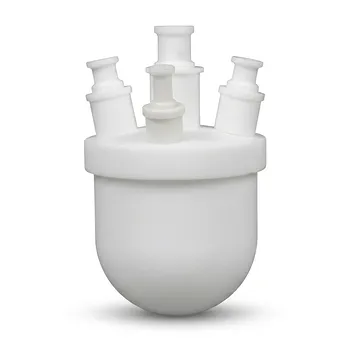
- Custom PTFE Flask 250ml High Purity Fluoropolymer Laboratory Vessel for Chemical Research
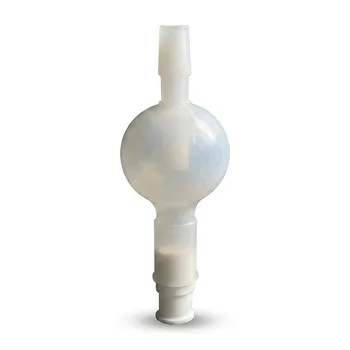
- High Purity PFA Chromatography Column with Collection Bottle Corrosion Resistant Fluoropolymer Filtration System for Trace Analysis
- Custom PTFE Reaction Tank Corrosion Resistant Fluoropolymer Chemical Processing Barrel 10L 20L 30L
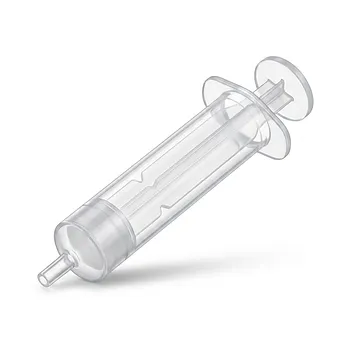
- Corrosion Resistant PFA Syringe Translucent Visual Fluoropolymer Labware 10ml Chemical Handling Tool
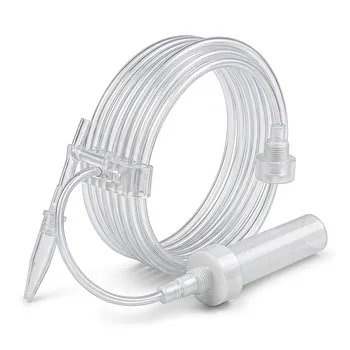
- Custom PFA Tubing 1/4 Inch High Purity Corrosion Resistant Fluoropolymer Tube with Welding and Machining Services
People Also Ask
- What are the key steps for structural integrity in molded PTFE lab reaction vessels? Master fine powder processing.
- Why do PTFE fluoropolymer laboratory vessels and containers exhibit superior chemical resistance against harsh solvents and corrosive acids compared to standard plastic labware? Discover the molecular secrets
- How do choice of solvent and chain transfer activity affect molecular weight during vinylidene fluoride (VDF) radical polymerization? Learn Key Factors for High-MW PVDF
- Why are fluoropolymer reaction vessels essential for SnO2/rGO synthesis? The Key to High-Performance Composites
- How does monomer purity during polymerization of fluoropolymers affect high-purity lab vessels? Key factors explained