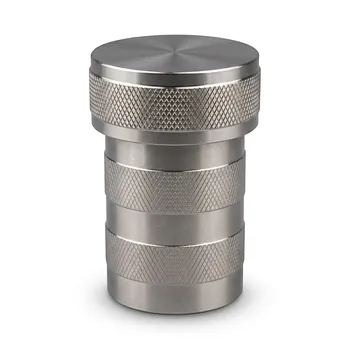
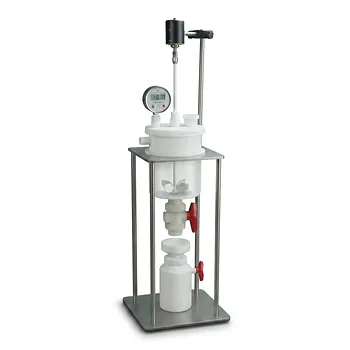
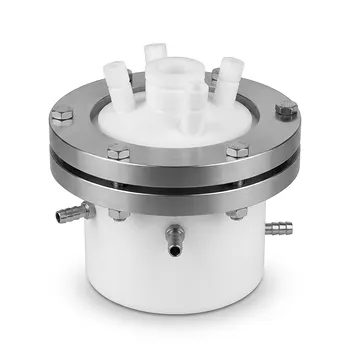
At 180°C, a high-pressure hydrothermal reactor facilitates the precise formation of rutile-phase iridium oxide nanocrystals while strictly limiting their growth. This process prevents the sintering and overgrowth typically seen in high-temperature methods, yielding ultra-fine particles approximately 2 nm in size with exceptionally high surface areas.
Core Takeaway: High-pressure hydrothermal synthesis enables subcritical phase transformation at relatively low temperatures, producing high-surface-area nanocrystals. By maintaining a sealed, pressurized environment, the reactor ensures uniform particle morphology and prevents the efficiency-killing effects of particle sintering.
The Mechanics of Low-Temperature Phase Transformation
Achieving Rutile Phase at Subcritical Temperatures
In a hydrothermal reactor, iridium precursors transform into the rutile phase at 180°C, a temperature significantly lower than standard solid-state methods. This subcritical environment provides the energy required for phase change without the thermal stress that causes particle degradation.
The Role of Autogenous Pressure
The reactor operates under autogenous pressure, created by heating the liquid phase within a constant, sealed volume. This pressure stabilizes the growth environment, allowing for complete solvothermal conversion of the precursors into ceramic nanoparticles.
Controlling Particle Morphology and Size
Inhibiting Sintering and Overgrowth
One of the primary advantages of this method is the inhibition of particle sintering. By operating in a liquid-phase growth environment, the reactor prevents individual nanocrystals from fusing together into larger, less effective masses.
Precision Growth at the Nanoscale
The controlled environment results in particles with a consistent size of approximately 2 nm. These nanocrystals maintain a regular morphology, which is critical for ensuring predictable behavior in technical applications.
Enhancing Electrocatalytic Surface Area
Because the growth is strictly limited, the resulting iridium oxide possesses a high surface area. This physical characteristic directly leads to significantly enhanced electrocatalytic activity, making the material more efficient for electrochemical reactions.
Maintaining Purity in Aggressive Environments
The Necessity of PTFE Liners
High-pressure reactors utilize Polytetrafluoroethylene (PTFE) liners to withstand the aggressive chemical reagents used in synthesis. These liners are essential when using strong alkaline reagents, such as concentrated ammonia, which would otherwise corrode the reactor.
Preventing Metal Ion Contamination
The liner acts as a barrier between the reactants and the reactor's outer metal walls. This prevents metal ion contamination, ensuring that the iridium oxide particles remain pure and their catalytic properties are not compromised by stray elements.
Understanding the Trade-offs
Temperature and Pressure Limitations
While 180°C is effective, PTFE liners have thermal limits and may begin to deform if temperatures exceed 220°C for extended periods. Users must balance the need for high-pressure conversion with the structural integrity of the internal seals.
Scaling and Throughput Challenges
Hydrothermal synthesis is often a batch process, which can limit high-volume production. Achieving the same particle uniformity at a larger scale requires complex engineering to maintain consistent heat and pressure throughout the entire vessel.
Optimizing Your Synthesis Strategy
How to Apply This to Your Project
- If your primary focus is Maximum Catalytic Activity: Prioritize maintaining the 180°C threshold to ensure particles stay within the 2 nm range and avoid sintering.
- If your primary focus is Material Purity: Ensure the use of high-quality PTFE liners and check them regularly for signs of degradation or chemical leaching.
- If your primary focus is Phase Consistency: Monitor the autogenous pressure closely to ensure the environment remains stable enough for full rutile phase transformation.
By leveraging the controlled environment of a high-pressure hydrothermal reactor, you can synthesize iridium oxide that outperforms traditionally processed materials through superior surface area and phase purity.
Summary Table:
| Parameter | Synthesis Effect at 180°C | Key Benefit |
|---|---|---|
| Particle Size | Limits growth to ~2 nm | Maximizes electrocatalytic surface area |
| Phase Type | Subcritical rutile-phase formation | Ensures material stability and performance |
| Morphology | Uniform nanoparticle formation | Prevents sintering and overgrowth |
| Environment | Autogenous pressure (sealed) | Enables precise solvothermal conversion |
| Purity Control | PTFE-lined containment | Eliminates metal ion contamination |
Elevate Your Synthesis with KINTEK’s High-Performance Fluoropolymer Solutions
Precision in hydrothermal synthesis demands materials that can withstand aggressive chemical environments without compromising purity. KINTEK specializes in high-performance fluoropolymer labware designed to support your most critical research.
From everyday basic labware (beakers, measuring cylinders, crucibles, dishes, reagent/wash bottles, centrifuge and digestion tubes) and high-purity trace analysis instruments to comprehensive fluid transfer components (tubing, fittings, valves), sample prep and filtration tools (separatory funnels, burettes, filters, pipettes, tweezers, spatulas), and general consumables (stirring bars, O-rings, gaskets, seal tapes, caps, septa), we have you covered.
For advanced research, we provide derivative and reaction apparatus like standard or custom hydrothermal synthesis liners, electrochemical cells, battery testing fixtures, and microwave digestion vessels. Backed by end-to-end custom CNC fabrication, KINTEK delivers everything from complex non-standard machined parts to high-volume orders with an absolute focus on PTFE and PFA excellence.
Ready to optimize your laboratory efficiency and material purity? Contact us today to discuss your custom fabrication needs!
References
- Genevieve C. Moss, Rhiyaad Mohamed. Perchlorate Fusion–Hydrothermal Synthesis of Nano‐Crystalline IrO <sub>2</sub> : Leveraging Stability and Oxygen Evolution Activity. DOI: 10.1002/smll.202412237
This article is also based on technical information from Kintek Knowledge Base .
Related Products
- High Temperature Corrosion Resistant Hydrothermal Synthesis Reactor with TFM Inner Liner and Straight Cylinder Design
- High Pressure Custom TFM Reactor Stainless Steel Outer Vessel PTFE Inner Cup for Corrosive Synthesis
- PTFE Lined High Pressure Digestion Vessel 50ml High Temperature Hydrothermal Synthesis Tank
- Custom TFM Reaction Vessel with Stainless Steel Jacket and PTFE Inner Cup for High Corrosion Resistance
- High Purity PFA Constant Pressure Condensation Reaction System Acid Resistant High Temperature Customizable Teflon Labware
People Also Ask
- What is the role of a corrosion-resistant reactor in the synthesis of lignin-based carbon dots? Ensure Maximum Purity
- What are the technical advantages of using hydrothermal synthesis reactors for advanced electronic & optical nanomaterials?
- How does a hydrothermal synthesis reactor facilitate the production of crystalline materials with tailored morphologies? Precision Crystal Growth
- Why is the sealing reliability of a hydrothermal synthesis reactor critical for 24-hour cycles? Ensure Nano-Precision
- What role do hydrothermal synthesis reactors play in CQD preparation? Achieve High-Purity Nanomaterial Synthesis