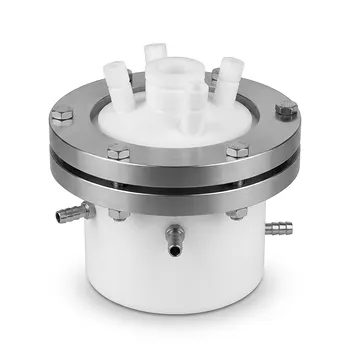
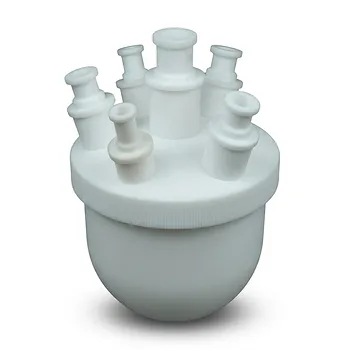
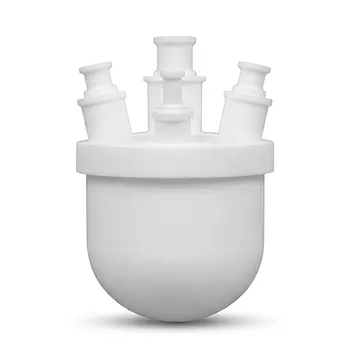
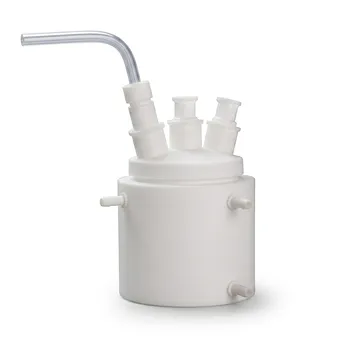
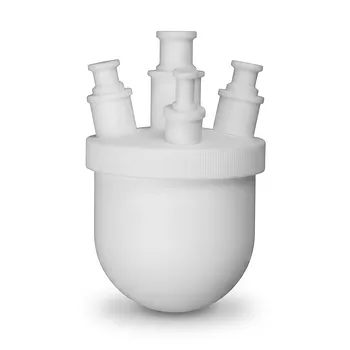
The high-pressure hydrothermal synthesis reactor acts as the essential "pressure cooker" that enables the simultaneous crystallization of titanium dioxide and the atomic-level integration of copper. By maintaining a sealed environment at elevated temperatures and pressures, the reactor allows titanium precursors to transform into pure anatase nanostructures with high specific surface areas. This specific environment ensures that copper active components achieve a uniform, atomic-level dispersion within the TiO2 matrix, effectively preventing the component segregation often seen in traditional synthesis methods.
The reactor’s critical role is to create a subcritical environment that facilitates a "one-step" synthesis, combining the growth of phase-pure TiO2 with the homogeneous doping of copper. This integrated process is vital for producing photocatalysts with superior structural integrity and optimized active sites.
Driving Phase Purity and Nanostructural Growth
Formation of the Pure Anatase Phase
The reactor provides the thermodynamic conditions necessary to convert titanium precursors into a pure anatase phase. This phase is widely regarded as the most photo-active form of TiO2, and the high-pressure environment ensures its stability during crystal growth.
Creation of High-Surface-Area Nanostructures
Under subcritical conditions, the solvent’s ability to dissolve and recrystallize precursors is significantly enhanced. This allows for the self-assembly of TiO2 into complex nanostructures that offer a larger specific surface area, providing more active sites for photocatalytic reactions.
Enhanced Solubility and Diffusion
The sealed system allows temperatures to exceed the boiling point of the solvent, creating high-pressure conditions that increase the solubility of precursor powders. This accelerated dissolution is what permits the rapid, in-situ growth of crystals directly from the solution.
Achieving Uniform Atomic Dispersion
Eliminating Component Segregation
Traditional impregnation methods often lead to "clumping" or segregation of the metal dopant on the surface of the catalyst. The one-step hydrothermal method uses the reactor's environment to force copper species into the TiO2 lattice or onto its surface with atomic-level precision.
Deep Ion Incorporation and Functionalization
The elevated pressure enhances the diffusion capability of the ions in the precursor solution. This allows copper ions to penetrate the developing titanium framework deeply, ensuring the active components are firmly adhered and highly dispersed rather than merely resting on the surface.
Controlled Nucleation and Growth
By maintaining a constant high-pressure environment, the reactor allows for controlled nucleation. This ensures that the copper and titanium precursors react at a synchronized rate, leading to a more chemically homogeneous composite material.
Understanding the Technical Trade-offs
The "Black Box" Nature of Synthesis
One primary challenge is that hydrothermal reactions occur within a sealed, opaque vessel, making real-time observation of crystal growth impossible. Researchers must rely on post-synthesis characterization to understand how pressure and temperature fluctuations affected the final product.
Scalability and Safety Constraints
High-pressure reactors require strict safety protocols and specialized equipment to prevent catastrophic failure at high temperatures. Furthermore, transitioning from small-batch laboratory autoclaves to large-scale industrial production presents significant engineering hurdles regarding heat distribution and pressure maintenance.
Sensitivity to Precursor Concentration
While the reactor facilitates deep integration, the process is highly sensitive to the initial chemical ratios. Inaccurate precursor concentrations can lead to the formation of undesired phases or secondary oxides (like CuO) rather than the intended doped structure.
How to Apply This to Your Synthesis Strategy
Making the Right Choice for Your Goal
- If your primary focus is maximizing photocatalytic activity: Use the reactor to target the pure anatase phase by maintaining temperatures between 160°C and 200°C to ensure optimal crystallinity and copper dispersion.
- If your primary focus is catalyst durability and longevity: Leverage the high-pressure environment to ensure in-situ functionalization, which creates stronger chemical bonds between the copper active sites and the TiO2 support.
- If your primary focus is morphology control (e.g., nanotubes vs. particles): Adjust the concentration of the solvent (such as NaOH) within the reactor to take advantage of supercritical solubility shifts that drive the self-assembly of specific nanostructures.
By mastering the high-pressure environment of the hydrothermal reactor, you can transition from simple material mixing to the precise engineering of high-performance TiO2-Cu photocatalysts.
Summary Table:
| Feature | Role in Synthesis | Benefit for Photocatalysts |
|---|---|---|
| Phase Control | Thermodynamic stabilization | Produces photo-active pure anatase |
| High Pressure | Increases precursor solubility | Enhances crystal growth and surface area |
| One-Step Method | Atomic-level integration | Prevents component segregation |
| Sealed System | Subcritical environment | Ensures homogeneous copper doping |
Precision Labware for Advanced Synthesis with KINTEK
Achieving the perfect TiO2-Cu nanostructure requires high-purity environments and reliable equipment. KINTEK provides an exhaustive range of high-performance laboratory supplies crafted exclusively from PTFE and PFA. From hydrothermal synthesis liners and microwave digestion vessels to high-purity trace analysis instruments and custom-machined fluid transfer components, we ensure your reaction environment is contamination-free.
Our end-to-end custom CNC fabrication allows us to deliver everything from complex non-standard parts to high-volume consumables like beakers, filters, and reaction apparatus. Contact us today to discover how KINTEK’s absolute focus on high-performance fluoropolymers can bring superior structural integrity to your next material synthesis project.
References
- Sergio Belda-Marco, María Carmen Román‐Martínez. Optimization of Active Sites in TiO <sub>2</sub> –Cu Photocatalysts for H <sub>2</sub> Generation via Cellulose Photo‐Reforming. DOI: 10.1002/cctc.202500250
This article is also based on technical information from Kintek Knowledge Base .
Related Products
- High Temperature Corrosion Resistant Hydrothermal Synthesis Reactor with TFM Inner Liner and Straight Cylinder Design
- PTFE Lined High Pressure Digestion Vessel 50ml High Temperature Hydrothermal Synthesis Tank
- High Pressure Custom TFM Reactor Stainless Steel Outer Vessel PTFE Inner Cup for Corrosive Synthesis
- Custom TFM Reaction Vessel with Stainless Steel Jacket and PTFE Inner Cup for High Corrosion Resistance
- High Purity PFA Reaction Vessel for Biopharmaceutical Synthesis and Corrosive Chemical Fluid Handling with Customizable Tube Fittings
People Also Ask
- What is the role of a corrosion-resistant reactor in the synthesis of lignin-based carbon dots? Ensure Maximum Purity
- What are the technical advantages of using hydrothermal synthesis reactors for advanced electronic & optical nanomaterials?
- How does a hydrothermal synthesis reactor facilitate the production of crystalline materials with tailored morphologies? Precision Crystal Growth
- Why is the sealing reliability of a hydrothermal synthesis reactor critical for 24-hour cycles? Ensure Nano-Precision
- What role do hydrothermal synthesis reactors play in CQD preparation? Achieve High-Purity Nanomaterial Synthesis