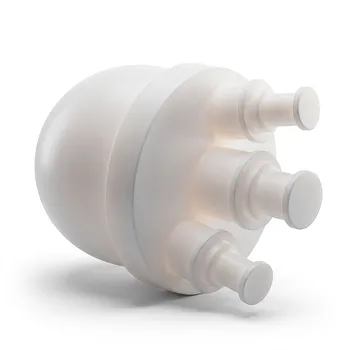
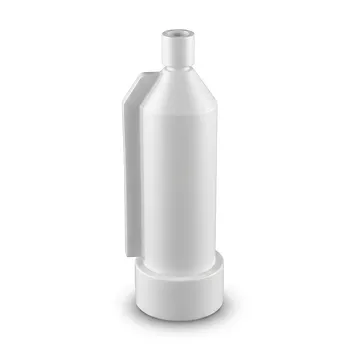
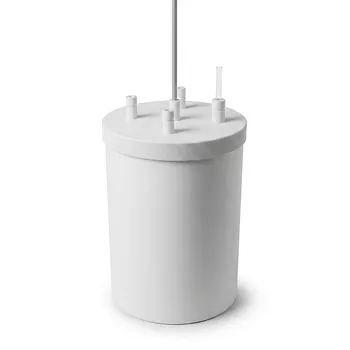
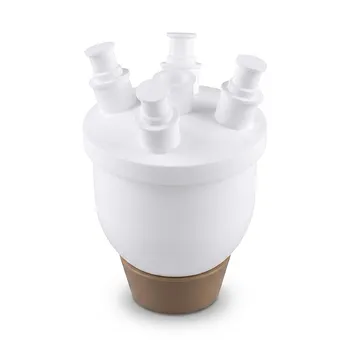
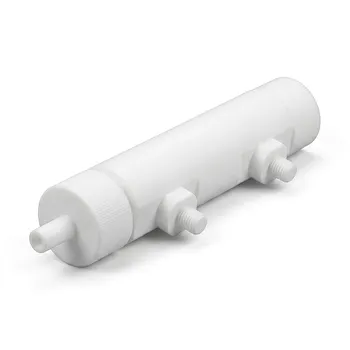
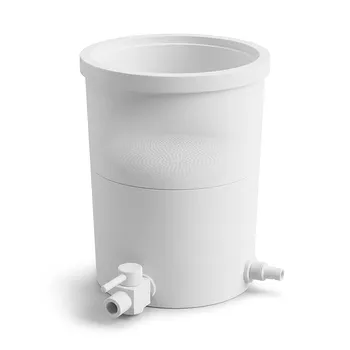
The hydrothermal synthesis of MO@MH relies on a specialized, high-energy environment. A high-pressure reaction vessel with a PTFE liner provides a critical combination of 160 °C temperature, high autogenous pressure, and chemical corrosion resistance for a duration of 10 hours. This environment facilitates the full reaction between ammonium molybdate and magnesium hydroxide slurry, ensuring that molybdenum oxide is effectively and uniformly hybridized on the surface or between the layers of the magnesium hydroxide.
The PTFE-lined vessel acts as a chemically inert micro-reactor that enables high-temperature reactions impossible at atmospheric pressure. By combining thermal energy with sealed autogenous pressure, it facilitates the precise molecular assembly required for uniform hybridization while preventing metallic contamination.
The Mechanics of the Hydrothermal Environment
Facilitating High-Temperature Kinetics
The synthesis of MO@MH requires a constant temperature of 160 °C, which is significantly higher than the boiling point of water at standard atmospheric pressure. Maintaining this temperature for 10 hours provides the activation energy necessary for ammonium molybdate to react thoroughly with the magnesium hydroxide slurry.
Utilizing Autogenous Pressure
Within the sealed vessel, the heating of the liquid media generates autogenous pressure, which brings the solvents into a high-energy state. This pressure increases the solubility and reactivity of the precursors, allowing the molybdenum oxide to permeate the layers of the magnesium hydroxide rather than simply coating the exterior.
Promoting Uniform Hybridization
The combination of heat and pressure ensures that the molybdenum oxide is uniformly distributed. This specialized environment allows the precursors to nucleate and grow at specific lattice sites, resulting in a consistent hybridized structure across the entire sample.
The Critical Role of the PTFE Liner
Ensuring Chemical Purity and Inertness
PTFE (polytetrafluoroethylene) is used because it is extremely stable and does not react with the magnesium hydroxide or ammonium molybdate. This chemical inertness prevents the introduction of metal impurities from the vessel’s outer walls, ensuring the high purity of the final MO@MH product.
Preventing Vessel Corrosion
The liner acts as a physical barrier that protects the metal body of the reaction vessel from chemical corrosion. Without the PTFE liner, the reactive slurry could damage the structural integrity of the high-pressure container over the 10-hour reaction period.
Maintaining a Sealed Reaction Space
PTFE liners, often paired with stainless steel jackets, create a securely sealed environment that prevents the loss of volatile components. This containment is essential for maintaining the specific stoichiometric ratios required for successful MO@MH hybridization.
Understanding the Trade-offs and Limitations
Thermal Constraints of PTFE
While PTFE is excellent for reactions at 160 °C, it has a functional limit typically around 220 °C. Exceeding these temperatures can cause the liner to soften or deform, which may lead to a loss of the seal and potential safety hazards.
Thermal Insulation Effects
PTFE is an effective thermal insulator, meaning there is a noticeable lag between the external heating of the vessel and the internal temperature of the slurry. Practitioners must account for this "ramp-up" time to ensure the reaction actually spends the intended 10 hours at the target temperature.
Pressure Risks and Filling Ratios
The pressure inside the vessel is "autogenous," meaning it is generated by the expansion of the contents; therefore, the filling ratio is critical. Overfilling the liner can lead to extreme pressure spikes that exceed the safety limits of the high-pressure vessel.
How to Apply This to Your Synthesis
To achieve the highest quality hybridization of molybdenum oxide and magnesium hydroxide, the following factors must be controlled:
- If your primary focus is uniform hybridization: Ensure the reaction is maintained at the target 160 °C for the full 10-hour duration to allow for complete interlayer penetration of the molybdenum.
- If your primary focus is product purity: Always inspect the PTFE liner for pitting, cracks, or discoloration before use to prevent any metallic contamination from the stainless steel vessel body.
- If your primary focus is equipment longevity: Never exceed a 70–80% filling volume in the PTFE liner to allow sufficient headspace for autogenous pressure without risking vessel failure.
Precise control over the hydrothermal environment within a PTFE-lined vessel is the only way to ensure the structural integrity and chemical purity of MO@MH hybrids.
Summary Table:
| Parameter | Synthesis Requirement | Role of PTFE-Lined Reaction Vessel |
|---|---|---|
| Temperature | 160 °C (10 Hours) | Maintains stable high-temperature kinetics beyond boiling point. |
| Pressure | Autogenous Pressure | Increases solubility for uniform interlayer hybridization. |
| Purity | Zero Metal Contamination | PTFE provides a chemically inert barrier against vessel walls. |
| Safety | Corrosion Resistance | Protects structural integrity from reactive precursors. |
| Consistency | Sealed Environment | Prevents loss of volatile components for precise stoichiometry. |
Elevate Your Synthesis with KINTEK’s High-Performance Fluoropolymers
Precision in hydrothermal synthesis starts with the quality of your reaction environment. At KINTEK, we specialize in the engineering and manufacture of high-performance laboratory supplies crafted exclusively from PTFE and PFA.
Whether you require high-purity trace analysis instruments or customized high-pressure reaction liners, our end-to-end custom CNC fabrication ensures your equipment meets the most rigorous thermal and chemical demands. Our extensive range includes:
- Everyday Basic Labware: Beakers, crucibles, reagent bottles, and digestion tubes.
- Fluid Transfer & Sample Prep: High-purity tubing, valves, filters, and pipettes.
- Advanced Reaction Apparatus: Custom electrochemical cells, microwave digestion vessels, and microchannel reactors.
From high-volume orders of general consumables like stirring bars and O-rings to bespoke, non-standard machined parts, KINTEK delivers the absolute focus on material purity your research deserves.
Ready to optimize your lab's performance? Contact us today to discuss your custom project or bulk supply needs!
References
- Xue Li, Li Dang. Construction of magnesium–molybdenum–phosphorus multi-component flame retardant and its performance in flexible PVC composites. DOI: 10.1039/d5ra04341g
This article is also based on technical information from Kintek Knowledge Base .
Related Products
- PTFE Lined High Pressure Digestion Vessel 50ml High Temperature Hydrothermal Synthesis Tank
- Custom TFM Reaction Vessel with Stainless Steel Jacket and PTFE Inner Cup for High Corrosion Resistance
- High Pressure Custom TFM Reactor Stainless Steel Outer Vessel PTFE Inner Cup for Corrosive Synthesis
- High Purity Custom PTFE Large Volume 15L Flask Corrosion Resistant Low Trace Background Fluoropolymer Reaction Vessel
- High Purity PTFE Corrosion Resistant Reaction Vessel with Luer Fittings and Caps for Trace Analysis
People Also Ask
- What are the benefits of using a PTFE-lined vessel for carbon-sulfur cathode treatment? Maximize Purity & Performance
- Why are PTFE-lined pressure digestion vessels required for the preparation of Ag/CeO2 catalysts? Purity & Performance
- What is the function of high-pressure PTFE digestion vessels in mineral analysis? Optimize Sample Mineralization
- What safety features are typically incorporated into high-pressure PTFE digestion vessel designs? Ensure Lab Safety
- What is the function of PTFE lined high-pressure vessels in g-C3N4 synthesis? Achieve High-Purity Material Growth