Chain-end inactivation in VDF controlled radical polymerization is primarily a regioselectivity problem. Although the desired PVDF chain end, typically –CH₂–CF₂–I, can be reactivated for further growth, competing 2,1-addition creates an inverted –CF₂–CH₂–I terminus with substantially lower reactivity. As conversion rises, these inactive chains accumulate unless both chain-end populations are quantitatively activated, leading to broader molecular-weight distributions and poorly defined block structures.
Well-defined VDF block fluoropolymers require two controls at once: complete reactivation of every relevant iodine chain end and an exceptionally clean reaction environment that does not consume the activator, alter radical kinetics, or introduce competing chain-transfer reactions.
Why VDF Chain Ends Become Inactive
Regioselectivity Creates Different Chain-Terminal Structures
VDF can add to a growing radical chain in more than one orientation. The desired pathway produces a reactive –CH₂–CF₂–I chain end, while a competing 2,1-addition produces the inverted –CF₂–CH₂–I structure.
These termini are chemically different even though they contain the same atoms. Their local bonding environment affects how readily the carbon–iodine bond participates in the activation and degenerative-transfer cycle.
The Inverted Terminus Reacts Less Efficiently
The –CF₂–CH₂–I end is less reactive toward the conditions used to regenerate a propagating radical. It therefore behaves as a partially or fully inactive chain end during subsequent polymerization.
This is a form of chain-end inactivation, rather than simple loss of polymer. The chain remains present, but it no longer contributes efficiently to controlled chain extension.
Inactive Chains Accumulate with Conversion
At low conversion, the fraction of incorrectly terminated chains may be limited. As polymerization proceeds, however, each regioselectivity defect adds another chain that may fail to react in a later activation or block-extension step.
The result is a mixture containing actively extendable chains, partially reactive chains, and inactive chains. That mixture broadens the molecular-weight distribution and makes the apparent polymer composition difficult to control.
How Reactivation Enables Block Formation
Activation Must Address Both Isomers
For block copolymer synthesis, activation cannot target only the dominant –CH₂–CF₂–I population. The inverted –CF₂–CH₂–I chains must also be converted into reactive PVDF radicals if they are to participate in block growth.
Photolytic activation with a stoichiometric manganese carbonyl such as Mn₂(CO)₁₀ can cleave the relevant carbon–iodine chain ends and generate reactive PVDF radicals. Quantitative activation is essential because even a modest residual inactive population becomes a homopolymer impurity or an unextended fraction in the final product.
Radical Addition Extends the PVDF Chain
Once a PVDF iodine end is converted into a radical, it can add to a second radically polymerizable alkene. Examples include styrene, butadiene, vinyl acetate, and methyl acrylate.
The relative reactivity of the selected comonomer, solvent, and manganese carbonyl concentration determines how efficiently those radicals enter block growth. Under suitable conditions, this produces AB or ABA-type PVDF block copolymers rather than a physical mixture of PVDF and a separate homopolymer.
Incomplete Activation Produces Homopolymer Impurities
If catalyst loading is too low, illumination is insufficient, or the reaction medium suppresses activation, some iodine ends remain unreacted. Those chains cannot reliably initiate the second block.
The product then contains a combination of block copolymer, unextended PVDF, and potentially homopolymer formed from free monomer. This is why block quality depends on end-group conversion, not merely on the amount of monomer consumed.
Why Material Purity Controls the Reaction
Trace Contaminants Can Deactivate the Activator
The manganese carbonyl activation step is a sensitive organometallic photoreaction. Trace metals, reactive impurities, or leachable substances from the apparatus can consume or deactivate the catalyst before it reaches the PVDF iodine ends.
This reduces activation efficiency and increases the fraction of chains that fail to enter block growth.
Leachables Can Change Radical Kinetics
Reaction vessels, tubing, fittings, and lids can release trace metals or organic compounds when exposed to aggressive solvents, fluorinated monomers, or radical initiators. These contaminants may participate in chain transfer, radical termination, or other side reactions.
The resulting changes can appear as unexpected molecular-weight distributions, lower block-conversion efficiency, discoloration, or extractable residues in the polymer.
Solvent Purity and Choice Matter
Common PVDF solvents such as DMF, DMAc, and NMP can exhibit strong chain-transfer behavior. In VDF free-radical polymerization, this can sharply reduce the number-average molecular weight, with reported values around 500–1,000 g/mol under relevant conditions.
By contrast, acetonitrile favors heterogeneous precipitation polymerization with comparatively little chain transfer, allowing substantially higher molecular weights, including values above 17,000 g/mol. This illustrates why solvent selection and solvent cleanliness are part of chain-end control, not merely processing details.
High-Purity PTFE and PFA Protect the Reaction
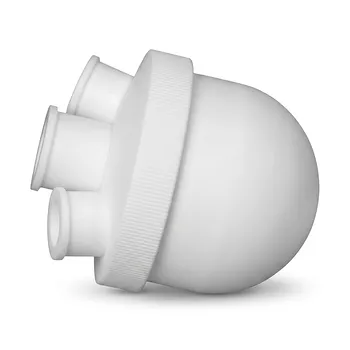
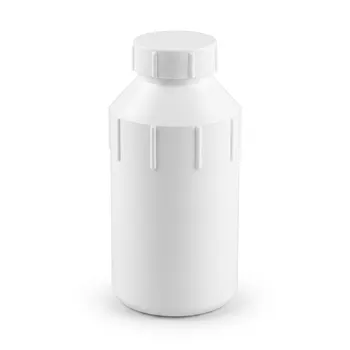
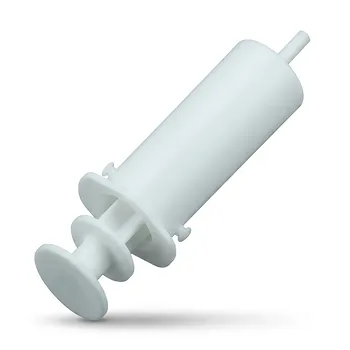
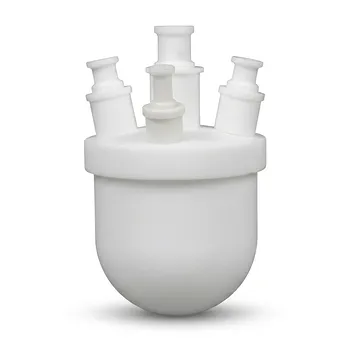
Reaction components made from high-purity PTFE or PFA provide chemical resistance against polar solvents, fluorinated reagents, and radical-generating conditions. Properly selected fluoropolymer vessels, tubing, fittings, and storage components minimize swelling, corrosion, and trace-metal leaching.
They also support reliable atmosphere control, which is important because uncontrolled oxygen or other reactive gases can interfere with radical chemistry and chain-end activation.
Understanding the Trade-offs
More Activator Does Not Automatically Mean Better Control
Insufficient manganese carbonyl can leave chain ends unactivated and cause homopolymer contamination. Excessive catalyst, however, can alter radical concentrations and increase the opportunity for side reactions or uncontrolled termination.
Catalyst concentration must therefore be matched to the number and type of PVDF iodine ends, the solvent, illumination conditions, and the reactivity of the block-forming monomer.
Hydrogen-Donating Solvents Can Have Mixed Effects
Some solvents can assist radical processes by participating in hydrogen transfer and may reduce the catalyst loading needed for iodine-end activation. The same hydrogen-donating behavior can also promote chain transfer and reduce molecular weight.
Solvent choice must balance activation efficiency against preservation of the desired chain length and end-group fidelity.
High Purity Does Not Correct Regioselectivity by Itself
Clean apparatus prevents external contamination, but it does not eliminate the intrinsic formation of 2,1-addition defects. Regioselectivity, activation conditions, and reaction monitoring must still be controlled.
Purity is a prerequisite for reproducibility, not a substitute for quantitative chain-end reactivation.
Inert Hardware Must Be Matched to the Entire Process
PTFE and PFA are valuable for aggressive synthesis and handling environments, but the full setup still requires suitable seals, connections, cleaning procedures, and gas-tight operation. A chemically resistant vessel cannot compensate for contamination introduced by an incompatible fitting or poorly controlled transfer line.
The reaction environment should be evaluated as a complete fluid-handling system.
Making the Right Choice for Your Goal
The correct strategy depends on whether the priority is molecular-weight control, block purity, or analytical cleanliness.
- If your primary focus is high block-copolymer fidelity: Quantify and reactivate both –CH₂–CF₂–I and –CF₂–CH₂–I chain-end populations before adding the second monomer.
- If your primary focus is molecular-weight control: Select the solvent and catalyst concentration together, because chain-transfer activity and activation kinetics jointly determine the final molecular-weight distribution.
- If your primary focus is reproducibility: Use rigorously cleaned, high-purity PTFE or PFA reaction and fluid-handling components while controlling atmosphere, solvent purity, and trace-metal exposure.
- If your primary focus is low extractables and clean characterization: Remove residual inorganic and organic contaminants throughout synthesis and handling so that apparatus-derived leachables do not become part of the polymer background.
Well-defined VDF block fluoropolymers result when regioselectivity defects, chain-end activation, solvent behavior, and material purity are controlled as one integrated process.
Summary Table:
| Factor | Impact on VDF Polymerization |
|---|---|
| Regioselectivity | Desired –CH₂–CF₂–I reactive terminus vs. inverted –CF₂–CH₂–I less reactive terminus |
| Chain-end activation | Quantitative activation of both isomers needed for block extension |
| Catalyst (Mn₂(CO)₁₀) | Insufficient: inactive chains; Excessive: side reactions |
| Solvent choice | DMF/DMAc/NMP: high chain transfer, low MW; Acetonitrile: less transfer, high MW |
| Material purity | PTFE/PFA prevent contamination, protect catalyst, ensure reproducibility |
Achieve well-defined VDF block fluoropolymers with high-purity PTFE/PFA labware and custom components. At KINTEK, our exclusively dedicated fluoropolymer expertise ensures your synthesis is free from contamination, preserving chain-end fidelity and block purity. From reaction vessels and tubing to custom CNC-machined parts, our PTFE/PFA products are designed for rigorous VDF polymerization. Contact us today to upgrade your lab setup and experience unmatched reliability—get in touch with our specialists!
Related Products
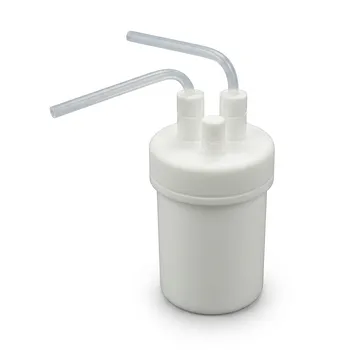
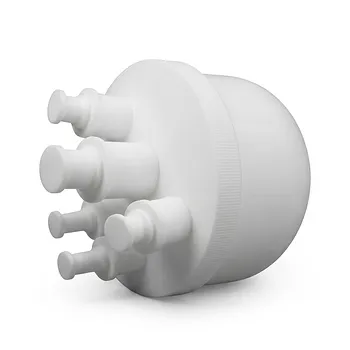
- Custom PTFE Continuous Reaction Bottles Virgin Fluoropolymer High Purity Low Background Synthesis Vessels
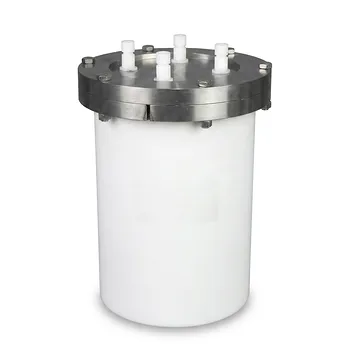
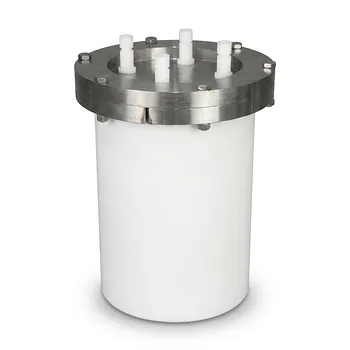
- Corrosion Resistant PTFE Hydrogen Fluoride Diluter Reaction System with Flange Seals and Multi Port Valve Fittings
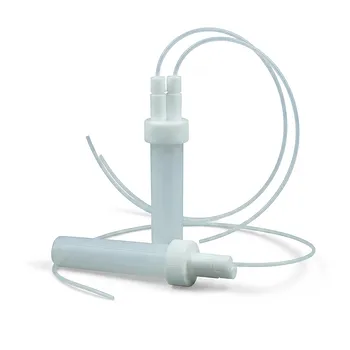
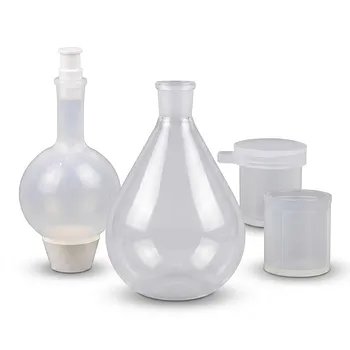
- High Purity PFA Reaction Bottle with Tubing Connection for Corrosive Chemical Synthesis and Trace Analysis
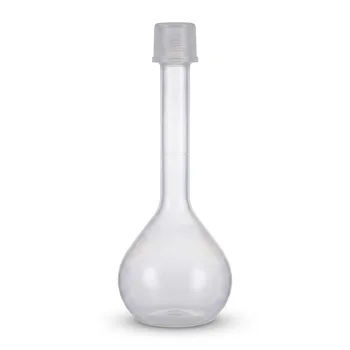
- High Purity PFA Volumetric Flask 1000ml 2000ml Constant Volume Bottle Acid Resistant Trace Analysis Custom Laboratory Labware
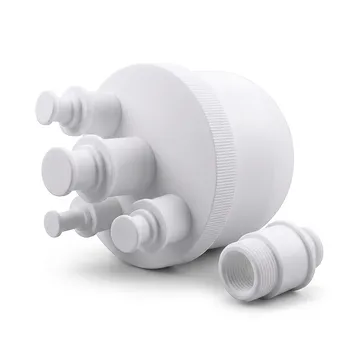
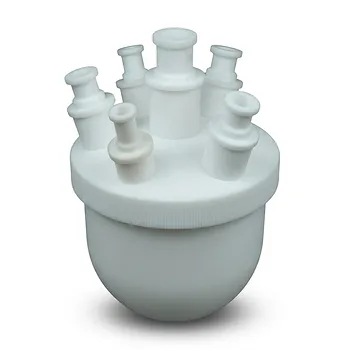
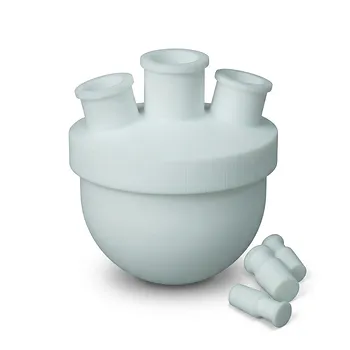
- Custom Multi Neck PTFE Flask for Chemical Engineering and High Purity Laboratory Synthesis Applications
People Also Ask
- What reaction vessel and fluid handling considerations are necessary for living cationic polymerization of fluorinated monomers involving Lewis acid catalysts? Key design and safety tips
- Ion Activation Reaction Vessel Requirements: Why PTFE is Critical for Membrane Performance
- How do perfluorinated solvent environments influence the selection of reaction vessels and fluid handling components in nonaqueous emulsion polymerizations? Choose fluoropolymer materials.
- Why are high-purity PTFE or PFA reaction vessels recommended for the synthesis of PANI-TiC hybrid materials? - Guide
- Why are fluoroplastic (PTFE) reaction vessels recommended for Methylene Blue (MB) adsorption kinetic experiments?