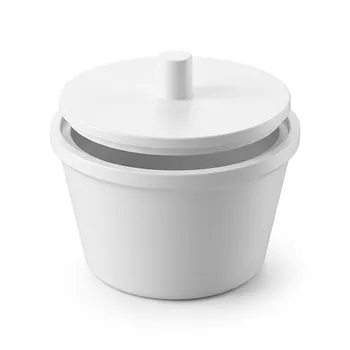
The technical advantages of a PTFE-lined autoclave for CuGNT synthesis stem from its unique ability to provide a chemically inert, high-pressure environment that allows temperatures to exceed the boiling point of water. This specific environment provides the necessary kinetic energy for glucose to reduce copper ions and facilitates the anisotropic growth of copper atoms into high-aspect-ratio nanowires while preventing any metallic contamination from the reactor vessel.
The PTFE-lined autoclave serves as a critical reaction vessel that bridges the gap between extreme chemical resistance and the high-pressure conditions required for complex nanostructure morphology. Its primary value lies in maintaining a high-purity environment while enabling the hydrothermal conditions necessary for the precise assembly of copper, graphene, and carbon nanotubes.
Ensuring Material Purity and Chemical Resistance
Preventing Metal Ion Contamination
The Polytetrafluoroethylene (PTFE) liner acts as a total barrier between the corrosive reaction fluid and the autoclave's stainless steel shell. Without this liner, metal ions from the reactor wall could leach into the solution, acting as unintended catalysts or impurities that degrade the performance of the CuGNT hybrids.
Resistance to Corrosive Precursors
Hydrothermal synthesis often involves aggressive chemical environments, including precursors like nitrates or chlorides and strong reducing agents. PTFE is chosen for its exceptional chemical inertness, allowing it to withstand these corrosive fluids at 120°C without reacting or degrading.
High-Purity Synthesis Environment
Because PTFE is a non-reactive polymer, it ensures that the final nanocomposite maintains its intended chemical signature. This is vital for applications where the electrical conductivity of the copper-graphene interface must be optimized without interference from foreign atoms.
Facilitating Kinetic and Structural Control
Operating Beyond Atmospheric Boiling Points
The sealed high-pressure environment allows the aqueous solution to reach 120°C, which is significantly higher than the standard boiling point of water. This elevated temperature provides the essential activation energy required for glucose to effectively reduce copper ions into metallic copper.
Directing Anisotropic Growth
The stable pressure and temperature within the autoclave guide copper atoms to grow along specific crystal planes. This controlled environment is what enables the formation of high-aspect-ratio nanowires rather than simple spherical particles.
Promoting Heterojunction Formation
The hydrothermal process facilitates the oriented growth of precursors onto support materials like graphene and carbon nanotubes. The autoclave environment ensures that the copper nanowires securely anchor to the carbon matrix, creating the precise heterojunctions needed for enhanced material properties.
Optimizing Yield and Structural Integrity
Non-Stick Surface Advantages
PTFE possesses a highly non-stick surface that prevents the synthesized CuGNT nanostructures from adhering to the vessel walls. This ensures a higher yield of the nanomaterial and prevents the formation of clumps that could disrupt the uniformity of the nanostructures.
Maintaining a Sealed Physical Environment
The combination of the PTFE liner and the stainless steel outer shell ensures a stable, sealed system under high pressure. This stability is mandatory for the 20-hour reaction duration required to fully develop the complex CuGNT architecture.
Understanding the Trade-offs
Temperature Limitations of PTFE
While PTFE is highly stable, it has a functional thermal limit, typically around 220°C to 250°C. Exceeding these temperatures can cause the liner to soften or deform, potentially leading to seal failure or contamination from the polymer itself.
Thermal Lag and Cooling Rates
The thick walls of the stainless steel autoclave and the insulating properties of the PTFE liner create a thermal lag. This means the internal reaction temperature may take time to stabilize, and rapid cooling is difficult, which may affect the final grain size of the copper nanowires.
How to Apply This to Your Project
Recommendations for Targeted Outcomes
- If your primary focus is maximum chemical purity: Prioritize using high-purity PTFE or PFA liners to eliminate the risk of leaching impurity ions into the reaction.
- If your primary focus is precise nanowire morphology: Ensure the autoclave is strictly maintained at 120°C to provide the consistent kinetic energy required for anisotropic crystal growth.
- If your primary focus is high-yield production: Leverage the non-stick properties of the PTFE liner by using a proper cleaning protocol between batches to ensure no residual material interferes with new growth.
The PTFE-lined autoclave is the essential tool for transforming simple precursors into sophisticated CuGNT nanostructures by balancing high-pressure kinetics with absolute chemical isolation.
Summary Table:
| Feature | Technical Advantage for CuGNT Synthesis |
|---|---|
| Chemical Inertness | Prevents metallic ion contamination and resists aggressive precursors. |
| High-Pressure Stability | Enables temperatures >100°C required for glucose reduction kinetics. |
| Anisotropic Control | Facilitates the growth of high-aspect-ratio nanowires over spherical particles. |
| Non-Stick Surface | Improves material yield and prevents nanostructure clumping. |
| Material Barrier | Protects the stainless steel shell from corrosion during 20-hour reactions. |
Elevate Your Nanomaterial Synthesis with KINTEK
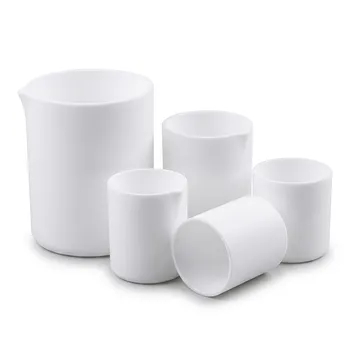
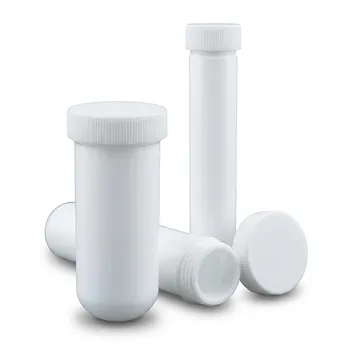
Achieve uncompromising purity and structural precision in your hydrothermal processes with KINTEK’s high-performance fluoropolymer solutions. From everyday basic labware like PTFE beakers, crucibles, and high-purity PFA reagent bottles to specialized hydrothermal synthesis liners and custom-machined reaction vessels, we provide the tools necessary for advanced material research.
Whether you require standard consumables (O-rings, stirring bars, filtration tools) or complex, non-standard machined parts crafted through our end-to-end custom CNC fabrication, KINTEK is your dedicated partner for high-performance fluoropolymers. Ensure your CuGNT nanostructures and high-purity trace analyses are free from contamination.
Ready to optimize your lab setup? Contact us today to discuss your custom project!
References
- Miao Yuan, Wenjiang Li. Nano copper-modified GO and CNTs for enhanced the epoxy resin composite thermal properties. DOI: 10.1016/j.apsusc.2025.162616
This article is also based on technical information from Kintek Knowledge Base .
Related Products
- PTFE Lined High Pressure Digestion Vessel 50ml High Temperature Hydrothermal Synthesis Tank
- Custom TFM Reaction Vessel with Stainless Steel Jacket and PTFE Inner Cup for High Corrosion Resistance
- High Pressure Custom TFM Reactor Stainless Steel Outer Vessel PTFE Inner Cup for Corrosive Synthesis
- High Pressure PTFE Digestion Vessel Inner Cup Holder Custom Corrosion Resistant Low Background Teflon
- High Temperature Corrosion Resistant Hydrothermal Synthesis Reactor with TFM Inner Liner and Straight Cylinder Design
People Also Ask
- What are the benefits of using a PTFE-lined vessel for carbon-sulfur cathode treatment? Maximize Purity & Performance
- Why are PTFE-lined pressure digestion vessels required for the preparation of Ag/CeO2 catalysts? Purity & Performance
- What is the function of high-pressure PTFE digestion vessels in mineral analysis? Optimize Sample Mineralization
- What safety features are typically incorporated into high-pressure PTFE digestion vessel designs? Ensure Lab Safety
- What is the function of PTFE lined high-pressure vessels in g-C3N4 synthesis? Achieve High-Purity Material Growth