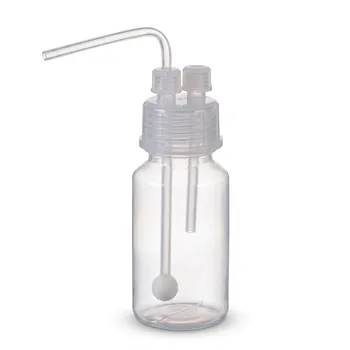
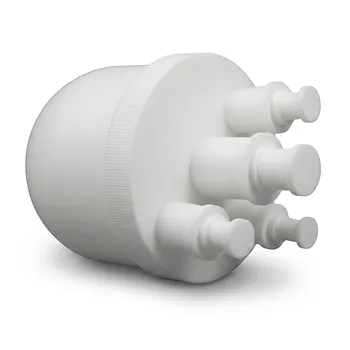
PVDF’s α, β, and γ phases are distinguished primarily by their molecular-chain conformations and resulting polarity. The α-phase has a non-polar trans–gauche arrangement, the β-phase has an all-trans conformation that produces strong ferroelectric and piezoelectric behavior, and the γ-phase has a partially extended TTTG-type conformation. PTFE and PFA tools are used during solution casting because they tolerate aggressive polar solvents, minimize contamination, and release the finished PVDF film cleanly.
The crystal phase determines PVDF’s electrical behavior, while the casting hardware helps preserve that phase by avoiding chemical contamination and processing interference. PTFE and PFA are preferred because their fully fluorinated structures provide broad chemical inertness and non-stick surfaces.
How PVDF’s Crystal Phases Differ
PVDF is a semicrystalline polymer, typically containing approximately 50%–70% crystalline material. Its properties depend strongly on how the polymer chains pack within those crystalline regions.
The α-Phase: Stable and Non-Polar
The α-phase has a trans–gauche–trans–gauche′ (TGTG′) chain conformation. This arrangement reduces steric hindrance and electrostatic repulsion between neighboring fluorine atoms.
Because the molecular dipoles largely cancel, the α-phase is considered non-polar overall. It is also the most thermodynamically stable form under normal conditions.
The reported α-phase unit cell belongs to the P2cm space group, with approximate dimensions:
- a = 0.496 nm
- b = 0.964 nm
- c = 0.462 nm
The α-phase is therefore associated with conventional stability rather than strong electroactive performance.
The β-Phase: Fully Extended and Ferroelectric
The β-phase has an all-trans planar zig-zag conformation, commonly written as TTTT. This extended arrangement places the fluorine atoms predominantly on one side of the polymer backbone and the hydrogen atoms on the other.
That separation creates a strong net dipole. The reference gives a dipole moment of approximately 2.10 D, producing the β-phase’s characteristic polar, ferroelectric, and piezoelectric properties.
The β-phase unit cell is associated with the Cm2m space group, with approximate dimensions:
- a = 0.858 nm
- b = 0.491 nm
- c = 0.256 nm
The β-phase is the desired structure for applications such as sensors, actuators, energy harvesters, and other electroactive devices.
The γ-Phase: Polar and Partially Extended
The γ-phase has a TTTGTTTG′ conformation. It is more extended than the α-phase but is not the fully all-trans structure of the β-phase.
This conformation gives the γ-phase a net polar character. Consequently, it can provide electroactive behavior, although its chain packing and electrical response differ from those of the β-phase.
The γ-phase is therefore best understood as a distinct polar crystalline structure, not simply as an imperfect version of the β-phase. Its properties arise from its specific repeating trans–trans–trans–gauche sequence.
Why Processing Determines the Resulting Phase
Solution Casting Uses Aggressive Polar Solvents
Producing electroactive PVDF commonly involves solution casting from solvents such as dimethylformamide (DMF) or dimethylacetamide (DMAc). These solvents dissolve PVDF sufficiently for the polymer to be deposited as a continuous film.
As the solvent evaporates, the chains reorganize and crystallize. Solvent choice, solution concentration, temperature, evaporation conditions, and subsequent treatment can influence which crystalline phases develop.
Crystal Structure Controls Function
The same PVDF chemistry can produce materially different performance depending on its crystalline phase.
- α-phase-rich PVDF: favors stability but has limited net polarization.
- β-phase-rich PVDF: provides strong ferroelectric and piezoelectric response.
- γ-phase-containing PVDF: provides polar behavior with a different chain arrangement from β-PVDF.
This is why phase control is central to PVDF processing. A film that looks acceptable visually may still be unsuitable if its crystalline composition does not match the intended electrical function.
Why PTFE and PFA Labware Are Used
They Resist DMF, DMAc, and Other Aggressive Chemicals
PTFE and PFA are fully fluorinated polymers with exceptionally broad chemical resistance. They are selected for casting dishes, beakers, bottles, and related tools because they are less likely to degrade, swell, or release extractable material during contact with aggressive processing chemicals.
PVDF itself resists many chemicals, but it is not universally inert. Strong bases, amines, esters, and ketones can cause swelling or dissolution, depending on concentration and temperature. PTFE and PFA provide a wider chemical-resistance margin for laboratory handling.
They Reduce the Risk of Contamination
Trace contaminants from unsuitable containers can affect polymer processing. Leached plasticizers, additives, corrosion products, or residues may interfere with:
- Solvent evaporation
- PVDF crystallization
- Film electrical properties
- Surface cleanliness
- Analytical measurements
High-purity PTFE and PFA minimize this risk because they are chemically stable and have low extractability under demanding conditions.
Their Non-Stick Surfaces Improve Film Recovery
PVDF films can adhere to ordinary glass, metal, or plastic surfaces. Removing a dried film mechanically may tear it, distort its thickness, or introduce surface damage.
PTFE and PFA have low-surface-energy, non-stick surfaces, allowing the cast film to be removed more cleanly. This is particularly valuable when the film must remain uniform and undamaged for electrical, mechanical, or spectroscopic testing.
They Help Preserve Experimental Reproducibility
Casting tools are part of the process, not merely passive containers. A chemically resistant and low-contamination surface helps ensure that differences between samples arise from controlled variables—such as temperature or solvent evaporation—rather than from the labware itself.
PFA is often useful where a more transparent, processable, or fabrication-friendly fluoropolymer vessel is preferred, while PTFE is widely used where maximum chemical resistance and non-stick behavior are the primary concerns.
Understanding the Trade-offs
“Inert” Does Not Mean Every Process Variable Is Irrelevant
PTFE and PFA reduce chemical and contamination risks, but they do not independently control PVDF crystallization. Temperature, evaporation rate, film thickness, solution concentration, and post-treatment still determine the final phase composition.
Using fluoropolymer labware improves process control; it does not guarantee a β- or γ-phase film by itself.
PTFE and PFA Are Not Identical in Use
PTFE generally offers excellent chemical resistance and non-stick performance, but PFA can be preferable when transparency, melt-processability, or more flexible fabrication options are important.
The correct choice depends on the vessel geometry, temperature, solvent exposure, cleaning method, and whether visual observation of the casting process is needed.
PVDF and Fully Fluorinated Polymers Serve Different Roles
PVDF can offer higher mechanical strength, abrasion resistance, and creep resistance than PTFE or PFA. It is therefore useful for structural and load-bearing components.
However, PTFE and PFA provide broader chemical inertness and higher temperature capability. Their use as casting tools reflects chemical reliability, not a claim that they are mechanically superior to PVDF in every application.
Avoid Assuming Phase Names Alone Predict Performance
The α, β, and γ labels describe crystalline structures, but real samples may contain mixtures of phases. Processing history and crystallinity must therefore be considered alongside phase identification when interpreting electrical or mechanical measurements.
How to Apply This to Your Project
The best material and labware choices depend on whether your priority is structural durability, electroactivity, or process cleanliness.
- If your primary focus is chemical stability during casting: Use high-purity PTFE or PFA vessels and confirm compatibility with the selected solvent, temperature, and cleaning procedure.
- If your primary focus is ferroelectric or piezoelectric performance: Optimize processing for a high β-phase content and verify the result using appropriate structural or spectroscopic characterization.
- If your primary focus is polar behavior with a different chain structure: Consider conditions that promote the γ-phase and distinguish it from β-PVDF rather than treating all polar PVDF as equivalent.
- If your primary focus is clean, defect-free film recovery: Prefer PTFE or PFA casting surfaces to reduce adhesion, tearing, and contamination during demolding.
- If your primary focus is mechanical strength or abrasion resistance: Evaluate PVDF itself for the final component, while reserving PTFE or PFA for chemically demanding processing and fluid-contact tasks.
Understanding the chain conformation and controlling the casting environment are the keys to obtaining the PVDF phase—and the performance—you actually need.
Summary Table:
| Phase | Conformation | Polarity | Key Properties | Unit Cell Parameters |
|---|---|---|---|---|
| α | TGTG′ | Non-polar | Most stable | a=0.496 nm, b=0.964 nm, c=0.462 nm |
| β | TTTT | Polar | Ferroelectric, piezoelectric | a=0.858 nm, b=0.491 nm, c=0.256 nm |
| γ | TTTGTTTG′ | Polar | Distinct polar structure | Not specified |
Ensure reliable PVDF processing with KINTEK's high-purity PTFE and PFA labware. Our products offer exceptional chemical resistance and non-stick surfaces, reducing contamination and improving film recovery. Whether you need beakers, dishes, or custom solutions, we support your lab with top-quality materials. Contact us today to discuss your requirements!
Related Products
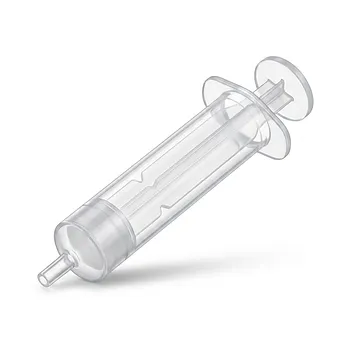
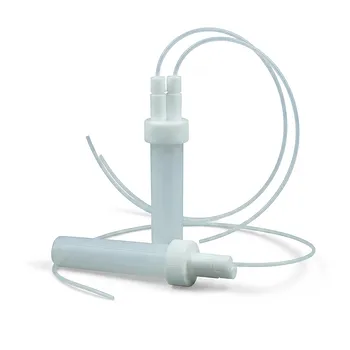
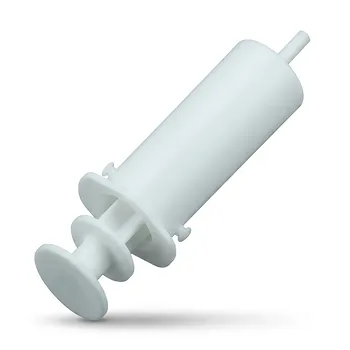
- Corrosion Resistant PFA Syringe Translucent Visual Fluoropolymer Labware 10ml Chemical Handling Tool
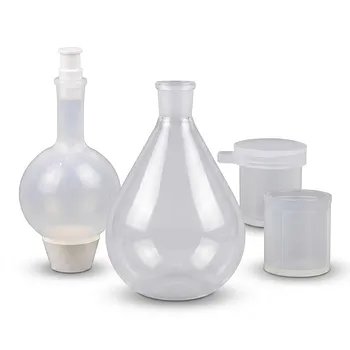
- Custom PTFE Flask 250ml High Purity Fluoropolymer Laboratory Vessel for Chemical Research
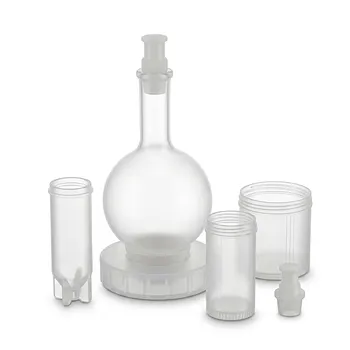
- Custom PFA Pear Shaped Flask High Purity Corrosion Resistant Labware Custom Molded Fluoropolymer Flask Glass Replacement Solution
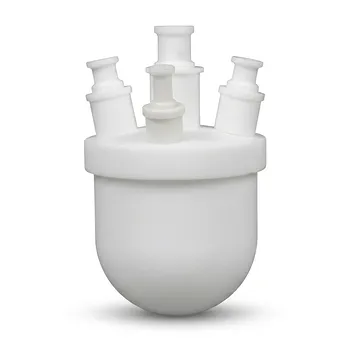
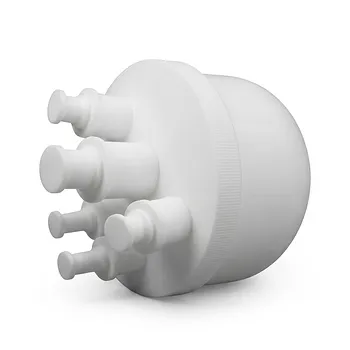
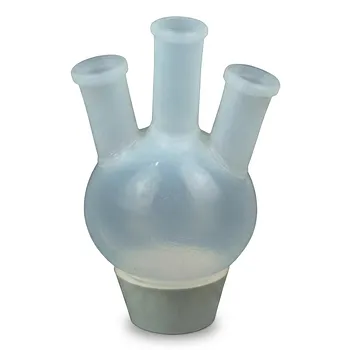
- Custom Multi Neck PTFE Flask for Chemical Engineering and High Purity Laboratory Synthesis Applications
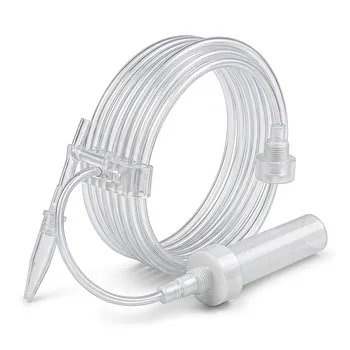
- Custom PFA Tubing 1/4 Inch High Purity Corrosion Resistant Fluoropolymer Tube with Welding and Machining Services
People Also Ask
- Why do PFA fluoropolymer laboratory products offer different melt-processability and structural toughness compared to standard PTFE labware?
- Which material characteristics make fluoropolymers suitable for lithium-ion battery separators, and how do fluoropolymer laboratory supplies support separator performance testing?
- Why use PTFE/PFA for pH adjustment in dye studies? Ensure chemical purity and reliable adsorption data accuracy.
- How do the chemical properties of fluorinated materials support specialized processing requirements in semiconductor cleanrooms and analytical labs? Discover high-purity PTFE/PFA solutions.
- Why might incorporating fluorine into a fluoropolymer backbone not always lead to a noticeable increase in surface hydrophobicity or water contact angle?