Fluorinated phosphazene elastomers combine unusually broad temperature capability with durable sealing mechanics. Poly(fluoroalkoxyphosphazene), or FZ, elastomers can operate continuously from approximately −65°C to 175°C while retaining low-temperature flexibility, high flex-fatigue resistance, vibration damping, and strong resistance to oils, acids, water, and other aggressive fluids. Their inorganic phosphorus–nitrogen backbone and fluorinated side groups make them particularly suitable for seals, diaphragms, tubing interfaces, and other components exposed to thermal cycling and chemically demanding fluids.
The key advantage of FZ elastomers is balanced performance: they remain flexible at very low temperatures, resist chemical and fluid attack, and tolerate repeated mechanical movement without relying on extractable plasticizers.
Why FZ Elastomers Suit Specialized Fluid Handling
Inorganic backbone with fluorinated side groups
FZ elastomers contain an alternating phosphorus–nitrogen backbone with fluorinated organic pendant groups. This structure combines elastomeric flexibility with the chemical resistance and environmental stability associated with fluorinated polymers.
The backbone is important for low-temperature performance because flexibility is inherent to the polymer structure rather than dependent on plasticizers that may migrate, leach, or be extracted by process fluids.
Resistance to chemically aggressive fluids
FZ elastomers provide robust resistance to oils, acids, water, and other challenging fluids across a broad temperature range. This supports long-term use in seals and fluid-contact components where swelling, embrittlement, or contamination could compromise system reliability.
Their high hydrophobicity and chemical inertness can also help reduce fluid interaction and sample contamination in laboratory and analytical equipment.
Stability in high-purity applications
Fluorinated phosphazene materials offer low water absorption, strong environmental stability, and resistance to aggressive solvents and reactive chemicals. These characteristics are valuable in high-purity fluid transfer, trace analysis, digestion systems, and specialized reaction equipment.
For these applications, material stability is not only a maintenance issue. It can directly affect sample integrity, leakage risk, and the reproducibility of analytical results.
Thermal Performance Characteristics
Broad continuous service range
The primary thermal characteristic is a continuous service range of approximately −65°C to 175°C—equivalent to about −85°F to 347°F. This allows one elastomer formulation to accommodate both cryogenic-adjacent flexibility requirements and elevated-temperature fluid handling.
The range is especially useful where components experience repeated transitions between cold storage, ambient operation, and hot processing.
Low-temperature flexibility
FZ elastomers have a reported glass transition temperature, Tg, of approximately −65°C. They also exhibit a TR-10 low-temperature retraction value of approximately −58°C, indicating useful recovery and flexibility at low temperatures.
This helps seals maintain contact pressure during cooling, reducing the risk of leakage caused by hardening, loss of compliance, or inadequate recovery.
Resistance to thermal cycling
A broad operating window is most valuable when paired with mechanical durability. FZ elastomers’ high flex-fatigue resistance allows them to accommodate repeated deformation associated with temperature changes, vibration, pressure fluctuations, and component movement.
Their performance should still be validated against the actual thermal ramp rate, exposure duration, pressure, and fluid chemistry of the application.
Thermal position relative to other fluoropolymers
FZ elastomers should not be confused with rigid, fully fluorinated materials such as PTFE or PFA, which can support higher continuous temperatures in some applications. FZ’s distinguishing benefit is the combination of elevated-temperature resistance with rubbery flexibility and sealing compliance.
For applications requiring temperatures substantially above 175°C, a higher-temperature fluoropolymer or another specialized sealing material may be more appropriate.
Mechanical Performance in Fluid Handling
High flex-fatigue resistance
FZ elastomers tolerate repeated flexing without rapidly losing sealing function. This is important for dynamic seals, diaphragms, flexible connectors, bellows-like components, and vibration-exposed fittings.
Flex-fatigue resistance can extend service life where conventional rigid fluoropolymers would crack, deform, or require a separate compliant seal.
Excellent vibration damping
The elastomeric nature of FZ materials provides vibration damping that rigid fluoroplastics generally cannot match. Damping can reduce transmission of pump, valve, and equipment vibration into fluid connections.
This is useful for protecting fittings, minimizing mechanical noise, and maintaining stable sealing contact in continuously operated systems.
Sealing compliance and recovery
FZ elastomers can conform to mating surfaces and compensate for small dimensional variations, surface irregularities, and thermal expansion differences. Their low-temperature flexibility helps preserve this compliance when the assembly cools.
The practical result is a material well suited to seals that must maintain contact pressure across temperature and fluid changes.
Mechanical durability under chemical exposure
Mechanical properties are meaningful only if they are retained after fluid exposure. FZ elastomers are designed to resist chemical attack while continuing to provide flexibility and sealing performance.
Qualification should therefore include compression set, swelling, hardness change, tensile retention, and leak testing after fluid immersion, rather than relying only on initial datasheet values.
How These Properties Translate Into Applications
Dynamic and low-temperature seals
The combination of low Tg, low-temperature retraction performance, and flex-fatigue resistance makes FZ elastomers suitable for seals exposed to cold fluids or frequent thermal cycling.
They are particularly attractive when a seal must remain compliant without the use of migrating plasticizers.
Harsh-fluid transfer systems
Resistance to oils, acids, water, and aggressive chemicals supports use in fluid-transfer assemblies, specialty tubing interfaces, valves, and pump components.
The correct grade still depends on the exact chemical, concentration, temperature, pressure, and exposure time.
Laboratory and analytical equipment
FZ elastomers can support fluid handling in digestion vessels, trace-analysis apparatus, and high-purity systems where chemical durability and low contamination are important.
Their hydrophobicity and low fluid interaction can be advantageous, but extractables and compatibility should be verified for regulated or ultra-trace applications.
Vibration-exposed equipment
Damping and fatigue resistance make FZ materials appropriate for components connected to pumps, compressors, actuated valves, or other equipment that produces continuous vibration.
The material can help absorb mechanical energy while maintaining a fluid-tight interface.
Understanding the Trade-offs
They are not universal high-temperature materials
The approximate 175°C continuous service limit is substantial for an elastomer, but it is lower than the operating capability of some rigid fluoropolymers. PTFE and PFA, for example, may be preferred for higher-temperature chemical digestion or hot corrosive-fluid transfer when elastic compliance is not required.
Elastomeric compliance can mean dimensional movement
FZ materials provide flexibility rather than the high stiffness of partially fluorinated structural polymers such as PVDF or ETFE. Under sustained load, pressure, or compression, elastomers can exhibit creep and stress relaxation.
Designs requiring precise dimensional stability should evaluate long-term compression, pressure, temperature, and sealing-force retention.
Chemical resistance must be application-specific
“Fluorinated” does not mean universally compatible with every chemical under every condition. Permeation, swelling, compression set, and degradation can vary with fluid composition, temperature, pressure, and exposure duration.
A representative immersion and mechanical-retention test is more reliable than a broad chemical-resistance label.
Processing and grade selection matter
FZ performance depends on formulation, cure system, reinforcement, geometry, and manufacturing quality. A seal with an appropriate polymer family can still fail because of poor surface finish, excessive squeeze, inadequate gland design, or incorrect tolerances.
Material selection should therefore be integrated with seal design and validation testing.
Making the Right Choice for Your Goal
FZ elastomers are most valuable when the application requires several demanding properties simultaneously rather than one extreme property in isolation.
- If your primary focus is low-temperature sealing: Prioritize FZ grades with verified Tg and TR-10 performance, then confirm compression set and leak retention at the minimum operating temperature.
- If your primary focus is chemical durability: Test the specific elastomer against the actual fluid, concentration, temperature, and exposure duration, including swelling and mechanical-property retention.
- If your primary focus is vibration and flexing: Use FZ elastomers where flex-fatigue resistance and damping are more important than rigid structural stiffness.
- If your primary focus is maximum operating temperature: Compare FZ directly with PFA, PTFE, or other high-temperature materials, recognizing that those alternatives may sacrifice elastomeric compliance.
- If your primary focus is high-purity fluid handling: Evaluate extractables, permeation, contamination risk, and post-exposure sealing performance in addition to basic chemical compatibility.
For specialized fluid handling, FZ elastomers provide a strong balance of thermal flexibility, chemical resistance, fatigue durability, and vibration damping when the application demands reliable sealing across severe operating conditions.
Summary Table:
| Property | Value/Benefit |
|---|---|
| Continuous temperature range | -65°C to 175°C |
| Glass transition temperature (Tg) | ~ -65°C |
| Low-temperature retraction (TR-10) | ~ -58°C |
| Chemical resistance | Oils, acids, water, aggressive fluids |
| Flexibility | Inherent, no plasticizers needed |
| Fatigue resistance | High |
| Vibration damping | Excellent |
Optimize your fluid handling with KINTEK's high-performance fluoropolymer solutions. Our PTFE and PFA products, backed by custom CNC machining, ensure reliability and purity. Contact us today to discuss your application and discover how our expertise can enhance your system's performance.
Related Products
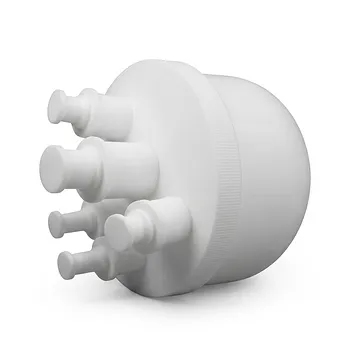
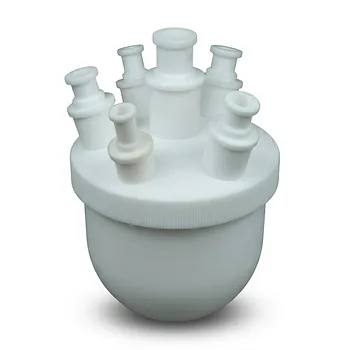
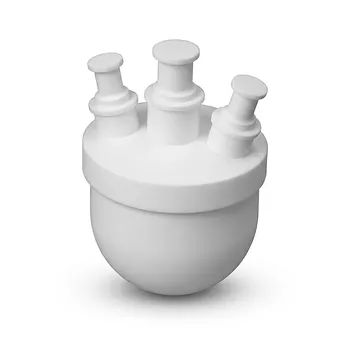
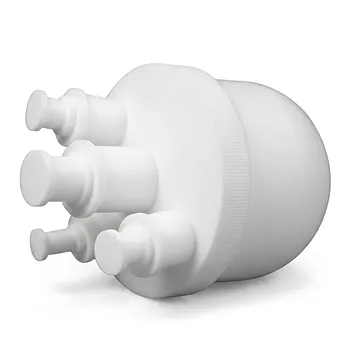
- Custom Multi Neck PTFE Flask for Chemical Engineering and High Purity Laboratory Synthesis Applications
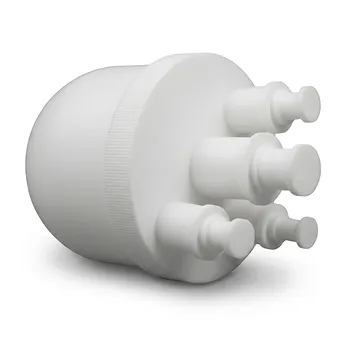
- Custom Multi Neck PTFE Flask 18L Laboratory Chemical Reactor Vessel for High Purity Synthesis and Stirring Applications
- Custom Corrosion Resistant PFA PTFE Multi Neck Laboratory Reaction Flask GL Standard Mouth Fluoropolymer Flasks
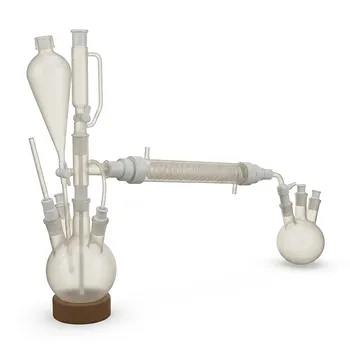
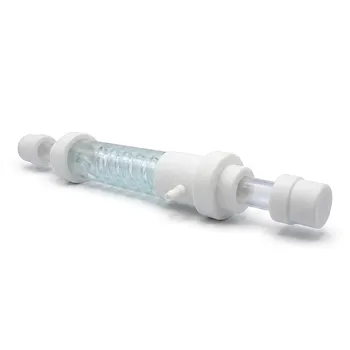
- PTFE Distillation Condensation Apparatus High Temperature Hydrofluoric Acid Resistant Fluorination Reaction Flask
- Custom PTFE Flask Large Volume 18L Corrosion Resistant Low Background High Purity Chemical Vessel
People Also Ask
- How does pressure management influence molar mass distribution and reaction rate in the iodine transfer emulsion polymerization of vinylidene fluoride, and how do custom fluoropolymer reaction vessels support this process?
- How does the molecular structure of fluorinated polymers contribute to the extreme thermal stability and chemical resistance required for high-performance laboratory reaction vessels and digestion containers? Discover the science behind PTFE and PFA for your lab.
- How do PTFE fluoropolymer laboratory vessels and tubing handle exposure to different types of organic solvents? Discover key insights for optimal solvent compatibility.
- What safety features and material specifications are essential when operating high-pressure reaction vessels for fluoropolymer synthesis? Ensure Safe High-Pressure Fluoropolymer Synthesis
- How do the fundamental chemical and thermal stability properties of fluoropolymers influence the performance of high-purity fluoropolymer laboratory supplies and reaction vessels? Discover key factors for reliable lab results.