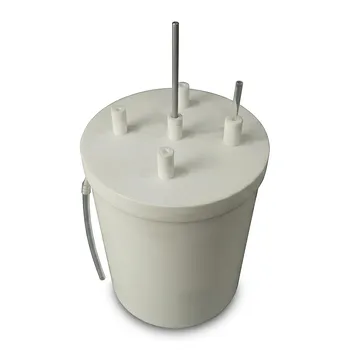
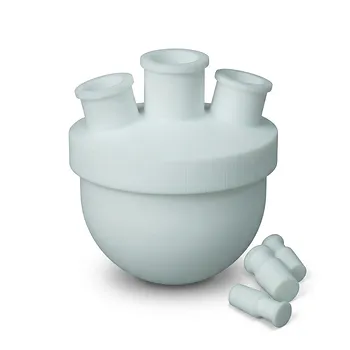
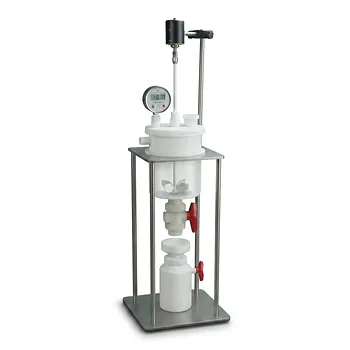
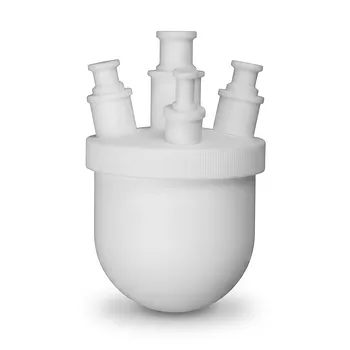
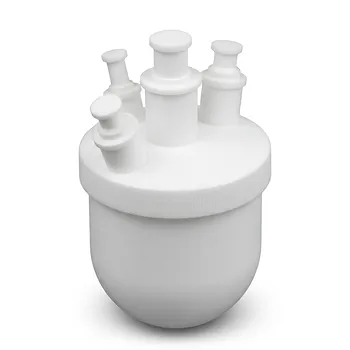
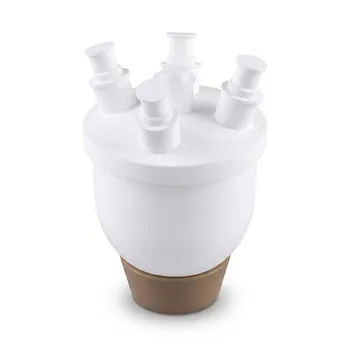
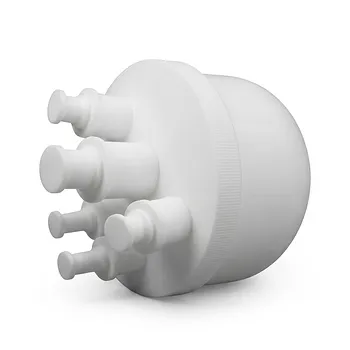
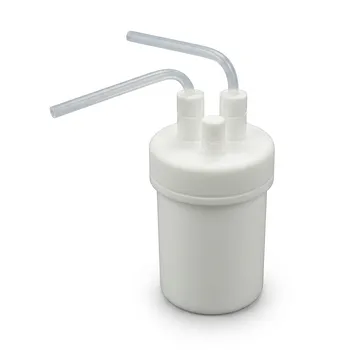
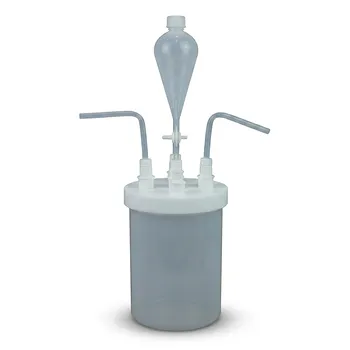
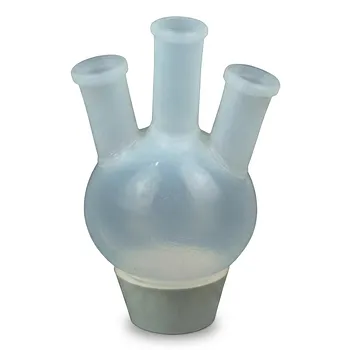
The performance requirements for reaction vessels used in the 170°C solvent-free methyl-imidation of aryl phthalimide dyes focus on extreme thermal stability and absolute chemical inertness. Specifically, vessels must utilize high-purity quartz glassware or high-performance fluoropolymer linings to survive the aggressive conditions without leaching impurities into the 4-nitro-N-methylphthalimide intermediate.
Core Takeaway: To ensure the high purity and fluorescence of aryl phthalimide dyes, reaction vessels must be constructed from materials that prevent container corrosion and impurity precipitation at a sustained operating temperature of 170°C.
Critical Thermal and Mechanical Resilience
Sustained High-Temperature Performance
Operating at 170°C puts significant thermal stress on reaction hardware, especially in a solvent-free environment where heat distribution may be uneven. The vessel must maintain its mechanical integrity and seal quality without softening or deforming over the duration of the methyl-imidation process.
Resistance to Thermal Shock
In high-temperature synthesis, the ability to withstand temperature fluctuations during heating and cooling cycles is vital. Using high-purity quartz is often preferred because its low coefficient of thermal expansion minimizes the risk of structural failure compared to standard borosilicate glass.
Chemical Inertness and Purity Control
Mitigating Container Corrosion
The reaction between 3-nitrophthalic anhydride and dimethylurea can be aggressive toward standard metallic or low-grade glass surfaces. Reaction kettles must be lined with materials that are non-reactive to prevent the base metal from leaching into the reaction mixture.
Preventing Impurity Precipitation
High-performance fluoropolymer linings act as a barrier that prevents the formation of degradation products derived from the vessel itself. This is critical for fluorescent dyes, as even trace amounts of metallic or organic impurities can quench fluorescence or alter the coloristic properties of the final product.
Protection of the Intermediate
Maintaining a "clean" reaction environment ensures the high purity of the 4-nitro-N-methylphthalimide intermediate. By eliminating vessel-derived contamination, researchers can ensure more predictable results in subsequent synthesis steps.
Understanding the Trade-offs
Material Limitations at Peak Temperatures
While fluoropolymer linings offer excellent inertness, they have specific thermal ceilings that must not be exceeded. If the reaction temperature inadvertently spikes above the material's limit, the lining may degrade, releasing contaminants into the dye.
Thermal Conductivity Challenges
Fluoropolymer-lined steel vessels provide excellent durability but may have lower thermal conductivity than unlined metal. This can lead to longer heating times or the need for more sophisticated temperature control systems to ensure the solvent-free melt remains at a consistent 170°C.
Applying These Standards to Your Synthesis
When selecting a vessel for the synthesis of aryl phthalimide fluorescent dyes, your choice should be dictated by your scale and purity requirements.
- If your primary focus is maximum purity in a laboratory setting: Utilize high-purity quartz glassware to provide the highest level of chemical inertness and transparency for visual monitoring.
- If your primary focus is industrial scale-up or durability: Invest in high-performance fluoropolymer-lined reaction kettles that offer the mechanical strength of steel with the necessary chemical protection.
- If your primary focus is cost-effective prototyping: Ensure that any glass used is of the highest grade and specifically rated for sustained 170°C operations to avoid contamination from glass leaching.
Selecting the correct vessel material is the most effective way to ensure the integrity of your fluorescent dyes in high-temperature, solvent-free environments.
Summary Table:
| Feature | Quartz Glassware | Fluoropolymer-Lined (PTFE/PFA) |
|---|---|---|
| Core Benefit | Extreme thermal shock resistance | Superior chemical inertness & durability |
| Purity Level | Highest; prevents leaching | High; prevents container corrosion |
| Application | Lab-scale & visual monitoring | Industrial scale-up & corrosive reagents |
| Thermal Limit | Very high (>1000°C) | Strict limits (approx. 260°C) |
| Conductivity | Moderate | Lower (requires precise temp control) |
Elevate Your Synthesis with KINTEK’s High-Performance Fluoropolymer Solutions
Are your high-temperature reactions demanding absolute purity and chemical resilience? KINTEK specializes in manufacturing premium laboratory supplies crafted from high-performance PTFE and PFA. From everyday basics like beakers, reagent bottles, and centrifuge tubes to advanced components like custom reaction vessels, microwave digestion liners, and microchannel reactors, we provide the inert environment your research requires.
Whether you need standard labware (burettes, filters, stirring bars) or bespoke, non-standard machined parts via our end-to-end custom CNC fabrication, we ensure your 170°C+ processes remain free from contamination. Don't compromise the fluorescence of your dyes—contact us today to discover how our fluoropolymer expertise can optimize your lab setup!
References
- Ben C. Bimberg, Axel Jacobi von Wangelin. Fluorescent and Chemiluminescent Dyes with Aryl Phthalimide and Aryl Luminol Chromophores. DOI: 10.1002/cptc.202500064
This article is also based on technical information from Kintek Knowledge Base .
Related Products
- PTFE 10L Reaction Vessel with Stirring Paddle Customizable Corrosion Resistant High Temperature Reactor for Biopharmaceutical and Chemical Processing
- High Temperature PTFE Reaction Flask 1000ml Single Neck Round and Flat Bottom Laboratory Bottle
- Customizable PTFE Reaction Vessel with Electric Stirring Paddle and Buchner Funnel Vacuum Filtration System
- High Purity PTFE Reaction Vessel with Electric Stirring System and Customizable 5L Tank including Buchner Funnel Filtration Assembly
- High Temperature Corrosion Resistant PTFE Reaction Flask Custom Multi Neck Laboratory Vessel with Flat or U Bottom
People Also Ask
- Why are high-purity PTFE or PFA reaction vessels recommended for the synthesis of PANI-TiC hybrid materials? - Guide
- What reaction vessel and fluid handling considerations are necessary for living cationic polymerization of fluorinated monomers involving Lewis acid catalysts? Key design and safety tips
- Ion Activation Reaction Vessel Requirements: Why PTFE is Critical for Membrane Performance
- Why are fluoroplastic (PTFE) reaction vessels recommended for Methylene Blue (MB) adsorption kinetic experiments?
- Why is a PTFE reaction vessel required for Ti3C2Tx MXene synthesis? Ensure Safe HF Etching & High Purity