PVDF is highly chemically resistant, but it is not universally inert. It reliably handles most inorganic acids, weak bases, halogens, oxidizing agents, hydrocarbons, alcohols, and chlorinated solvents, often at elevated temperatures. Its principal limitations are strong caustics, amines, ketones, esters, and certain highly polar organic solvents, which can cause swelling, softening, embrittlement, or complete dissolution.
PVDF is an excellent choice for many aqueous, acidic, oxidizing, and halogenated chemical-transfer applications, but it should not be treated as a universal fluoropolymer. For strong alkaline solutions or aggressive polar organics, PTFE or PFA is generally the more reliable material.
Where PVDF Performs Well
Inorganic Acids and Oxidizing Reagents
PVDF offers strong resistance to many inorganic acids, acid mixtures, halogens, and oxidizing agents. This makes it suitable for numerous acid-transfer lines, valve bodies, fittings, and storage components.
Compatibility still depends on the specific acid, concentration, temperature, and exposure duration. Highly concentrated or fuming reagents require direct manufacturer data or application-specific testing.
Chlorinated Solvents and Hydrocarbons
PVDF generally resists chlorinated solvents, hydrocarbon solvents, fuels, and other relatively nonpolar chemicals. This is a significant advantage over many conventional engineering plastics.
The polymer can therefore be appropriate for fluid systems handling many halogenated or hydrocarbon-based process streams, provided the operating temperature remains within the selected grade's limits.
Weak Bases, Alcohols, and Many Oxidants
Weak bases, alcohols, and many oxidizing chemicals are typically compatible with PVDF. These properties support its use in chemical processing and laboratory fluid-handling equipment.
The distinction between a weak base and a strong caustic is important. A system that safely handles a dilute or weakly basic solution may fail when exposed continuously to concentrated sodium hydroxide or potassium hydroxide.
Where PVDF Has Chemical Compatibility Limits
Strong Bases and Caustic Solutions
Strong bases are one of PVDF's most important limitations. Sodium hydroxide, potassium hydroxide, ammonia, and other strongly alkaline environments can cause swelling, softening, or broader chemical degradation.
Continuous exposure to strongly basic solutions, particularly at elevated temperature or high concentration, should generally be considered unsuitable unless validated for the exact formulation and service conditions.
Amines and Ammonia
Primary and secondary amines can attack PVDF, with the severity depending on concentration, temperature, and exposure time. Organic bases may produce swelling or loss of mechanical strength even when the system remains visually intact.
This is a critical design concern for valves, tubing, seals, and fittings because dimensional changes can cause leakage or impair actuation before obvious dissolution occurs.
Ketones and Esters
Ketones such as acetone and methyl ethyl ketone are known compatibility concerns. Esters and other polar organic solvents can similarly cause PVDF to swell, soften, or dissolve.
These effects can compromise pressure capability, alter flow dimensions, release dissolved polymer into the process fluid, and contaminate samples. PTFE or PFA is generally preferable for continuous service involving these chemical classes.
Particularly Aggressive Polar Organics
Some highly polar solvents are severely incompatible with PVDF. Furan and hexamethylphosphoric triamide, for example, should not be assumed safe for PVDF components based only on the polymer's general solvent resistance.
For unusual or aggressive solvents, the exact chemical name, concentration, temperature, and exposure duration should be checked against compatibility data before specifying PVDF.
Why Operating Conditions Matter
Temperature Accelerates Chemical Attack
A reagent that appears compatible at room temperature may cause rapid degradation at elevated temperature. Heat can increase swelling, diffusion, softening, and dissolution rates.
PVDF service temperatures vary by resin grade and chemical environment. Published temperature limits must therefore be treated as application-specific rather than as a universal operating allowance.
Concentration Changes the Result
Chemical compatibility is not a simple yes-or-no property. Dilute solutions, concentrated reagents, mixtures, and fuming formulations can affect PVDF very differently.
Compatibility data for one concentration should not be extrapolated automatically to another. Mixtures deserve particular caution because one component may intensify the attack of another.
Mechanical Stress Increases Risk
Pressure, flexing, clamping, and repeated thermal cycling can magnify the consequences of chemical exposure. A small amount of swelling may be tolerable in an unstressed container but unacceptable in a pressurized tube or precision valve.
Material selection must consider both chemical resistance and retained mechanical performance under actual operating stress.
Understanding the Trade-offs
PVDF Versus PTFE and PFA
PVDF combines broad chemical resistance with useful mechanical strength and processability. However, PTFE and PFA provide substantially broader resistance to aggressive bases and polar organic solvents.
Fully fluorinated polymers are usually the safer choice when chemical purity, long-term inertness, or exposure to strongly alkaline and solvent-rich streams is the primary concern.
Chemical Inertness Is Not the Only Design Factor
PTFE and PFA may offer better chemical resistance, but the preferred material still depends on pressure, temperature, dimensional stability, permeability, fabrication requirements, and cost.
PVDF can remain the better engineering choice for compatible chemicals where stiffness, strength, or system construction requirements matter more than near-universal inertness.
Compatibility Tables Are Screening Tools
A compatibility rating is useful for narrowing material options, but it does not replace validation. Ratings may not account for the exact resin grade, additives, welds, molded geometry, pressure, stress, or chemical mixture.
For critical systems, perform testing with the actual reagent and component design, or obtain a written recommendation from the material supplier.
Common Failure Modes to Avoid
Assuming “Fluoropolymer” Means “Chemically Inert”
PVDF contains fluorine, but it is not equivalent to PTFE or PFA in chemical inertness. Treating all fluoropolymers as interchangeable is a common cause of unexpected degradation.
The polymer family and specific formulation must be identified before relying on a compatibility claim.
Ignoring Early Swelling
Swelling and softening can begin before visible cracking or dissolution. These early changes may affect valve operation, tubing dimensions, connection integrity, and pressure rating.
Inspect components for dimensional change, loss of stiffness, discoloration, cracking, and leakage during qualification.
Selecting Materials from Chemical Names Alone
The same chemical class can produce different results at different concentrations and temperatures. A general statement such as “acid resistant” or “solvent resistant” is insufficient for a high-consequence process.
Document the full exposure profile, including concentration, temperature, pressure, duration, cycling, and whether the reagent is pure or mixed.
Making the Right Choice for Your Goal
Use the complete chemical and operating profile to select PVDF, PTFE, PFA, or another compatible material.
- If your primary focus is acid, oxidizer, halogen, hydrocarbon, alcohol, or chlorinated-solvent service: PVDF is often an appropriate choice, subject to confirmation of concentration, temperature, and exposure duration.
- If your primary focus is strong caustics or strongly alkaline service: Specify PTFE or PFA unless the exact PVDF formulation and operating conditions have been specifically validated.
- If your primary focus is ketone, ester, amine, furan, or other aggressive polar-organic service: Prefer fully fluorinated PTFE or PFA components to reduce swelling, dissolution, and contamination risk.
- If your primary focus is long-term reliability in a pressurized fluid system: Validate the selected material under combined chemical, thermal, mechanical, and cycling conditions rather than relying on a room-temperature compatibility rating.
The correct PVDF decision depends less on its broad resistance reputation than on whether the specific reagent and operating conditions fall inside its proven compatibility range.
Summary Table:
| Chemical Class | PVDF Compatibility | Notes |
|---|---|---|
| Inorganic Acids & Oxidizers | Generally compatible | Confirm concentration and temperature. |
| Chlorinated Solvents & Hydrocarbons | Generally compatible | Suitable for many nonpolar organics. |
| Weak Bases & Alcohols | Compatible | Dilute or weak bases usually safe. |
| Strong Bases (e.g., NaOH, KOH) | Limited | Swelling, softening, or degradation at high concentrations/temperatures. |
| Amines & Ammonia | Limited | May swell or weaken components. |
| Ketones & Esters | Poor | Swelling, dissolution, contamination risk. |
| Polar Organics (e.g., furan) | Poor | Severe incompatibility; avoid. |
| Operating Conditions | Critical | Temperature, concentration, and stress accelerate failure. |
| Preferred Alternative | PTFE/PFA | For strong bases and polar organics, use PTFE/PFA. |
Is PVDF the right material for your fluid system? At KINTEK, we specialize in high-performance fluoropolymers like PTFE and PFA. Our lab supplies—from tubing and fittings to custom-machined parts—are designed for maximum chemical compatibility, even with aggressive reagents. Contact our experts today to select the ideal material for your application and ensure long-term reliability. Contact us now!
Related Products
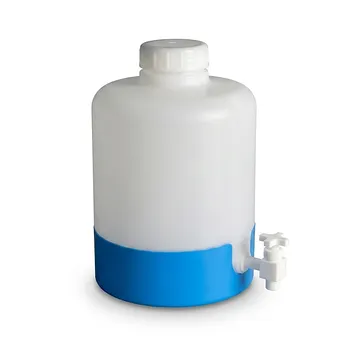
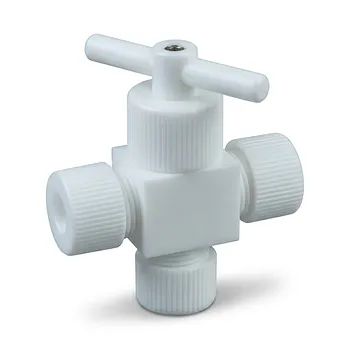
- High Corrosion Resistant PTFE Faucet Polytetrafluoroethylene Valve for Chemical Storage Drums and Fluid Transfer Systems Customizable Industrial Grade
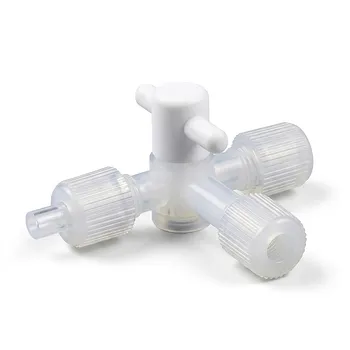
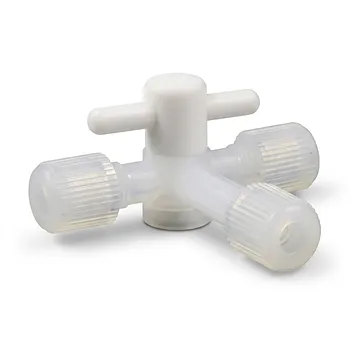
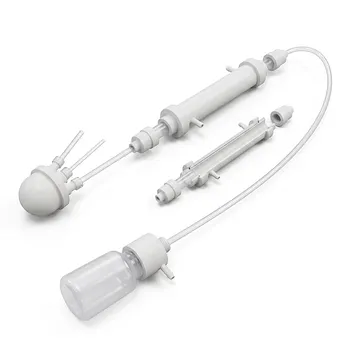
- Corrosion Resistant High Purity PFA Valve and Weldable Transparent Tubing for Semiconductor Fluid Transfer
- High Purity PFA Valves and Weldable Corrosion Resistant Transparent Tubing for Semiconductor Sensor Manufacturing Fluid Transfer
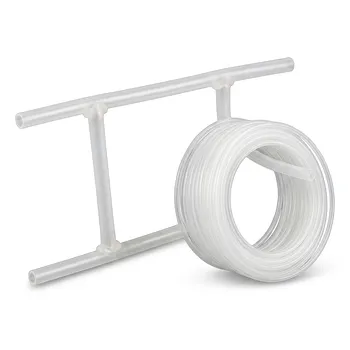
- Corrosion Resistant PFA Tubing 1/4 Inch Custom Molded Welded Fluid Transfer Components
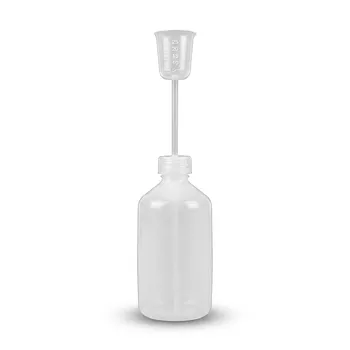
- Corrosion Resistant PFA Bottle Top Dispenser Translucent Squeeze Liquid Extraction System for Ultra Pure Chemical Handling
People Also Ask
- What is the typical operating temperature and pressure range for PTFE valves? Key Specs for Optimal Performance
- How do PTFE valves and components support high-purity liquid transfer? Ensure Product Integrity with Inert Materials
- What industries commonly use PTFE valves and components? Essential for Chemical & Purity Applications
- What specific advantages do PTFE valves offer? Unmatched Corrosion Resistance for Industrial Chemical Handling
- What are the key properties of PTFE valves? Ensure Purity, Safety, and Reliability in Demanding Processes