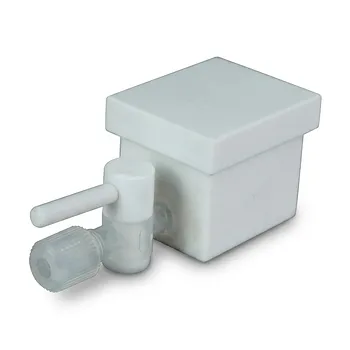
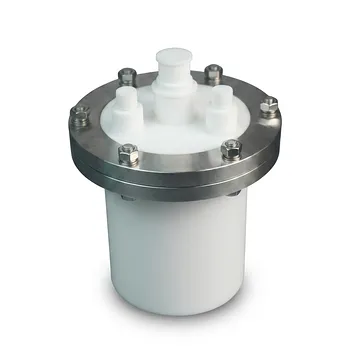
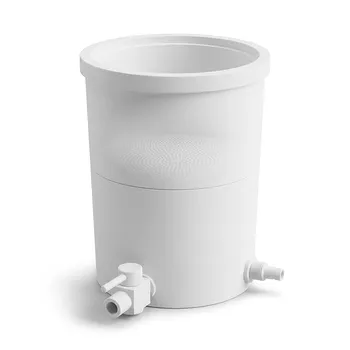
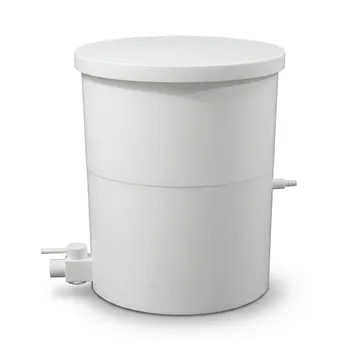
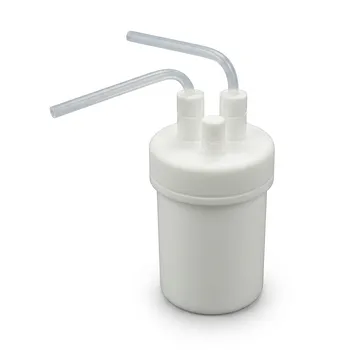
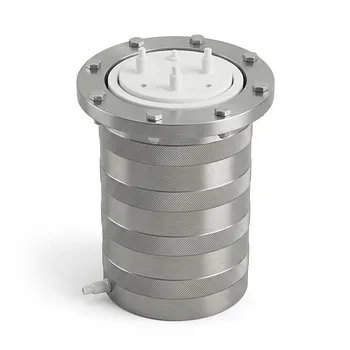
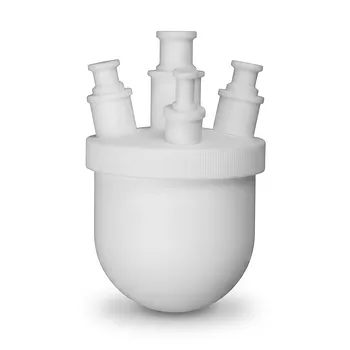
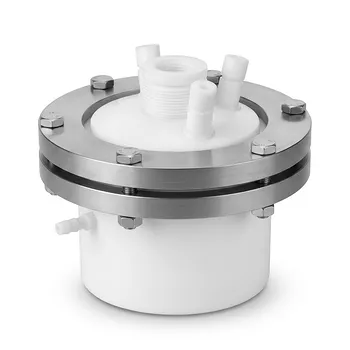
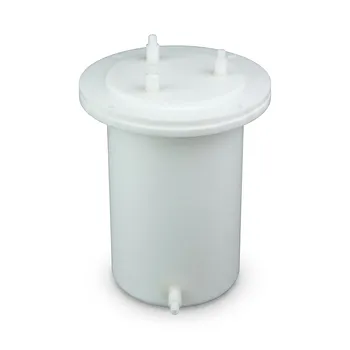
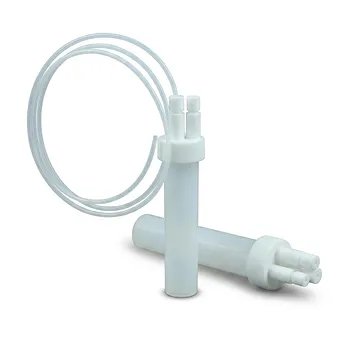
The use of PTFE-lined reaction vessels is a critical requirement for the accurate study and synthesis of Heptafluoroisobutyronitrile (C4F7N). These liners provide a chemically inert barrier that prevents highly reactive C4F7N molecules and their fluorinated radicals from coming into direct contact with the metal walls of the reactor. By eliminating these metal-gas interactions, researchers can suppress unwanted catalytic side reactions and ensure that the experimental data accurately reflects the intrinsic physicochemical properties and stability of the gas.
Core Takeaway: PTFE-lined vessels are essential for C4F7N applications because they isolate the reaction from metallic catalytic effects and prevent impurity infiltration. This ensures that the chemical products and stability data are a result of the gas’s inherent molecular behavior rather than environmental contamination.
Suppressing Catalytic Side Reactions
Preventing Radical-Metal Interactions
During high-temperature decomposition, C4F7N breaks down into highly active fluorinated radicals. If these radicals contact the stainless steel or metal walls of a standard reactor, the metal can act as a catalyst, accelerating decomposition or steering the reaction toward unintended byproducts.
Ensuring Data Accuracy
A PTFE liner creates a "wall-less" effect by providing an inert surface that does not participate in the reaction. This ensures that the stability data obtained—such as decomposition rates and temperature thresholds—reflects the intrinsic properties of the C4F7N molecule rather than a reaction influenced by the vessel material.
Maintaining High Purity and Structural Integrity
Preventing Metal Leaching and Contamination
C4F7N is a specialized insulating gas used in high-voltage equipment, where even trace impurities can significantly degrade performance. PTFE’s extreme corrosion resistance prevents the gas from eroding metal walls, which would otherwise introduce metallic ions and other contaminants into the sample.
Superior Airtight Sealing
The mechanical properties of PTFE allow for high-sealability in sampling and reaction environments. This prevents the infiltration of external moisture or air, which is vital because moisture can react with fluorinated gases to produce toxic or corrosive acidic byproducts like HF.
Non-Stick Surface and Product Yield
PTFE has an extremely low surface energy, which prevents synthesized products or decomposition residues from adhering to the vessel walls. This non-stick characteristic ensures a higher yield during recovery and simplifies the cleaning process, preventing cross-contamination between experimental runs.
Understanding the Trade-offs and Limitations
Temperature Ceiling
While PTFE is excellent for many laboratory applications, it has a functional temperature limit, typically around 220°C to 260°C. For high-temperature decomposition studies exceeding these limits, the PTFE liner may begin to soften or release its own decomposition gases, potentially interfering with the C4F7N analysis.
Thermal Expansion and Pressure
PTFE has a high coefficient of thermal expansion, meaning it expands more than the metal autoclave surrounding it when heated. If the vessel is not designed to accommodate this expansion, the liner can become deformed or "creep," which may compromise the seal or make the liner difficult to remove after the experiment.
Structural Dependency
PTFE liners have very little structural strength on their own and must always be used inside a metal pressure vessel (autoclave). The liner provides the chemical resistance, while the outer shell provides the necessary mechanical strength to withstand the high pressures generated during synthesis or decomposition.
How to Apply This to Your Project
Recommendations for Your Goal
- If your primary focus is determining intrinsic stability data: Use a PTFE-lined vessel to ensure that the metal walls of the autoclave do not catalyze the decomposition of C4F7N.
- If your primary focus is high-purity synthesis for insulation: Prioritize PTFE or PFA components to eliminate metal ion contamination and ensure a moisture-free, airtight environment.
- If your primary focus is decomposition above 250°C: Evaluate alternative liners or specialized alloys, as standard PTFE may approach its thermal degradation point and introduce its own artifacts into your data.
By utilizing the chemical inertness of PTFE, you secure the reliability of your experimental results and the purity of your synthesized chemical products.
Summary Table:
| Feature | Benefit for C4F7N Research | Impact on Results |
|---|---|---|
| Chemical Inertness | Prevents radical-metal interactions | Eliminates catalytic side reactions |
| Corrosion Resistance | Stops metal leaching into the gas | Maintains high insulating gas purity |
| Non-Stick Surface | Prevents residue adhesion | Ensures higher yield & easy cleaning |
| Airtight Sealing | Blocks moisture and air infiltration | Prevents formation of toxic HF byproducts |
| Thermal Stability | Inert up to 220°C - 260°C | Ideal for most decomposition simulations |
Secure Your Experimental Precision with KINTEK’s High-Performance Fluoropolymers
When handling sensitive molecules like Heptafluoroisobutyronitrile (C4F7N), the integrity of your labware defines the accuracy of your data. At KINTEK, we specialize in an exclusive range of high-performance PTFE and PFA laboratory supplies, specifically engineered to eliminate metallic interference and contamination in critical synthesis and decomposition studies.
From everyday essentials like beakers, measuring cylinders, crucibles, and reagent bottles to advanced hydrothermal synthesis liners, microwave digestion vessels, and custom electrochemical cells, KINTEK provides the inert environment your research demands. Our capabilities extend to specialized fluid transfer components (tubing, fittings, valves), high-purity trace analysis instruments, and precision-machined centrifuge tubes and digestion vessels.
Why Choose KINTEK?
- End-to-End Customization: Our full CNC fabrication services deliver everything from non-standard machined parts to bespoke laboratory setups.
- Comprehensive Range: We supply all consumables, including stirring bars, O-rings, gaskets, and filters, alongside complex reaction apparatus like microchannel reactors and condensation devices.
- Absolute Purity: We maintain a 100% focus on fluoropolymer materials to ensure your results are a product of your science, not your vessel.
Ready to elevate your lab’s performance with custom-engineered fluoropolymer solutions?
Contact KINTEK Today to Discuss Your Project Requirements
References
- Muhammad Bilal Arif, Carlo Adamo. On the Stability of Perfluoroisobutyronitrile in High-Voltage Circuit Breaker: A Computational Study. DOI: 10.1021/acsomega.5c06890
This article is also based on technical information from Kintek Knowledge Base .
Related Products
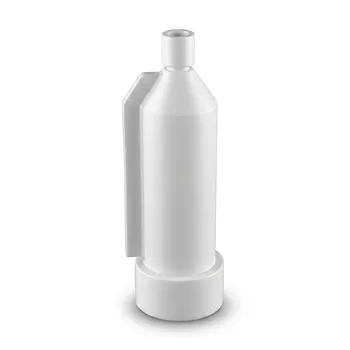
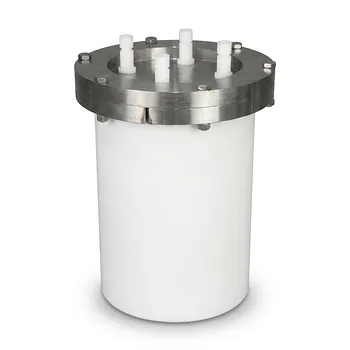
- Custom TFM Reaction Vessel with Stainless Steel Jacket and PTFE Inner Cup for High Corrosion Resistance
- PTFE Lined High Pressure Digestion Vessel 50ml High Temperature Hydrothermal Synthesis Tank
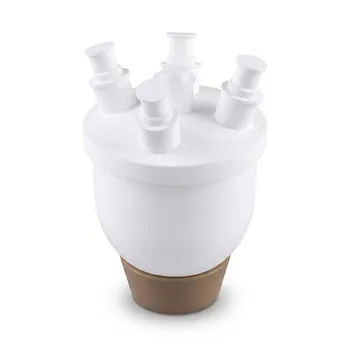
- High Purity PTFE Corrosion Resistant Reaction Vessel with Luer Fittings and Caps for Trace Analysis
- High Performance Customizable PTFE Reaction Vessel and Corrosion Resistant Polytetrafluoroethylene Flask for Chemical Laboratory Use
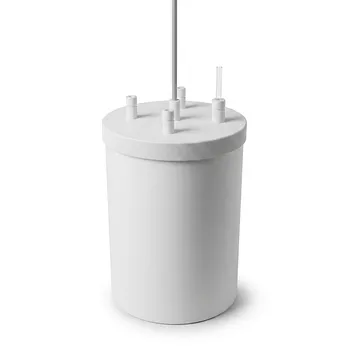
- High Purity PTFE Reaction Vessel Polyfluortetraethylene Cylindrical Tank Petrochemical Reaction Container
People Also Ask
- Why are high-performance pressure-resistant reaction vessels required for oxygen-assisted hydrothermal conversion at 150 °C?
- Why are PTFE-lined reaction vessels necessary for forced degradation studies? Ensure high-purity results and accuracy.
- Why are high-quality fluoropolymer-lined reaction vessels required for alk-Ti3C2Tx MXene? Ensure Purity & HF Resistance
- How do magnetic stirring and reaction vessels impact MOF-derived carbon quality? Optimize Your Composite Performance
- Why is a high-purity PTFE lined reaction vessel required for the acidic etching of MXenes? Ensure Material Purity.