The primary advantage of using high-purity PFA or PTFE over glass is their near-absolute chemical inertness, which prevents container corrosion and ion leaching during aggressive testing. While glass is susceptible to etching by strong alkalis and can release trace metal impurities in acidic environments, fluoropolymers maintain structural integrity and experimental purity, ensuring that any observed changes in a polymer membrane are caused solely by the test reagents.
High-purity PFA and PTFE consumables provide a chemically "silent" environment that eliminates background interference from container degradation. This is essential for accurately measuring the structural stability and trace-level degradation of polymer membranes in concentrated acidic or alkaline solutions.
Superior Resistance to Chemical Corrosion
Immunity to Alkaline Attack
Glass is primarily composed of silica, which reacts chemically with strong bases like 6 M NaOH, leading to surface etching and structural weakening of the container. PTFE and PFA are completely resistant to alkaline corrosion, making them the only viable choice for long-term immersion studies involving high-pH solutions.
Stability in Concentrated Acids
While glass is generally acid-resistant, it is not immune to all acidic environments, particularly those involving strong oxidizing agents or trace contaminants. Fluoropolymers remain stable in 6 M HCl, concentrated sulfuric acid, and perchloric acid, ensuring the container does not degrade or react with the electrolyte.
Preservation of Reagent Concentration
Because fluoropolymer containers do not react with the test media, the concentration and molarity of the acid or alkali remain constant throughout the duration of the test. This consistency is vital for long-term membrane stability studies where precise chemical exposure is required.
Elimination of Ion Leaching and Contamination
Preventing Trace Metal Interference
Glass surfaces contain metal ions and silicon hydroxyl groups that can leach into the solution, especially under acidic conditions. High-purity PFA and PTFE have exceptionally low leaching rates, preventing the introduction of unwanted trace metals that could catalyze side reactions or interfere with membrane analysis.
Avoiding Catalyst Poisoning
In specialized membrane testing, such as those involving electrochemical cells, trace impurities leached from glass can poison active sites on catalysts like platinum. Using PFA or PTFE ensures that the electrochemical data reflects the true performance of the membrane and electrode assembly without "masking" effects from container-born impurities.
Maintaining High-Sensitivity Results
For experiments involving nanomaterials or trace-level metabolite studies, even parts-per-billion levels of contamination can skew results. Fluoropolymers provide the low background levels necessary for high-sensitivity detection and precise control over the material composition of the membrane.
Optimizing Surface Interactions
Minimal Physical Adsorption
Unlike glass, which can have an active surface chemistry that "grabs" ions, fluoropolymers prevent the physical adsorption of target ions onto the container walls. This ensures that the full concentration of the reagent remains available to interact with the polymer membrane.
Prevention of Unwanted Side Reactions
Certain reagents, such as hydrogen peroxide, are highly sensitive to metal ion contamination, which can cause rapid decomposition. High-purity fluoropolymer materials effectively prevent the introduction of these catalytic impurities, maintaining the integrity of the process path.
Understanding the Trade-offs
Thermal and Physical Limitations
While PFA and PTFE offer superior chemical resistance, they cannot be heated over an open flame or used in extremely high-temperature applications where specialized quartz or technical glass might be required. Furthermore, PTFE is opaque, which can make visual monitoring of the membrane during immersion more difficult compared to transparent glass or translucent PFA.
Cost and Material Selection
High-purity fluoropolymers represent a higher initial investment compared to standard laboratory glassware. However, their longevity in corrosive environments and the prevention of failed experiments due to contamination often result in a lower total cost of ownership for specialized polymer research.
Making the Right Choice for Your Goal
Guidelines for Consumable Selection
- If your primary focus is strong alkali (NaOH) testing: Use PTFE or PFA exclusively to avoid the certain corrosion and etching associated with glass containers.
- If your primary focus is trace element or metal ion analysis: Choose PFA laboratory-ware for its superior surface smoothness and the lowest possible leaching rates among all plastics.
- If your primary focus is routine acid immersion without trace analysis: PTFE provides a cost-effective, chemically inert alternative that outperforms glass in terms of durability.
- If your primary focus is visual monitoring of the membrane: Opt for PFA, as its translucency allows for better observation of the sample than opaque PTFE.
By utilizing high-purity fluoropolymer consumables, researchers ensure that their data reflects the true chemical resistance of the polymer membrane rather than the limitations of the testing vessel.
Summary Table:
| Feature | Glass (Silica-based) | High-Purity PFA / PTFE |
|---|---|---|
| Alkali Resistance | Poor (Etches in strong bases like NaOH) | Excellent (Near-absolute inertness) |
| Acid Stability | Variable (Prone to leaching in acids) | Excellent (Stable in HCl, H2SO4, etc.) |
| Ion Leaching | High (Trace metals and Si release) | Minimal (Essential for trace analysis) |
| Surface Adsorption | Active (Can "grab" target ions) | Minimal (Prevents ion loss to walls) |
| Visual Monitoring | Clear/Transparent | PFA: Translucent / PTFE: Opaque |
| Durability | Fragile; prone to chemical aging | High; resists chemical degradation |
Upgrade Your Laboratory Precision with KINTEK Fluoropolymers
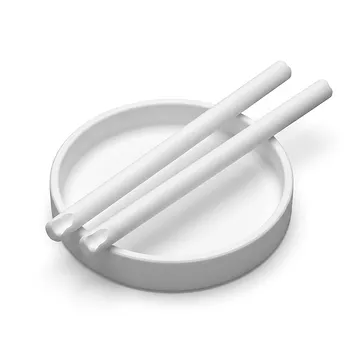
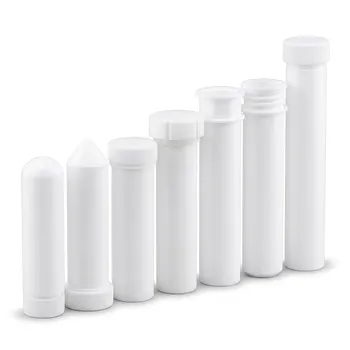
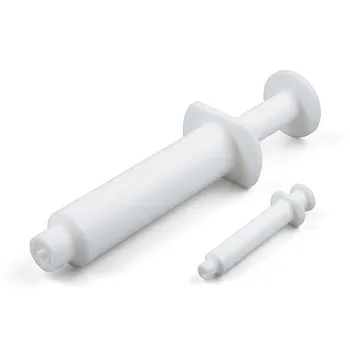
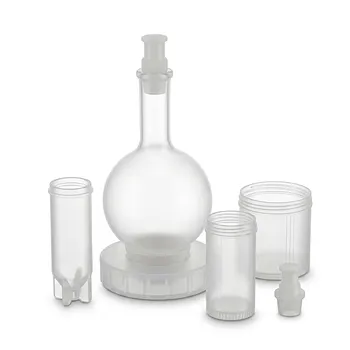
Don't let container corrosion or ion leaching compromise your polymer membrane research. KINTEK specializes in manufacturing a comprehensive range of high-performance labware crafted exclusively from PTFE and PFA.
Our extensive catalog includes everything from:
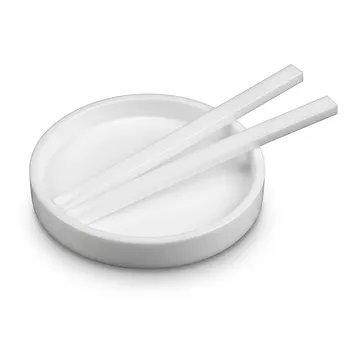
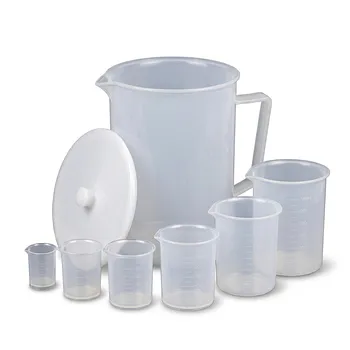
- Everyday Essentials: Beakers, measuring cylinders, crucibles, reagent bottles, and centrifuge tubes.
- Fluid Transfer & Prep: High-purity tubing, fittings, valves, filters, and pipettes.
- Advanced Apparatus: Custom electrochemical cells, battery testing fixtures, and microwave digestion vessels.
Whether you require high-volume standard consumables or bespoke, non-standard parts through our end-to-end custom CNC fabrication, KINTEK delivers the chemical inertness and durability your experiments demand.
Ensure absolute experimental purity—contact us today to discuss your custom laboratory setup!
References
- Haoyong Yang, Tao Zhang. Synthesis of crystalline two-dimensional conjugated polymers through irreversible chemistry under mild conditions. DOI: 10.1038/s41467-025-57612-0
This article is also based on technical information from Kintek Knowledge Base .
Related Products
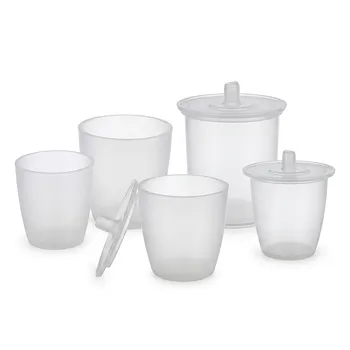
- High Purity PFA Crucible and Corrosion Resistant PTFE Beaker for Trace Analysis and Custom Laboratory Applications
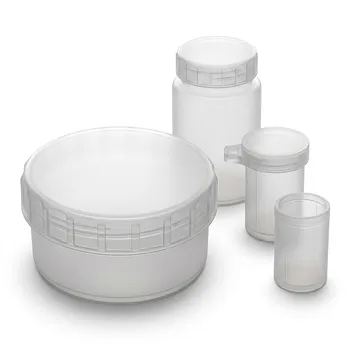
- PFA Reaction Jar Corrosion Resistant Wide Mouth PTFE Lab Bottle High Purity Chemical Vessel
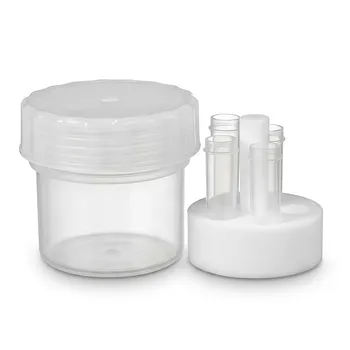
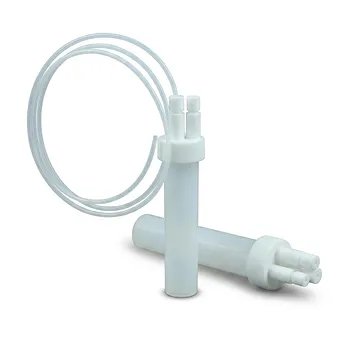
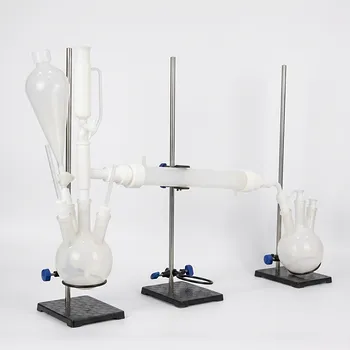
- Corrosion Resistant PTFE Support with PFA Transparent Reaction Tank and High Purity PFA Sampling Tube for Trace Analysis
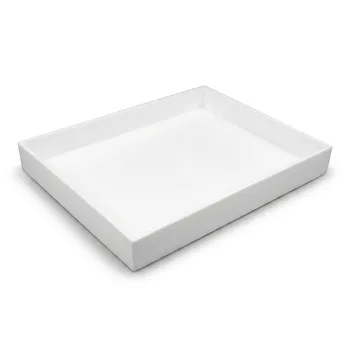
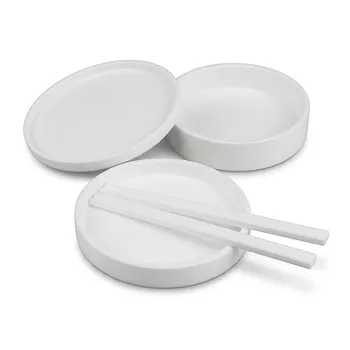
- High Purity PTFE Trays Corrosion Resistant Laboratory Labware Customizable Square Round Fluoropolymer Trays
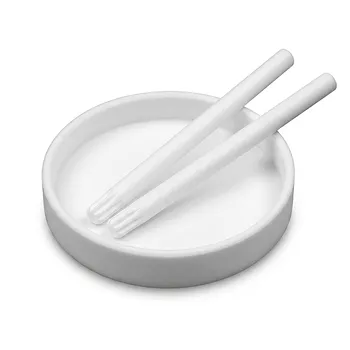
- Custom PTFE Petri Dish 200mm High Purity Corrosion Resistant Low Background Laboratory Ware
People Also Ask
- Why are high-purity vessels critical for BiFeO3 synthesis? Ensuring Phase Purity
- Why is the use of high-purity PFA or PTFE labware critical during TiO2 nanoparticle purification? Protect Sample Purity
- Why is high-purity PFA labware necessary for Znx@LS-2 zeolite ICP-OES analysis? Ensure Trace-Level Precision
- Why is high-purity PFA trace analysis labware used for MXene? Ensure Superior Material Integrity in Research
- Why is high-purity PFA trace analysis labware used for sample processing when preparing Mo2CTx@MoS2? Ensure Material Purity