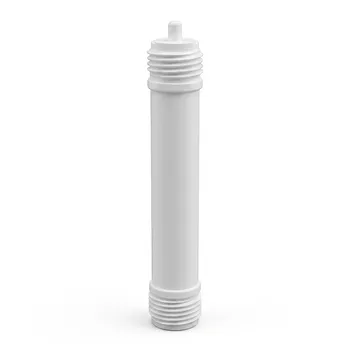
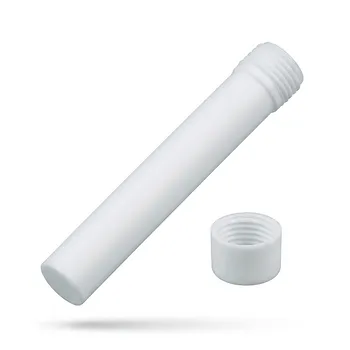
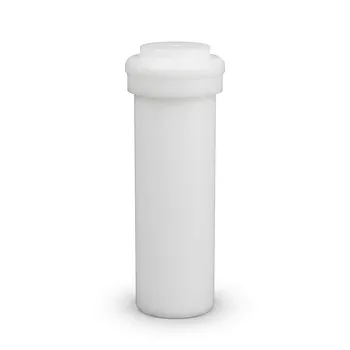
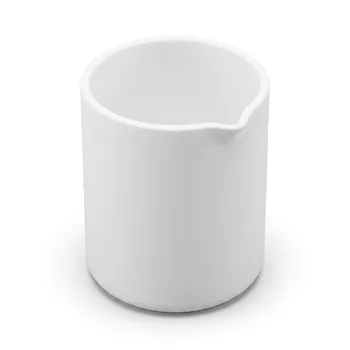
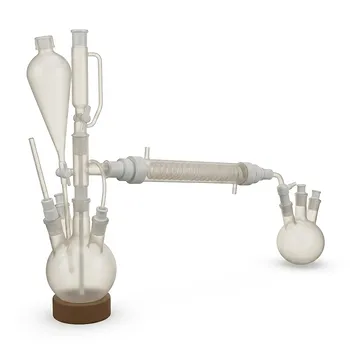
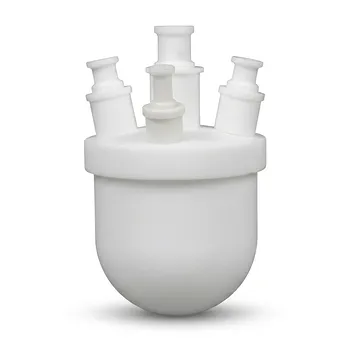
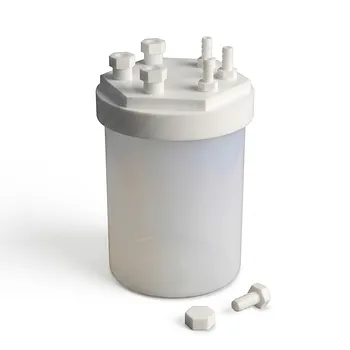
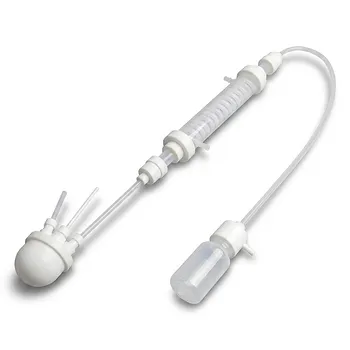
High-performance fluoropolymer liners like PTFE and PFA provide a chemically inert and microwave-transparent barrier essential for high-purity material synthesis. These materials effectively isolate aggressive reagents from the metal structural components of the reaction vessel, preventing both equipment corrosion and metal ion contamination of the final product. In microwave-assisted processes, their transparency to electromagnetic energy ensures that heat is generated directly within the reaction solution rather than being absorbed by the container walls.
High-performance fluoropolymer liners act as the critical interface that decouples the chemical reaction from the physical vessel. By combining extreme chemical resistance with microwave transparency, they ensure the purity, speed, and safety of advanced nanomaterial and crystal growth.
Safeguarding Purity in Hydrothermal Synthesis
Chemical Inertness and Corrosion Resistance
High-performance fluoropolymers such as PTFE (Polytetrafluoroethylene) and PFA (Perfluoroalkoxy) are virtually unaffected by the most aggressive chemical environments. They successfully resist corrosion from strong acids, bases, and organic solvents, including precursors like chloroauric acid and sodium hydroxide.
This inertness is maintained even under the high-temperature and high-pressure conditions characteristic of hydrothermal synthesis. These liners allow researchers to use reagents like sodium sulfide and thiourea without risking damage to the reaction vessel.
Preventing Metal Ion Contamination
In hydrothermal synthesis, the liner serves as a physical barrier between the reaction media and the metal autoclave body. Without this barrier, acidic or alkaline solutions would leach metal ions from the steel jacket into the experimental product.
By eliminating this leaching, PTFE and PFA liners ensure the high purity of synthesized nanomaterials and single crystals. This isolation is a core safeguard for maintaining a controlled chemical environment during crystal growth.
Efficiency and Uniformity in Microwave Synthesis
Microwave Transparency for Volumetric Heating
One of the most critical advantages of PTFE and PFA in microwave synthesis is their microwave transparency. Unlike metallic or certain ceramic containers, these fluoropolymers do not absorb electromagnetic energy.
This allows the microwave energy to pass through the liner and act directly on the reaction solution. This mechanism facilitates volumetric heating, where the entire volume of the liquid heats simultaneously rather than relying on conduction from the vessel walls.
Rapid Temperature Ramping
Because the liner does not compete with the reactants for energy, the system can achieve rapid temperature increases. This efficiency is vital for the precise control of nucleation and growth kinetics in nanomaterial production.
Uniform energy distribution reduces thermal gradients within the vessel. This results in more homogeneous reaction products and higher yields of high-performance materials.
Operational Advantages of Fluoropolymer Materials
Non-Stick Surface and Product Recovery
The low surface energy (non-stick property) of PTFE and PFA is a significant operational benefit. It prevents synthesized nanopowders or crystals from adhering to the vessel walls during the reaction.
This characteristic ensures that materials can be easily collected after the process is complete. Furthermore, the non-stick nature simplifies the cleaning process and reduces the risk of cross-contamination between different experimental batches.
Thermal Stability and Structural Integrity
These liners are designed to maintain their physical stability across a broad temperature range. They provide a stable, sealed environment that can withstand the internal pressures generated during hydrothermal processes.
The combination of thermal stability and mechanical resilience extends the service life of the hydrothermal autoclave. By protecting the outer metal shell from corrosive attack, the liners prevent structural degradation of the primary pressure vessel.
Understanding the Trade-offs and Limitations
Thermal Thresholds and Deformation
While robust, fluoropolymers have specific temperature limits, typically around 250°C for PTFE. Exceeding these temperatures can lead to the softening or deformation of the liner, potentially compromising the seal of the autoclave.
Over time, repeated cycling between high and low temperatures can cause "creep" or permanent changes in shape. Users must monitor liners for signs of thinning or warping to ensure continued safety and performance.
Permeability and Cleaning Challenges
Although chemically inert, fluoropolymers can be slightly permeable to certain gases or small molecules at high temperatures. This can occasionally lead to trace amounts of reactants becoming embedded in the polymer matrix.
While the non-stick surface aids cleaning, aggressive reagents that have permeated the surface may require specialized cleaning protocols. Failure to address this can lead to subtle carry-over effects in extremely sensitive analytical applications.
How to Apply This to Your Project
Making the Right Choice for Your Goal
- If your primary focus is synthesizing high-purity crystals: Prioritize PFA liners for their extremely low leaching rates and superior chemical resistance to ensure a contamination-free growth environment.
- If your primary focus is rapid microwave-assisted synthesis: Utilize PTFE liners to take advantage of their excellent microwave transparency and ability to facilitate uniform volumetric heating.
- If your primary focus is working with highly corrosive acids or bases: Ensure the liner is fully seated and inspected for deformation to provide a reliable barrier that protects the metal autoclave shell.
By leveraging the unique properties of PTFE and PFA, researchers can achieve the precise chemical control and structural integrity required for modern material science.
Summary Table:
| Feature | Benefit | Key Application |
|---|---|---|
| Chemical Inertness | Prevents metal ion contamination and vessel corrosion | High-purity crystal growth & nanomaterials |
| Microwave Transparency | Enables volumetric heating and rapid temperature ramping | Microwave-assisted synthesis |
| Low Surface Energy | Non-stick properties for easy recovery and cleaning | Precise nanoparticle collection |
| Thermal Stability | Maintains structural integrity under high pressure | Hydrothermal autoclave reactions |
Elevate Your Lab’s Precision with KINTEK Fluoropolymer Solutions
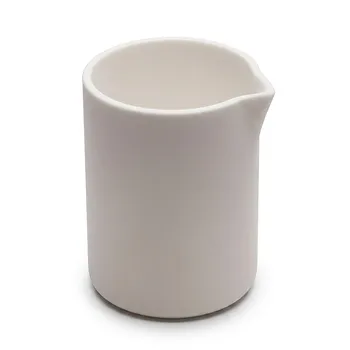
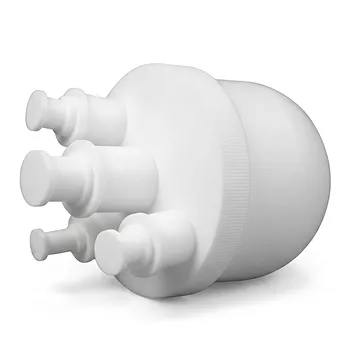
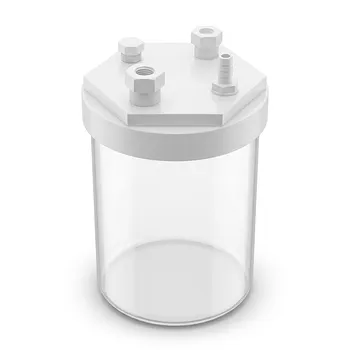
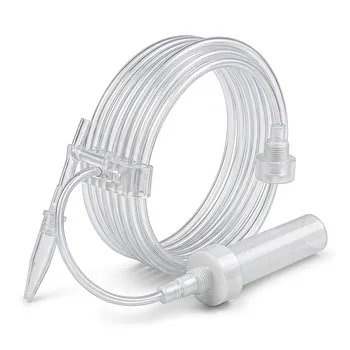
Maximize the purity and efficiency of your synthesis processes with high-performance PTFE and PFA components. KINTEK manufactures virtually all imaginable laboratory supplies, from everyday basic labware (beakers, measuring cylinders, crucibles, reagent bottles) and fluid transfer components (tubing, fittings, valves) to advanced reaction apparatus like hydrothermal synthesis liners, microwave digestion vessels, and custom electrochemical cells.
Whether you need standard consumables or complex non-standard machined parts via our end-to-end custom CNC fabrication, we deliver everything with an exclusive focus on high-performance fluoropolymers. Ensure the integrity of your research and protect your equipment from aggressive reagents today.
Contact KINTEK for a Custom Quote
References
- Murat Ateş. Sulfur dopant effects on hybrid rGO/MoS2/PANI nanocomposites for SupercapBattery devices. DOI: 10.59287/iccar.780
This article is also based on technical information from Kintek Knowledge Base .
Related Products
- High Purity PTFE Microwave Digestion Vessel for Soil and Food Analysis Acid Resistant Fluoropolymer Sample Preparation Liners
- High Purity TFM Microwave Digestion Vessels PTFE Acid Evaporation Liners Domestic GT-400 Equivalent Laboratory Reaction Containers
- High Temperature Corrosion Resistant Hydrothermal Synthesis Reactor with TFM Inner Liner and Straight Cylinder Design
- High Purity TFM Microwave Digestion Vessels for Trace Analysis and Custom Sample Preparation Systems
- Custom Thickened PTFE Beaker 3000ml Hotplate Heating High Temperature Deformation Resistant Fluoropolymer Labware
People Also Ask
- How does the dielectric property of PTFE benefit microwave-assisted digestion? Unlock Rapid and Uniform Sample Heating
- What are the advantages of using microwave digestion vessels? Optimize EG@MO synthesis with superior thermal control.
- What safety features are commonly integrated into microwave digestion vessels? Ensuring High-Pressure Laboratory Safety
- What are the advantages of using microwave digestion vessels for environmental analysis? Boost speed and sample accuracy.
- How do microwave digestion vessels support pharmaceutical elemental impurity testing? Achieve Precise USP Compliance