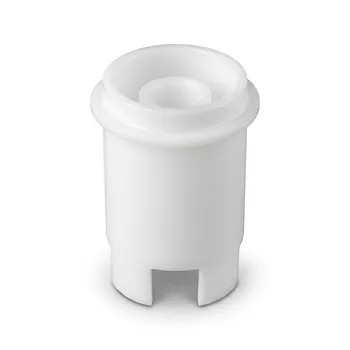
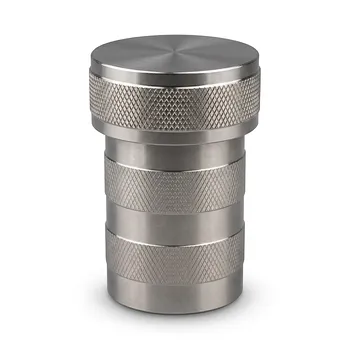
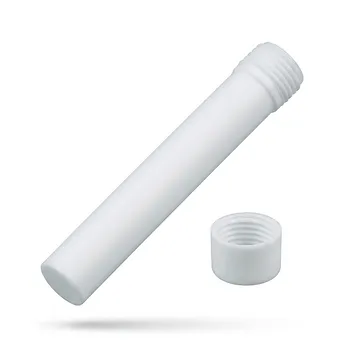
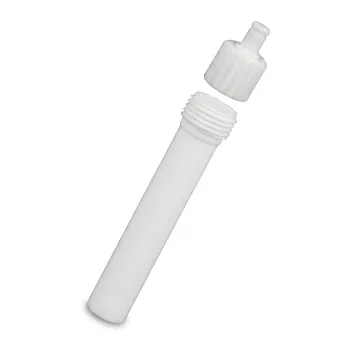
PTFE-lined high-pressure autoclaves are the industry standard for hydrothermal synthesis due to their unique combination of chemical inertness and structural integrity. These vessels provide a sealed, high-pressure environment that facilitates the precise growth of nanocomposites while preventing metallic contamination and resisting corrosive reagents like strong acids or bases.
The core advantage of a PTFE-lined autoclave is its ability to create a sterile, high-pressure "micro-reactor" that ensures chemical purity and promotes strong interfacial bonding between different nanomaterials, such as nanoparticles and carbon-based substrates.
Maintaining Chemical Purity and Integrity
Exceptional Corrosion Resistance
The PTFE (Polytetrafluoroethylene) liner acts as an impenetrable barrier against aggressive chemical environments. It effectively resists erosion from strong acids, organic solvents, and alkaline solutions (such as NaOH) that would otherwise degrade the metal body of the reactor.
Prevention of Metal Ion Contamination
In the synthesis of high-performance nanocomposites, even trace amounts of metallic impurities can ruin the material's properties. The liner ensures that the stainless steel outer shell does not leach ions into the reaction mixture, preserving the single-crystal phase characteristics and chemical purity of the final product.
Non-Stick Surface for Morphological Control
The inherently non-stick properties of PTFE prevent nanomaterials from adhering to the vessel walls during the growth process. This ensures that the precursors remain in the solution, facilitating the formation of uniform nanorod morphologies and precise heterojunction structures.
Facilitating Advanced Nanocomposite Formation
Accelerated Chemical Bond Recombination
The high-pressure environment generated within the sealed autoclave accelerates the breaking and recombination of chemical bonds. This kinetic boost is critical for promoting strong bonding between disparate materials, such as BiFeO3 and MXene or ZnO and reduced Graphene Oxide (rGO).
Enhanced Interfacial Heterojunctions
By maintaining stable temperatures (typically between 120°C and 230°C), the autoclave allows nanoparticles to be securely anchored onto substrate surfaces. This process creates precise heterojunctions that are essential for enhancing photocatalytic activity and electronic performance.
Synergy of Pressure and Mechanical Strength
While the PTFE liner handles the chemical load, the stainless steel outer shell provides the mechanical strength to withstand the autogenous pressure. This synergy allows for the in-situ growth of nanoclusters directly onto surfaces like Graphene Oxide or Boron Nitride.
Understanding the Trade-offs
Temperature and Pressure Limitations
While PTFE is remarkably stable, it has a functional thermal ceiling, typically around 230°C. Exceeding these limits can lead to liner deformation or "creeping," which may compromise the seal and damage the stainless steel housing.
Heat Transfer Latency
PTFE is an effective thermal insulator, meaning it takes longer for the internal reaction solution to reach the desired temperature compared to a direct metal interface. Researchers must account for this thermal lag when timing their synthesis processes to ensure consistent results.
Applying This Technology to Your Synthesis
Choosing the right autoclave configuration depends entirely on your specific material requirements and reaction conditions.
- If your primary focus is photocatalytic performance: Use a PTFE liner to ensure precise heterojunction formation and prevent metallic impurities from quenching active sites.
- If your primary focus is high-purity crystal growth: Prioritize the integrity of the PTFE seal to maintain a closed system that prevents any contact between the precursor and the metal shell.
- If your primary focus is synthesis at temperatures above 250°C: Consider alternative liner materials like PPL (polyphenylene polymers) or quartz, as standard PTFE may lose its structural integrity.
The PTFE-lined autoclave remains the most reliable tool for researchers seeking to engineer complex nanocomposites with high purity and robust structural bonding.
Summary Table:
| Feature | Key Advantage for Nanocomposites |
|---|---|
| Corrosion Resistance | Resists strong acids and bases to prevent reactor degradation. |
| Chemical Inertness | Eliminates metal ion leaching for high-purity single-crystal phases. |
| Non-Stick Surface | Ensures uniform morphology and prevents adhesion to vessel walls. |
| High-Pressure Seal | Accelerates bond recombination and facilitates heterojunction formation. |
| Thermal Stability | Provides a stable environment for in-situ growth (up to 230°C). |
Optimize Your Nanomaterial Synthesis with KINTEK
Elevate your research precision with KINTEK’s world-class fluoropolymer laboratory solutions. We specialize in high-performance PTFE and PFA manufacturing, offering an exhaustive range of products tailored for aggressive chemical environments and high-purity trace analysis.
From everyday lab essentials—such as beakers, crucibles, reagent bottles, and centrifuge tubes—to complex fluid transfer components like tubing, fittings, and valves, we ensure your synthesis remains uncontaminated. For researchers engineering the next generation of materials, we provide advanced hydrothermal synthesis liners, microwave digestion vessels, and custom electrochemical cells designed to withstand the rigors of high-pressure reactions.
Why choose KINTEK?
- End-to-End Customization: Our advanced CNC fabrication allows us to deliver everything from complex non-standard machined parts to bespoke laboratory setups.
- Unrivaled Purity: Absolute focus on high-performance fluoropolymers to prevent metallic contamination in your nanocomposites.
- Scalable Solutions: We support both high-volume orders and specialized, one-off reactor components.
Don't let impurities compromise your interfacial heterojunctions or photocatalytic results. Contact us today to discover how our expertise in PTFE and PFA labware can enhance your laboratory's efficiency and output.
References
- Tanvitha Guttapalli, Koyeli Girigoswami. rGO Decorated with ZnO Synthesized Using Clitoria ternatea Flower Extract—Characterization, In Vitro and In Vivo Biocompatibility, and Textile Dye Remediation. DOI: 10.3390/jcs9090454
This article is also based on technical information from Kintek Knowledge Base .
Related Products
- PTFE Lined High Pressure Digestion Vessel 50ml High Temperature Hydrothermal Synthesis Tank
- Custom TFM Reaction Vessel with Stainless Steel Jacket and PTFE Inner Cup for High Corrosion Resistance
- High Pressure Custom TFM Reactor Stainless Steel Outer Vessel PTFE Inner Cup for Corrosive Synthesis
- High Pressure PTFE Digestion Vessel Inner Cup Holder Custom Corrosion Resistant Low Background Teflon
- High Temperature Corrosion Resistant Hydrothermal Synthesis Reactor with TFM Inner Liner and Straight Cylinder Design
People Also Ask
- What are the benefits of using a PTFE-lined vessel for carbon-sulfur cathode treatment? Maximize Purity & Performance
- Why are PTFE-lined pressure digestion vessels required for the preparation of Ag/CeO2 catalysts? Purity & Performance
- What is the function of high-pressure PTFE digestion vessels in mineral analysis? Optimize Sample Mineralization
- What safety features are typically incorporated into high-pressure PTFE digestion vessel designs? Ensure Lab Safety
- What is the function of PTFE lined high-pressure vessels in g-C3N4 synthesis? Achieve High-Purity Material Growth