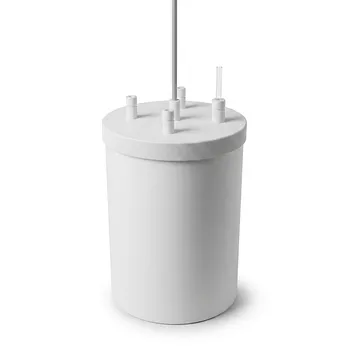
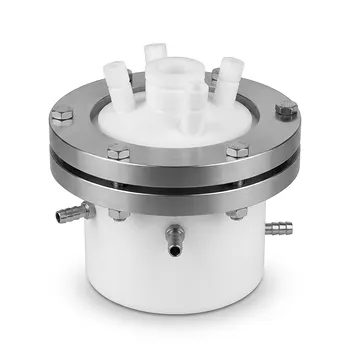
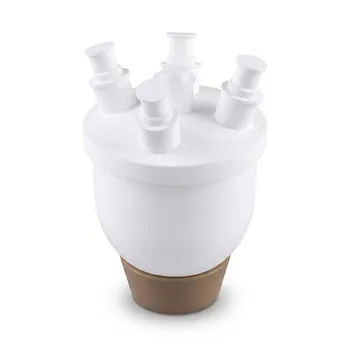
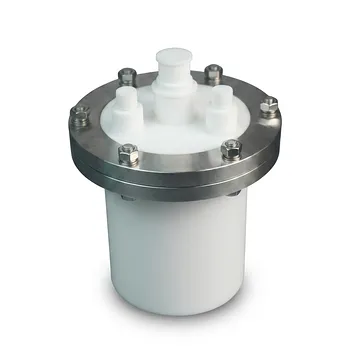
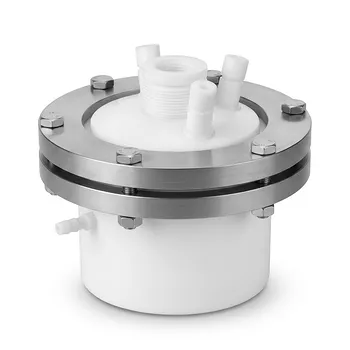
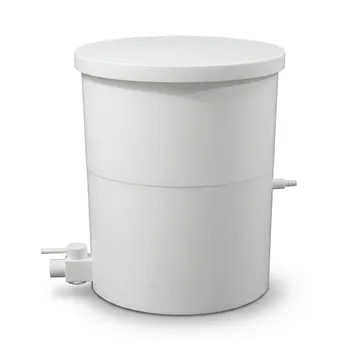
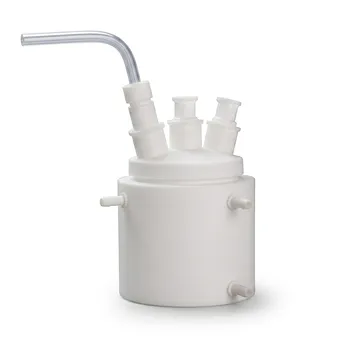
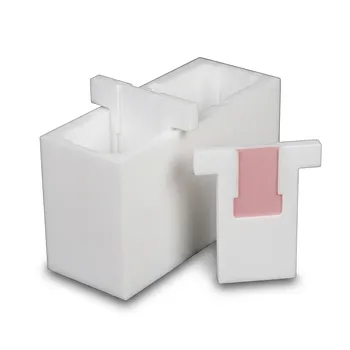
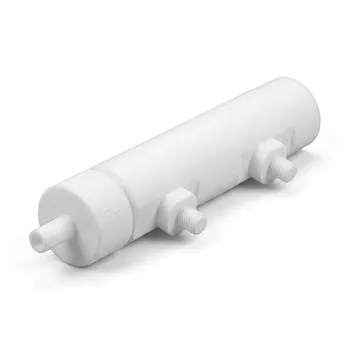
PTFE-lined reactors provide a critical barrier against chemical contamination while ensuring the structural integrity of the reaction vessel. In the final synthesis of MCTA nanocomposites, these reactors prevent corrosive precursors from leaching metal ions into the solution, which would otherwise degrade the purity and catalytic activity of the final product. Furthermore, the smooth internal surface of the liner promotes uniform thermodynamic reactions, resulting in nanocomposites with highly regular morphology and consistent performance.
The central advantage of a PTFE-lined reactor is its ability to isolate aggressive chemical environments from the structural metal shell. This dual-layer approach ensures that MCTA nanocomposites maintain high purity and consistent structural characteristics that are impossible to achieve in standard metal reactors.
Elimination of Metal Ion Contamination
Preventing Leaching from Corrosive Precursors
Standard metal reactors, even those made of high-grade stainless steel, are susceptible to erosion when exposed to the aggressive chemical precursors used in nanocomposite synthesis. At hydrothermal temperatures reaching 200°C, acidic or alkaline reagents can attack the metal walls, causing metal ions to leach into the reaction mixture.
Safeguarding Product Purity
The PTFE liner acts as an impenetrable chemical barrier, ensuring that the resulting MCTA catalysts remain free of unintended metallic impurities. This is essential for maintaining a high-purity crystal structure, which directly influences the enzymatic or catalytic activity of the nanocomposite.
Optimization of Morphology and Activity
Ensuring Uniform Thermodynamic Reactions
The smooth, non-reactive internal surface of a PTFE liner facilitates more uniform heat distribution and thermodynamic consistency than bare metal. In a standard metal reactor, surface irregularities or micro-corrosion sites can lead to localized reaction variances.
Promoting Regular Nanostructure Growth
Because the environment is thermodynamically stable and free of wall-induced interference, MCTA catalysts develop a regular morphology. This structural consistency is vital for ensuring that every batch of nanocomposites exhibits consistent catalytic activity and predictable performance.
Enhanced Operational Yield and Recovery
Leveraging Non-Stick Properties
PTFE is inherently hydrophobic and non-stick, which prevents high-viscosity polymers or nanoparticles from adhering to the reactor walls. In standard metal vessels, significant product loss can occur due to surface adsorption, making recovery difficult and potentially skewing yield calculations.
Facilitating High-Pressure Stability
The combination of a stainless steel outer shell and a PTFE liner allows for a sealed, constant-pressure environment. This setup promotes deeper molecular interaction and better compatibility between different phases, such as anchoring ZnO nanoparticles onto rGO surfaces.
Understanding the Trade-offs
Temperature and Pressure Limitations
While PTFE offers superior chemical resistance, it has lower thermal limits than metal, typically capped around 250°C for safe operation. Beyond these temperatures, the liner may undergo thermal deformation or "creeping," which can compromise the seal of the autoclave.
Mechanical Sensitivity
PTFE is a relatively soft material compared to steel and can be scratched or gouged by abrasive materials or improper cleaning tools. Any damage to the liner surface can create "pockets" where reactants trap, potentially leading to cross-contamination in subsequent batches.
How to Apply This to Your Project
Selecting the right reactor environment depends on your specific synthesis requirements and the sensitivity of your nanomaterials.
- If your primary focus is Maximum Chemical Purity: Utilize a PTFE-lined reactor to eliminate any risk of metal ion leaching from the vessel walls into your nanocomposite.
- If your primary focus is Consistent Particle Morphology: Choose the PTFE liner for its smooth surface properties, which ensure uniform thermodynamic conditions and regular crystal growth.
- If your primary focus is High-Temperature Processing (>260°C): You must transition to specialized metal alloys or PPL (Polyphenylene polymers) liners, as standard PTFE will lose its structural integrity.
By prioritizing the chemical isolation provided by PTFE, you ensure that the final MCTA nanocomposite retains the precise purity and morphology required for high-performance catalytic applications.
Summary Table:
| Feature | PTFE-Lined Reactor | Standard Metal Reactor |
|---|---|---|
| Contamination | Zero metal ion leaching; high purity | High risk of metallic impurities |
| Surface Property | Smooth, non-stick, hydrophobic | Prone to surface adsorption/loss |
| Morphology | Uniform thermodynamic growth | Potential localized variances |
| Thermal Limit | Optimized up to 250°C | Handles extremely high temps |
| Chemical Resistance | Exceptional against acids/alkalis | Susceptible to corrosion/erosion |
Elevate Your Synthesis with KINTEK High-Performance Fluoropolymers
Don't let metal contamination compromise your MCTA nanocomposite research. KINTEK specializes in high-performance laboratory solutions crafted from premium PTFE and PFA, ensuring your chemical environments remain inert and your results remain pure.
From everyday basic labware like beakers and reagent bottles to advanced PTFE-lined hydrothermal synthesis liners, microwave digestion vessels, and custom electrochemical cells, we provide the tools you need for precision science. Our expertise extends to comprehensive fluid transfer components (tubing, valves), sample prep tools, and general consumables (O-rings, seal tapes).
Why choose KINTEK?
- Unrivaled Purity: Absolute focus on high-performance fluoropolymers to prevent leaching.
- Custom Precision: End-to-end custom CNC fabrication for non-standard machined parts and bespoke laboratory setups.
- Scalable Solutions: We handle everything from complex individual parts to high-volume orders with equal precision.
Ready to optimize your lab's performance? Contact our experts today to discuss your specific requirements or request a quote for our custom-engineered fluoropolymer solutions.
References
- Fatemeh Mollaie, Davoud Balarak. Optimization of photodegradation of acid blue 1 dye on aluminosilicate supported Cu doped TiO2 magnetic nanocatalyst using response surface methodology. DOI: 10.1038/s41598-025-89968-0
This article is also based on technical information from Kintek Knowledge Base .
Related Products
- Custom TFM Reaction Vessel with Stainless Steel Jacket and PTFE Inner Cup for High Corrosion Resistance
- Large Scale PTFE Double Layer Reaction Tank with Integrated Filter Plate for Chemical Processing
- High Pressure Custom TFM Reactor Stainless Steel Outer Vessel PTFE Inner Cup for Corrosive Synthesis
- High Purity TFM Microwave Digestion Vessels PTFE Acid Evaporation Liners Domestic GT-400 Equivalent Laboratory Reaction Containers
- PTFE Lined High Pressure Digestion Vessel 50ml High Temperature Hydrothermal Synthesis Tank
People Also Ask
- Why are high-performance pressure-resistant reaction vessels required for oxygen-assisted hydrothermal conversion at 150 °C?
- Why are high-quality fluoropolymer-lined reaction vessels required for alk-Ti3C2Tx MXene? Ensure Purity & HF Resistance
- How do magnetic stirring and reaction vessels impact MOF-derived carbon quality? Optimize Your Composite Performance
- Why are PTFE-lined reaction vessels necessary for forced degradation studies? Ensure high-purity results and accuracy.
- Why is a high-purity PTFE lined reaction vessel required for the acidic etching of MXenes? Ensure Material Purity.