Fluoropolymers provide composites with a rare combination of structural binding, environmental protection, and long-term durability. As multifunctional binders and matrix materials, they encapsulate and distribute functional fillers while resisting moisture, chemicals, heat, friction, and flame. Functionalized grades can also improve adhesion to metals, fibers, and secondary polymers without sacrificing the core advantages of fluorinated materials.
The central advantage is multifunctionality: a fluoropolymer matrix does more than hold composite constituents together—it also protects them from chemical and thermal damage while improving surface performance and service life.
How Fluoropolymers Improve Composite Structures
They Securely Bind Functional Fillers
Fluoropolymer matrices can encapsulate particles such as metal powders and functional inorganic compounds, helping maintain a stable composite structure.
This binding function supports more uniform filler dispersion, which can improve consistency and reduce localized weaknesses caused by particle agglomeration.
They Protect the Composite from the Environment
The matrix forms a protective barrier around embedded constituents. This helps shield fillers and reinforcement interfaces from ambient moisture, solvents, corrosive chemicals, and other degrading environments.
That protection is especially valuable when the composite must maintain performance in chemical processing, laboratory, fluid-handling, or outdoor applications.
They Combine Mechanical Durability with Thermal Resistance
Fluoropolymers retain useful performance across demanding temperature ranges while providing mechanical durability suitable for protective layers, binders, and matrix systems.
This combination allows the composite to withstand thermal cycling and harsh operating conditions more reliably than a matrix selected only for room-temperature strength.
Why Fluoropolymers Add More Than Structural Binding
They Provide Chemical Compatibility
Fluoropolymers are highly chemically inert. They resist dissolution, swelling, and chemical attack across a broad range of aggressive environments.
In analytical and fluid-handling equipment, this stability helps prevent the matrix from leaching contaminants or interfering with sensitive processes.
They Reduce Friction and Adhesion
Fluoropolymer surfaces generally exhibit low friction and anti-adhesive behavior. These properties can reduce sliding resistance, material buildup, and surface wear.
For composite components exposed to motion or contact, this can improve durability and reduce maintenance requirements.
They Improve Surface Protection
A thin fluoropolymer surface layer, such as an adhesive ETFE film applied to a thermoplastic carbon-fiber composite, can protect the underlying matrix from moisture absorption, chemical attack, and thermal degradation.
The same layer can also reduce dynamic friction and surface abrasion loss.
They Can Improve Flame Performance
Certain fluoropolymer surface layers provide flame-retardant behavior. In the cited ETFE composite application, the surface treatment can make parts self-extinguishing under standard flame testing.
Actual fire performance remains dependent on the specific polymer, construction, thickness, and test method.
Functionalized Grades Solve the Adhesion Challenge
Standard Fluoropolymers Have Low Surface Energy
The chemical inertness that makes standard PTFE and PFA valuable also creates a bonding challenge. Their low surface energy makes them difficult to adhere to metals, composite fibers, and other polymers.
Without appropriate surface treatment or material modification, the fluoropolymer may form a mechanically weak interface even when the bulk material performs well.
Functionalization Improves Interfacial Compatibility
Functionalized fluoropolymers incorporate reactive groups into the polymer structure. These groups improve chemical reactivity and interfacial compatibility with dissimilar materials.
As a result, functionalized grades can support more reliable bonding, including leak-tight interfaces and stronger integration within multilayer or fiber-reinforced composite structures.
They Preserve Key Fluoropolymer Properties
Functionalization is valuable because it addresses adhesion without eliminating the characteristics that motivated fluoropolymer selection in the first place.
The material can retain high-temperature resistance, chemical durability, and low-friction behavior while becoming more compatible with metals, fibers, and secondary polymers.
Applications That Benefit from Multifunctional Matrix Behavior
Chemical and Laboratory Equipment
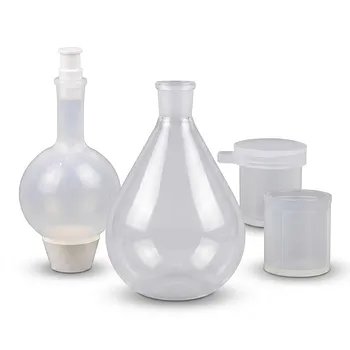
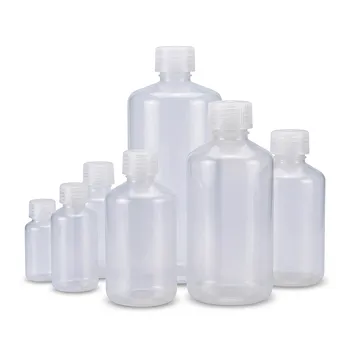
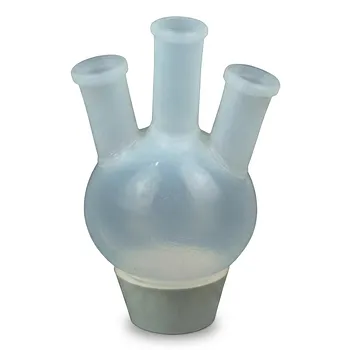
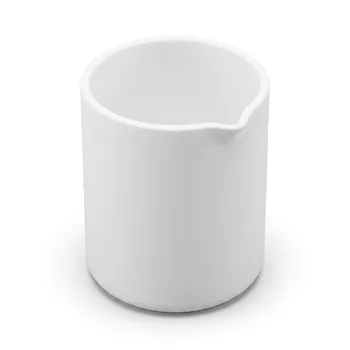
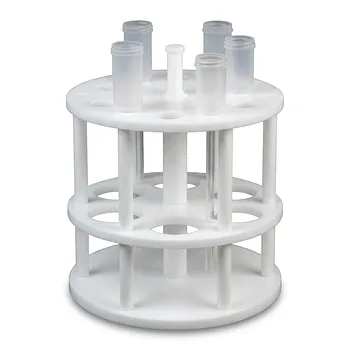
Fluoropolymer composites are well suited to high-purity labware, digestion vessels, chemical storage containers, and fluid-transfer systems.
Their resistance to solvents and aggressive chemicals helps protect both the equipment and the contents from contamination or degradation.
Filtration and Analytical Systems
PTFE filter membranes and fluoropolymer support hardware can tolerate nearly all solvent environments without dissolving or leaching significant impurities.
This chemical stability is important in systems supporting sensitive analytical instruments such as HPLC and GC-MS, where unintended chemical interference can compromise results.
Fiber-Reinforced Structural Composites
In carbon-fiber and other reinforced composites, fluoropolymer films or matrix components can add a durable environmental barrier to the structural material.
They are particularly useful when the composite requires resistance to abrasion, moisture, chemicals, heat, or flame in addition to its primary load-bearing function.
Understanding the Trade-offs
Adhesion May Require Material Engineering
Unmodified fluoropolymers are not automatically easy to bond. A successful composite design may require functionalized grades, surface treatment, mechanical interlocking, or a compatible intermediate layer.
The interface must be engineered rather than assumed to be reliable.
Strength and Creep Can Limit Structural Use
Compared with many structural engineering polymers, unmodified fluoropolymers can have relatively low tensile strength and may creep under sustained mechanical loads.
For heavily loaded components, designers may need greater wall thickness, reinforcement, encapsulated metal structures, or a different matrix architecture.
Performance Depends on the Complete Composite Design
The fluoropolymer alone does not determine final performance. Filler type, particle loading, reinforcement architecture, interface quality, processing conditions, and operating temperature all affect the result.
The matrix should therefore be selected as part of the full composite system, not as an isolated material choice.
Surface Benefits Do Not Replace Structural Reinforcement
Low friction, chemical resistance, and flame performance improve service behavior, but they do not automatically provide high load-bearing capability.
Where sustained mechanical stress is significant, the fluoropolymer should generally work with reinforcement or a supporting structural design.
Making the Right Choice for Your Goal
Fluoropolymers are most valuable when the matrix must perform several functions at once rather than simply provide cohesion.
- If your primary focus is chemical resistance: Use a fluoropolymer matrix or protective layer to shield fillers, fibers, and interfaces from solvents, moisture, and corrosive chemicals.
- If your primary focus is thermal durability: Select a fluoropolymer system capable of withstanding the expected temperature range and thermal cycling.
- If your primary focus is reliable bonding: Consider functionalized fluoropolymers or engineered interfaces, because standard PTFE and PFA can be difficult to bond.
- If your primary focus is surface wear and friction: Use a fluoropolymer surface layer to reduce dynamic friction, adhesion, and abrasion.
- If your primary focus is sustained structural loading: Account for tensile strength and creep, and consider reinforcement, increased thickness, or an encapsulated support structure.
When properly engineered, fluoropolymer binders and matrices turn a composite into both a structural material and a durable protective system.
Summary Table:
| Advantage | Description |
|---|---|
| Multifunctional binding | Encapsulates fillers and distributes them uniformly for consistent performance. |
| Environmental protection | Forms barrier against moisture, chemicals, and solvents, preserving integrity. |
| Thermal resistance | Withstands wide temperature ranges and thermal cycling. |
| Low friction & anti-adhesion | Reduces surface wear and buildup, improving durability. |
| Flame retardancy | Surface layers can provide self-extinguishing properties in some constructions. |
| Chemical inertness | Resists dissolution and swelling, preventing contamination. |
| Functionalization | Improves adhesion to metals/fibers while retaining key fluoropolymer properties. |
Elevate Your Composite Designs with High-Performance Fluoropolymers
At KINTEK, we specialize in advanced PTFE and PFA solutions engineered for demanding applications. Our materials deliver exceptional chemical resistance, thermal stability, and low friction—ideal for binders, matrices, and surface protections in composites. Whether you need custom CNC-machined parts, labware, or high-purity components, our expertise ensures reliability and performance.
Partner with us to enhance durability, reduce maintenance, and achieve superior results. Contact us today to discuss your project and get a tailored solution. Let’s build something exceptional together!
Related Products
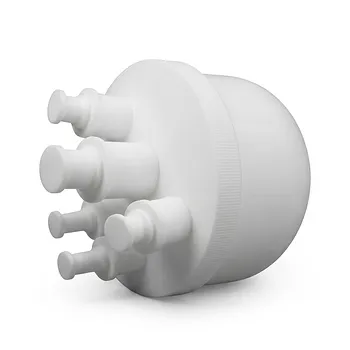
- Custom Multi Neck PTFE Flask for Chemical Engineering and High Purity Laboratory Synthesis Applications
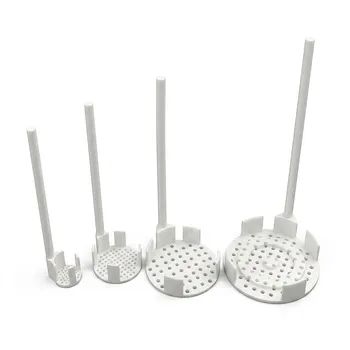
- High Purity PTFE Wafer Cassette Etching Carrier for Semiconductor Silicon Wafer Cleaning and Acid Resistance
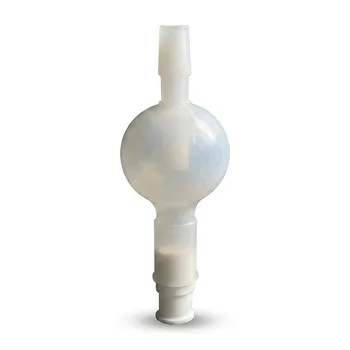
- High Purity PFA Chromatography Column with Collection Bottle Corrosion Resistant Fluoropolymer Filtration System for Trace Analysis
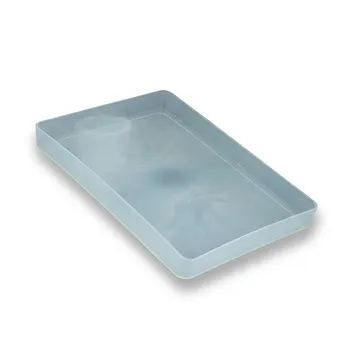
- Customizable PFA Square Tray Corrosion Resistant High Temperature Large Petri Dish Electrolytic Cell
- High Purity PFA Chromatography Columns and Collection Bottles Corrosion Resistant Fluoropolymer Filtration Systems for Trace Analysis
People Also Ask
- How does the molecular structure of fluorinated polymers contribute to the extreme thermal stability and chemical resistance required for high-performance laboratory reaction vessels and digestion containers? Discover the science behind PTFE and PFA for your lab.
- How do PTFE fluoropolymer laboratory vessels and tubing handle exposure to different types of organic solvents? Discover key insights for optimal solvent compatibility.
- How does hardware selection optimize research? Enhance Workflows with Custom Reaction Vessels
- How do pyrolysis temperature and steam diluent ratios influence tetrafluoroethylene (TFE) conversion and yield in fluoropolymer monomer reaction apparatus? Optimize TFE yield with temperature and steam control
- How is Teflon classified in terms of plastic types? A Guide to Thermoplastic Fluoropolymers