Void formation in pure PTFE homopolymer creates microscopic internal pathways that reduce the reliability of machined laboratory components. During sintering, PTFE powder particles fuse, but the polymer’s extremely slow void-closure rate can leave residual micro-voids between them. These voids increase chemical permeation and reduce flex life and stress-crack resistance, particularly when components face pressure, aggressive reagents, or repeated mechanical cycling.
The manufacturing solution is to copolymerize TFE with a small amount of a comonomer, such as PPVE or HFP. This disrupts PTFE’s rigid crystalline structure, lowers melt viscosity, and improves particle coalescence during sintering, producing a denser material with substantially lower internal void volume.
Why Pure PTFE Can Retain Voids
What Happens During Sintering
PTFE is processed by compacting granular or fine powder, sintering it, and then machining the resulting stock. Unlike conventional thermoplastics, PTFE does not become a freely flowing melt above its melting point; it forms a stiff, highly viscous gel.
As the particles fuse, the material must close the spaces between them through polymer-chain movement and consolidation. In pure PTFE, this process is exceptionally slow, so complete elimination of microscopic voids is difficult.
Why Machining Does Not Remove the Problem
CNC machining removes material from the external surface and creates the required geometry, but it does not eliminate voids within the remaining polymer. A precisely machined component can therefore still contain internal pathways left from incomplete sintering.
This matters for thin walls, threaded fittings, valve bodies, seals, and other designs where fluid pressure or chemical exposure can reach the material’s internal structure.
How Voids Affect Laboratory Component Performance
Reduced Permeation Resistance
Micro-voids can form connected or partially connected pathways through the polymer. These pathways make it easier for gases, solvents, and aggressive chemicals to migrate through the component than they would through a fully dense structure.
For laboratory vessels, liquid-handling fittings, and fluid-control components, higher permeation can contribute to contamination, chemical loss, or exposure of surrounding hardware.
Lower Flex Life
Repeated bending or pressure cycling concentrates stress around internal voids. The voids act as local discontinuities where cracks can initiate and grow, reducing the number of cycles a tubing component, seal, or flexible fitting can withstand.
The effect becomes more important when the component must tolerate repeated assembly, vibration, thermal cycling, or pressure changes.
Reduced Stress-Crack Resistance
Chemical exposure and mechanical stress can act together at the edges of microscopic voids. This can accelerate crack growth and make a component more vulnerable to premature failure under conditions that would be less damaging to a dense material.
For machined components used with aggressive reagents or under pressure, bulk density is therefore a performance property, not merely a manufacturing detail.
How Resin Manufacturing Overcomes Void Formation
Copolymerizing TFE With a Comonomer
Modified PTFE is produced by adding a small fraction of a comonomer to tetrafluoroethylene during polymerization. Common examples include perfluoropropylvinyl ether, or PPVE, and hexafluoropropylene, or HFP.
The comonomer interrupts the regularity of the PTFE chain. This reduces the rigidity of the crystalline structure and allows the polymer to consolidate more effectively during sintering.
Improving Particle Coalescence
The modified resin has lower melt viscosity than pure PTFE while retaining the processing behavior associated with PTFE-type materials. During sintering, polymer chains can move and entangle more readily, promoting better contact between fused particles.
The result is significantly lower internal void volume and a denser, more uniform structure. The goal is improved consolidation without extensive recrystallization that would recreate the original processing limitation.
Preserving Fluoropolymer Chemical Performance
The comonomer changes the physical structure and processing behavior of the resin without abandoning the chemical inertness expected from fluoropolymers. This makes modified PTFE suitable where both chemical resistance and improved mechanical durability are required.
The exact balance of properties depends on resin formulation, processing history, and component design, so “modified PTFE” should be evaluated against the actual chemical, thermal, and mechanical duty.
Why Resin Purity Also Matters
Supporting High Molecular Weight
High-molecular-weight PTFE requires exceptionally pure TFE feedstock. Telogenic chain-transfer impurities, including trifluoroethylene, must be tightly controlled because they can limit polymer-chain growth.
Chlorine- or hydrogen-bearing impurities can also interfere with achieving the desired degree of polymerization. High molecular weight supports structural integrity and helps maintain the low-leachable, high-purity behavior expected in laboratory applications.
Connecting Resin Quality to Final Components
Void reduction and monomer purity address different failure mechanisms. Copolymerization improves consolidation during sintering, while purified feedstock helps produce polymer with the molecular weight and integrity needed for demanding service.
Both factors influence the reliability of trace-analysis vessels, chemical storage components, fittings, and custom-machined fluid-handling parts.
Understanding the Trade-offs
Modified PTFE Is Not Automatically Superior for Every Use
Adding a comonomer improves consolidation and can enhance flexural fatigue and stress-crack resistance, but it also changes the resin’s crystallinity, mechanical behavior, and processing characteristics. Material selection should therefore be based on the component’s operating conditions rather than on the label alone.
Processing Quality Still Controls Performance
A modified resin can still perform poorly if compression molding, sintering, or machining is poorly controlled. Inadequate consolidation, thermal gradients, contamination, or excessive machining damage can undermine the benefits of the formulation.
Component suppliers should connect resin selection with documented molding, sintering, inspection, and machining controls.
Density Must Match the Application
The most demanding applications include high-pressure digestion vessels, valve components, liquid-handling fittings, and parts exposed to repeated flexing or aggressive chemicals. In less demanding applications, the additional performance of a modified resin may not justify its cost or other property changes.
The correct comparison is not simply pure PTFE versus modified PTFE, but the expected service life and failure consequences of each material in the intended design.
Making the Right Choice for Your Goal
Use the material and manufacturing decision together with the component’s actual service requirements.
- If your primary focus is chemical permeation resistance: Specify a well-consolidated modified PTFE formulation and verify density and processing quality for the component geometry.
- If your primary focus is flex life: Favor a resin and sintering process that minimize internal voids, then evaluate the finished part under representative bending and pressure cycles.
- If your primary focus is stress-crack resistance: Select a dense modified PTFE grade and validate it against the combined chemical exposure, stress level, temperature, and time of use.
- If your primary focus is ultra-high-purity laboratory work: Control TFE feedstock purity, resin formulation, processing contamination, and final leachables as one integrated material-quality program.
For machined fluoropolymer laboratory components, reliable performance begins with resin chemistry that enables complete consolidation before precision machining ever takes place.
Summary Table:
| Aspect | Pure PTFE Homopolymer | Modified PTFE (with comonomer) |
|---|---|---|
| Void formation | High; slow consolidation during sintering | Low; improved coalescence due to lower melt viscosity |
| Permeation resistance | Lower; micro-voids create pathways | Higher; denser structure reduces chemical permeation |
| Flex life | Lower; voids initiate cracks under cycling | Higher; reduced void content improves fatigue resistance |
| Stress-crack resistance | Lower; voids accelerate crack growth | Higher; denser material resists stress cracking |
| Processing | Difficult; slow void closure | Better; comonomer improves consolidation |
| Applications | Suitable for less demanding uses | Ideal for high-pressure, chemical, or cyclic loading |
Ensure reliable performance for your fluoropolymer lab components. At KINTEK, we specialize in high-performance PTFE and PFA products, from standard labware to custom CNC-machined parts. Our materials are chosen to minimize voids and maximize durability, delivering components that withstand aggressive chemicals and repeated stress. Whether you need digestion vessels, fittings, or bespoke assemblies, our expertise ensures your specifications are met. Contact us today to discuss your application and benefit from our tailored solutions.
Related Products
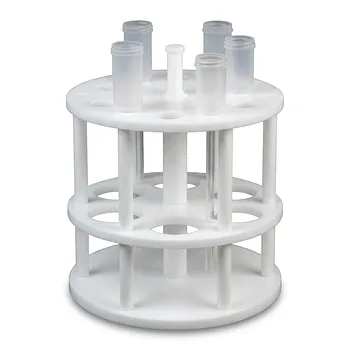
- Custom PFA Microcolumn Racks and PTFE Machined Low Background Corrosion Resistant Laboratory Fixtures
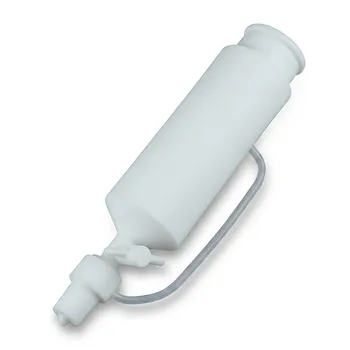
- Custom PTFE Constant Pressure Separatory Funnel 100ml Fluoropolymer Labware for Corrosive Chemical Transfer
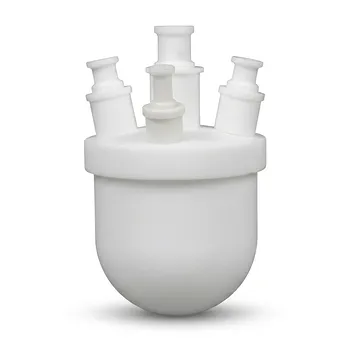
- Custom PTFE Flask 250ml High Purity Fluoropolymer Laboratory Vessel for Chemical Research
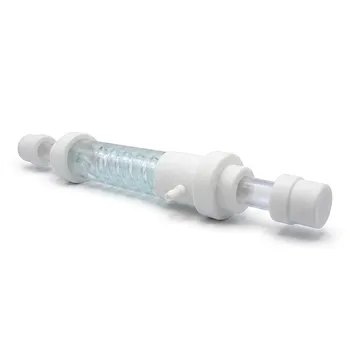
- Custom PTFE Condenser Tube 100ml Serpentine and Straight Fluoropolymer Laboratory Heat Exchanger with Flask Adapters
- High Temperature Resistant PTFE Thermal Insulation Board Corrosion Resistant Metal Free Fluoropolymer Stand for Ultra Clean Laboratories
People Also Ask
- What other PTFE lab accessories are commonly used? Essential Tools for Chemical Resistance & Purity
- How does high fluorination in perfluorinated polymers improve chemical resistance and thermal stability of lab apparatus? Discover the science behind PTFE and PFA's superior performance.
- What inherent material characteristics of non-melt-processable PTFE make it suitable for manufacturing high-purity laboratory containers and custom-machined apparatus?
- How do extreme temperatures and harsh chemical environments affect PTFE and PFA lab apparatus? Achieve Reliable Performance in Demanding Conditions
- What material considerations are critical for laboratory apparatus when performing cage-opening reactions on fluorinated silsesquioxanes using strong superacids? Choose PTFE/PFA for inertness and purity