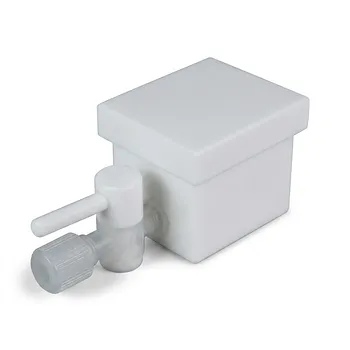
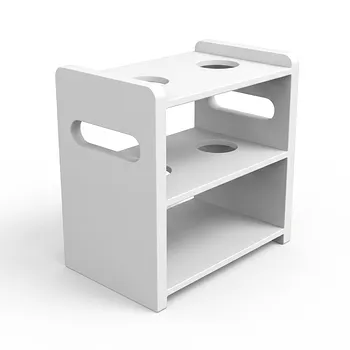
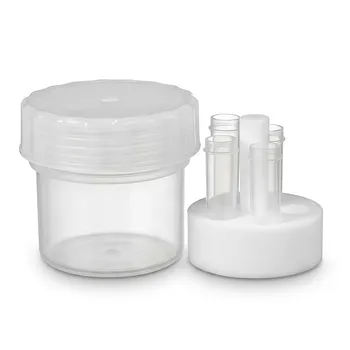
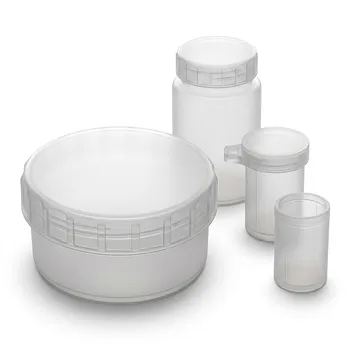
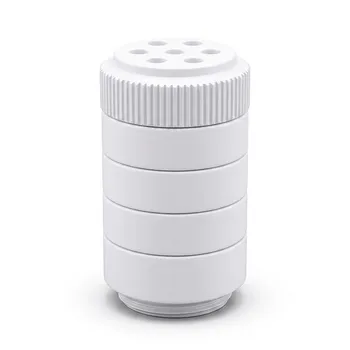
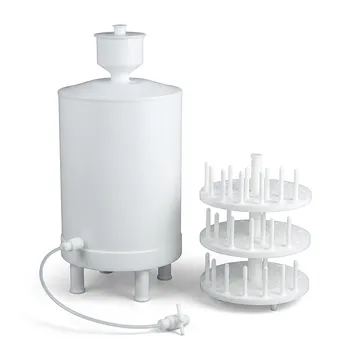
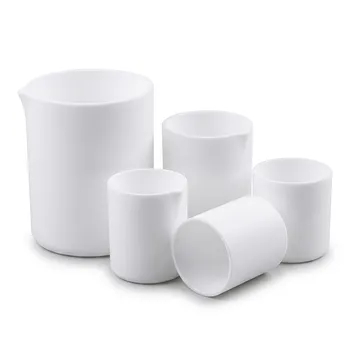
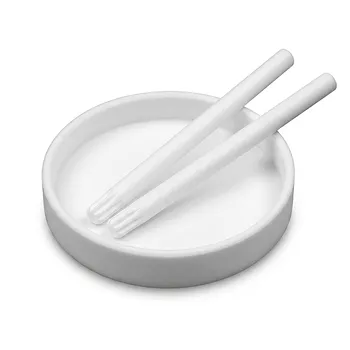
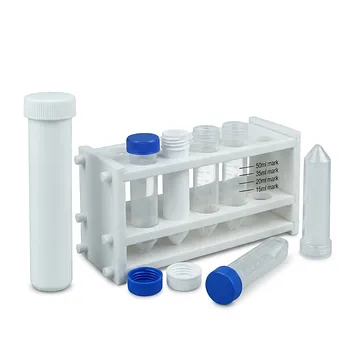
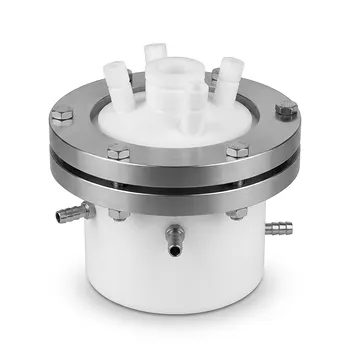
For cage-opening reactions on fluorinated silsesquioxanes, laboratory apparatus should be selected for chemical inertness, low contamination, and stability under superacid and fluorinated-solvent exposure. High-purity PTFE and PFA are generally the most suitable wetted materials because they resist trifluoromethanesulfonic acid (HOTf), hexafluorobenzene, and related aggressive media better than ordinary glass, metals, or conventional plastics. The apparatus must also remain mechanically and thermally stable throughout the reaction, workup, and transfer steps.
The critical material choice is a fully fluoropolymer-compatible reaction and transfer system, with PTFE or PFA used wherever reagents contact the apparatus. Material selection should be validated against the exact acid concentration, solvent composition, temperature, pressure, and exposure time rather than treated as universally inert.
Why Material Selection Is Critical
The Reaction Environment Is Exceptionally Aggressive
Cage-opening reactions of fluorinated POSS compounds can require strong superacids such as HOTf and dense fluorinated solvents such as hexafluorobenzene. These conditions can attack, swell, embrittle, or contaminate materials that are acceptable for routine synthetic chemistry.
The challenge is not limited to visible corrosion. Trace extractables, surface residues, or dissolved ions can affect cage-opening chemistry, product purity, and subsequent characterization.
Fluorinated Media Increase Compatibility Demands
Fluorinated solvents can behave differently from common organic solvents with respect to wetting, penetration, swelling, and contamination. A material that performs well with standard hydrocarbons or alcohols may be unsuitable in a highly fluorinated solvent system.
Dense solvents also place practical demands on vessel closure, tubing connections, and transfer hardware. Components must retain dimensional integrity and sealing performance during repeated exposure.
Preferred Wetted Materials
PTFE for Primary Chemical Resistance
PTFE is a strong default for reaction vessels, liners, stir bars, gaskets, stopcocks, valve components, and other parts directly exposed to HOTf and fluorinated solvents. Its low reactivity and resistance to aggressive acids help reduce corrosion and contamination.
PTFE is especially useful for custom-machined vessels or liners when the reaction geometry requires nonstandard dimensions.
PFA for Fabricated and Transparent Components
PFA provides similarly strong chemical resistance while being more suitable than PTFE for some fabricated tubing, bottles, vessels, and chemically resistant containers. Its processability and weldability can simplify the construction of integrated reaction and transfer systems.
PFA can also be useful where visual inspection is needed, provided the selected product has adequate thickness and mechanical strength for the intended conditions.
PTFE and PFA Transfer Hardware
Reaction compatibility must extend beyond the vessel itself. PTFE/PFA tubing, fittings, valves, syringes, and fluid-transfer lines help prevent contamination during reagent charging, sampling, filtration, and product recovery.
A glass vessel connected to fluoropolymer tubing can still introduce contamination or become the limiting component. The entire wetted path should therefore be reviewed as one materials system.
Materials That Require Caution
Conventional Glass
Standard glass may experience micro-etching, surface alteration, or silanol-related contamination under severe acid exposure. These effects may be subtle and difficult to detect visually, yet still influence surface-sensitive reactions or analytical results.
Glass may remain useful for noncontact observation or downstream handling when compatibility has been demonstrated, but it should not automatically be assumed to be suitable as the primary wetted reaction surface.
Conventional Plastics
Many commodity plastics can swell, soften, crack, leach additives, or lose mechanical strength in strong acids and halogenated or fluorinated solvents. Compatibility data for water or mild organic solvents does not establish suitability for HOTf or hexafluorobenzene.
Polymer identity, grade, additives, temperature, and exposure duration all matter. “Plastic” is not a meaningful compatibility category by itself.
Metals
Metal components can corrode in strongly acidic and fluorinated environments and may introduce metal-ion contamination into the reaction. This is particularly undesirable when trace impurities can affect product distribution, surface chemistry, or spectroscopic measurements.
Metal reinforcement or hardware may be unavoidable in pressure-rated equipment, but wetted metal surfaces should be minimized and specifically qualified for the chemical and thermal conditions.
Designing the Complete Apparatus
Prioritize the Wetted Path
The most important question is which materials contact the reaction mixture. Vessel liners, stir bars, seals, valves, sampling ports, filters, tubing, and containers used during workup all belong to the wetted path.
Use high-purity PTFE or PFA throughout that path where practical. Avoid assuming that a chemically resistant vessel compensates for incompatible seals, fittings, or transfer components.
Account for Seals and Connections
Seals can fail before the main vessel material does. Gaskets, O-rings, valve seats, septa, and compression fittings must be evaluated for acid resistance, fluorinated-solvent exposure, swelling, permeation, and temperature.
Connection design also matters because fluoropolymer components can deform under compression or thermal cycling. Mechanical integrity should be confirmed at the actual operating temperature and pressure.
Consider Thermal and Mechanical Stability
Fluoropolymers generally provide strong chemical resistance, but they are not interchangeable from a mechanical-design perspective. Vessel wall thickness, machining geometry, pressure differential, agitation, and heating can affect deformation and sealing reliability.
The apparatus should be rated for the full process envelope, including heating, cooling, vacuum, pressure buildup, and any exotherm associated with acid addition or reaction.
Control Surface Cleanliness
Even an appropriate material can cause problems if it is poorly cleaned or previously exposed to incompatible reagents. Dedicated, thoroughly cleaned fluoropolymer components reduce the risk of residual acids, siloxanes, metal particles, and other contaminants.
For sensitive cage-modification work, avoid shared labware with an uncertain chemical history. Cleaning and conditioning procedures should be verified without introducing new residues.
Understanding the Trade-offs
Chemical Resistance Does Not Mean Universal Inertness
PTFE and PFA are preferred materials, but no material should be described as absolutely inert under every condition. Temperature, acid strength, impurities, mechanical stress, radiation, pressure, and contact time can change performance.
Supplier compatibility data and small-scale qualification tests should be used for the specific HOTf concentration, solvent mixture, temperature, and duration.
Fluoropolymers Have Mechanical Limitations
Fluoropolymers can deform, creep, or lose sealing force under sustained load or elevated temperature. Custom-machined parts must therefore be designed with appropriate tolerances and support rather than selected solely on the basis of chemical resistance.
They may also be less suitable than rigid materials for high-pressure applications unless properly engineered or used as chemically resistant liners within a rated assembly.
Contamination Control Can Conflict With Convenience
Glass may offer easier visual inspection, and metal systems may provide greater mechanical strength, but both can increase corrosion or trace-contamination risks in this chemistry. A practical design may require fluoropolymer liners, isolated structural supports, or remote monitoring to balance chemical purity with mechanical performance.
The correct solution is a qualified hybrid design when necessary, with the reactive fluid isolated from vulnerable structural materials.
Permeation and Handling Still Matter
Fluoropolymer components can permit some diffusion or permeation of volatile chemicals, especially over long contact times. Closures, storage containers, and transfer lines should be selected with containment and exposure duration in mind.
The apparatus must also support safe handling of superacids and fluorinated solvents, including compatible secondary containment and controlled addition procedures.
Making the Right Choice for Your Goal
The material strategy should follow the reaction conditions and the sensitivity of the intended product and analysis.
- If your primary focus is chemical compatibility: Use high-purity PTFE or PFA for the vessel, liner, seals, tubing, fittings, valves, and other wetted components, then verify compatibility for the exact HOTf and fluorinated-solvent conditions.
- If your primary focus is trace contamination control: Minimize glass and wetted metals, use dedicated fluoropolymer labware, and establish cleaning and handling procedures that prevent silanol, metal-ion, and polymer-additive contamination.
- If your primary focus is thermal or pressure performance: Treat PTFE and PFA as chemically resistant materials that still require mechanical qualification for temperature, vacuum, pressure, agitation, and thermal cycling.
- If your primary focus is process reliability: Evaluate the complete fluid path, including seals, valves, sampling ports, transfer lines, containers, and secondary containment rather than qualifying only the reaction vessel.
- If your primary focus is scale-up: Revalidate chemical compatibility, deformation resistance, heat transfer, mixing, sealing, and containment as vessel size and exposure time increase.
A properly qualified PTFE/PFA system provides the strongest starting point for reliable cage-opening reactions on fluorinated silsesquioxanes under superacid conditions.
Summary Table:
| Material | Suitability | Key Considerations |
|---|---|---|
| PTFE | Excellent | Superior chemical resistance; use for vessels, liners, seals, and custom parts. |
| PFA | Excellent | Good chemical resistance and processability; use for tubing, bottles, and transparent components. |
| Glass | Poor | Risk of etching and contamination; avoid for primary wetted surfaces. |
| Conventional plastics | Poor | Swelling, leaching, and degradation; not recommended. |
| Metals | Poor | Corrosion and metal-ion contamination; minimize contact. |
Ensure the success of your cage-opening reactions with KINTEK's high-purity PTFE/PFA labware, designed for superior chemical resistance and minimal contamination. Our products, from reaction vessels to transfer lines, are ideal for harsh superacid and fluorinated solvent conditions. Contact us today to discuss your custom requirements and benefit from our end-to-end CNC machining capabilities. Get in touch to upgrade your lab's performance.
Related Products
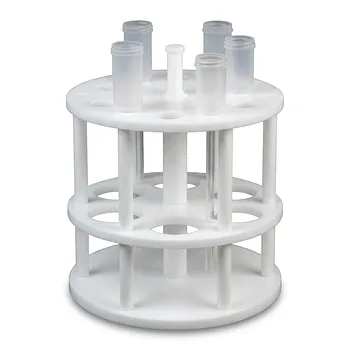
- Custom PFA Microcolumn Racks and PTFE Machined Low Background Corrosion Resistant Laboratory Fixtures
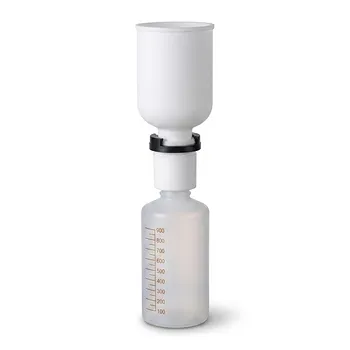
- PTFE PFA Vacuum Filtration System Corrosion Resistant Customizable Shatterproof Laboratory Device
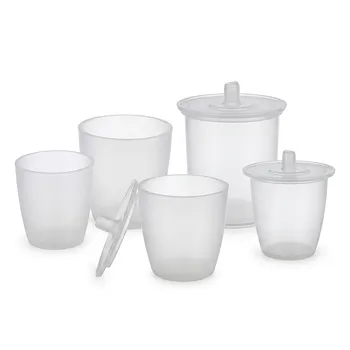
- High Purity PFA Crucible and Corrosion Resistant PTFE Beaker for Trace Analysis and Custom Laboratory Applications
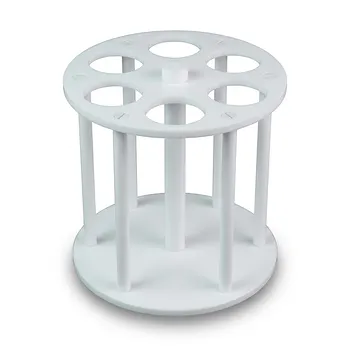
- Custom PFA Separatory Funnel Rack PTFE Machined Laboratory Support Stand Corrosion Resistant Low Background Fluoropolymer Fixture
- Custom PTFE Laboratory Apparatus Corrosion Resistant Low Background Reaction Cells Precision CNC Fabrication
People Also Ask
- What other PTFE lab accessories are commonly used? Essential Tools for Chemical Resistance & Purity
- How does high fluorination in perfluorinated polymers improve chemical resistance and thermal stability of lab apparatus? Discover the science behind PTFE and PFA's superior performance.
- What inherent material characteristics of non-melt-processable PTFE make it suitable for manufacturing high-purity laboratory containers and custom-machined apparatus?
- What surface chemical species and binding energy signatures are detected on PTFE fluoropolymer sample holders during XPS analysis? Key insights for accurate calcium detection.
- Why are PTFE and PFA preferred over other fluoropolymers for manufacturing specialized laboratory apparatus and custom machined components? Discover the key advantages and how to select the right material for your lab needs.