Platelet-like fillers enhance fluoropolymer barrier performance primarily by forcing permeating molecules to take a longer route through the material. Impermeable flakes such as mica interrupt direct diffusion paths for water, gases, and chemical vapors. When the platelets are laterally oriented and overlap, molecules must travel around them, reducing permeability and limiting chemical or moisture accumulation at interfaces.
Core takeaway: Platelet fillers do not necessarily make the fluoropolymer chemically inert to a greater degree; they improve protection by slowing the transport of aggressive molecules through the component. Their effectiveness depends strongly on platelet orientation, overlap, dispersion, and the compatibility of the filler with the fluoropolymer matrix.
How Platelets Improve the Barrier
They create a tortuous diffusion path
In an unfilled polymer, a permeant molecule can move through the matrix along a relatively direct path. Platelet fillers disrupt that route because the inorganic flakes are effectively impermeable to many small molecules.
Instead of moving straight through the component, the molecule must diffuse around each platelet. This increases the effective distance between the exposed surface and the protected substrate or interior region.
Overlapping platelets increase protection
The barrier effect is strongest when platelets are well dispersed and partially overlap. A series of overlapping flakes acts like a layered maze, forcing permeants to make repeated lateral detours.
Poorly dispersed or randomly oriented platelets provide fewer effective obstacles and may leave continuous channels through the polymer.
They reduce moisture and vapor permeability
The extended diffusion distance lowers the overall rate at which water, gases, and chemical vapors penetrate the fluoropolymer. This is particularly useful where even small amounts of permeation can cause long-term damage.
Reduced permeability can also limit the accumulation of moisture or chemicals at a coating–substrate boundary, where localized attack is often more damaging than uniform surface exposure.
How This Supports Chemical Resistance
The filler slows chemical access
Fluoropolymers already provide strong intrinsic chemical resistance because of their stable molecular structure. Platelet fillers complement that resistance by slowing the arrival of aggressive species at the polymer interior, interfaces, or underlying substrate.
This is a transport-based improvement rather than a fundamental change to the fluoropolymer’s chemical structure.
It can reduce interfacial chemical attack
When permeating moisture or chemicals collect at a substrate boundary, they can contribute to corrosion, adhesion loss, blistering, or osmotic pressure buildup. A platelet-filled matrix reduces the rate at which these species reach and accumulate at that boundary.
This helps preserve coating integrity and long-term substrate protection, especially in environments involving chemical vapors or persistent moisture exposure.
It helps maintain protection over time
Lower permeability can delay the progression of chemical exposure through a component. That may extend the time before the substrate, bond line, or internal region experiences damaging concentrations of the permeant.
However, the result should be viewed as improved barrier durability, not unlimited chemical resistance.
Why Filler Structure Matters
Platelet geometry is central
The high aspect ratio of a platelet gives it greater barrier value than a similarly sized spherical particle. A thin, broad flake obstructs a larger cross-sectional area and forces diffusion farther sideways.
This is why mica and comparable flake-shaped inorganic fillers are used when permeation control is a priority.
Orientation affects performance
Platelets aligned broadly across the direction of permeation create the most effective barrier. In a coating, this often means orientation parallel to the surface, so molecules moving toward the substrate encounter multiple lateral obstacles.
If platelets align with the permeation direction, their barrier contribution can be substantially reduced.
Dispersion and interface quality are critical
Agglomerated flakes can create defects, voids, or poorly bonded regions. These defects may become easier paths for chemical or moisture transport and can offset the theoretical advantage of the filler.
The filler must therefore be dispersed uniformly and bonded sufficiently to the fluoropolymer matrix.
Additional Benefits of Fluoropolymer Fillers
Mechanical reinforcement can protect the barrier
Fillers can improve mechanical strength, dimensional stability, creep resistance, and wear resistance while retaining many of the base fluoropolymer’s chemical and high-temperature characteristics.
That matters because cracking, deformation, and abrasion can create direct routes for permeants even when the polymer itself has excellent chemical resistance.
Wear resistance can preserve surface integrity
In dynamic seals, bearings, valves, and fluid-transfer components, filled PTFE grades can substantially reduce wear compared with unfilled PTFE. Lower wear helps maintain the component’s intended geometry and reduces the formation of surface defects.
The barrier benefit is therefore supported indirectly: a more durable surface is less likely to expose the material to accelerated chemical ingress.
Other fillers address different failure modes
Graphite, PTFE powders, glass fibers, carbon black, silica, and barium sulfate can be selected for properties such as friction reduction, wear resistance, compression-set performance, strength, or moisture resistance.
These fillers should not be assumed to provide the same tortuous-path barrier effect as platelet-shaped fillers. Filler selection must match the dominant failure mechanism.
Understanding the Trade-offs
Barrier improvement is not automatically chemical compatibility
A platelet filler can reduce permeation, but it does not guarantee compatibility with every chemical or operating temperature. The matrix, filler, filler treatment, interfaces, and service conditions must be evaluated together.
A chemically stable fluoropolymer may still experience performance loss if the filler reacts, extracts, swells, or weakens the composite under the application conditions.
Excess filler can harm processability
Increasing filler content may improve a targeted property but can also raise viscosity, complicate molding or coating, and reduce melt flow or weldability. High loading may further increase brittleness or create dispersion defects.
The optimum formulation is therefore a balance between barrier performance, mechanical properties, processing, and cost.
Interfaces can become weak points
Every filler–polymer interface is a potential defect if adhesion is inadequate. Voids or debonded regions can provide preferential transport paths and reduce both barrier performance and mechanical durability.
Surface treatment, controlled mixing, and proper processing are important when long-term chemical exposure is expected.
Chemical resistance and wear resistance are different objectives
A filler that improves wear resistance may not significantly reduce chemical permeability. Conversely, a platelet filler optimized for barrier performance may not provide the best friction, compression-set, or high-load wear behavior.
For demanding components, a hybrid formulation or a fluoropolymer combination such as PTFE with FEP or PFA may be considered, provided processing and compatibility requirements are satisfied.
How to Apply This to Your Project
The correct choice depends on whether the primary concern is permeation, mechanical damage, or chemical exposure at an interface.
- If your primary focus is barrier performance: Use well-dispersed, high-aspect-ratio platelets oriented across the permeation direction to maximize the tortuous-path effect.
- If your primary focus is chemical protection of a substrate: Prioritize low permeability, strong coating adhesion, and reduced porosity so chemicals and moisture are less likely to accumulate at the substrate boundary.
- If your primary focus is wear and dimensional stability: Evaluate filled PTFE or other fluoropolymer compounds with fillers selected for friction, creep, compression-set, and abrasion requirements.
- If your primary focus is broad chemical and thermal durability: Confirm the intrinsic compatibility of the fluoropolymer, filler, and filler–polymer interface with the actual chemicals, temperature, stress, and exposure time.
Platelet fillers are most effective when their geometry, orientation, dispersion, and chemistry are engineered as part of the complete fluoropolymer system.
Summary Table:
| Aspect | How Platelet Fillers Help | Key Consideration |
|---|---|---|
| Barrier Mechanism | Create tortuous path, forcing permeants to travel longer distances | Platelet orientation and overlap are crucial |
| Moisture/Vapor Permeation | Reduce permeability to water, gases, and chemical vapors | Effective when platelets are well dispersed and oriented |
| Chemical Resistance | Slow chemical access to interior and interfaces | Complements intrinsic fluoropolymer resistance |
| Interfacial Attack | Reduce accumulation of chemicals at substrate boundary | Preserves coating adhesion and prevents blistering |
| Long-Term Protection | Delay progression of chemical exposure | Improves barrier durability, not unlimited resistance |
| Filler Structure | High aspect ratio and broad flakes are more effective | Mica and similar fillers are preferred |
| Orientation | Parallel to surface blocks permeation effectively | Misalignment reduces barrier effect |
| Dispersion | Uniform dispersion and good bonding are vital | Agglomerates can create defects and weak points |
| Mechanical Reinforcement | Improve strength, stiffness, and dimensional stability | Prevents cracks and deformation that allow permeation |
| Wear Resistance | Reduce wear in dynamic applications | Maintains surface integrity and reduces defect formation |
| Trade-offs | Excess filler can harm processability and increase brittleness | Balance performance with manufacturability |
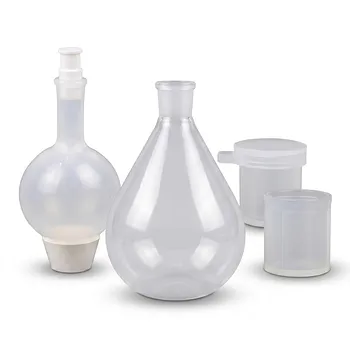
Optimize your fluoropolymer components with platelet-filled PTFE and PFA solutions. KINTEK offers a wide range of high-performance lab supplies, from beakers and digestion vessels to custom CNC-machined parts. Our platelet-filled materials are engineered to enhance barrier properties and chemical resistance, ensuring longer service life and reliability in demanding applications. Whether you need standard labware or bespoke electrochemical cells, our experts can help you select the right filler and formulation for your specific needs. Contact us today to discuss your requirements and get a tailored solution!
Related Products
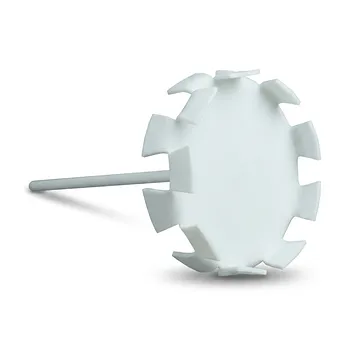
- Corrosion Resistant PTFE Stirring Disk Chemical Dispersion Plate 350mm Diameter Fluoropolymer Mixer Accessory
- High Purity PFA Chromatography Column Double Layer Constant Pressure Filter Column with Sieve Plate Acid Resistant Fluoropolymer Filtration System
- High Temperature Resistant Insulating TFM Separator and Ultra Clean Laboratory PTFE Baffle Plate with Customizable Pore Size and Hole Configuration
- Corrosion Resistant High Purity PFA Valve and Weldable Transparent Tubing for Semiconductor Fluid Transfer
- High Purity Laboratory Grade PTFE Syringe Chemical Resistant Fluoropolymer Injector for Trace Analysis
People Also Ask
- What are the tolerance specifications for the thickness of PTFE disks? Why ±20% is the Industry Standard
- What is the chemical formula and material of PTFE Disk? Unlock the Power of C₂F₄ Polymer
- How many variations of PTFE disks are available and what parameters do they differ in? Choose the Right Material for Your Application
- What is Dispersion PTFE used for? Creating Thin, High-Performance Coatings and Films
- Where are PTFE stirrers typically applied? Essential for Chemical, Pharma & Bioprocessing