Fluorination improves processability mainly by preventing polymer chains from packing too efficiently. Bulky groups such as trifluoromethyl (-CF₃) and hexafluoroisopropylidene [–C(CF₃)₂–] disrupt chain symmetry, reduce inter-chain attraction, suppress crystallization, and increase fractional free volume. As a result, many otherwise insoluble aromatic polymers become soluble in organic solvents and easier to form by solution casting, while retaining high thermal and chemical resistance.
Core takeaway: Fluorine does not simply make a polymer “softer.” It creates a less tightly packed, lower-polarizability structure that is easier for solvent molecules to penetrate and, in suitable architectures, easier to flow during processing without sacrificing high-temperature performance.
Why Standard Aromatic Polymers Are Difficult to Process
Rigid backbones restrict chain movement
Standard aromatic polymers often contain stiff, planar macromolecular backbones. These structures resist rotation and prevent the chains from rearranging readily during melting or dissolution.
Their rigidity is valuable for thermal and mechanical performance, but it can produce very high glass-transition or melting temperatures and poor melt flow.
Strong inter-chain interactions limit solubility
Aromatic chains can pack closely and interact through dipolar forces, hydrogen bonding, and charge-transfer complex formation. These interactions stabilize the solid polymer and make it difficult for solvent molecules to separate individual chains.
The result is often low solubility, even in strong processing solvents, and a narrow processing window.
Efficient packing promotes crystallinity
Symmetrical, planar polymer structures can organize into ordered regions. Crystallinity further restricts solvent penetration and chain mobility, making the material more difficult to dissolve, soften, or form into uniform films.
How Fluorine Changes Polymer Structure
Bulky -CF₃ groups disrupt chain packing
A trifluoromethyl group is both chemically inert and sterically large. When placed in the backbone or as a side group, it creates physical spacing between neighboring chains and introduces kinks or irregularities into the macromolecular structure.
This reduces packing efficiency and makes it harder for the polymer to form highly ordered crystalline domains.
Fluorinated linkages increase free volume
Groups such as –C(CF₃)₂– and semifluorinated linkages increase the polymer’s fractional free volume. Free volume is the unoccupied space within the polymer matrix that allows solvent molecules to penetrate and interact with the chains.
Greater free volume generally supports improved organic-solvent uptake and easier chain separation during dissolution.
Fluorine reduces polarizability and charge-transfer interactions
The C–F bond has relatively low polarizability, and fluorinated groups can reduce the tendency of aromatic chains to form strong charge-transfer complexes. Weaker inter-chain electronic interactions lower the cohesive forces holding the polymer together.
This is a key reason fluorinated aromatic polymers can be substantially more soluble than structurally similar non-fluorinated materials.
Fluorination introduces structural irregularity
Bulky fluorinated groups disturb the symmetry of an aromatic backbone. Reduced symmetry makes it more difficult for chains to align into a tightly ordered structure, often producing an amorphous polymer.
Amorphous materials generally dissolve more readily than highly crystalline counterparts because solvents can access the chains more effectively.
How These Changes Improve Processability
Improved solution processability
Fluorinated aromatic polymers can show improved solubility in solvents such as NMP, DMAc, THF, chloroform, and dioxane, depending on the specific polymer architecture and molecular weight.
This enables lower-temperature processing methods, including solution casting, coating, membrane formation, and fabrication of flexible films or custom components.
Better melt flow in suitable polymer designs
Reduced chain packing and weaker inter-chain interactions can also improve melt flowability. The chains require less energy to move past one another than in a tightly packed, strongly interacting aromatic polymer.
However, fluorination does not automatically make every high-performance fluoropolymer melt-processable. Very high molecular weight, highly crystalline materials such as conventional PTFE remain difficult to melt-process, whereas melt-processable grades such as PFA are specifically designed for that purpose.
Easier formation of uniform films and components
Higher solubility allows the polymer to be deposited from solution before the material reaches its high-use temperature. This is especially important for high-Tg materials that cannot be conveniently shaped by conventional thermal processing.
The result can be tough, flexible, transparent, and creasable films, as well as coatings and specialized laboratory components.
What Performance Is Retained
High thermal stability
Fluorinated groups can improve processability without eliminating the rigid aromatic structure responsible for high thermal performance. Reported fluorinated aromatic systems can retain very high glass-transition temperatures, in some cases above 270°C and extending into the 300°C range, depending on the backbone.
This combination—solution processability with high Tg—is one of the main advantages over conventional aromatic polymers.
Chemical and environmental resistance
The strength and low reactivity of C–F bonds contribute to resistance against aggressive chemicals, weathering, and environmental degradation. This is valuable in high-purity fluid handling, protective coatings, separation membranes, and laboratory equipment.
Lower moisture absorption
Fluorinated structures generally reduce water affinity and moisture retention. Lower moisture uptake helps preserve dimensional stability, electrical performance, and fluid purity in demanding environments.
Lower dielectric constant and optical coloration
Reduced polarizability, increased free volume, and suppressed charge-transfer complex formation can lower the dielectric constant and reduce coloration. These features are useful in electronic insulation, optical films, trace-analysis equipment, and components where low fluid or moisture absorption matters.
The Role of Fluorine Content and Polymer Architecture
More fluorine is not the only design variable
Increasing fluorine content often improves chemical resistance, thermal endurance, flame resistance, weather resistance, and electrical resistivity. It can also reduce friction, dielectric constant, and dissipation factor.
But overall processability depends on where the fluorine is placed, the backbone geometry, molecular weight, crystallinity, and the presence of flexible groups such as ethers.
Flexible ether linkages can complement -CF₃ groups
Ether linkages introduce additional flexibility into otherwise rigid structures. When combined with bulky trifluoromethyl groups, they increase steric disruption and improve solvent accessibility.
This combination can provide a useful balance between high thermal performance and practical solution processing.
Mixed linkages can control crystallization
Highly symmetrical placement of fluorinated groups can sometimes preserve enough regularity to permit partial crystallization. Copolymerization or the use of mixed meta- and para-linkages can reduce that symmetry and help maintain amorphous character and high solubility.
The best results therefore come from controlling the entire molecular architecture rather than simply maximizing fluorine content.
Understanding the Trade-offs
Solubility and melt processability are not identical
A polymer may dissolve readily in organic solvents yet remain difficult to melt-process because of its high Tg or decomposition temperature. Conversely, a material may be melt-processable but poorly soluble because it is highly crystalline.
Processing behavior must therefore be evaluated using the actual fabrication method: solution casting, compression molding, extrusion, injection molding, or another technique.
Excessive free volume can increase permeability
Greater free volume improves solvent penetration and can enhance gas permeability. That may benefit membranes and controlled transport applications, but it can be undesirable when the component must provide an exceptional barrier to gases or vapors.
The required balance depends on whether transport or containment is the primary objective.
Mechanical strength may change
High fluorine content and disrupted packing can reduce basic mechanical strength in some systems, even while improving chemical and thermal durability. Material selection should therefore consider toughness, creep, tensile strength, and environmental stress cracking—not only chemical resistance.
Crystallization can still occur
Fluorinated groups usually suppress crystallization, but they do not guarantee a fully amorphous polymer. Symmetry, regularity, and processing history can still produce ordered regions that reduce solubility and alter dimensional behavior.
Solvent compatibility remains formulation-specific
The solvents listed—such as NMP, DMAc, THF, and chloroform—are representative rather than universal. Solubility depends on fluorine content, backbone polarity, molecular weight, temperature, and the final polymer’s crystallinity.
Making the Right Choice for Your Goal
Fluorination is most effective when the molecular design is matched to the required processing route and service environment.
- If your primary focus is solution processing: Choose an amorphous aromatic fluoropolymer with bulky -CF₃ or –C(CF₃)₂– groups, sufficient free volume, and reduced backbone symmetry.
- If your primary focus is melt processing: Select a polymer specifically engineered for melt flow, such as an appropriate PFA-type material, rather than assuming that all fluorinated polymers will process easily when heated.
- If your primary focus is high-temperature performance: Use fluorinated aromatic structures that retain a rigid backbone and high Tg while incorporating steric disruption to improve solubility.
- If your primary focus is chemical purity and fluid handling: Prioritize low moisture absorption, low extractables, chemical inertness, and resistance to environmental stress cracking alongside processability.
- If your primary focus is membranes or controlled transport: Use the increased free volume deliberately, while checking whether the resulting gas or vapor permeability is acceptable for the application.
The central design principle is to use fluorination to weaken excessive chain packing and inter-chain attraction while preserving the backbone features that deliver high-performance durability.
Summary Table:
| Feature | Standard Aromatic Polymers | Fluorinated Aromatic Polymers |
|---|---|---|
| Chain Packing | Tight, efficient | Disrupted by bulky groups |
| Inter-chain Interactions | Strong (dipole, H-bonding, charge-transfer) | Weakened (lower polarizability) |
| Crystallinity | Often high | Suppressed, often amorphous |
| Free Volume | Low | Increased |
| Solubility | Poor in common solvents | Improved in NMP, DMAc, THF, etc. |
| Processability | Limited (high Tm, rigid) | Enhanced (solution casting, melt flow in designed grades) |
| Thermal Stability | High | Retained (often Tg > 270°C) |
| Moisture Absorption | Can be significant | Reduced |
| Chemical Resistance | Good | Excellent (C-F bond strength) |
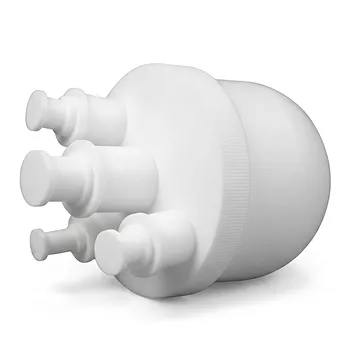
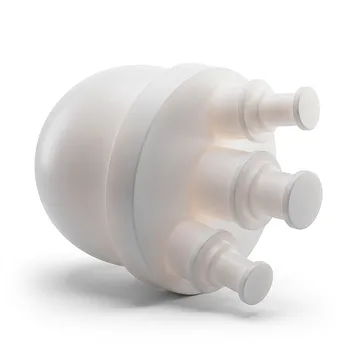
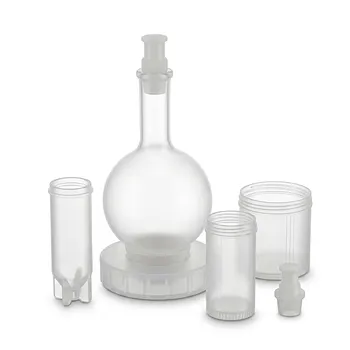
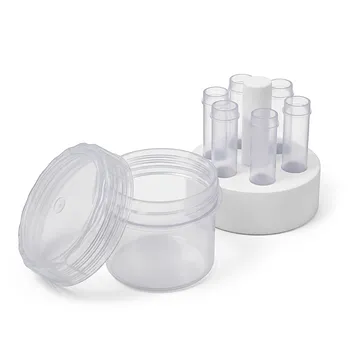
Looking for high-performance fluoropolymers that are both processable and durable? At KINTEK, our PTFE and PFA labware—from beakers to custom CNC-machined parts—combine excellent chemical resistance with tailored processing. Whether you need solution-cast films or melt-processed components, our expertise ensures you get the right material for your application. Contact us today to discuss your requirements!
Related Products
- High Purity PFA Chromatography Column with Collection Bottle Corrosion Resistant Fluoropolymer Filtration System for Trace Analysis
- Custom PTFE Flask 250ml High Purity Fluoropolymer Laboratory Vessel for Chemical Research
- High Purity PFA Chromatography Column Double Layer Constant Pressure Filter Column with Sieve Plate Acid Resistant Fluoropolymer Filtration System
- Custom PFA Tubing 1/4 Inch High Purity Corrosion Resistant Fluoropolymer Tube with Welding and Machining Services
- High Purity PTFE Single Neck Reaction Flask Acid Resistant Customizable Fluoropolymer Laboratory Reactor
People Also Ask
- Why is the chemical stability of polymer endgroups critical when selecting melt-processible fluoropolymers like PFA for high-purity laboratory apparatus? Choose Stable Endgroups for Reliable Performance
- What are the characteristics of PFA material? A Guide to Its High-Performance Balance
- Why is Perfluoroalkoxy alkane (PFA) preferred over glass or stainless steel in pharmaceutical process development? Pure Yield
- Why is PFA superior for cleaning and preventing cross-contamination? The Gold Standard for Ultra-Trace Lab Hygiene
- What are the key properties of PFA (PerFluoroAlkoxy)? A Guide to Extreme Chemical and Thermal Resistance