Tailoring fluoropolymer properties lets engineers match a material to the exact demands of each specialized application. By controlling thermal stability, chemical resistance, surface energy, dielectric behavior, wetting, gas permeability, and processing characteristics, manufacturers can produce components that reduce contamination, withstand aggressive environments, and maintain reliable performance in microelectronics, trace analysis, and custom reaction systems.
The central benefit is controlled performance: tailored fluoropolymers protect sensitive samples and devices while extending component life. The best formulation and fabrication method depend on whether the priority is purity, chemical resistance, electrical behavior, fluid control, or dimensional precision.
Why Property Tailoring Matters
One fluoropolymer cannot optimize every requirement
Specialized applications often impose several demands at once. A component may need to tolerate strong acids, resist analyte adhesion, maintain electrical insulation, withstand elevated temperatures, and still be manufactured into a complex geometry.
Tailoring the polymer formulation and processing conditions allows these requirements to be balanced rather than treating fluoropolymer selection as a one-material-fits-all decision.
Key properties can be adjusted
Advanced synthesis and processing can influence:
- Thermal stability
- Chemical resistance
- Surface energy and wetting
- Dielectric properties
- Optical transparency
- Gas permeability
- Friction and non-stick behavior
- Processing and machining characteristics
This control helps engineers select or develop materials according to the actual operating environment.
How Tailoring Benefits Microelectronics
It supports high-purity processing
Microelectronics manufacturing relies on fluid handling, cleaning, and process equipment that must not introduce ionic or elemental contaminants. Fluoropolymers with strong chemical resistance and low leaching help protect sensitive substrates and process fluids.
Materials such as PTFE and PFA are particularly useful where aggressive chemicals and elevated temperatures are present.
It enables control of electrical behavior
In electronic and microfluidic systems, the dielectric properties of the polymer can be important. Tailoring the material helps engineers address insulation, signal isolation, and compatibility with electrically active components.
This is especially valuable when the fluoropolymer forms part of a small fluidic, sensor, or electrochemical assembly.
It improves surface and fluid behavior
Low surface energy produces non-stick behavior, low friction, and reduced liquid retention. In microelectronics fluid-management systems, these characteristics can improve drainage, cleaning, and process consistency.
The result is less residue and a lower risk that process fluids or contaminants remain on internal surfaces.
How Tailoring Benefits Trace Analysis
It reduces contamination from the container
Trace analysis can be compromised when elements leach from the vessel or when analytes absorb onto its walls. Chemically resistant fluoropolymers help minimize both risks, supporting more reliable measurements.
This is why fluoropolymer vessels, tubing, fittings, and storage components are valuable in high-purity analytical workflows.
It improves sample recovery
The low surface energy of fluoropolymers reduces droplet retention and analyte adhesion. More of the sample can be recovered during transfer, rinsing, or collection.
Better recovery is particularly important when analytes are present at very low concentrations, where even small losses can affect the result.
It helps prevent cross-contamination
Non-stick surfaces are easier to clean thoroughly and are less likely to retain residues from earlier samples. This supports repeatable analysis across batches and reduces the possibility of analyte carryover.
The benefit is not merely convenience: surface behavior directly affects data quality.
Higher fluorination can strengthen chemical performance
Increasing fluorine content generally improves resistance to aggressive organic and inorganic reagents while reducing surface energy and friction. Fully fluorinated materials such as PTFE and PFA therefore provide strong performance in demanding trace-analysis environments.
The specific material still needs to be matched to temperature, mechanical load, permeability, and fabrication requirements.
How Tailoring Benefits Custom Reaction Apparatus
It enables non-standard designs
Custom reaction systems often require geometries that are unavailable as standard catalog components. CNC machining can produce specialized parts such as:
- Electrochemical cell bodies
- Reaction vessels
- Manifold blocks
- Hydrothermal synthesis liners
- Microchannel reactors
- Electrode accessories
- High-pressure microwave digestion vessels
This design flexibility allows the apparatus to conform to the experiment rather than forcing the experiment into a standard vessel.
It protects the reaction environment
Fluoropolymers offer strong resistance to harsh acids, solvents, and elevated temperatures. In reaction apparatus, this reduces material degradation and helps prevent the equipment from altering the chemistry being studied.
The result is improved experimental accuracy and longer service life.
It supports electrochemical testing
Custom electrochemical cells can use fluoropolymer bodies and accessories because these materials combine chemical inertness with useful insulating behavior. Their non-stick surfaces also help reduce residue and scaling.
This is valuable in electrochemical processing and battery-testing fixtures, where repeatable cell conditions are essential.
It can improve microfluidic mixing
Some electroactive fluoropolymer formulations, including PVDF copolymers, exhibit piezoelectric and pyroelectric behavior while retaining fluoropolymer chemical resistance. When integrated into microfluidic systems, these materials can support localized actuation and acoustic streaming.
That approach can improve mass transport and mixing without adding conventional moving mechanical parts.
Why Fabrication Quality Is Part of Material Performance
Fluoropolymers require specialized machining
Fluoropolymers are not machined exactly like rigid metals or engineering plastics. Their relatively low modulus, high thermal expansion, and tendency to creep under load can affect dimensional accuracy.
CNC fabrication therefore requires suitable tooling, controlled feed rates, and effective temperature management.
Sealing surfaces must be carefully controlled
Custom reaction vessels and fluidic components often depend on precise mating surfaces. Distortion during machining or operation can compromise seals and create leakage or contamination paths.
Proper fabrication helps the finished component maintain its intended tolerances and reliability.
Design must account for long-term deformation
A fluoropolymer may perform well chemically but still require mechanical design allowances for creep, expansion, and load conditions. Material tailoring is most effective when formulation, geometry, machining, and operating temperature are considered together.
Understanding the Trade-offs
Chemical resistance does not solve every mechanical problem
Highly fluorinated materials provide excellent chemical and thermal performance, but they may have lower stiffness and greater susceptibility to creep than some alternative engineering materials.
A design may therefore require appropriate support structures, reduced mechanical stress, or careful sealing strategies.
Low surface energy can affect bonding
The same low-adhesion surface that prevents contamination can make fluoropolymers difficult to bond, coat, or print. If the component must be joined to another material, surface treatment or mechanical fastening may be necessary.
Customization can increase complexity and cost
Tailored formulations, custom geometries, and specialized CNC machining generally require more engineering effort than standard parts. The added cost is justified when purity, chemical compatibility, or experimental accuracy is more important than initial component price.
More fluorine is not automatically the best choice
Higher fluorination can improve chemical resistance, thermal stability, and non-stick behavior, but the final selection must also consider dielectric needs, permeability, mechanical strength, machining, and operating conditions.
The correct objective is fit-for-purpose optimization, not simply maximizing one property.
Making the Right Choice for Your Goal
The material and fabrication strategy should begin with the most important performance risk in the application.
- If your primary focus is microelectronics purity: Prioritize low leaching, chemical resistance, suitable dielectric behavior, and low-retention surfaces for process-fluid handling and cleaning systems.
- If your primary focus is trace-analysis accuracy: Select fluoropolymers that minimize elemental leaching, analyte adsorption, droplet retention, and cross-contamination.
- If your primary focus is custom reaction apparatus: Combine chemical and thermal resistance with a fluoropolymer grade and machining process capable of maintaining the required geometry, seals, and long-term dimensional stability.
- If your primary focus is microfluidic or electrochemical performance: Consider tailored electrical or piezoelectric behavior alongside chemical inertness, fluid compatibility, and integration requirements.
Tailoring fluoropolymer properties turns chemical inertness and low contamination into application-specific performance advantages that improve reliability, accuracy, and service life.
Summary Table:
| Application | Key Benefit | Tailored Property |
|---|---|---|
| Microelectronics | High-purity processing | Low leaching, chemical resistance, dielectric control |
| Trace Analysis | Reduced contamination & sample loss | Low surface energy, chemical resistance |
| Custom Reaction Apparatus | Design flexibility & chemical inertness | Thermal stability, machinability, electrical behavior |
Need a tailored fluoropolymer solution for your specialized application? At KINTEK, we offer high-performance PTFE and PFA labware, custom CNC-machined parts, and complete fluid handling systems. Our experts can help you achieve the exact properties you need for microelectronics, trace analysis, or custom reaction apparatus. Contact us today to discuss your requirements and get a free consultation! Contact us.
Related Products
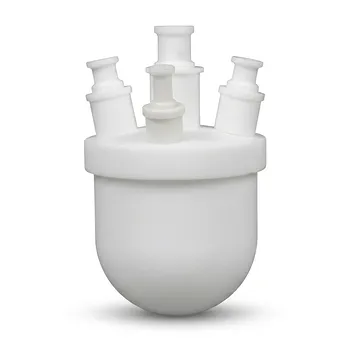
- Custom PTFE Flask 250ml High Purity Fluoropolymer Laboratory Vessel for Chemical Research
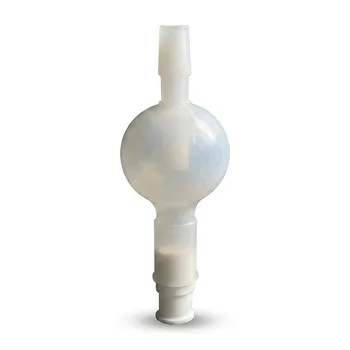
- High Purity PFA Chromatography Column with Collection Bottle Corrosion Resistant Fluoropolymer Filtration System for Trace Analysis
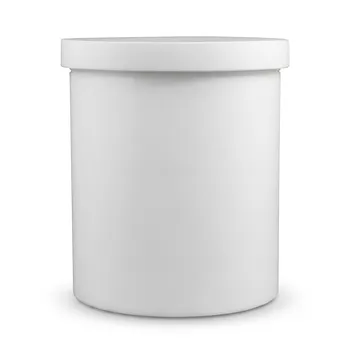
- Custom PTFE Reaction Tank Corrosion Resistant Fluoropolymer Chemical Processing Barrel 10L 20L 30L
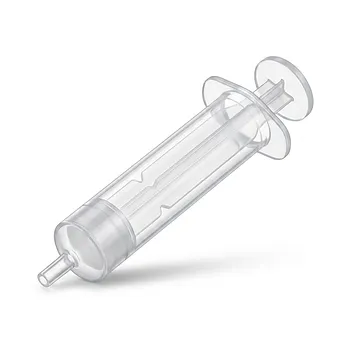
- Corrosion Resistant PFA Syringe Translucent Visual Fluoropolymer Labware 10ml Chemical Handling Tool
- Custom PFA Tubing 1/4 Inch High Purity Corrosion Resistant Fluoropolymer Tube with Welding and Machining Services
People Also Ask
- What are the key steps for structural integrity in molded PTFE lab reaction vessels? Master fine powder processing.
- When synthesizing TFVE monomers involving reactive organometallic reagents and aggressive polar solvents, what material performance characteristics are required? Ensure purity with PTFE/PFA.
- Why Are High-Purity Fluoropolymer Vessels and Tubing Critical for Trace Analysis? Prevent Contamination Reliably
- Why do PTFE fluoropolymer laboratory vessels and containers exhibit superior chemical resistance against harsh solvents and corrosive acids compared to standard plastic labware? Discover the molecular secrets
- Why are fluoropolymer reaction vessels essential for SnO2/rGO synthesis? The Key to High-Performance Composites